- 0
- 1,251 word
Governments will return to the negotiating table — virtually — on 1 December, when the Intergovernmental Panel on Climate Change (IPCC) resumes its suspended 65th session to settle the timetable and budget for its Seventh Assessment Report (AR7), the scientific backbone of the next global climate stocktake.
FAKTA
- Resumed session: 1–3 December 2026, held virtually.
- Suspended: 16 October 2026 in Addis Ababa, Ethiopia, after the 12–16 October session ended without agreement.
- On the agenda: the AR7 work plan and the IPCC Trust Fund programme and budget.
- The divide: whether all three working-group reports are ready in 2028 to feed the second Global Stocktake, or spread across 2028 and 2029.
- The stakes: AR7 is the science that will inform the second Global Stocktake at COP33 in 2028; its Synthesis Report is due in late 2029.
What happened in Addis Ababa
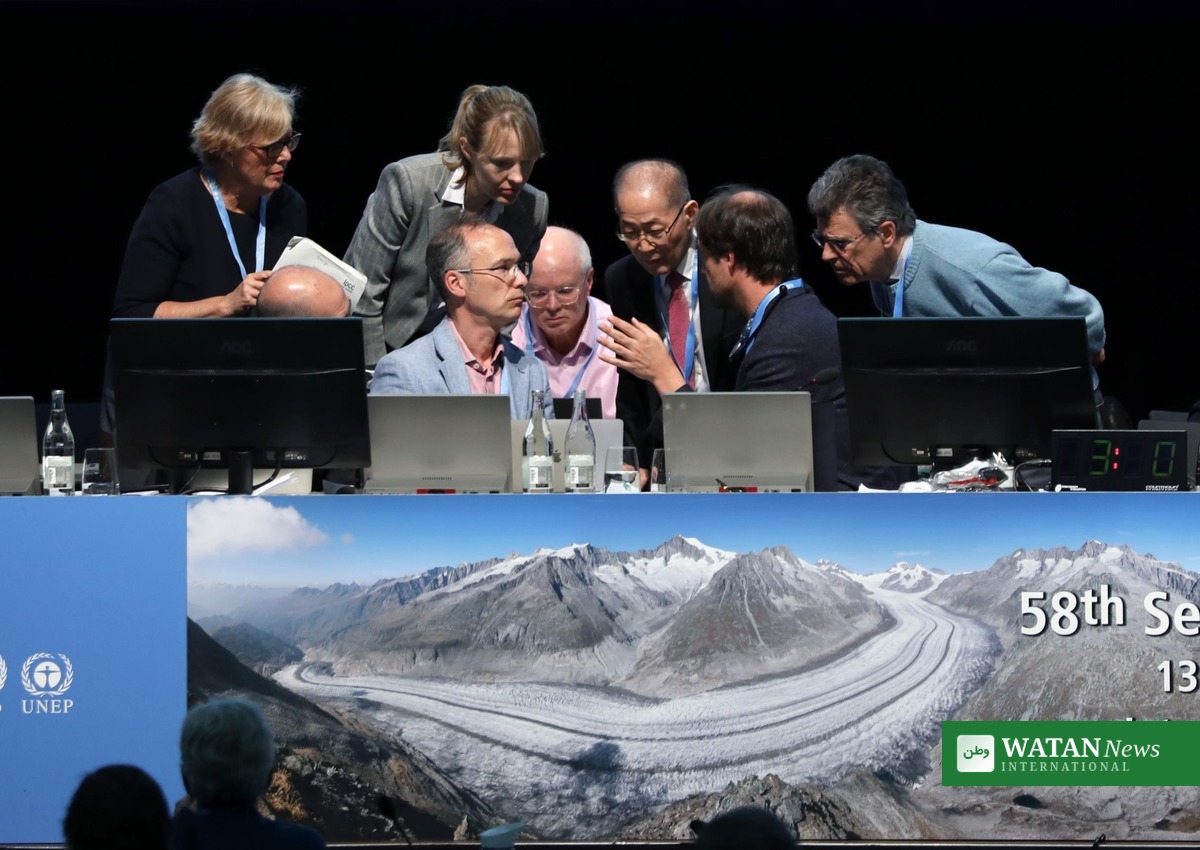
The IPCC’s 65th session met in Addis Ababa from 12 to 16 October 2026. Chair Jim Skea suspended it after governments failed to reach consensus on the work plan for the Seventh Assessment Report, above all on the schedule for delivering its three working-group reports, according to the Third World Network, which covered the session in detail. The IPCC confirmed on 29 October that the session will resume virtually from 1 to 3 December, with the work plan and the budget as the two remaining agenda items.
The timeline question has deadlocked five previous sessions. In Addis Ababa, a contact group co-chaired by Pedro Ferraz da Silva of Brazil and Frank McGovern of Ireland worked through seven proposals and narrowed them to four options:
| Option | Working Group I | Working Group II | Working Group III |
|---|---|---|---|
| Option 1 | May 2028 | July 2028 | September 2028 |
| Option 2 | May 2028 | September 2028 | February 2029 |
| Option 3 | May 2028 | April 2029 | July 2029 |
| Option 4 | April 2028 | July 2028 | October 2028 |
The argument: speed or inclusivity
Small-island states and most developed countries want all three reports finished in 2028, so that the science can feed into the second Global Stocktake, whose technical phase concludes in June 2028. They are joined by a broad group of countries including Panama, Antigua and Barbuda, Mexico, Chile, Uruguay, Kiribati, Jamaica, Palau, Ukraine, Türkiye, Sri Lanka, Barbados, Singapore, the Solomon Islands and Vanuatu.
Saudi Arabia, India and Russia favour the longer schedule, with the impacts and mitigation reports in 2029. Their argument is that compressed timetables, with overlapping reviews and back-to-back approval sessions, risk squeezing out developing-country scientists and their literature. India told the session that the concerns raised about inclusivity and participation represent the voices of “more than 40% of the population of the world”. Saudi Arabia said the work plan must remain anchored in the panel’s agreed mandate and procedures, adding: “The credibility of the IPCC must never become the price we pay for political compromise.”
Both sides say they want the same thing — a rigorous, authoritative assessment — and disagree on how much time that requires.
The budget is blocked too
The money is stuck behind the same disagreement. The proposed budget for 2027, and the forecasts for 2028 and 2029, assume a particular sequence for the AR7 work plan — a sequence governments have not agreed. India called discussing the budget first “putting the cart before the horse”, a view supported by Saudi Arabia, Russia, Iraq, China, Syria, Burkina Faso, Indonesia, Yemen and Tunisia. The session’s Financial Task Team was left to work from a non-status sheet while the timeline remains open.
Saudi Arabia also raised a point of order on procedure, recalling that under the IPCC’s financial rules the panel adopts a budget by consensus before the financial year it covers, and that several budget lines for 2027, 2028 and 2029 remained marked as not agreed. “The budget should follow the panel’s decisions on its work programme, not anticipate them,” the delegation said.
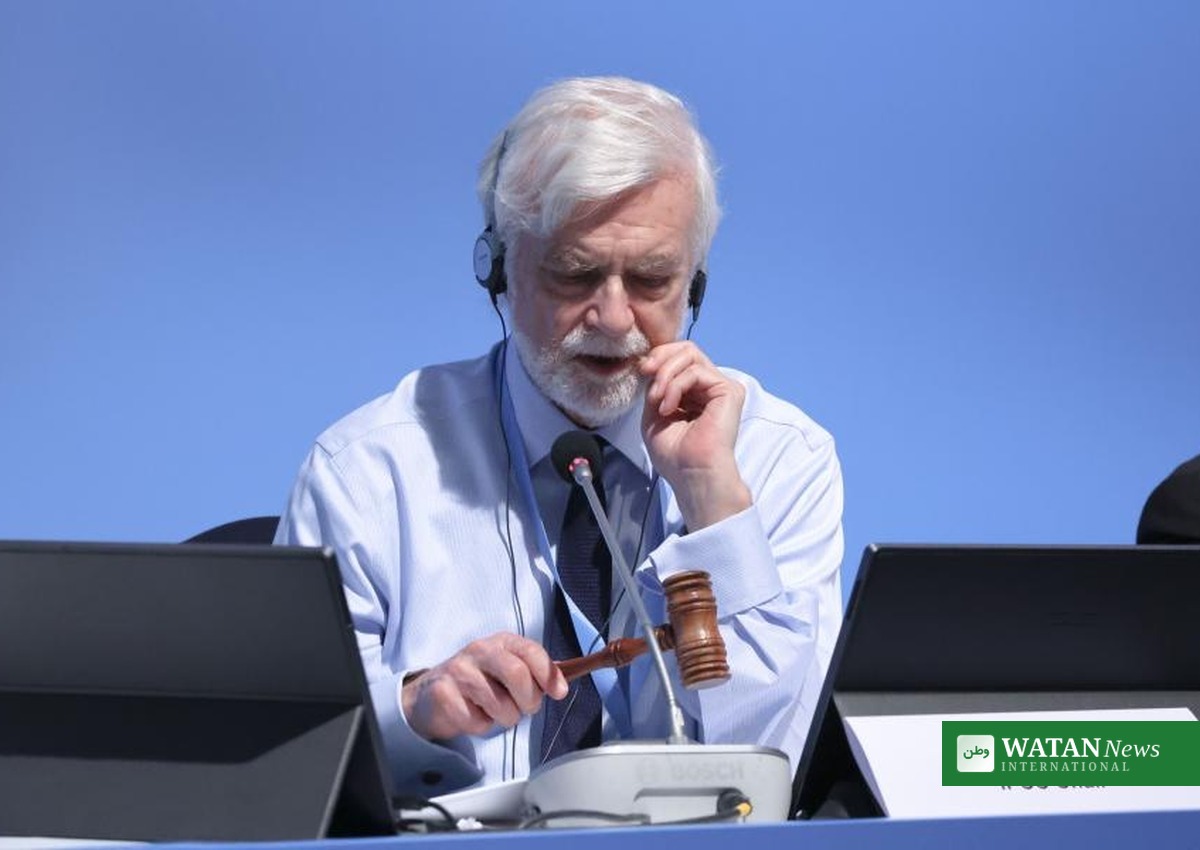
IPCC Chair Jim Skea, who suspended the October session in Addis Ababa, will chair the resumed meeting in December.
Skea’s appeal at COP31
When COP31 opened in Antalya on 9 November, Skea used the platform to press governments to break the deadlock. “Climate action without climate science is like a ship without a rudder,” he told delegates, according to the Earth Journalism Network, warning that delays are disrupting researchers’ work and threatening the timely delivery of critical climate findings. Uncertainty over the schedule is making it difficult for volunteer scientists to plan their work, he said, and researchers still do not know what will be expected of them in early 2027.
COP31 itself closed on 22 November without agreement on its final text, as Watan News reported, leaving the December IPCC session as the next decision point for the science that underpins the negotiations. The think tank E3G, assessing the Antalya outcome, said agreement must be reached in December on the budget and timeline for the AR7 reports “to enable them to inform the second Global Stocktake in 2028”.
What the Seventh Assessment Report is
The IPCC, established in 1988 by the United Nations Environment Programme and the World Meteorological Organization, is the UN body that assesses the science of climate change. Thousands of experts volunteer as authors to assess the scientific papers published each year. Its assessments are a key input into the international climate negotiations.
The seventh assessment cycle formally began in July 2023. At its 60th session in Istanbul in January 2024, the panel agreed to produce three working-group contributions: Working Group I on the physical science basis, Working Group II on impacts, adaptation and vulnerability, and Working Group III on mitigation of climate change. The outlines were agreed in Hangzhou in February 2025, and the Synthesis Report is to be released by late 2029.
The cycle will also produce a Special Report on Climate Change and Cities, scheduled for approval and publication in March 2027, a methodology report on short-lived climate forcers in the second half of 2027, and a 2027 methodology report on carbon dioxide removal technologies and carbon capture, utilisation and storage, agreed at the Lima session in October 2025. The previous cycle’s Synthesis Report, completed in March 2023, provided direct scientific input to the first Global Stocktake at COP28 in Dubai.
Frequently asked questions
What is IPCC-65?
IPCC-65 is the 65th plenary session of the Intergovernmental Panel on Climate Change, the UN body that assesses climate science. It first met in Addis Ababa from 12 to 16 October 2026 and was suspended without agreement on the Seventh Assessment Report work plan and budget.
Why was the session suspended?
Governments could not agree on the schedule for delivering the three working-group reports of the Seventh Assessment Report, nor on the budget that depends on that schedule. Chair Jim Skea suspended the session after a draft decision failed to win consensus.
What are the four timeline options?
All four put the physical science report in April or May 2028. They differ on the other two: the fastest finishes all three reports in 2028, while the slowest puts the impacts report in April 2029 and the mitigation report in July 2029. Two middle options split the difference.
Why does the 2028 date matter?
The second Global Stocktake under the Paris Agreement, which assesses collective progress towards its long-term goals, concludes its technical phase in June 2028 and is scheduled for COP33 in 2028. Reports finished in 2028 can feed into it; reports finished in 2029 cannot.
What happens if December also ends without agreement?
The two items stay undecided, and the planning uncertainty continues. IPCC Chair Jim Skea has said researchers still do not know what will be expected of them in early 2027, and the panel’s own statement lists the work plan and the budget as the resumed session’s business.
One week from now, governments get their next chance to settle it. The science the world’s climate decisions rest on cannot wait much longer — and neither can the scientists writing it.
Author

usmanch0013@gmail.com
Related Posts

World’s Best Destinations for 2027: From Santorini to Samarkand
- 0
- 1,685 word
Lonely Planet and National Geographic have named the world's best destinations for 2027, from the Veneto and the California redwoods to Chengdu,...
Read out all
1.3 Million New Yorkers Rely on Food Pantries as Hardship Bites
- 0
- 1,047 word
Nearly 1.3 million New Yorkers used food pantries in 2025 and 2.6 million experienced food hardship, a Robin Hood and Columbia University...
Read out all
Luxury Market Returns to Growth in 2026 as Jewellery Shines
- 0
- 986 words
Bain & Company expects personal luxury goods sales to return to growth in 2026, rising about 2 per cent to 367 billion...
Read out all
Erasmus+ Opens 2027 Call With €5.36 Billion for Study and Training
- 0
- 901 words
The European Commission has opened the Erasmus+ 2027 call with a budget of 5.36 billion euros, expected to reach 1.6 million participants...
Read out all
Christie’s Acquires Dreweatts in Return to the Antiques Market
- 0
- 828 words
Christie's has acquired Dreweatts, the 266-year-old British auction house, in a deal announced on 25 November 2026 that returns the global auctioneer...
Read out all
US Home Prices Fall for Fourth Straight Week as Payments Ease
- 0
- 727 words
US home-sale prices fell for a fourth straight week, Redfin reported on 19 November 2026, with the median price at $388,516 and...
Read out all