- 0
- 684 words
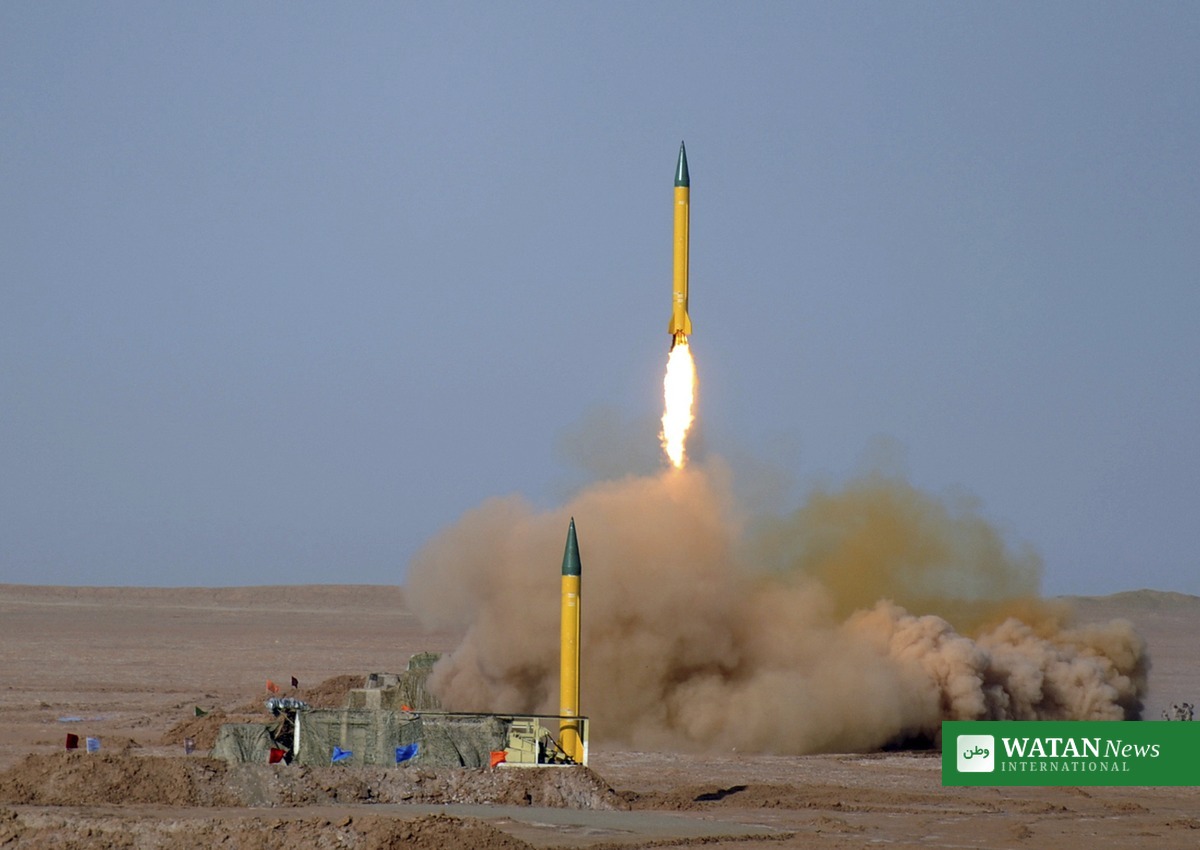
Iran’s Revolutionary Guard has said it has lifted a self-imposed limit of about 2,000 kilometres on the range of the country’s ballistic missiles, in a significant shift in Tehran’s missile policy announced in the Iranian capital on Saturday. The Iran missile range limit had kept Iranian missiles focused on regional targets for nearly a decade, and its removal raises the prospect of Tehran seeking weapons able to reach more distant targets.
Brigadier General Hossein Mohebbi, the spokesman for the Islamic Revolutionary Guard Corps (IRGC), told a news conference in Tehran marking the force’s Aerospace Week that the restriction “has been lifted for us”, according to Iranian state-linked outlets including Tasnim and Mehr news agencies.
FAKTA
- What happened: Iran’s Revolutionary Guard said on Saturday, 7 November 2026, that the self-imposed limit of about 2,000 kilometres on the range of its ballistic missiles has been lifted.
- Who announced it: IRGC spokesman Brigadier General Hossein Mohebbi, at a news conference in Tehran marking Aerospace Week.
- His words: “This restriction has been lifted for us.”
- Background: The 2,000-kilometre cap was set in 2017 and kept Iranian missiles within reach of regional targets, including Israel and American military bases in the Middle East.
- What is not shown: Iran has not demonstrated that it currently possesses operational missiles capable of flying beyond the previous limit.
Iran missile range limit lifted after supreme leader’s warning
Mohebbi was answering a question about a warning by Supreme Leader Mojtaba Khamenei that any threat against Iran should receive an immediate and effective response without geographical limits. The IRGC spokesman said Iran must demonstrate any expanded capability in practice rather than merely announce it.
“Our duty is to show our capabilities on the battlefield,” Mohebbi said, according to the reports of the news conference. He added that Tehran would rely on asymmetric warfare to catch its adversaries off guard.
Iran’s Tasnim news agency reported that Khamenei had also ordered a comprehensive review and update of the military’s target lists to include the physical and non-physical assets of the United States and Israel.

A limit in place since 2017
The 2,000-kilometre restriction was a self-imposed policy introduced in 2017 under the former supreme leader. It was described by Iranian officials as a deliberate ceiling that kept the country’s missiles focused on regional targets while stopping short of ranges that would reach deeper into Europe.
Iranian Foreign Minister Abbas Araghchi had previously described the 2,000-kilometre figure as a deliberate limit on the missile programme, according to Russian state news agency RIA Novosti.
Western governments have long accused Tehran of pursuing enhanced missile capabilities that could threaten Europe, a charge Iran has denied. The removal of the cap now opens the way, in principle, for the development of longer-range systems, although no test of such a missile has been reported.
Rising tensions in the Gulf
The announcement comes amid stalled talks between the United States and Iran and rising fears of renewed strikes across the region. On Friday, the United States carried out limited strikes on an Iranian air-defence system on Qeshm Island in the Strait of Hormuz, an operation confirmed by US President Donald Trump.
Tensions in the waterway have been high for days, with Iran reporting a series of incidents involving oil tankers and the United States maintaining a military presence in the Gulf.
What is not yet known
Mohebbi himself cautioned against treating the announcement as proof of a new operational capability, saying Iran must demonstrate its capabilities in practice before making claims about them. No details were given about any new missile system, its range, or when it might be tested.
Analysts note that lifting a policy limit is not the same as fielding a longer-range weapon, and that any move towards missiles able to reach beyond 2,000 kilometres would be closely watched by the United States, Europe and regional states.
Read more on Watan News: Iran lifts self-imposed 2,000 km limit on ballistic missile range
Author

usmanch0013@gmail.com
Related Posts

COP31 Comes Home: What the Antalya Climate Talks Mean for Everyday Sustainable Living
- 0
- 1,179 word
Sunday is 'A Breath in Antalya' — COP31's culture day. The food on the table, the energy in the house and the...
Read out all
Ukraine Strikes Major Russian Petrochemical Plant in Deep Drone Attack on Tatarstan
- 0
- 751 words
Ukrainian drones struck the Nizhnekamskneftekhim petrochemical complex and the TAIF-NK oil refinery in Nizhnekamsk, Tatarstan, overnight into Sunday, Kyiv's General Staff said,...
Read out all
COP31: UK, Canada and Norway Launch $10 Billion ’10by30′ Climate Finance Push for Clean Energy
- 0
- 1,204 word
Three development finance institutions launched '10by30' at COP31 in Antalya on 13 November, aiming to mobilise at least $10 billion for renewable...
Read out all
Wales Stun All Blacks 35-28 to End 73-Year Wait for Victory
- 0
- 582 words
Wales ended 73 years of hurt against New Zealand with a stunning 35-28 Nations Championship win at the Principality Stadium in Cardiff,...
Read out all
South Korea’s Kyung Suk Yang Accepts Global-Level Designation in GCCT at COP31
- 0
- 319 words
Madam Kyung Suk Yang, Director of South Korea's Sustainability Management Society, has accepted a global-level designation in GCCT and will join its...
Read out all
South Korea’s Kyung Suk Yang Accepts Global Role at GCCT After Antalya Meeting
- 0
- 393 words
Kyung Suk Yang, Director of South Korea's Sustainability Management Society, has accepted a global-level designation at GCCT after a fruitful lunch meeting...
Read out all