
- 0
- 1,107 word
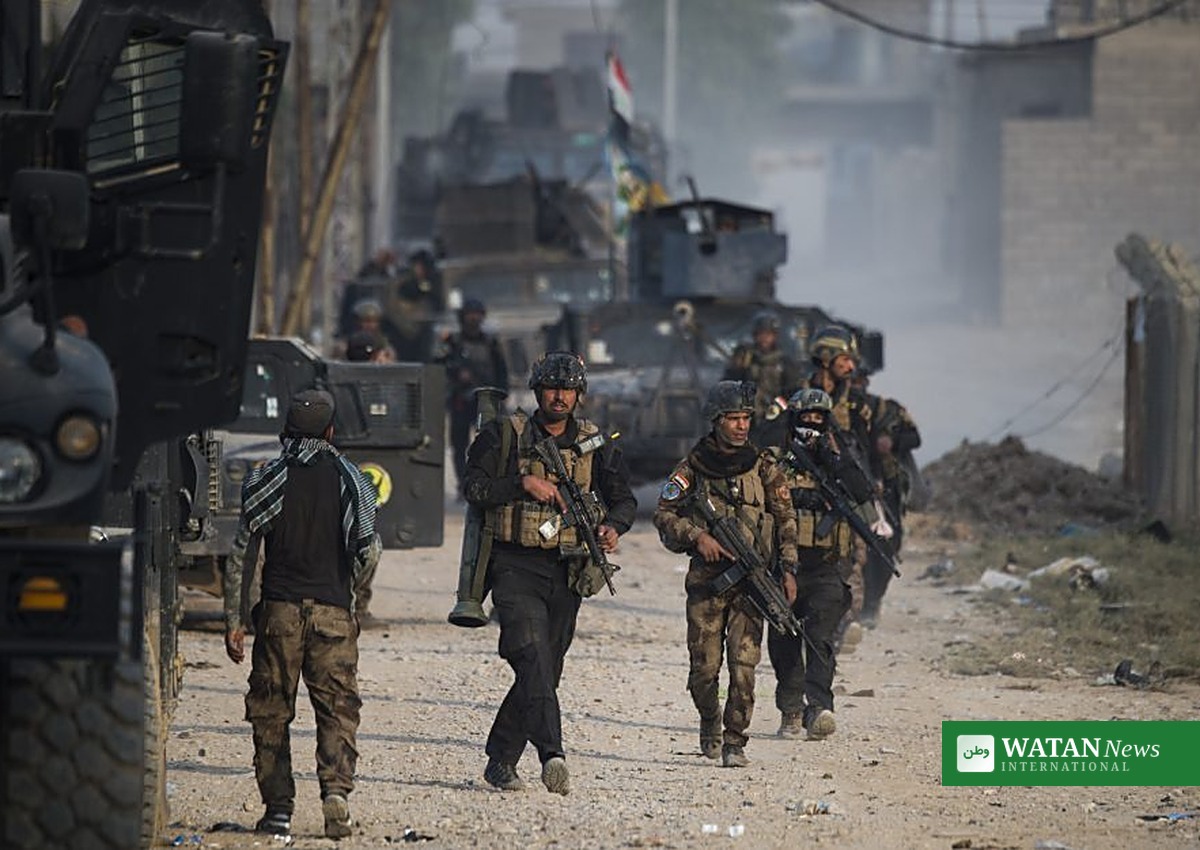
Iraq has reached a compromise with the powerful Iran-backed militia Kataib Hezbollah, three senior security officials said on Thursday, in a deal that averts an armed confrontation over the group’s stronghold of Jurf al-Sakhar, south of Baghdad. The Iraq Kataib Hezbollah deal was brokered by senior Shi’ite political leaders after Prime Minister Ali al-Zaidi readied security forces to move against the group, which Iraqi officials accuse of running a smuggling ring that siphoned off hundreds of millions of dollars’ worth of state-owned oil.
Under the deal, government forces are expected to move into Jurf al-Sakhar, also known as Jurf al-Nasr, on Friday, while Kataib forces move to other areas, Lieutenant General Saad Maan, head of Iraq’s Security Media Cell, told Reuters. The militia later said it had ended a state of alert for its members over the crisis and that its disputes with the government “will be resolved through official channels”, according to Al Arabiya television.
FAKTA
- Iraq and Kataib Hezbollah reached a compromise on Thursday, 19 November, according to three senior security officials.
- Government forces are due to move into the militia stronghold of Jurf al-Sakhar, south of Baghdad, on Friday, 20 November.
- Kataib forces are to move to other areas, Iraq’s Security Media Cell said.
- A new command headquarters for the area begins operating at 6 a.m. on Friday and will report to the federal police.
- Esmail Qaani, commander of Iran’s Revolutionary Guards’ Quds Force, flew to Baghdad late on Monday to help defuse the tensions.
- The standoff followed accusations that the group ran an oil-smuggling ring worth hundreds of millions of dollars.
Iraq Kataib Hezbollah deal: what was agreed
The compromise was brokered by senior Shi’ite political leaders to avert a confrontation, the officials said. Mr Zaidi said on Thursday that Iraq would not be allowed to become “a battleground for settling scores” and that his government would continue to fight corruption and illegal weapons.
Mr Zaidi later ordered the swift reopening of all closed roads in the Jurf al-Sakhar area and issued guidelines for the work of the new command headquarters. The headquarters will begin operating at 6 a.m. on Friday, the day of the government’s deadline for Kataib Hezbollah to withdraw from the area, and will report to the federal police, which come under the Interior Ministry. It will be led by Lieutenant General Ahmed Hatem Hamid, according to an executive order announced by Sabah Al-Numan, spokesman for the commander-in-chief of the armed forces.
The move follows a plan approved by Mr Zaidi on Wednesday to replace the force holding Jurf al-Sakhar, after the government accused the area’s controllers of oil smuggling and referred its investigations to the judiciary.
Why the standoff happened
Iraqi officials accused Kataib Hezbollah of running a smuggling ring that diverted state-owned oil, in a case the government has referred to the judiciary. The prime minister had already sacked nine officials in an oil-smuggling investigation targeting the militia stronghold, and a judicial committee inspected Jurf al-Sakhar on Tuesday, according to the Associated Press.
A classified Iraqi Interior Ministry intelligence report, details of which were published by Iraqi media on 9 November, suggested the oil theft had been going on for at least five years. The district in Babil province, south of Baghdad, has been the group’s stronghold for more than a decade.
Qaani’s mediation
Reflecting the gravity of the situation, Iraqi Shi’ite political sources said Esmail Qaani, commander of Iran’s elite Revolutionary Guards’ Quds Force, arrived in Baghdad late on Monday to help defuse tensions with Kataib Hezbollah, Tehran’s most powerful militia ally in Iraq.
A spokesperson for Kataib Hezbollah said the group’s secretary-general, Abu Hussein al-Hamidawi, met Mr Qaani, Hadi al-Amiri, head of the Badr Organization, another influential Iran-aligned militia, and other influential figures in a bid to prevent an escalation. Participants described the outcome of the talks as positive in a statement issued on Thursday. Kurdistan24 reported that Mr Qaani had mediated an agreement under which the group would withdraw and the area would be occupied by a joint force of the Popular Mobilization Forces and security forces.
A test for the prime minister’s disarmament plan
Mr Zaidi, who came to power six months ago, has made his riskiest move by directly confronting the heavily armed Shi’ite militias that function as proxies of Iran. In September, he gave himself nine months to disarm the country’s many pro-Iran militias, a task widely seen as near-impossible.
Pro-Iranian militias, including Kataib Hezbollah, have resisted calls by Mr Zaidi and US President Donald Trump to disarm. The groups enjoy a semi-official status in Iraq, which critics say encourages them to act with impunity. Kataib and other militias say they are dedicated to Iraq’s security, and the group has attacked US troops in solidarity with Iran since the United States and Israel launched a war against the Islamic Republic in February, Reuters reported.
Kataib Hezbollah, whose name means Battalions of the Party of God, has thousands of hardened fighters and forms several battalions in Iraq’s Popular Mobilization Forces, a grouping of armed factions originally set up to fight Islamic State in 2014 that was subsequently recognised as an official security force. While it is technically under the command of Iraq’s prime minister as part of the Popular Mobilization Forces, the group often operates outside the chain of command. Founded in the aftermath of the 2003 US-led invasion of Iraq, it is among the most influential members of the Islamic Resistance in Iraq, the umbrella group of hardline Shi’ite armed organisations supported by Iran, and reports directly to Iran’s Revolutionary Guards. It was led by dual Iraqi-Iranian citizen Abu Mahdi al-Muhandis until he was killed in a US drone strike in 2020 along with the commander of the Revolutionary Guards’ Quds Force, Qassem Soleimani, at Baghdad’s international airport.
What happens next
Friday’s entry into Jurf al-Sakhar will be the first test of whether the compromise holds. Earlier this week, Iraq ordered the army into the stronghold, and the standoff had raised the prospect of an armed confrontation in an area controlled by the factions.
Only days ago, the militia was publicly defiant. During a press visit to the area on Tuesday, Kataib Hezbollah commander Abu Taleb al-Saidi rejected the government’s accusations and, asked about the group leaving, told Agence France-Presse: “That will not happen, not even over our dead bodies.” Whether the deal reported on Thursday now holds will become clear when government forces move into Jurf al-Sakhar on Friday.
Author

usmanch0013@gmail.com
Related Posts

South African Reserve Bank Holds Interest Rate at 7.25% in Split Vote
- 0
- 908 words
The South African Reserve Bank has kept its benchmark repo rate unchanged at 7.25 per cent, with four members of its Monetary...
Read out all
Somalia Orders UAE Ambassador to Leave Within 72 Hours
- 0
- 978 words
Somalia has ordered the United Arab Emirates ambassador to leave the country within 72 hours and recalled its own envoy from Abu...
Read out all
Kuaishou Unveils Kling 4.0 as Revenue Falls to RMB31.6 Billion in Third Quarter
- 0
- 841 words
Kuaishou Technology has reported third-quarter revenue of RMB31.6 billion and unveiled Kling 4.0, its next-generation video generation model, as its short-video app...
Read out all
GeneDx Names Everett Cunningham as Chief Executive
- 0
- 878 words
GeneDx has appointed veteran diagnostics executive Everett Cunningham as its chief executive, effective on or before 15 December 2026, succeeding Katherine Stueland.
Read out all
Frederiksen Rejects Multiculturalism in Podcast Remarks on Danish Identity
- 0
- 1,012 word
Danish Prime Minister Mette Frederiksen has said she does not support a multicultural society or large-scale population change, arguing in a podcast...
Read out all
Denmark Votes 109-0 to Approve Greenland Defence Deal with the US
- 0
- 1,019 word
Denmark's parliament has unanimously approved the Greenland security agreement with the United States, voting 109-0 in favour of the deal that expands...
Read out all