- 0
- 1,310 word
Shillong, Meghalaya — Young people in the north-eastern Indian state of Meghalaya have handed their government a youth-written plan for living with a changing climate — 15 recommendations drawn from their own experience of floods, landslides and rising heat — and the state has signed a work plan with UNICEF to act on it.
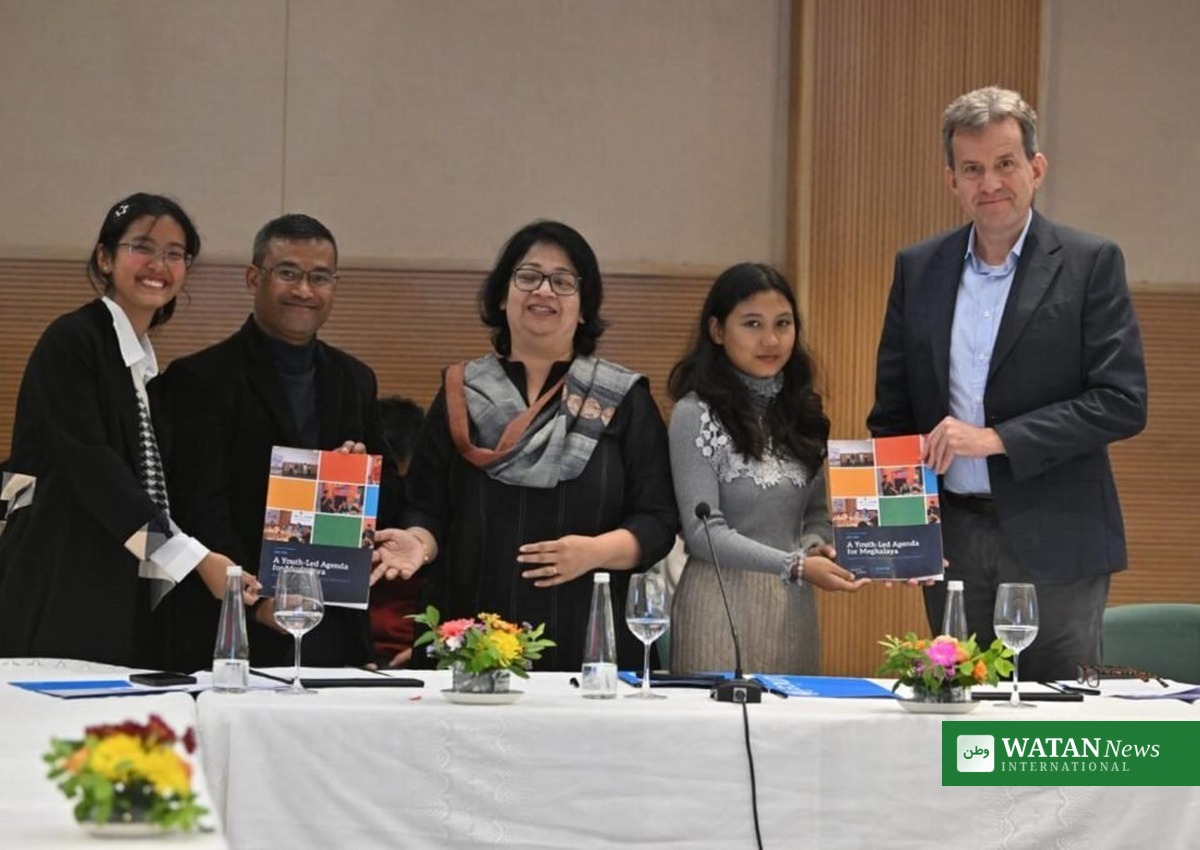
On 24 November, members of the Young People’s Action Group (YPAG) presented their report, A Youth-Led Agenda for Meghalaya, at the State Guest House in Shillong. The event was hosted by UNICEF Assam together with the state’s Department of Sports & Youth Affairs and the Centre for Policy.
Key facts
- What: Young people presented 15 recommendations for a climate-ready Meghalaya to the state government.
- When and where: 24 November 2026, State Guest House, Taragarh, Shillong.
- Who: The Young People’s Action Group (YPAG), young people aged 15 to 29, with UNICEF Assam, the Department of Sports & Youth Affairs and the Centre for Policy.
- What happens next: The department and UNICEF India signed a work plan running until 31 December 2027, including technical support for Chief Minister’s Youth Centres, YPAG advice on state youth policy and a Youth Budget Statement.
- Scale: 138 young people helped choose the group’s focus, more than 72,000 were reached online, and 105 young people from 11 districts joined workshops in Shillong, Nongpoh, Tura and Jowai.
A seat at the table
YPAG aims to give young people aged 15 to 29 a regular role in policymaking, public decisions and community action, with climate change at the centre of its work. UNICEF Assam presented the idea to Meghalaya’s Chief Minister in 2023, and in July 2026 a state government review formally named YPAG a youth advisory group, carrying young people’s ideas to government across departments.
“This session is designed so that young people’s recommendations have somewhere to go,” said Dr Madhulika Jonathan, Chief of Field Office, UNICEF Assam. “What we heard today is the first advice from YPAG as an advisory platform, and we will take it forward with the Department through the work plan.”
The group was built through participation: 138 young people helped choose its focus and more than 72,000 were reached online. Then 105 young people from 11 districts took part in workshops in Shillong, Nongpoh, Tura and Jowai, using skits, songs, posters, short videos and traditional storytelling to describe what climate change looks like in their own communities. A 20-member cohort, chosen for a one-year term, turned that work into the 15 recommendations.
Fifteen recommendations for a climate-ready state
The recommendations cover public health, education and mental health — the three areas young people said matter most when floods, landslides and heat arrive. They include mobile health units, safe routes to school during floods, climate-proof classrooms, help for families so children stay in school, climate lessons in schools, and mental health care as part of disaster relief. Each recommendation names the government departments that could act on it.
“Distance should not decide whether someone survives,” one participant said during the workshops. Another group concluded: “When nature suffers, the mind feels the impact.”
Solutions designed by young people
Alongside the recommendations, the young people designed practical solutions of their own:
- LandGuard: roadside sensors and warning lights that alert drivers and emergency services to landslides.
- HydroLens: a river sensor mounted on a bamboo pole that shows whether water is safe to drink.
- Cooling curtains woven from pineapple leaves, and school roofs strengthened with treated bamboo.
- Youth task forces that support mental health after disasters.
The ideas are deliberately low-cost and built from materials and knowledge available in the state — designed to work in remote villages, not only in towns.
From report to action
YPAG members presented the report to Shri Alertson Nongbri, Director of Sports & Youth Affairs and Joint Secretary of the department; Dr Madhulika Jonathan; and Mr Jesper Moller, Deputy Representative for Programmes at UNICEF India.
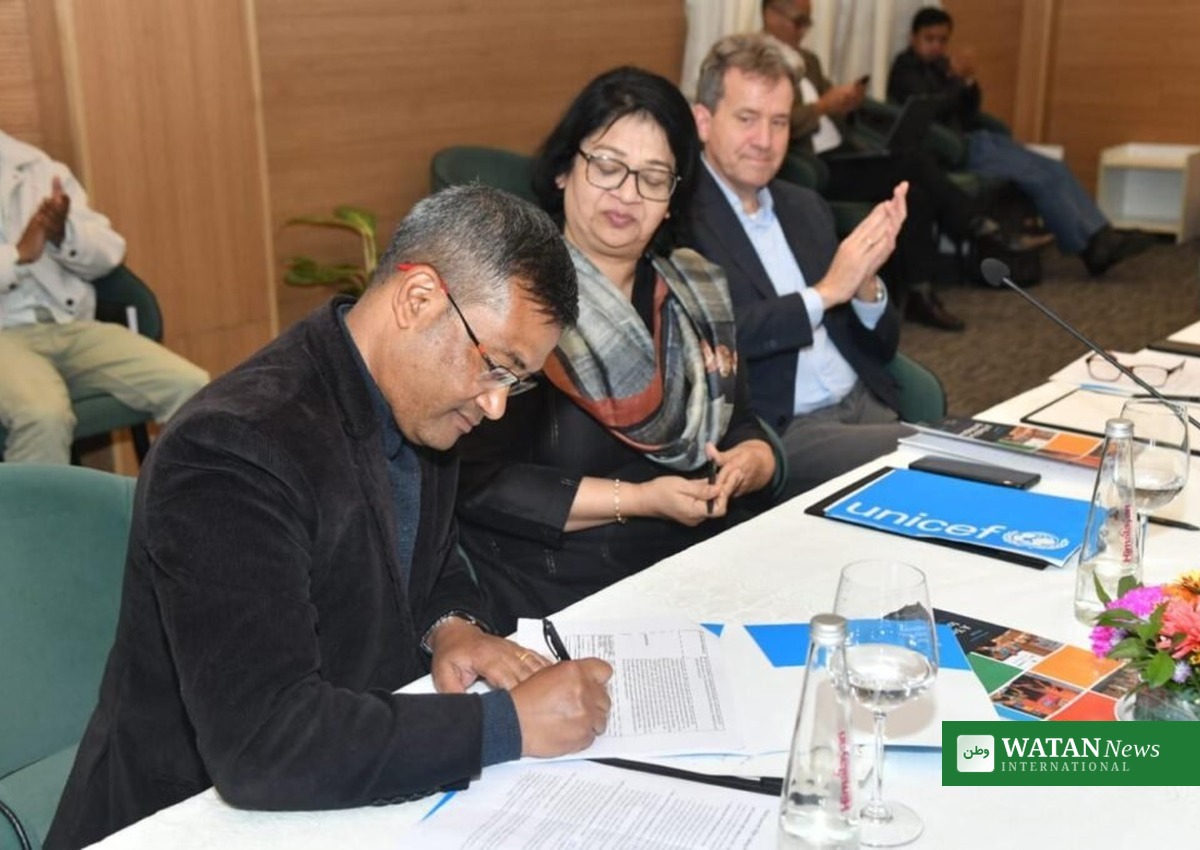
The department and UNICEF India then signed a work plan running until 31 December 2027. Under the plan, UNICEF will provide technical support for the Chief Minister’s Youth Centres, which will link young people — especially in remote areas — to career guidance, skills and state schemes. YPAG will advise on the state’s youth policy, and the state will prepare a Youth Budget Statement showing what it spends on young people. Progress will be reviewed every year, and UNICEF’s support comes at no cost to the department.
“Nearly three-quarters of Meghalaya’s people are under 35. Young people are our biggest asset in facing climate shocks, so their voice belongs in planning,” said Shri Alertson Nongbri. “This report is a beginning. We will take it to the departments concerned and invite YPAG back to hear what has been done.”
Mr Jesper Moller added: “For a young person in a flood-hit village, health, school and peace of mind are one story. The road that closes takes them all away. This is a working agenda for Government, not a wish list. When young people are given a real seat, real data and real follow-up, they don’t bring complaints. They bring coherence.”
Why this matters beyond Meghalaya
The Meghalaya model arrives just days after COP31 closed without a deal, while young delegates there had demanded decision-making power rather than token representation. Meghalaya shows one way to answer that demand: a permanent youth advisory role inside government, backed by a signed work plan and a budget statement.
It also fits a wider pattern of youth-led climate work: in Bermuda, more than 150 young people closed their Youth Climate Summit the same week with a five-year partnership between the island’s ocean institute and UNDP, and the Sanofi Foundation has opened grants of €50,000 to €100,000 for youth-led climate and health projects in Africa.
UNICEF’s Children’s Climate Risk Index found that 1 billion children worldwide face extremely high risk from climate impacts — a reminder that the generation most affected by climate change is also the one with the least say in the decisions. In Meghalaya, young people have now been given a formal say — and a plan to check whether it is used.
In the words of the report’s young authors, the agenda is a beginning, not an ending. The test now is whether the departments named in each recommendation act — and whether YPAG is invited back, as promised, to hear what has been done.
Frequently asked questions
What is the Young People’s Action Group?
YPAG is a youth advisory group in Meghalaya, India, for young people aged 15 to 29. It gives them a regular role in policymaking, public decisions and community action, with a focus on climate change. It is an initiative of UNICEF India and the Centre for Policy, with institutional support from the Government of Meghalaya.
What did the young people present on 24 November 2026?
They presented a report, A Youth-Led Agenda for Meghalaya, containing 15 recommendations on public health, education and mental health, designed to keep health care, schooling and wellbeing within reach as floods, landslides and heat become more common.
What is LandGuard?
LandGuard is a youth-designed solution of roadside sensors and warning lights that alert drivers and emergency services to landslides — one of four practical ideas in the report, alongside the HydroLens water sensor, pineapple-leaf cooling curtains and youth mental-health task forces.
What did the government and UNICEF agree to do?
The Department of Sports & Youth Affairs and UNICEF India signed a work plan until 31 December 2027: UNICEF will support the Chief Minister’s Youth Centres, YPAG will advise on state youth policy, and the state will publish a Youth Budget Statement. Progress will be reviewed every year.
Why does youth participation in climate policy matter?
Young people face the longest exposure to climate impacts — UNICEF estimates 1 billion children are at extremely high risk — yet they rarely sit in the rooms where decisions are made. Advisory roles like YPAG aim to turn consultation into a permanent, accountable part of government.
Author

usmanch0013@gmail.com
Related Posts

One Dead as Diesel Tanker Sinks Off Ibiza, Raising Spill Fears
- 0
- 485 words
The Malta-flagged tanker Med Emre sank off Ibiza in the early hours of Thursday, killing one crew member. All 17 crew were...
Read out all
Elever kan blive Earth Ambassadors — tilmeldingen lukker 18. december
- 0
- 1,160 word
Elever i alderen 13 til 19 år kan stadig melde sig som Earth Ambassadors for The Earth Foundation. Tilmeldingen lukker den 18....
Read out all
طلبہ کو ارتھ ایمبیسیڈر بننے کی دعوت، رجسٹریشن 18 دسمبر کو بند ہو رہی ہے
13 سے 19 سال کی عمر کے طلبہ اب بھی دی ارتھ فاؤنڈیشن کے ارتھ ایمبیسیڈر بننے کے لیے رجسٹریشن کرا سکتے...
Read out all
Students Invited to Become Earth Ambassadors as Registrations Close 18 December
- 0
- 1,057 word
Students aged 13 to 19 can still sign up to become Earth Ambassadors for The Earth Foundation. Registrations close on 18 December...
Read out all
Explosion and Fire at Bangkok Oil Refinery Injures Seven, Forces Evacuations
- 0
- 536 words
An explosion and fire at the Bangchak oil refinery in Bangkok injured at least seven people on Thursday and forced nearby residents...
Read out all
Klimachampion Jocelyn Turnbull vinder New Zealands Kidson-medalje for drivhusgasvidenskab
- 0
- 1,084 word
Dr. Jocelyn Turnbull har vundet New Zealands Kidson-medalje for at lede WMO's første globale standard for måling af byers drivhusgasudledninger.
Read out all