- 0
- 781 words
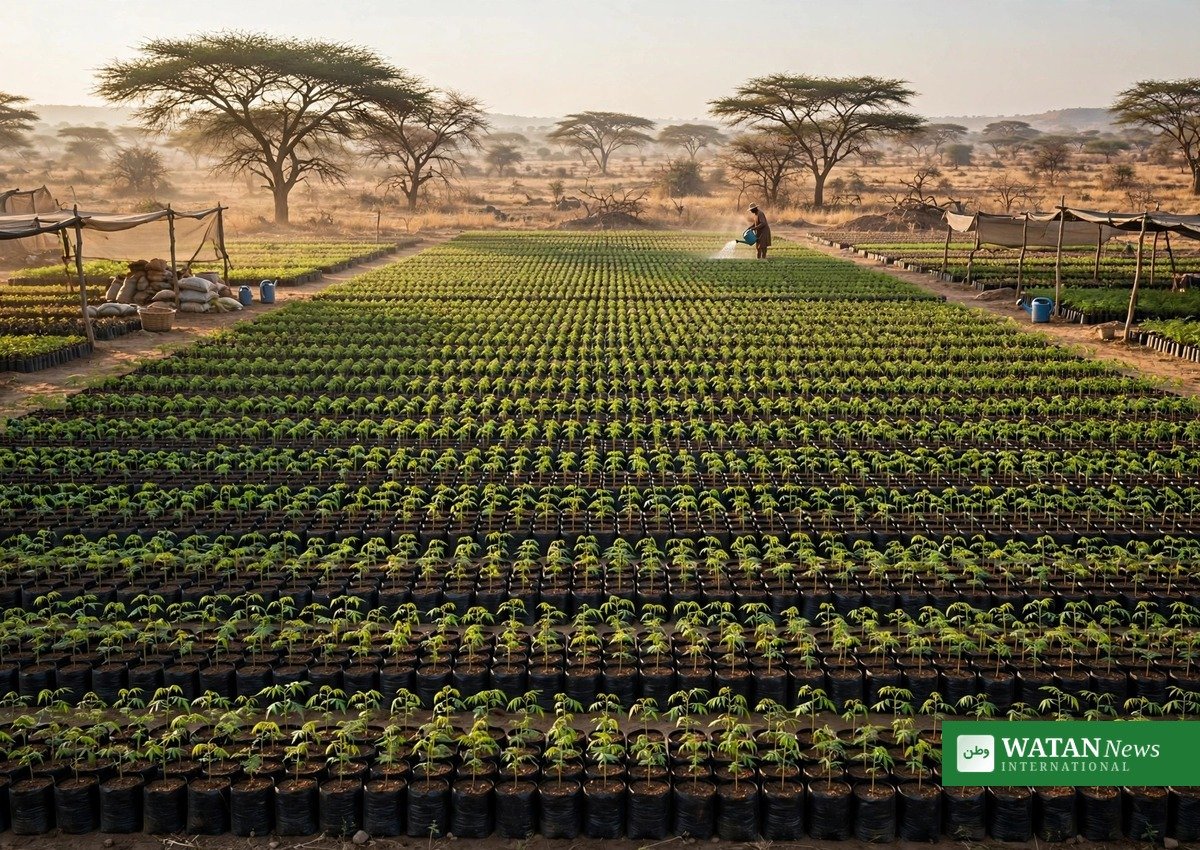
Dutse, Nigeria — Nigeria’s National Agency for the Great Green Wall (NAGGW) has raised more than 500,000 Great Green Wall seedlings for planting across Jigawa State, stepping up its campaign to hold back the advancing Sahara and restore degraded land in the country’s northern frontline states.
The agency’s Director-General, Saleh Abubakar, announced the milestone during a one-day field visit to project sites across the state, where he inspected the progress of ongoing restoration work. Jigawa is one of the northern states implementing the Great Green Wall programme in line with President Bola Ahmed Tinubu’s Renewed Hope Agenda for environmental protection, according to the announcement.
FAKTA
- What: More than 500,000 tree seedlings raised for Jigawa State’s 2026 planting season.
- 2026 targets: 50 hectares of refilling at project sites, 50 hectares of new plantation fields, and a 10 km shelter belt.
- Already established: Over 50 hectares of gum arabic, woodlots and cactus plantations, plus a 10 km neem shelterbelt.
- Bigger picture: The Great Green Wall is being implemented across Nigeria’s 11 frontline states.
500,000 Great Green Wall seedlings for the 2026 season
The seedlings raised for the 2026 season will be planted at NAGGW project sites and also distributed to communities as well as public and private institutions for onward planting, the agency said.
Outlining the season’s targets, Abubakar said the agency aims for “50 hectares for refilling across our project sites, 50 hectares at new plantation fields, and also a 10km shelter belt site”. He described the progress observed at sites including Maigari and Yarda Kangiwa as encouraging for the fight against desertification, erosion and global warming.
Plantations already changing the landscape
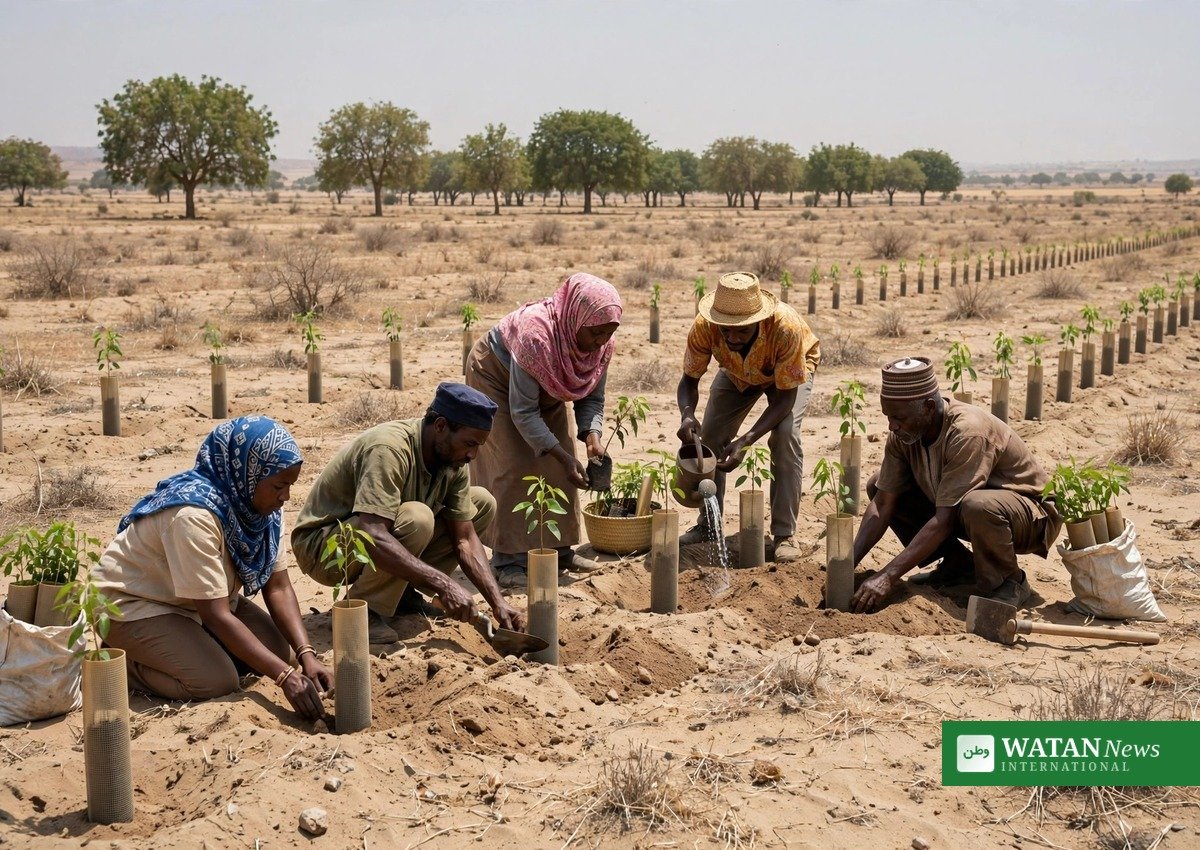
In Fari, the agency has established 10 hectares of gum arabic and 20 hectares of woodlots, while another 10 hectares of cactus and gum arabic have been planted at Yarda Kangiwa in Kaugama Local Government Area. Five hectares of woodlots have also been established in Balangu, Kafin Hausa Local Government Area, and roughly 10 kilometres of neem trees now line the Kamataraye shelterbelt in Maigatari.
These plantations form a line of defence for communities increasingly exposed to climate change, offering protection against wind erosion while providing potential sources of energy and economic benefits.
Gum arabic: restoration that pays
The NAGGW field officer for Jigawa, Kabiru Abubakar, said the project works on multiple targets: planting economic trees that produce food, trees that supply raw materials such as gum arabic, trees for woodlots and traditional trees for conservation.
Gum arabic — derived from acacia trees native to the Sahel — is a valuable export commodity with growing global demand. By actively promoting its cultivation in ecologically suitable areas, NAGGW combines environmental restoration with sustainable livelihood opportunities for rural communities, in addition to tackling desertification, erosion and environmental degradation.
The bigger picture: 11 frontline states
The Great Green Wall programme is being implemented across Nigeria’s 11 frontline states: Borno, Yobe, Jigawa, Kano, Katsina, Zamfara, Sokoto, Kebbi, Bauchi, Gombe and Adamawa.
In 2025 the agency announced a five-year strategic plan to plant 50 million date palm trees across these states, beginning with five million seedlings — an initiative designed to restore degraded land, strengthen climate resilience and generate economic opportunities. Complementary measures include solar-powered boreholes and sustainable land management practices.
The federal Ministry of Information separately confirmed that the NAGGW Director-General has commenced a monitoring exercise of the agency’s 2026 tree-planting activities in Kano and Jigawa states, including a visit to the Federal College of Education (Technical), Bichi, which received 3,000 seedlings. More than 20,000 seedlings of neem, gum arabic and cactus are being planted at monitored sites in Gumel and Kaugama as part of the 2026 season.
Survival is the real test
Officials have cautioned that planting the trees is only the beginning. The Jigawa field officer urged residents to protect the plantations and take ownership of the projects, particularly against vandalism, linking changing rainfall patterns and deforestation to the environmental challenges confronting the state.
Community leaders echoed the message. The Bulama of Yarda Kangiwa, Alhaji Ibrahim Shehu, thanked the federal government for the intervention, which he said already provides shade, roofing wood and other resources, and pledged the community’s continued support. Malam Abdullahi Magaji, a community leader, described the trees as long-term investments that would provide environmental, economic and social benefits to present and future generations.
Conclusion
The 500,000 seedlings now raised in Jigawa are more than trees: a shield against the advancing desert, a source of livelihood for rural families and a symbol of hope in the fight against climate change. As the 2026 planting season gets underway, Nigeria’s Great Green Wall effort shows what can be achieved when environmental restoration is combined with community empowerment and economic opportunity. Read more climate stories on Watan News (English).
Author

usman2344913@gmail.com
Related Posts
Malaysia vil aflede 53 % af affaldet fra lossepladser inden 2035
- 0
- 577 words
Med sit nye affald 2035-mål har Malaysia sat et af Sydøstasiens mest ambitiøse affaldsmål: 53 procent af det faste affald skal afledes...
Read out all
ملائیشیا کا عزم: 2035 تک لینڈ فلز سے فضلے کا اخراج 53 فیصد کم ہوگا
ملائیشیا نے ٹھوس فضلے کے حوالے سے جنوب مشرقی ایشیا کے انتہائی اہم ہدف کا اعلان کیا ہے، جو ملائیشیا کے صفر...
Read out all
Malaysia Targets 53% Waste Diversion From Landfills by 2035
- 0
- 593 words
Malaysia has set one of Southeast Asia’s most ambitious municipal-waste targets: diverting 53 per cent of solid waste from landfills by 2035...
Read out all
Lionel Messi Scores in Final Argentina Match, Beating Benin
- 0
- 829 words
Lionel Messi scored one goal and set up two more as Argentina beat Benin 3-0 in his 208th and final international match...
Read out all
Helsinki topper 2026-indekset over verdens mest bæredygtige rejsemål for tredje år i træk
- 0
- 642 words
Helsinki er kåret som verdens mest bæredygtige rejsedestination i 2026 GDS-Indexet med 92,94 % og holder førstepladsen for tredje år i træk....
Read out all
ہیلسنکی 2026 کے عالمی پائیدار سیاحتی انڈیکس میں مسلسل تیسرے سال سرفہرست
ہیلسنکی 2026 کے عالمی پائیدار سیاحتی انڈیکس (جی ڈی ایس انڈیکس) میں 92.94 فیصد اسکور کے ساتھ دنیا کی سب سے پائیدار...
Read out all