
- 0
- 780 words
Paul Mackenzie sentenced to 200 years in prison on Friday by a Kenyan court for the murder of 191 people — 190 children and one adult — who were starved to death on his orders in the Shakahola forest, in one of the worst mass killings by a religious cult in modern times.
FAKTA
- Sentence: 200 years in prison — 100 years for murder by starvation and 100 years for direct homicide.
- Judge: Justice Diana Kavedza, Mombasa High Court, Friday, November 6, 2026.
- Victims: 191 people — 190 children and one adult — covered by the trial; 448 bodies were recovered from Shakahola Forest.
- Suspected total: 500 victims, including 52 people found at a separate site about 30 km away.
- Conviction: Mackenzie and 28 co-accused were convicted on October 19, 2026, on 191 counts of murder.
- Prosecution: Prosecutors had sought the death penalty for Mackenzie.
Paul Mackenzie Sentenced to 200 Years: The Court’s Decision
The sentence was handed down at the Mombasa High Court, where Justice Diana Kavedza read out the judgment. The 200-year term is made up of 100 years for murder by starvation and 100 years for direct homicide.
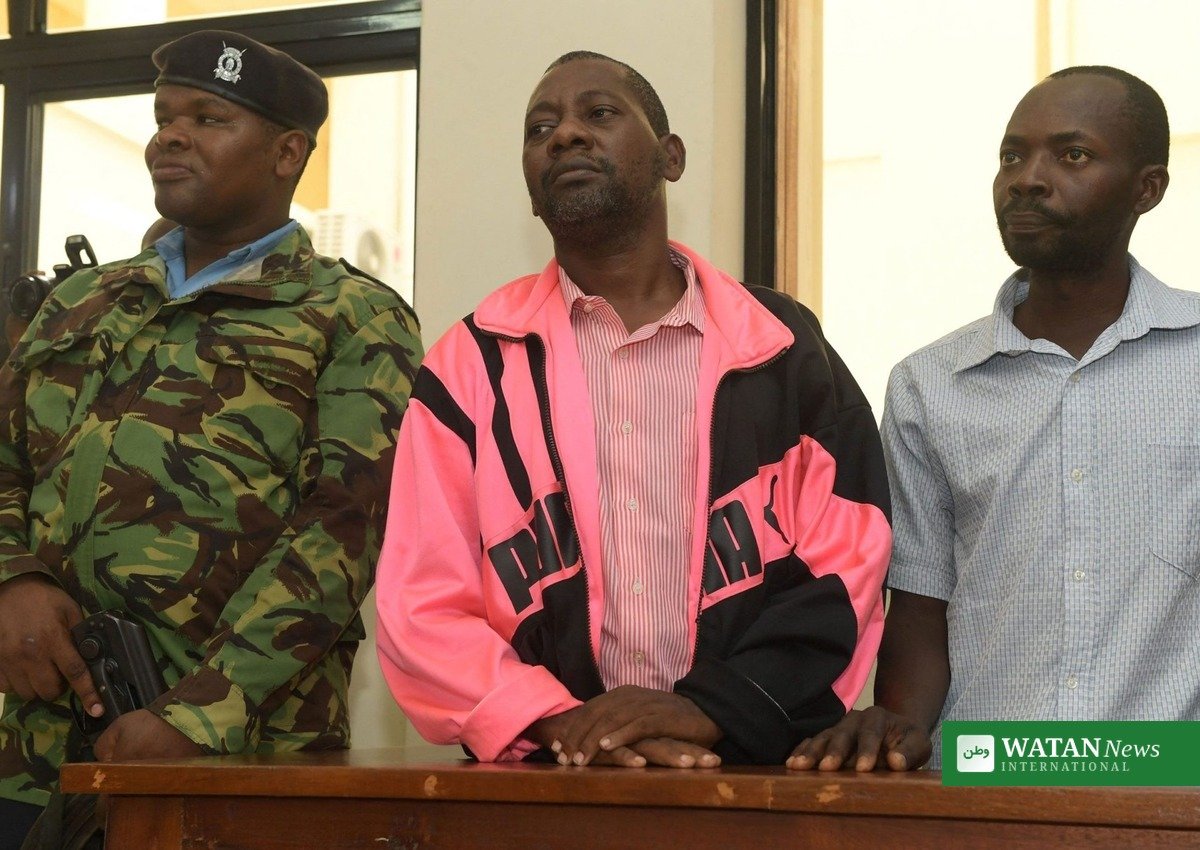
Mackenzie, wearing a grey polo shirt and black trousers, smiled as he entered a tent set up outside the court where the hearing was held. He had denied the murder charges, saying he did not force the victims to starve, but the court rejected his defence.
Prosecutors had asked the court to sentence Mackenzie to death, arguing that the nature of the crimes and their impact on society justified the harshest possible punishment. He was sentenced alongside more than two dozen co-accused who were convicted with him.
A Tragedy That Shocked Kenya
The case shocked Kenya in April 2023, when police began uncovering bodies in Shakahola Forest near the coastal town of Malindi. Mackenzie led an apocalyptic church, the Good News International Church, in a forest near Kenya’s Indian Ocean coast, and had told his followers to starve themselves to death, along with their children, to reach heaven before the end of the world.
Prosecutors said his accomplices threatened and beat victims to ensure they followed his orders. The emaciated bodies were found scattered in shallow graves and dumped in latrines. Some had been buried alive.
Although only the cases of 190 children and one adult victim were covered by the trial, the Kenya National Commission on Human Rights says 448 bodies were ultimately found in the forest. The scale of the killing is comparable to that of a doomsday cult that killed more than 700 people in Uganda in 2000, and the 1978 Jonestown massacre in Guyana, when an American cult leader killed more than 900 people.
Families of the Victims Speak
Stephen Mwiti, 48, lost six of his children to the cult. His wife had taken the children to Shakahola, where they were starved to death, and she is among those convicted with Mackenzie.
“I lost children and I will not be able to get them back no matter what happens to Mackenzie and his accomplices,” Mwiti told Reuters ahead of the sentencing. “I expect him to be sentenced to death or be jailed for life so that he never comes out to cause more deaths.”
Dan Mackenzie, one of Paul Mackenzie’s sons, said his father did not spare his own family. He said he had left the church because he no longer believed in its teachings about going to heaven.
“I lost friends too, and my younger brother. It’s justice to the people who we lost over there in Shakahola.”
Calls for Wider Accountability
Mackenzie had been on the radar of the authorities since 2017, when his premises were searched by police. In 2019, authorities shut down his church in Malindi and he relocated to the nearby Shakahola Forest.
The discoveries prompted calls for tighter oversight of religious groups. President William Ruto appointed a task force in May 2023 to review the legal and regulatory framework, and separate government-backed and Senate proposals were published in 2024, though they have yet to be passed into law.
Ojiro Odhiambo, head of rapid response at the Kenya Human Rights Commission, said the conviction was an important step but accountability should go further, as local administrators, police, intelligence officers and religious leaders bore responsibility for failing to act on repeated warning signs.
“All these people have failed the people,” he said.
In 2023, Ruto said he took responsibility as president for the government having failed to prevent the deaths.
What Happens Next
Mackenzie is also accused of ordering the deaths of 52 people found at a separate location in a village about 30 km away, which would bring the suspected total toll to 500. He has pleaded not guilty in that case.
Read more world news on Watan News.
Author

usmanch0013@gmail.com
Related Posts

LIV Golf to Shut Down After Five Years as $5 Billion Breakaway League Winds Down
- 0
- 799 words
LIV Golf will shut down after five years, its lawyers told a New Jersey bankruptcy court on Thursday, as the Saudi-backed league...
Read out all
ADF Rebels Kill 24 Civilians in Overnight Attacks in Eastern DR Congo
- 0
- 454 words
At least 24 civilians were killed in overnight ADF rebel attacks on villages in Beni territory, eastern DR Congo, local civil society...
Read out all
Lagos Takes $50bn Climate Investment Opportunity to COP31 in Antalya
- 0
- 803 words
Lagos State is taking an estimated US$25–50 billion climate investment opportunity, spanning more than 300 projects, to COP31 in Antalya — with...
Read out all
Oil Prices Set for 12% Weekly Drop Despite Friday Rebound
- 0
- 483 words
Brent and WTI are heading for weekly losses of about 12 percent despite Friday's rebound, as hopes of an end to the...
Read out all
Iran Sends Nuclear Proposal to US via Qatar, Demanding Seven Conditions First
- 0
- 478 words
Iran has sent the United States a nuclear proposal through Qatar, but says talks can only begin after Washington meets its seven...
Read out all
Tundu Lissu Cleared of Treason in Tanzania but Convicted of Incitement
- 0
- 539 words
Tanzania’s High Court has cleared opposition leader Tundu Lissu of treason, sparing him the death penalty, but convicted him of incitement. The...
Read out all