- 0
- 1,166 word
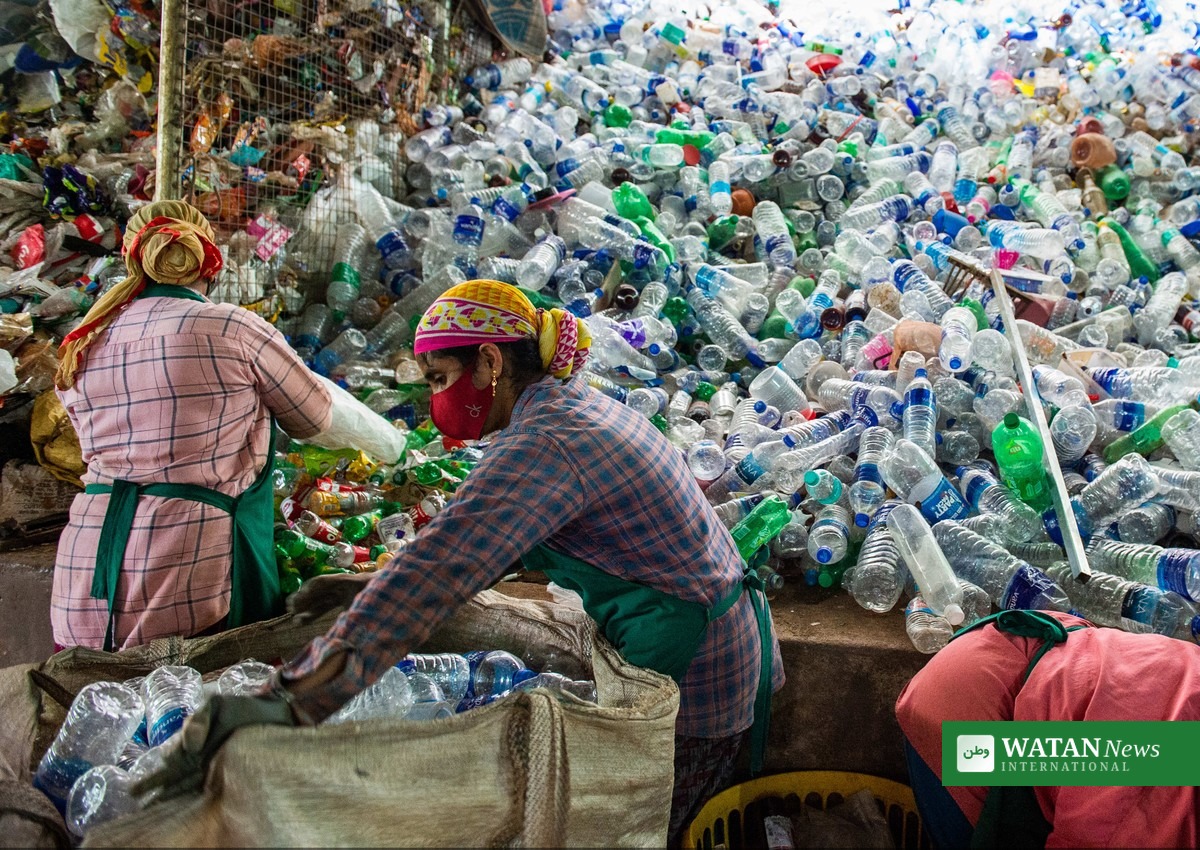
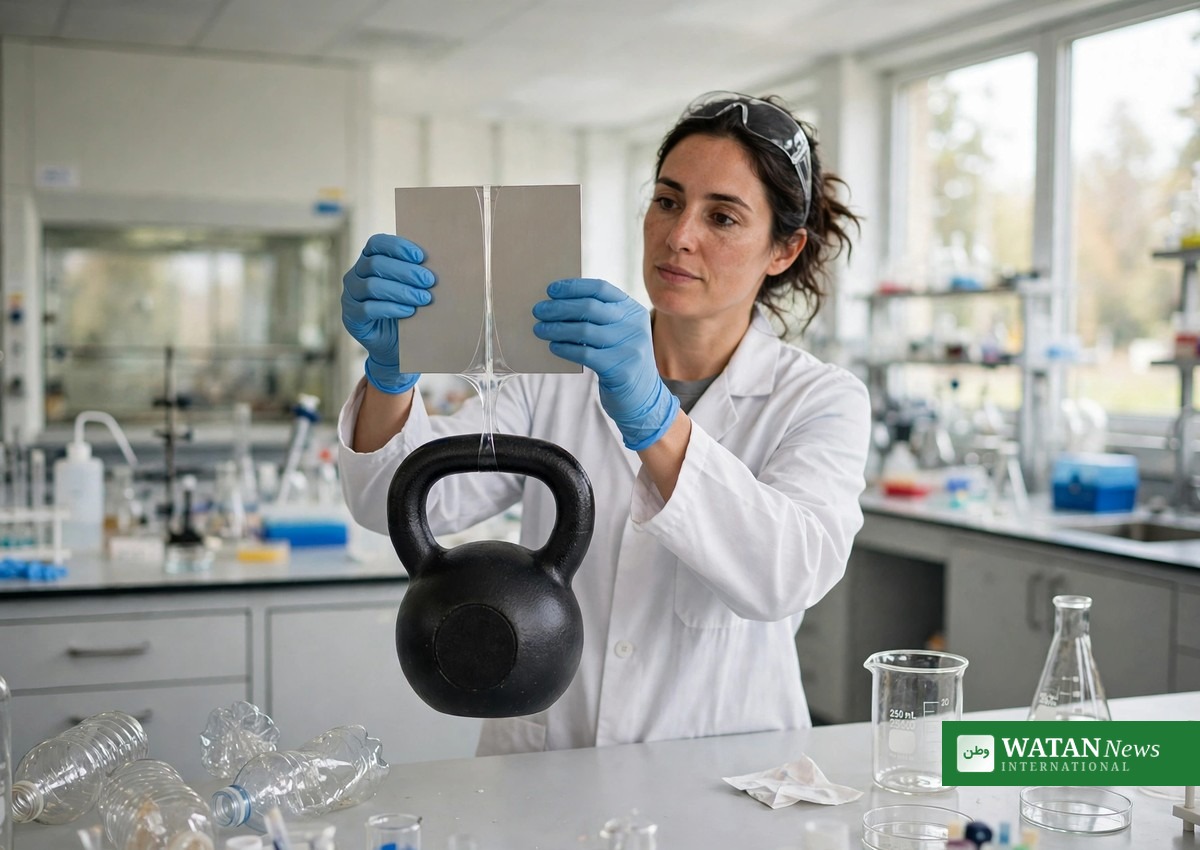
Zurich — Researchers at ETH Zurich have turned discarded plastic bags and bottles into an industrial-strength adhesive, in a breakthrough that could give the world’s most common plastics a second life as high-value materials instead of landfill. Just 13 milligrams of the new adhesive held a 20-kilogram kettlebell between two metal plates — and in another test, a sample supported the weight of an adult of about 80 kilograms.
The work, led by polymer chemist Professor Tae-Lim Choi and published in the Journal of the American Chemical Society, tackles one of recycling’s oldest problems: the plastics we use most — polyethylene and polypropylene, the polyolefins in bags, bottles and packaging — lose quality every time they are melted down and remade. The Zurich team’s answer is not to recycle them into something weaker, but to “upcycle” them into something worth more.
How waste becomes glue
The process is strikingly simple. The plastic waste is dissolved in a chlorinated solvent, and then the monomers needed to build new polymer chains are added. Exposure to light of a suitable wavelength generates highly reactive particles called radicals, which activate certain points in the original plastic structure. From there, new polymer chains grow directly out of the starting material — a technique called grafting.
The whole modification happens in a single reaction step, with no need for costly catalysts. The idea of using chlorinated solvents to create the reactive sites came from a collaboration between Choi and the group led by Athina Anastasaki, Professor of Sustainable Polymers at ETH Zurich. Hongsik Kim, the senior scientist in Choi’s group who was primarily responsible for developing the method, produced the first adhesives from ordinary plastic bags and bottles. Read how WM will supply PureCycle with 25 million pounds of recycled polypropylene a year.
Stronger than shop-bought glue
The mechanical tests were, in the researchers’ words, especially promising. One of the materials reached an average shear strength of 12.7 megapascals on aluminium, clearly outperforming two commercial hot-melt adhesives used as benchmarks in the study. The adhesive bonds metal, glass and wood, and its strength meets the requirements for an industrial adhesive used in load-bearing, high-stress joints in vehicle and equipment manufacturing.
But glue is only the first product. Because grafting can add new polymer chains with almost any chemical function, the same approach could introduce polar groups, acids, bases or highly specific reactive groups into polyolefins — turning a cheap commodity plastic into a material with entirely new properties. As a binding agent, the researchers say, such materials could also bond low-grade recycled plastic into a much more durable, higher-quality material.
Why upcycling matters
Polyolefins are the world’s most widely used plastics, and most of them are used once and thrown away. According to UNEP, the world produces around 400 million tonnes of plastic waste a year, and the OECD estimates only about 9 per cent of plastic waste is recycled. Mechanical recycling — sorting, shredding and melting — usually produces darker, weaker material fit only for lower-value products such as paving slabs or plant pots.
Upcycling follows a different logic: use waste to obtain something of greater value than the starting product. In the Zurich case the leap is plain to see — a plastic used for bags and containers becomes an adhesive able to join metal, glass and wood under heavy stress. If recovering hard-to-value plastics becomes more attractive, more of them may be collected instead of discarded. The European Union has just banned plastic waste exports to non-OECD countries, raising the pressure to find value in waste at home. Read about the EU ban on plastic waste exports to non-OECD countries.
From the lab to the factory
The research is published as Kim H, Wang HS, Yun N, Anastasaki A and Choi T-L, “Direct Polymer-on-Polymer Grafting of Polyolefins under Visible Light”, in the Journal of the American Chemical Society (2026). ETH Zurich has patented the process and nominated it for the university’s Spark Award, which honours its most promising patent application of the year. The researchers say they have already begun working with industry partners since the patent was published.
It is still laboratory work, not a commercial product: scaling the process up, handling the chlorinated solvents safely at industrial volumes, and proving the economics remain open questions. But the demonstration is a concrete one — 13 milligrams of yesterday’s plastic bag, holding 20 kilograms in the air.
Key facts
- What happened: researchers at ETH Zurich developed a one-step process that upcycles polyethylene and polypropylene waste into high-performance adhesives.
- How strong is it: 13 milligrams of the adhesive held a 20-kilogram kettlebell, and a sample supported an adult of about 80 kilograms; average shear strength reached 12.7 megapascals on aluminium, beating two commercial hot-melt adhesives.
- How it works: plastic waste is dissolved in a chlorinated solvent, light generates radicals that activate the polymer chains, and new chains are grafted on in a single step, with no costly catalysts.
- Who did it: the team was led by polymer chemist Professor Tae-Lim Choi, with senior scientist Hongsik Kim as the main developer; the paper appeared in the Journal of the American Chemical Society in 2026.
- Why it matters: polyolefins are the world’s most widely used plastics, yet only about 9 per cent of plastic waste is recycled; upcycling could make collecting low-value plastic waste worthwhile, and the process is patented with industry partners already in talks.
Frequently asked questions
What is upcycling, and how is it different from recycling?
Recycling usually breaks plastic down and remakes it into something of lower value — darker, weaker material for products such as paving slabs. Upcycling turns waste into something of greater value than the starting product. Here, plastic bags and bottles become an industrial adhesive stronger than some commercial glues.
How strong is the adhesive made from plastic waste?
In laboratory tests, 13 milligrams of the adhesive held a 20-kilogram kettlebell between two metal plates, and a sample supported the weight of an adult of about 80 kilograms. It reached an average shear strength of 12.7 megapascals on aluminium, outperforming two commercial hot-melt adhesives used as benchmarks.
Which plastics can the process use?
The process works on polyolefins — polyethylene and polypropylene, the plastics in bags, bottles and much packaging — and ETH Zurich’s technology listing also names LDPE, LLDPE, HDPE, isotactic polypropylene, polystyrene and acrylic glass as materials the method can treat.
Is the glue on sale yet?
No. The work is at laboratory stage. ETH Zurich has patented the process and nominated it for the university’s Spark Award, and the researchers say they have begun working with industry partners, but scaling up and proving the economics remain to be done.
Why does this matter for the climate?
Plastic is made mostly from fossil fuels, and most plastic waste is never recycled — UNEP puts annual plastic waste at around 400 million tonnes, and the OECD estimates only about 9 per cent is recycled. Giving low-value plastic waste a high-value use could keep more of it in circulation, cut demand for new plastic, and reduce the waste that ends up burned, buried or leaked into nature.
Author

usmanch0013@gmail.com
Related Posts

Indiens GREEN Olympiad vinder MBRKA 2026 for miljøundervisning
- 0
- 1,021 word
Indiens GREEN Olympiad har vundet organisationskategorien ved den niende Mohammed bin Rashid Al Maktoum Knowledge Award (MBRKA), offentliggjort den 25. november 2026...
Read out all
بھارت کے گرین اولمپیاڈ نے ماحولیاتی تعلیم کے فروغ پر ایم بی آر کے اے 2026 جیت لیا
بھارت کے گرین اولمپیاڈ نے محمد بن راشد المکتوم نالج ایوارڈ (ایم بی آر کے اے) کے نویں ایڈیشن میں تنظیموں کے...
Read out all
India’s GREEN Olympiad Wins MBRKA 2026 for Advancing Environmental Education
- 0
- 1,009 word
India's GREEN Olympiad has won the Organizations category at the ninth Mohammed bin Rashid Al Maktoum Knowledge Award (MBRKA), announced on 25...
Read out all
Macy’s Thanksgiving Day Parade Postponed to Saturday in First-Ever Weather Delay
- 0
- 514 words
The 100th Macy's Thanksgiving Day Parade has been postponed to Saturday, November 28, after a powerful nor'easter forced the first weather delay...
Read out all
SJ EuroNight vender tilbage: Nattoget Stockholm–Berlin kører igen fra 13. december
- 0
- 988 words
SJ og RDC Deutschland genstarter i fællesskab nattoget Stockholm–Berlin den 13. december 2026 og bringer SJ EuroNight-navnet tilbage på ruten gennem Danmark...
Read out all
ایس جے یورونائٹ کی واپسی: اسٹاک ہوم–برلن نائٹ ٹرین 13 دسمبر سے دوبارہ چلے گی
ایس جے اور آر ڈی سی ڈوئچ لینڈ 13 دسمبر 2026 سے مشترکہ طور پر اسٹاک ہوم–برلن نائٹ ٹرین دوبارہ چلائیں گی،...
Read out all