
- 0
- 1,256 word
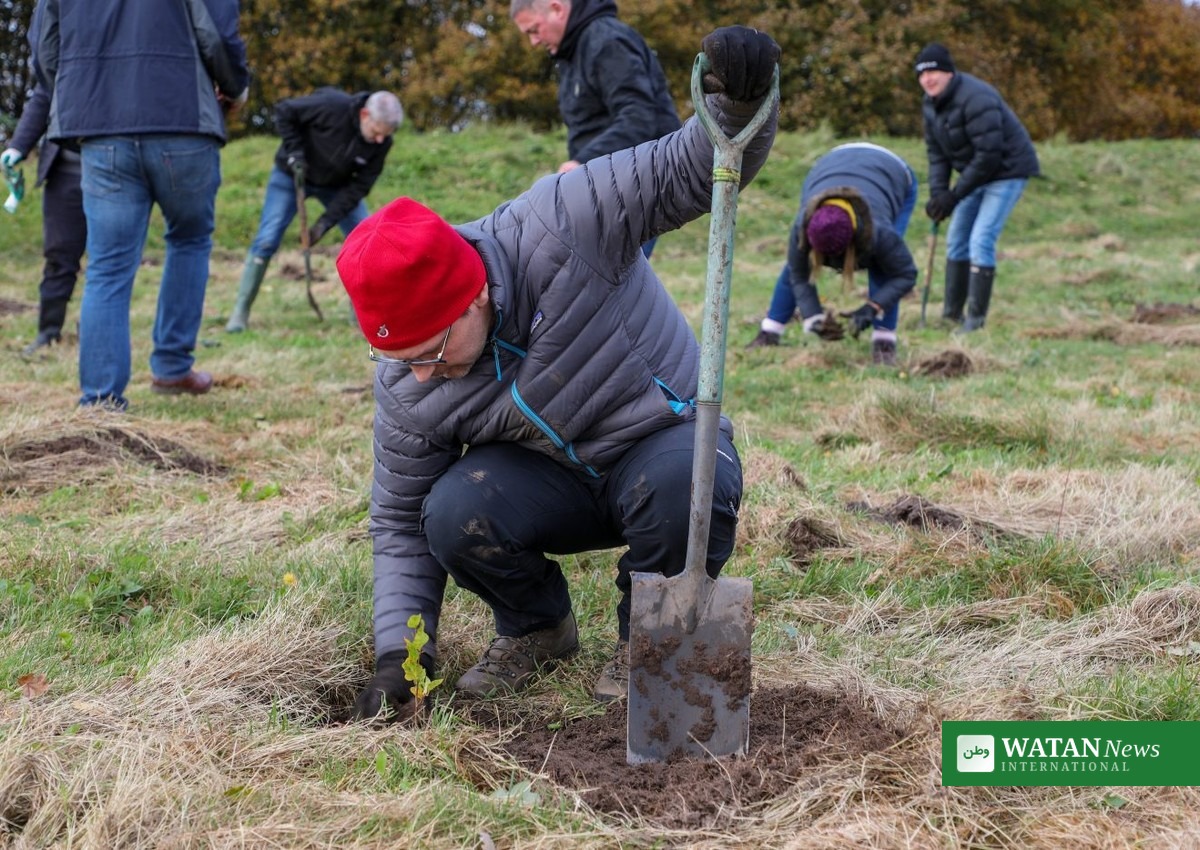
Volunteers across Britain are picking up their spades this week as National Tree Week 2026 opens the winter tree planting season — and in Northumberland, five young trees grown from the seeds of the felled Sycamore Gap tree are taking root in a brand-new woodland.
The week, which runs from 21 to 29 November, is led by The Tree Council under the theme “Trees Near You”. It marks the traditional start of the winter planting season, when bare-root trees establish best, and brings together charities, schools, councils and volunteers for hundreds of planting events, walks and talks across the country.
A new woodland at Wallington
At the heart of this year’s planting is a major new woodland at Elf Hills, on the National Trust’s Wallington estate near Morpeth in Northumberland. The Trust has invited the public to help plant 169,000 trees there, with community planting sessions on 21, 24 and 25 November. No experience or specialist equipment is needed, and shuttle buses carry volunteers from the visitor entrance to the planting site.
The 109-hectare (269-acre) woodland will eventually combine areas managed mainly for nature, productive woodland and open woodland pasture. The project began after the previous farming tenant retired, and the Trust says it also has future plans to create meadows and wetland at the site.
Among the trees going into the ground are five saplings grown from seeds of the Sycamore Gap tree, planted as part of the Trees of Hope project. The new woodland is part of the Trust’s aim to plant one million trees across the Wallington estate by 2030 — more than 500,000 have already been planted there since 2021.
“Volunteers will help create a woodland that people can enjoy for years to come,” said Elaine More, the National Trust’s project manager for Wilder Wallington. The charity says the planting will support red squirrels and pine martens and help nature recovery in the area. The project is funded by a £2.5 million English Woodland Creation Offer, administered by the Forestry Commission and funded through the Nature for Climate Fund.
The tree that became a symbol
The Sycamore Gap tree stood for around 150 years in a dip beside Hadrian’s Wall in Northumberland, and was one of the most photographed trees in Britain. It was illegally felled in the early hours of 28 September 2023. Two men were later convicted of causing criminal damage by felling it.
After the felling, seeds and cuttings were gathered from the tree for propagation, and the stump has thrown up new shoots. Saplings grown from its seeds are now being shared through the Trees of Hope project, so that the tree’s descendants grow in woodlands and communities across the country — including the new wood at Elf Hills.
National Tree Week 2026: Trees Near You
National Tree Week was first marked by The Tree Council and its partners in 1975. This year’s theme, Trees Near You, turns the spotlight on the everyday trees that shape daily life — street trees that give shade during heatwaves and improve air quality, hedgerows that support wildlife and reduce flooding, and the trees outside homes, schools and workplaces.
“The trees closest to us are often the ones we notice least, yet they do so much for our communities,” said Sara Lom, chief executive of The Tree Council. “They help us cope with hotter summers, support wildlife, improve our health and wellbeing, and make our neighbourhoods better places to live.”
Hundreds of activities are taking place during the week, from planting events and guided walks to talks, family activities and craft sessions. More than 300 libraries across England, Scotland and Wales are hosting tree-themed displays, and a series of free online events includes a discussion on the power of nature connection on 23 November, a live tree planting masterclass on 24 November, and an expert panel on extreme weather and tree survival on 25 November.
Local councils are joining in too. Somerset Council is marking the week by planting a further 2,500 native trees at Ham Hill Country Park, building on 3,000 trees planted there last year — 5,500 trees in two years. Residents are invited to a community tree planting day there on Saturday 28 November.
Why planting now matters
The winter months, from November to March, are the planting season because trees are dormant and the soil is moist, giving young roots time to establish before spring growth. Planting now is also a direct response to a warming climate: trees cool streets during heatwaves, slow flood water, store carbon and give wildlife somewhere to live.
The Woodland Trust also gives away hundreds of thousands of trees to schools, nurseries, parish councils and community groups, so that even a small patch of ground can join the national effort. For readers who would like to take part, The Tree Council’s National Tree Week website lists events and offers a downloadable Tree Party pack for celebrating trees at home.
FAKTA
- National Tree Week 2026 runs from 21 to 29 November, led by The Tree Council, under the theme “Trees Near You”.
- 169,000 trees are being planted in a new 109-hectare woodland at Elf Hills, on the National Trust’s Wallington estate in Northumberland.
- Five saplings grown from seeds of the felled Sycamore Gap tree are being planted as part of the Trees of Hope project.
- One million trees: the National Trust aims to plant one million trees across the Wallington estate by 2030; more than 500,000 have been planted since 2021.
- £2.5 million from the English Woodland Creation Offer, administered by the Forestry Commission, funds the Elf Hills project.
- 2,500 native trees are being planted by Somerset Council at Ham Hill Country Park during the week, with a community planting day on 28 November.
Tree planting on this scale does not restore a forest overnight — a new woodland takes decades to mature. But each National Tree Week adds another layer of green cover, and this year’s planting carries a special meaning: from the seeds of a tree that was lost, a whole new woodland is growing. Readers can follow related tree-planting stories in our coverage of mangrove forests growing again after decades of loss and the ASEAN plan to plant one billion trees.
Frequently asked questions
What is National Tree Week?
National Tree Week is the UK’s largest annual tree celebration, led by The Tree Council. First marked in 1975, it runs every November and marks the traditional start of the winter tree planting season, with planting events, walks, talks and community activities across the country.
When is the best time of year to plant trees?
The winter planting season runs from November to March. Trees are dormant then and the soil is moist, which helps young roots establish before spring growth begins.
What happened to the Sycamore Gap tree?
The Sycamore Gap tree, around 150 years old and growing beside Hadrian’s Wall in Northumberland, was illegally felled on 28 September 2023. Two men were later convicted of causing criminal damage. Seeds and cuttings were collected, and saplings grown from them are now being planted through the Trees of Hope project.
What is the Trees of Hope project?
Trees of Hope is the project sharing saplings grown from the seeds of the felled Sycamore Gap tree, so its descendants can grow in woodlands and communities. Five of the saplings are being planted in the new woodland at Elf Hills, Wallington.
How can I take part in National Tree Week?
The Tree Council’s National Tree Week website lists planting events, walks and talks near you, and offers a downloadable Tree Party pack for celebrating trees at home. Local councils and the Woodland Trust also run planting days and free-tree schemes for schools and community groups.
Author

usmanch0013@gmail.com
Related Posts

Houthis Attack Aramco’s Jazan Refinery, Saudi Coalition Says
- 0
- 628 words
Yemen's Houthis attacked Saudi Aramco's Jazan refinery on Thursday, the Saudi-led coalition said, a day after the group claimed a strike on...
Read out all
De fleste regeringer mangler en strategi for klimainformation, viser første globale kortlægning
- 0
- 1,455 word
Forum on Information and Democracy’s første globale kortlægning af 23 lande og EU finder, at de fleste regeringer ikke har nogen selvstændig...
Read out all
پہلی عالمی جانچ میں انکشاف: اکثر حکومتوں کے پاس موسمیاتی معلومات کی کوئی قومی حکمت عملی نہیں
ایف آئی ڈی کی پہلی عالمی جانچ میں 23 ممالک اور یورپی یونین کا جائزہ لیا گیا: اکثر حکومتوں کے پاس موسمیاتی...
Read out all
Most Governments Lack a Climate Information Strategy, First Global Mapping Finds
- 0
- 1,427 word
The Forum on Information and Democracy’s first global mapping of 23 countries and the EU finds most governments have no standalone strategy...
Read out all
Elektrisk hjem kan spare en typisk britisk husstand 1.200 pund om året
- 0
- 1,080 word
Ny analyse fra Storbritanniens Climate Change Committee viser, at en typisk husstand kan spare 1.200 pund om året ved at blive elektrisk...
Read out all
بجلی کی طرف منتقلی سے عام برطانوی گھرانا سالانہ 1,200 پاؤنڈ بچا سکتا ہے
برطانیہ کی موسمیاتی تبدیلی کمیٹی کے نئے تجزیے کے مطابق عام گھرانا بجلی کی طرف منتقلی سے سالانہ 1,200 پاؤنڈ بچا سکتا...
Read out all