- 0
- 983 words
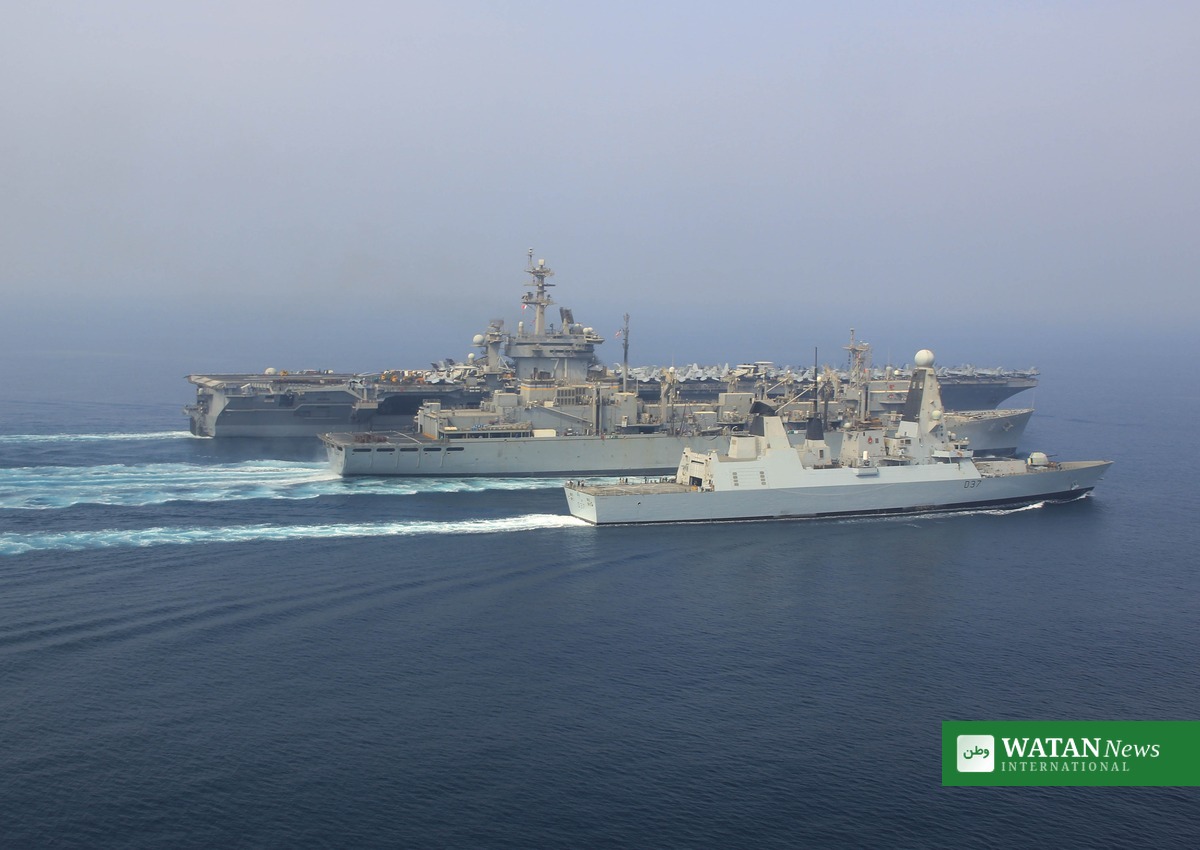
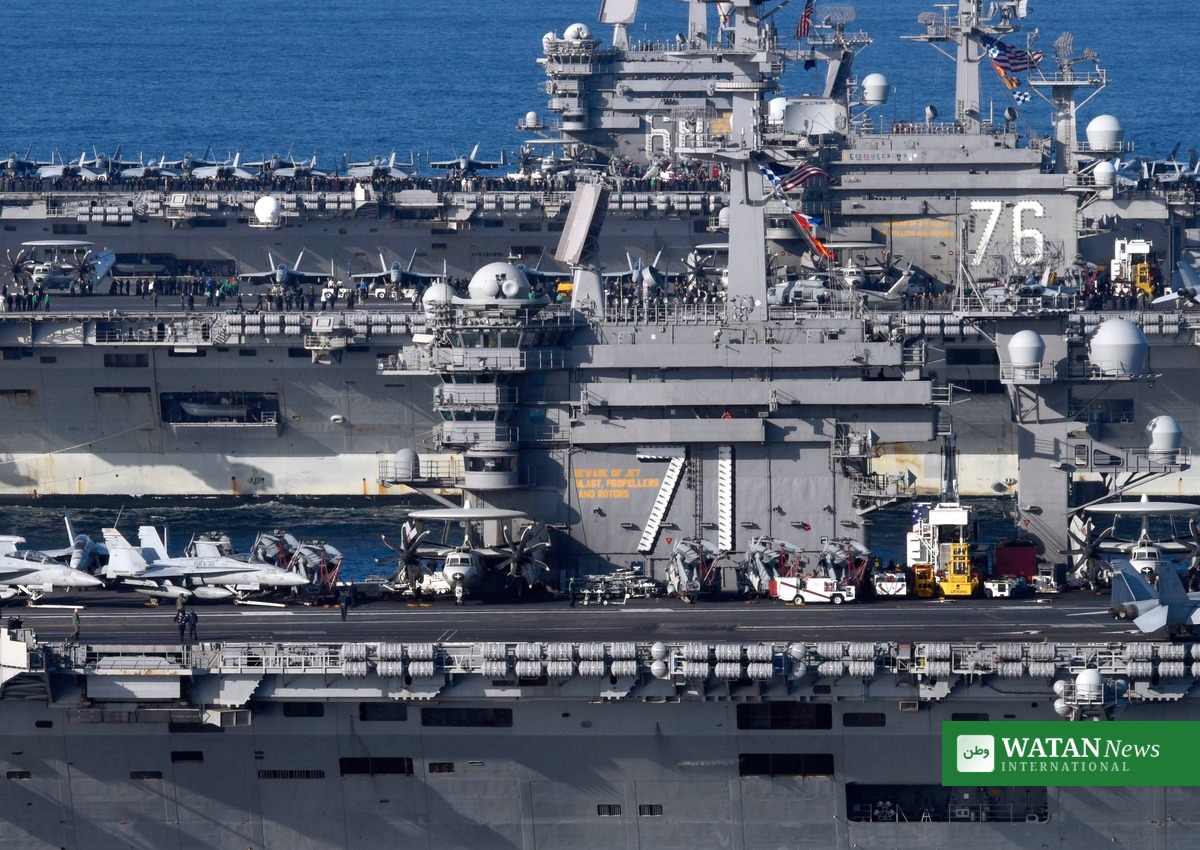
The USS Theodore Roosevelt carrier strike group has entered the Middle East, bringing the number of American aircraft carrier strike groups in the region to three, a United States official said on Sunday, as Iran warned it would not wait for Washington to strike first.
FAKTA
- The USS Theodore Roosevelt entered the United States Central Command area of operations on Sunday, 15 November 2026.
- It joins the USS George H.W. Bush and the USS George Washington, both operating in the Arabian Sea.
- The strike group includes Carrier Air Wing 11, the cruiser USS Chosin and the destroyers USS Paul Hamilton and USS Decatur, with more than 5,000 personnel.
- The ships are part of a force of more than 20 United States Navy vessels enforcing a blockade of Iranian ports in place since 13 April 2026.
- Iran’s deputy foreign minister, Kazem Gharibabadi, warned that Tehran “will not wait for the US to attack first”.
- It is unclear whether the Roosevelt will relieve the George Washington or stay alongside it.
Theodore Roosevelt Carrier Brings US Force to Three
A United States official confirmed to ABC News and Al Jazeera that the Theodore Roosevelt carrier strike group crossed into Central Command’s area of operations earlier on Sunday. The New York Times had reported that the carrier would arrive within a day. Central Command has not commented on the move, and the Navy has not announced the arrival, citing operational security.
The Roosevelt left San Diego on 27 September for a deployment expected to last more than seven months. The group made a port call in Singapore in early November before sailing west through the Strait of Malacca towards the Indian Ocean.
The Theodore Roosevelt, commissioned in October 1986, is the oldest of the three carriers now in the region. The George Washington entered service in July 1992 and the George H.W. Bush in January 2009. The last time three carrier groups operated together in the region was in April, the first such concentration since the 2003 Iraq War.
Whether all three will remain is not settled. One report said the Roosevelt was scheduled to replace the George Washington group, which has been in the region since August. United States officials have said all three could remain if the situation demands it, while an assessment by Israel’s Institute for National Security Studies concluded the deployment is likely a rotation rather than a permanent three-carrier posture.
Iran Warns It Will Not Wait for an Attack
Tehran’s tone hardened as the carrier arrived. Kazem Gharibabadi, the deputy foreign minister for legal and international affairs, said in an interview with Iranian state television on Sunday that Iran “will not wait for the US to attack first” and suggested Washington might be using diplomacy to buy time to prepare another attack. He said Tehran was ready for talks, a blockade or war.
Iran’s Revolutionary Guard said on Sunday that it had attacked a United States radar system in Bahrain for the second time in three days, saying six drones of its Aerospace Force had targeted an air defence radar at the Riffa air base, south of Manama. Bahrain said its air defences had thwarted several Iranian aerial attacks before they reached their targets and condemned what it called renewed Iranian attacks. The United States ambassador to Bahrain, Stephanie Hallett, said the Revolutionary Guard’s claims were false, that all the drones were intercepted and that there were no injuries or damage. Central Command had not commented on Sunday’s claim, according to Al Jazeera.
It followed a similar exchange on Friday, when the Revolutionary Guard said it had destroyed an American early-warning radar in Bahrain. Central Command said then that the Guard had launched two one-way attack drones towards Bahrain and that United States forces shot both down without injuries or damage. Bahrain hosts the headquarters of the United States Navy’s Fifth Fleet.
Blockade, Missiles and Diplomacy
The carrier buildup strengthens the force behind the United States blockade of Iranian ports, which more than 20 United States Navy vessels are enforcing. The blockade was imposed on 13 April, after nuclear negotiations collapsed, six weeks after United States and Israeli strikes opened the war on 28 February. Central Command reported having redirected 100 commercial vessels by 23 May and 115 by late September.
The scale of what Iran could still fire is the subject of a new American assessment. The Wall Street Journal reported at the weekend that United States intelligence agencies estimate Iran has between 1,500 and 2,500 ballistic missiles, along with large numbers of drones and short-range missiles. Officials called it a low-confidence assessment because of the difficulty of counting missiles ready to launch or held in storage. Bloomberg reported last week that Iran probably has at least 1,700 ballistic missiles and is producing up to 50 a month.
Reuters reported, citing three people familiar with the matter, that President Donald Trump has indicated in national security meetings that he might hold off on further strikes on Iran unless provoked. Mr Trump is due to leave Washington on Monday for Asia, where United States officials say he intends to raise the Iran war with the Chinese and Russian presidents in Shenzhen on Thursday.
At sea, the Revolutionary Guard Navy said two oil tankers struck mines and caught fire south of the Strait of Hormuz while trying to pass along an unauthorised route. Other Iranian statements put the number at three. The vessels were not named and the claims could not be verified. The Guard also said it had shot down an American MQ-1 drone near the strait, which the United States has not confirmed. The United Nations said on Saturday that 25 seafarers have been killed in and around the strait since the war began.
Read more on Watan News: Third US Carrier Reaches Middle East as USS Theodore Roosevelt Joins Iran Blockade
Author

usmanch0013@gmail.com
Related Posts

England End Spain’s 43-Match Unbeaten Run With Famous 3-2 Win in Madrid
- 0
- 595 words
England beat Spain 3-2 in Madrid to end the world champions' 43-match unbeaten run and top Nations League Group A3, holding on...
Read out all
France and Britain to Host Paris Conference on Russia’s Shadow Fleet
- 0
- 426 words
France and Britain will host an international conference in Paris on 4 December to coordinate action against Russia's shadow fleet, announced by...
Read out all
EU Accuses Russia of Stalling Ukraine Peace Talks to Target Power Plants as Winter Nears
- 0
- 875 words
EU foreign ministers meeting in Brussels accused Russia of dragging out the Ukraine peace talks while bombing power plants, and demanded a...
Read out all
COP31 Final Week Opens as Ministers Take Over the Fight for a Deal in Antalya
- 0
- 2,037 words
COP31 enters its final week in Antalya as ministers from nearly 200 countries take over negotiations, with draft texts on just transition...
Read out all
Rescue Ships Rush to Sinking Cargo Vessel in Black Sea as 12 Crew Unaccounted For
- 0
- 435 words
A Somali-flagged cargo ship carrying wheat sent a distress signal as it began sinking in the Black Sea off Bulgaria. The fate...
Read out all
Houngbo Re-elected to Lead UN Labour Agency for Second Term
- 0
- 458 words
Gilbert Houngbo of Togo has won a second five-year term as Director-General of the International Labour Organization, taking 51 of 56 votes...
Read out all