
- 0
- 1,720 word
Kenya’s long fight for justice over alleged abuses by British soldiers training in the country has reached a decisive phase, as an extradition case over the 2012 killing of Agnes Wanjiru heads to a London court and Kenyan MPs stall the UK-Kenya defence deal. The British soldiers Kenya immunity question — who gets to try troops accused of serious crimes on Kenyan soil, Kenyan courts or British military justice — now sits at the heart of the two countries’ defence relationship.
At the centre of the storm is the case of Agnes Wanjiru, a 21-year-old mother whose body was found in a septic tank at a Nanyuki hotel in 2012 after she was last seen with British soldiers. A former British soldier, Robert Purkiss, now faces extradition to Kenya to stand trial over her death, with a hearing scheduled for November 16 in London.
Meanwhile, Kenya’s parliament is refusing to let the renewed Defence Cooperation Agreement take effect until Britain accepts changes that would clearly place murder and other serious crimes under Kenyan jurisdiction — a direct challenge to the immunity-style protections critics say have shielded soldiers for decades.
Read this story on watannews.dk.
FAKTA
- What: Justice fight over alleged abuses by British soldiers in Kenya; extradition of former soldier Robert Purkiss; Kenyan MPs stalling the Defence Cooperation Agreement over immunity
- Who: Agnes Wanjiru (killed 2012, Nanyuki); her daughter Stacy Wanjiru, 14; niece Esther Njoki; Robert Purkiss, 38 (denies the charge); UK Defence Secretary John Healey; MPs led by Nelson Koech
- When: Wanjiru disappeared on 31 March 2012; her body was found about three months later; the extradition hearing is set for November 16 in London; Stacy’s London trip is planned for November 16–22
- Where: Nanyuki and the British Army Training Unit Kenya (BATUK), Laikipia; a London court; Kenya’s National Assembly
- Key dispute: Article 6(5) of the Defence Cooperation Agreement — MPs want murder explicitly placed under Kenyan courts; the UK wants the deal in force first, with amendments negotiated afterwards
- Latest: An M-Changa fundraiser targeting Sh1 million for Stacy’s London trip; Healey has met the family; a May 2025 rape allegation against a soldier is under UK military investigation
The Agnes Wanjiru case: a 13-year wait for a suspect
The night at Lions Court Hotel
Wanjiru, 21 and the mother of five-month-old Stacy, disappeared on 31 March 2012 after reportedly spending the evening with British soldiers at the Lions Court Hotel in Nanyuki, near the BATUK base. Her body was discovered about three months later in the hotel’s septic tank. In 2021, former Directorate of Criminal Investigations chief George Kinoti told MPs that a hotel gardener had found part of her body submerged in the tank. A Kenyan inquest later ruled her death a murder.
Extradition moves forward
Kenyan authorities have now formally commenced extradition proceedings. The Office of the Director of Public Prosecutions informed the court that the extradition request had been transmitted to the Attorney General, and two physical copies plus a soft copy of the extradition documents were dispatched through diplomatic channels on October 9, 2025, and stamped as received by UK authorities on October 13, 2025. Justice Alexander Muteti rejected a proposal to mention the matter in January 2026, ordering monthly mentions instead to keep the process under scrutiny.
Purkiss, 38, was arrested in the UK and denies the charge; his lawyers say he will contest the extradition. The hearing is set for November 16 at a London court.
A daughter’s journey to London
Stacy Wanjiru, now 14, plans to travel to London from November 16 to 22 with her cousin Esther Njoki to attend the hearing and press for the extradition. The family launched an M-Changa fundraiser targeting Sh1 million for passports, visas, flights and accommodation; any surplus will go into a trust fund for Stacy’s education. During the visit they expect to meet MPs, members of the House of Lords, journalists and campaigners.
UK Defence Secretary John Healey has met Esther Njoki in London, reaffirming Britain’s commitment to justice; in April 2025 he became the first UK minister to meet the family in Kenya.

The scales of justice: Kenya wants serious crimes allegedly committed by British soldiers to be tried in Kenyan courts, not under British military jurisdiction.
Parliament stalls the defence deal over immunity
The justice fight has spilled into Kenya’s National Assembly, where the Departmental Committee on Defence, Intelligence and Foreign Relations — chaired by Belgut MP Nelson Koech — is investigating BATUK over allegations including corruption, abuse of power, torture, unlawful detention, killings and human-rights violations. The committee’s report was tabled on November 25, 2025 and adopted on December 4, 2025.
MPs have refused to let the renewed Defence Cooperation Agreement take effect, saying key conditions remain unresolved. They want the wording of Article 6(5) changed to clearly place murder under the jurisdiction of Kenyan courts, and Article 23 strengthened on BATUK’s corporate social responsibility and protections for affected communities. Britain’s position is that the DCA should first come into force, with amendments discussed afterwards — an approach Parliament has rejected.
The dispute has turned tense: Koech accused BATUK officials of snubbing a summons to appear before the inquiry, calling them “hostile witnesses”; the British High Commission responded that no formal invitation was ever received and that discussions on contributing to the inquiry are ongoing. Defence Principal Secretary Patrick Mariru told MPs the ministry was not blocking Parliament’s oversight.
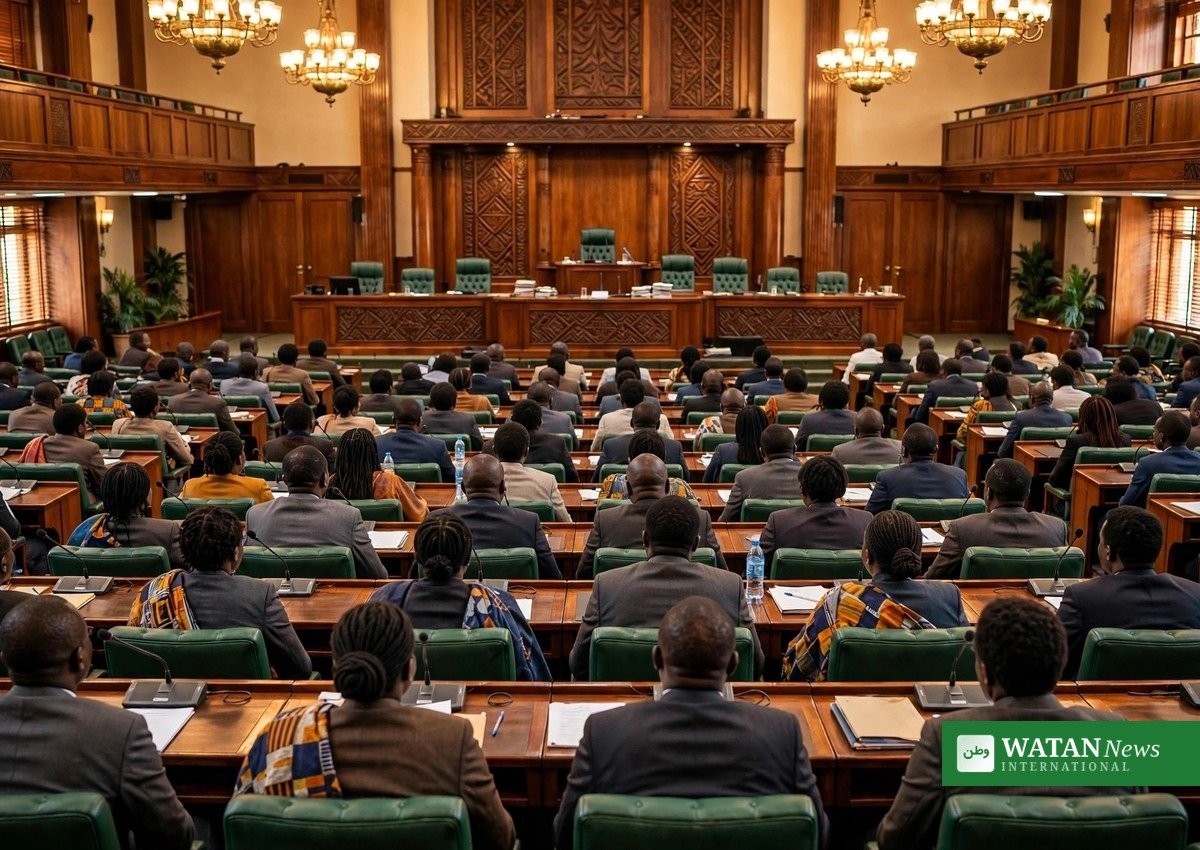
Kenya’s National Assembly: MPs are refusing to let the renewed UK defence deal take effect until the immunity questions are resolved.
The British soldiers Kenya immunity fight: why Article 6 is the battleground
Under the Defence Cooperation Agreement, visiting British forces are subject to Kenyan law, but the UK holds primary jurisdiction over offences committed in the line of duty. Critics say this framework — the functional equivalent of a status-of-forces immunity deal — has kept cases out of Kenyan courts for decades.
The May 2025 case illustrates the divide: a British soldier was arrested in Kenya over a rape allegation near the BATUK camp and then repatriated to the UK. The Ministry of Defence confirmed the victim was a British adult and said the UK’s Defence Serious Crime Unit is investigating under the DCA — meaning Kenyan police have no role. For Kenyan campaigners, such cases prove the system denies victims justice at home.
Supporters of the current setup argue it guarantees due process through British military courts; MPs and survivors counter that without Kenyan jurisdiction, accountability depends entirely on London’s willingness to act.
A decades-long pattern of allegations
Sexual violence claims
Allegations against British troops in Kenya stretch back decades. Amnesty International’s 2003 report “Decades of Impunity” documented hundreds of rape allegations by Samburu and Maasai women near the training grounds. Kenya’s Truth, Justice and Reconciliation Commission recorded a 1997 incident in Archer’s Post in which 30 women were gang-raped at knifepoint. A parliamentary report cites “compelling evidence” of widespread sexual violence, with survivors saying cases were dropped or mishandled by local authorities.
Children fathered by soldiers and later abandoned have become a visible legacy of the deployments. Marian Pannalossy, 17, of Archer’s Post says her mother Lydia Juma alleged rape by a British soldier; Juma filed complaints with the UK military before her death in 2013, with no resolution reached.
Killings, injuries and environmental harm
Beyond the Wanjiru case, MPs cite the 2012 shooting of herder Tilam Leresh by a BATUK sergeant — with no arrest or prosecution in either country, and British prosecutors finding insufficient evidence. A child, Lisoka Lesasuyan, lost both arms and an eye to unexploded ordnance; a court awarded him Sh10 million in compensation, but BATUK reportedly offered a settlement claiming only “50 per cent responsibility”. The 2021 Lolldaiga Hills fire destroyed more than 12,000 acres, with reports of toxic fumes, livestock deaths and miscarriages linked to military waste.
What happens next
Three tracks now run in parallel: the London extradition hearing on November 16, the parliamentary inquiry’s final report, and the stalled DCA. MPs say the deal stays in abeyance until Britain commits in writing to the jurisdiction changes; the UK says it will discuss amendments once the agreement is in force. Neither side is blinking.
For the Wanjiru family, the immediate goal is narrower: get the suspect before a Kenyan court. The outcome will signal whether the immunity era is ending — or being entrenched.
Conclusion
The fight over British military immunity in Kenya is no longer a historical grievance; it is live politics, live diplomacy and a live court case. From a septic tank in Nanyuki to a London courtroom, the Agnes Wanjiru case has forced both countries to confront a question they avoided for decades: when a foreign soldier is accused of a grave crime, who gets to judge him?
Kenya’s answer — its own courts — now stands between the two countries’ defence pact and its renewal. Whatever London decides on November 16, the pressure for accountability is unlikely to fade. More of Watan News’ world news coverage follows stories like this one.
Frequently Asked Questions
Who was Agnes Wanjiru?
A 21-year-old Kenyan mother who disappeared on 31 March 2012 after spending time with British soldiers at the Lions Court Hotel in Nanyuki; her body was found in the hotel’s septic tank about three months later. A Kenyan inquest ruled her death a murder.
Who is accused of killing her?
Former British soldier Robert Purkiss, 38. He was arrested in the UK after Kenya issued a warrant, denies the charge, and will contest his extradition to Kenya. His extradition hearing is scheduled for November 16 at a London court.
What is the immunity dispute about?
Under the UK-Kenya Defence Cooperation Agreement, Britain holds primary jurisdiction over offences by its troops committed in the line of duty. Kenyan MPs want Article 6(5) rewritten so serious crimes like murder are clearly tried in Kenyan courts.
Why is the defence deal stalled?
Kenya’s parliament has refused to let the renewed DCA take effect until the UK gives written commitments on jurisdiction for serious crimes and stronger community protections. The UK wants the deal in force first, with amendments negotiated afterwards.
What is BATUK?
The British Army Training Unit Kenya, based in Nanyuki since 1964, where up to six British Army battalions train each year under the defence agreement.
Who is travelling to London in November?
Agnes Wanjiru’s 14-year-old daughter Stacy and her cousin Esther Njoki, who plan to attend the November 16 extradition hearing. The family is raising Sh1 million through M-Changa for the trip; any surplus will fund Stacy’s education.
Author

usmanjaved13132@gmail.com
Related Posts

US Introduces First Federal Bill Against Fast-Fashion Textile Waste
- 0
- 1,195 word
The United States has taken a first federal step toward tackling one of the fastest-growing waste streams in the world: discarded clothing....
Read out all
Trump Rules Out Nuclear Strike on Iran, Warns of New Strikes on Pickaxe Mountain
- 0
- 694 words
Washington, D.C. — President Donald Trump has ruled out using nuclear weapons against Iran in the ongoing war, but warned that the...
Read out all
Cyprus Israel Lobby Row: Pro-Israel Parliamentary Group Sparks Political Dispute
- 0
- 480 words
NICOSIA — A Cyprus Israel lobby row has erupted on the divided Mediterranean island after six lawmakers launched a new parliamentary chapter...
Read out all
Brewers Sweep Dodgers to Reach World Series for First Time Since 1982
- 0
- 580 words
The Milwaukee Brewers are going to the World Series for the first time in 44 years. Down 4-0 in the early innings...
Read out all
Lukashenko Says Trump Should Not Dictate Ukraine’s Future
- 0
- 497 words
Belarusian President Alexander Lukashenko said on Friday that US President Donald Trump should not dictate Ukraine’s political future, declaring that only the...
Read out all
Russian Drone Strikes Kill Three Across Ukraine, Cut Power to 370,000
- 0
- 419 words
Russian drone strikes across Ukraine killed at least three people and knocked out electricity to around 370,000 residents in the northwestern Volyn...
Read out all