- 0
- 782 words
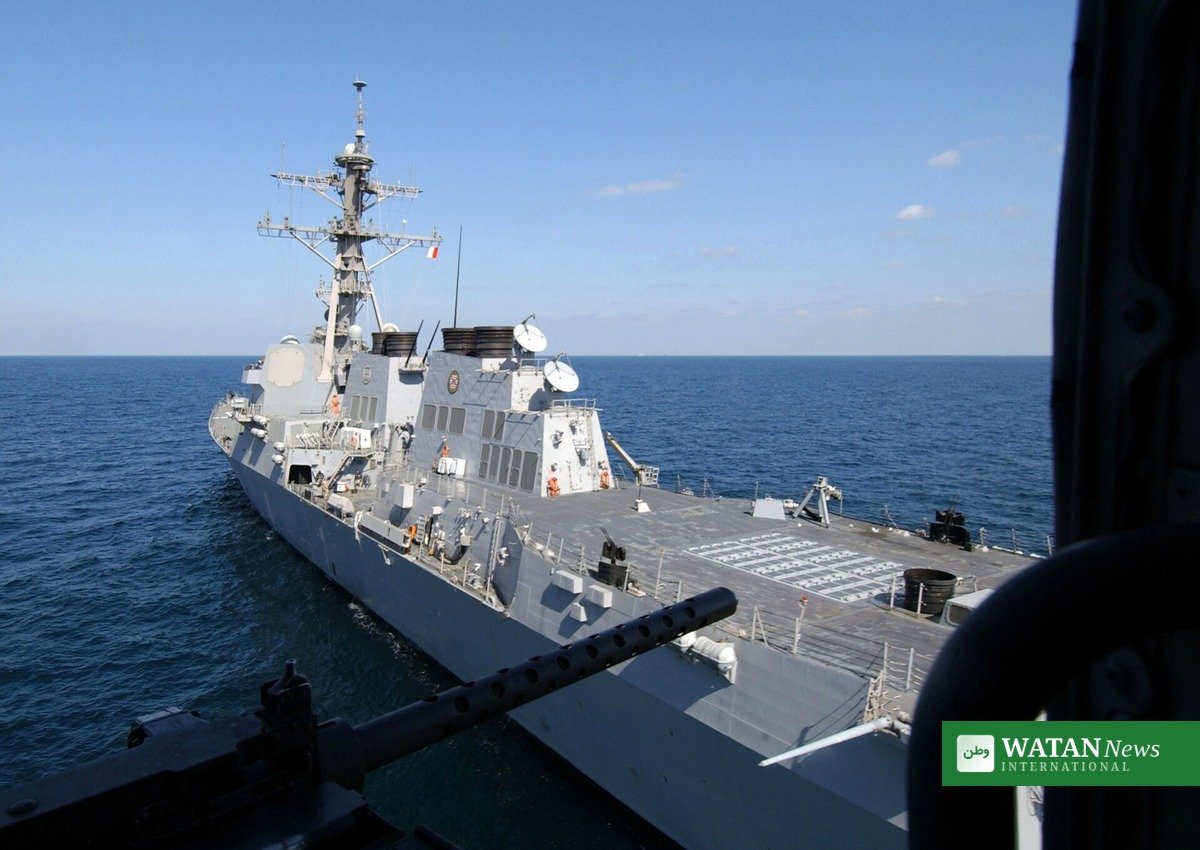
The US blockade of Iran has prevented at least $25 billion worth of crude oil exports and helped freeze nearly $350 million in cryptocurrency assets, the head of US Central Command said on Friday, as Washington claims its naval pressure campaign is straining Tehran’s finances nine months into the conflict.
FAKTA
- $25 billion: the value of crude oil exports the US blockade has prevented Iran from shipping in recent months, according to CENTCOM chief Admiral Brad Cooper.
- $350 million: Iranian cryptocurrency assets frozen with CENTCOM’s support, working with other US agencies.
- “No exports and no imports by sea” — Cooper says only humanitarian assistance is being allowed through.
- 400 merchant ships transited the Strait of Hormuz in the past week, moving over 100 million barrels of crude, according to US figures.
- Trump’s claim: President Donald Trump says the US Navy’s blockade is “effective” and that no Iranian ship has been able to cross the strait.
US blockade of Iran: the $25 billion claim
Admiral Brad Cooper, who leads US Central Command, made the claims in a video message released on Friday, cited by Axios and reported by multiple outlets. He said Washington’s pressure campaign targets Iranian oil exports, digital financial networks and the ability of the country’s security forces to pay their personnel.
“With the exception of the humanitarian assistance we’ve allowed in, Iran has no exports and no imports by sea,” Cooper said. According to the CENTCOM chief, the measures are intended to restrict Tehran’s ability to finance military activities, replace damaged weapons and rebuild facilities struck during the conflict.
IRGC cash crisis alleged
Cooper also claimed that the financial strain has reached Iran’s security apparatus. He said Iran-aligned groups across the region — including Hezbollah, Hamas and Shia militias in Iraq — have begun withholding payments to their fighters and redirecting funds to Iran’s Islamic Revolutionary Guard Corps (IRGC), which he said is itself struggling to pay its personnel.
“The Islamic regime is clearly feeling the economic pain, and the IRGC is increasingly showing signs of greater desperation as a result,” Cooper said. He added that Tehran is withholding salaries, pensions and benefits from public-sector workers, including internal security personnel.
Independent analysts caution that reports of Iranian fuel shipments continuing to move mean the blockade’s effectiveness is hard to verify against independently documented maritime activity, distinguishing Washington’s stated objectives from outside observation.
Hormuz stays open, US says
Cooper insisted the Strait of Hormuz remains open to commercial traffic despite the pressure on Iran. “The Strait of Hormuz is controlled by the United States and our regional partners, not Iran, and it remains open for business,” he said.

An oil tanker transits the Strait of Hormuz. The US says around 400 merchant ships crossed the waterway in the past week, while the US blockade of Iran restricts Tehran’s own sea trade.
He reported that approximately 400 merchant ships had transited the waterway during the preceding seven days, and that US forces assisted Gulf partners in transporting more than 100 million barrels of crude oil in the same period. The cumulative volume moved with US assistance in recent months has exceeded 1.3 billion barrels, he added. Figures from the United Kingdom Maritime Trade Operations agency (UKMTO) present a more constrained picture of commercial shipping through the waterway.
Trump reiterates “effective” blockade
President Trump, speaking separately, reiterated that the US Navy is carrying out an “effective” blockade and that no Iranian ship has been able to cross the Strait of Hormuz, according to Al Jazeera’s live coverage of the conflict on Saturday.
Meanwhile, Axios reported that CENTCOM has nearly stopped striking Iranian anti-ship missile and drone launchers near the strait after the White House ordered a pause to avoid escalation ahead of the midterm elections.
Regional fallout: Spain counts the cost
The economic fallout of the conflict is being felt well beyond the Gulf. Spanish Prime Minister Pedro Sánchez said on Friday that the war has already cost Europeans more than €100 billion, with ordinary people bearing the burden. Spain’s parliament has approved a package worth more than €12 billion to protect affected sectors and households, he said.
In Yemen, the Saudi-led coalition said on Friday it had destroyed two Houthi ballistic missile launchers in the northern Saada governorate, following Houthi reports of Saudi air strikes east of Saada city.
Background
The US naval blockade is part of a broader pressure campaign aimed at pushing Tehran toward a deal that includes concessions on its nuclear programme. Iran has yet to respond formally to a US counterproposal aimed at ending the hostilities. US officials have said nuclear weapons will not be used and ruled out deploying ground troops inside Iran, while continuing maritime restrictions.
Author

usman2344913@gmail.com
Related Posts
OIC Foreign Ministers Convene in Baghdad as Islamic World Faces Gaza and Regional Crises
- 0
- 484 words
Foreign ministers from across the Islamic world gathered in Baghdad on Saturday for the 52nd session of the Organisation of Islamic Cooperation’s...
Read out all
Nigeria’s Nnimmo Bassey Honoured with Lifetime Achievement at 2026 Courageous Scientists Award in Vienna
- 0
- 955 words
Nigeria's Nnimmo Bassey received the Lifetime Achievement Award for Environmental and Climate Justice at the 2026 Courageous Scientists Award gala in Vienna...
Read out all
Experimental Drug ANB033 Protects Celiac Patients From Gluten Damage in Early Trial
- 0
- 440 words
An experimental drug has shown promising results in shielding the intestines of people with celiac disease from gluten-related damage, according to early...
Read out all
Mass Protests Set to Sweep France as Students, Unions and Yellow Vests Join Forces
- 0
- 481 words
Tens of thousands of people are expected to take to the streets across France on Saturday, as students, trade unionists and Yellow...
Read out all
Global Youth Summit for Climate Change 2026 Set for Nairobi This December
- 0
- 796 words
The Global Youth Summit for Climate Change 2026 will gather 50+ young leaders in Nairobi on 15–18 December — YCDP × UNITAR,...
Read out all
Istanbul Floods Kill at Least Four After Record Rainfall
- 0
- 423 words
Istanbul has been struck by the worst flooding the city has seen since records began in 1942, leaving at least four people...
Read out all