- 0
- 905 words
Pacific leaders have adopted the Taku Pakasoa Declaration — a joint call for deep, rapid and sustained emissions reductions to keep the 1.5°C goal within reach — at the close of the Pre-COP31 ministerial meeting in Nadi, Fiji. The declaration, whose name is a Tuvaluan expression for strength found in unity and collective action, was endorsed after leaders visited Tuvalu and other frontline communities earlier in the week, and it now forms the Pacific’s political mandate heading into COP31 in Antalya this November.
FAKTA
- The Taku Pakasoa Declaration was adopted on October 6, 2026, after leaders’ visits to Tuvalu and a ministerial meeting in Nadi, Fiji, on October 5–8
- “Taku Pakasoa” is a Tuvaluan concept meaning strength found in unity and collective action
- The declaration demands deep, rapid and sustained emissions cuts to keep the 1.5°C temperature goal within reach ahead of COP31
- Fiji pledged US$10 million for a Pacific Resilience Facility, providing grants directly to communities for seawalls, water security and cyclone-proof homes
- Australia’s Chris Bowen, COP31 President of Negotiations, announced a presidency-led decision approach aimed at an ambitious outcome in Antalya
- COP31 takes place November 9–20, 2026, in Antalya, Türkiye — hosted by Türkiye with Australia presiding over negotiations
Taku Pakasoa: unity as climate strategy
The declaration’s core message is that the Pacific’s survival depends on collective action — and that the world’s largest emitters must cut emissions deeply, quickly and durably. Fiji’s Minister for Information, Environment and Climate Change, Lynda Tabuya, told the closing ceremony that the region had to shift from commitments to delivery: “Our communities cannot adapt with promises, and they cannot rebuild from cyclones with speeches,” she said. “From conversation, we move to decision. From commitment, we move to delivery.”
The week’s talks, attended by thousands of delegates, were designed to give Pacific priorities — climate finance, ocean protection and urgent emissions action — a louder voice ahead of the UN climate summit in Antalya.

Tuvalu: the frontline that named the declaration
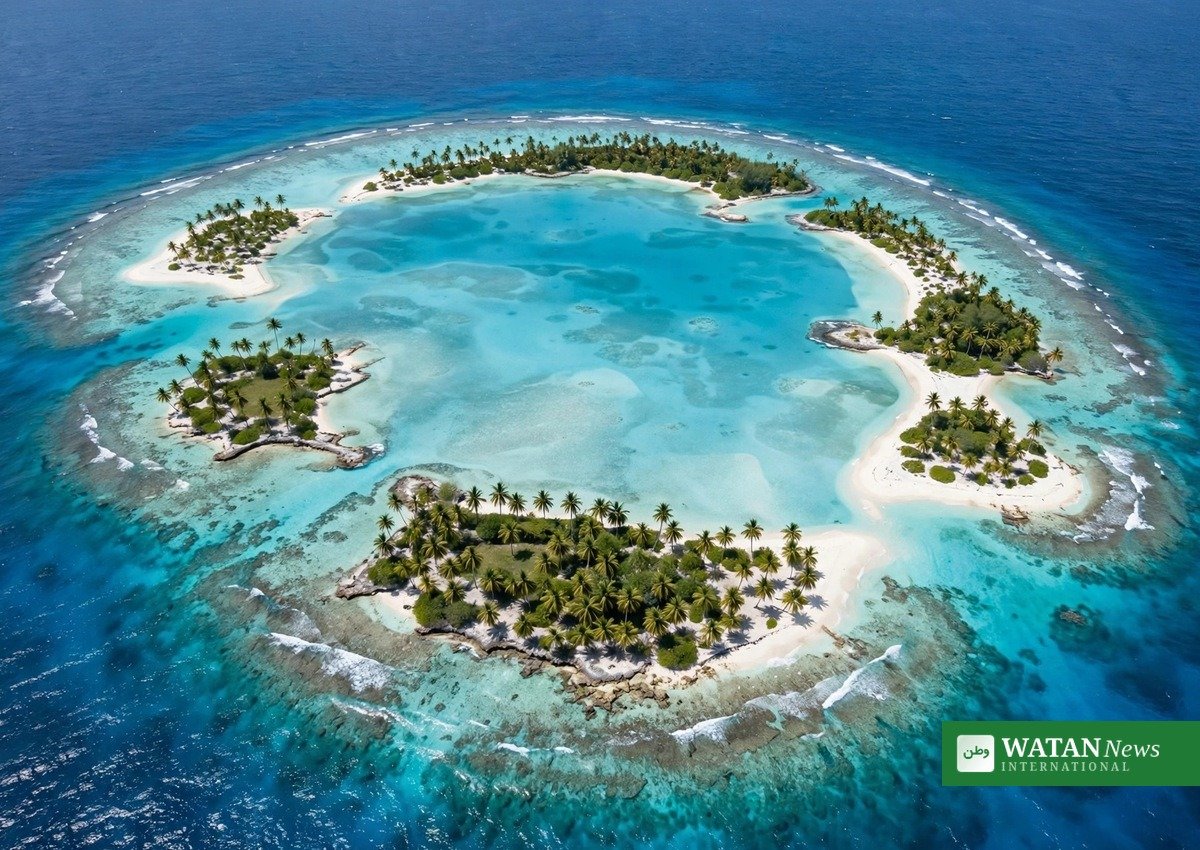
Leaders began the week with visits to Tuvalu and other frontline island communities, where the climate crisis is already reshaping coastlines. Tuvalu’s sea level has risen roughly 15 centimetres in the three decades to 2023 — about twice the global average, according to NASA research. The declaration backs the island states’ position that their statehood, sovereignty and maritime zones remain intact even as the seas rise.
Tuvaluan Prime Minister Feleti Teo urged Pacific leaders to stand united behind the declaration at the close of the leaders’ meeting in Denarau.
A tangible pledge: US$10 million for resilience
One concrete outcome from Nadi was Fiji’s announcement of US$10 million for a Pacific Resilience Facility — a fund that Tabuya said would provide grants “directly to communities” for projects such as seawalls, clean water security and cyclone-proofing homes. Ministers and delegates endorsed the Taku Pakasoa Declaration at the closing as a political mandate to carry Pacific concerns into COP31.

Presidency-led decision for Antalya
At the Pre-COP ministerial briefing in Nadi, Australia’s Climate Change and Energy Minister Chris Bowen — COP31’s President of Negotiations — announced that Australia and Türkiye would take forward a presidency-led decision at COP31 aimed at strengthening climate action. Bowen said the approach gives the summit the best chance of an ambitious outcome, announcing it at Pre-COP so countries would have advance notice rather than being surprised in Antalya.
“We feel that a presidency-led decision gives us the best chance of a strong ambitious outcome at COP 31,” Bowen said. The decision will seek to “send a signal, to follow the science, to keep 1.5 degrees within reach” and accelerate delivery of climate action. He acknowledged scientific evidence pointing to an overshoot of the 1.5°C threshold, but said countries needed to limit how far and for how long temperatures exceed it. Elevating the voice of Small Island Developing States was a shared objective of the Australian-Turkish partnership, Bowen said.
Follow the road to Antalya at watannews.dk: the presidency-led decision push and the COP31 finance summit in Istanbul.
Conclusion
The Taku Pakasoa Declaration turns the Pacific’s vulnerability into a unified negotiating mandate: keep 1.5°C within reach, deliver money and technical support, and stop treating adaptation as a speech to be made. With COP31 opening in Antalya on November 9, the declaration — backed by Fiji’s US$10 million pledge and the Australia-Türkiye presidency partnership — sets the bar the summit will be judged against.
Frequently Asked Questions
What is the Taku Pakasoa Declaration?
A political declaration adopted by Pacific leaders on October 6, 2026, demanding deep, rapid and sustained emissions reductions to keep the 1.5°C goal within reach.
What does “Taku Pakasoa” mean?
It is a Tuvaluan concept meaning strength found in unity and collective action.
Where and when was it adopted?
After leaders’ visits to Tuvalu and a Pre-COP31 ministerial meeting in Nadi, Fiji, on October 5–8, 2026.
What did Fiji pledge?
US$10 million for a Pacific Resilience Facility, providing grants directly to communities for seawalls, clean water security and cyclone-proof homes.
What is the presidency-led decision?
An approach announced by Australia and Türkiye at Pre-COP to carry a presidency-led decision into COP31 aimed at a strong, ambitious outcome — announced early so countries have advance notice.
When and where is COP31?
November 9–20, 2026, in Antalya, Türkiye — hosted by Türkiye, with Australia presiding over the negotiations.
Author

usman2344913@gmail.com
Related Posts
Vatican Confirms Pope Leo XIV Has Lung Cancer After Successful Surgery
- 0
- 459 words
The Vatican confirmed on Tuesday evening that Pope Leo XIV has lung cancer, announcing that surgeons removed the lower lobe of his...
Read out all
Sharlene Mawdsley at 28: The 400m Comeback She Never Imagined
- 0
- 1,036 word
The 2026 season gave Sharlene Mawdsley everything athletics can hand out — four personal bests in one summer, a Diamond League debut,...
Read out all
Duane “Keffe D” Davis Sentenced to 40 Years to Life for 1996 Murder of Tupac Shakur
- 0
- 493 words
Duane “Keffe D” Davis was sentenced to 40 years to life in prison on Tuesday for orchestrating the 1996 murder of rap...
Read out all
Atlanta’s First Climate Week Closes With Roadshow for City’s First Resilience Plan
- 0
- 514 words
Atlanta's first Climate Week (10–15 October) closes on Thursday with the 2026 Climate Resilient ATL Roadshow — the public launch of the...
Read out all
Zimbabwean Founders Raise $2M Pre-Seed for Voice AI Data Startup Ocular AI
- 0
- 864 words
Two Zimbabwean founders have raised $2 million in pre-seed funding for Ocular AI, their San Francisco startup building the training data behind...
Read out all
Dubai Property Q3 2026: 37,429 Sales Worth AED92.9 Billion as Rents Near Record
- 0
- 967 words
Dubai's property market recorded 37,429 sales transactions worth AED92.9 billion in the third quarter of 2026, with off-plan sales from developers continuing...
Read out all