- 0
- 1,132 word
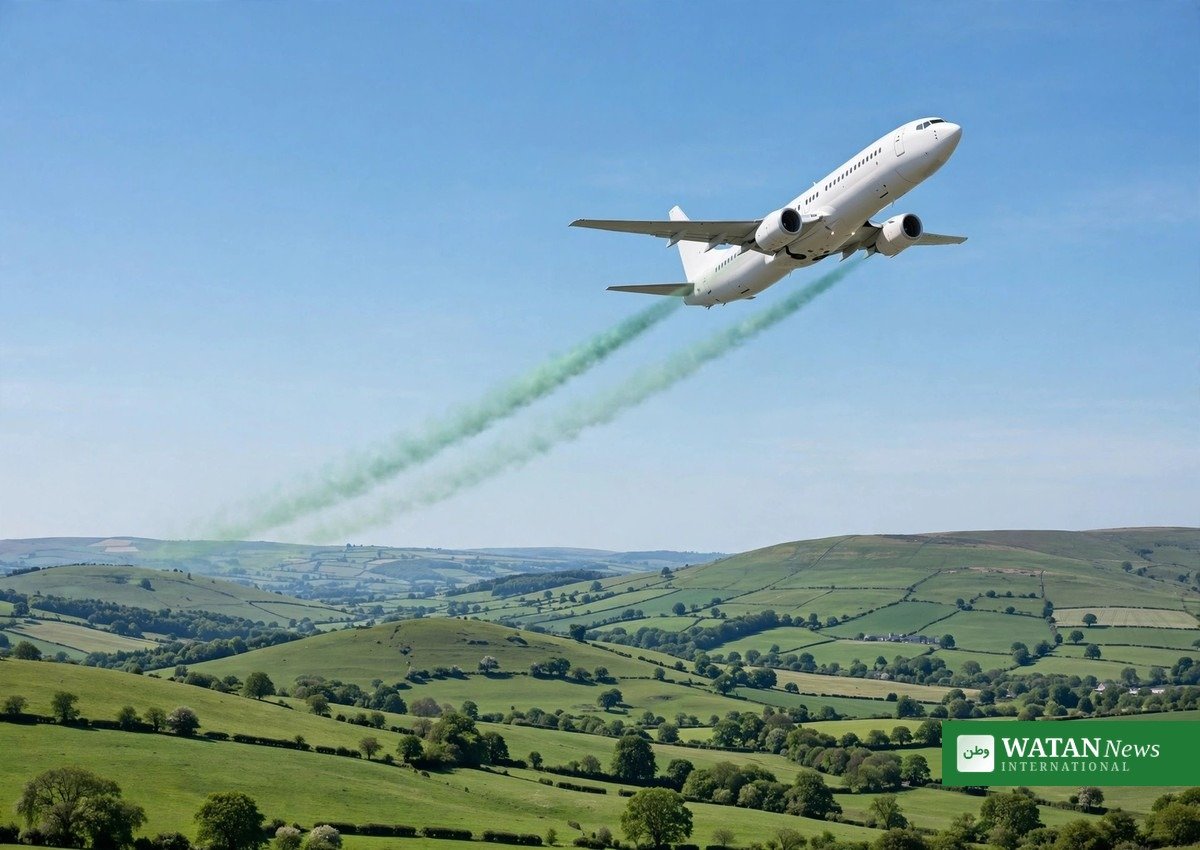
Corporate buyers could become one of the most important funders of cleaner air travel by the end of this decade. A new study released on 14 October 2026 by the International Air Transport Association (IATA), Airbus and Accenture estimates that corporate purchases of sustainable aviation fuel (SAF) certificates could support between 1.0 and 1.9 million tonnes of SAF annually by 2030 — up from an estimated 323,000 tonnes in 2024, a near-sixfold increase at the top of the range.
The projections are modeled scenarios rather than confirmed orders, and they depend on real obstacles being removed: high price premiums, uncertain emissions-accounting rules and complicated purchasing processes. But the message is clear — companies whose employees fly or whose goods move by air could share the cost of aviation’s energy transition, instead of leaving airlines to carry it alone.
What the study estimates
The report, titled “SAF Environmental Attribute Certificate (EAc) Market”, models how fast a corporate market for SAF certificates could grow. According to the study, corporate purchases could support up to 1.9 million tonnes of SAF by 2030, compared with an estimated 323,000 tonnes in 2024. That would make corporate buying a far larger slice of SAF financing — although reaching even the lower end of the range would require substantial growth from today’s market.
Marie Owens Thomsen, IATA’s Senior Vice President Sustainability and Chief Economist, said the industry cannot fund the scale-up on its own. “Airlines cannot shoulder the cost of scaling it up alone,” she said, adding that corporate buyers have a unique opportunity to help build the SAF market and share the cost of air transport’s energy transition.
How corporate SAF certificates work
Companies do not buy the physical fuel. Instead, they purchase SAF Environmental Attribute Certificates, which represent the verified environmental benefits of eligible SAF use. The system is known as book-and-claim: the benefit can be allocated to a corporate buyer even when the actual fuel is delivered and used at a different airport.
The book-and-claim mechanism
For example, a company can support SAF use through a certificate purchase without requiring the fuel to be loaded onto the specific aircraft carrying its employees. This separates the climate benefit from the physical fuel, letting companies contribute to lower-emission aviation wherever production is cheapest or most efficient.
Scope 3 and business travel
According to the study, such purchases would let companies address indirect “scope 3” emissions from business travel and air freight. For that to work, the study says, companies need confidence that the emissions reductions they buy will be recognised under corporate emissions-accounting rules — a guarantee many say is still missing.
Why most companies still hold back
The research finds a wide gap between corporate interest and actual participation. Only about 15 per cent of surveyed companies are buying SAF certificates today. Three barriers stand out:
- Price. SAF certificates generally cost between USD 150 and USD 500 for each tonne of CO2 equivalent avoided, while companies say they are willing to pay closer to USD 300.
- Accounting uncertainty. Companies need to know the claims will count toward their climate targets under emissions-accounting rules.
- Complexity. Limited price transparency, high minimum purchase quantities and long contractual commitments discourage wider adoption.
Airlines are currently the main distribution channel: about 53 per cent of corporate purchasers obtain certificates through airlines, with fuel suppliers, alliances and other intermediaries covering the rest.
The three fixes the study calls for
The study names three priorities for unlocking corporate demand: clear and consistent accounting rules so purchased emissions reductions are recognised; transparent, interoperable tracking systems that prevent double counting; and simpler purchasing, with greater price transparency, lower minimum volumes and shorter contracts.
Julien Manhes, Airbus’s Vice President of Sustainable Aviation Fuel and Carbon Dioxide Removal Development, said giving corporate buyers accounting certainty could turn potential interest into firm commitments, sending the demand signal fuel producers need to accelerate production. Jesko Neuenburg, Accenture’s Global Aviation and Travel Sustainability Lead, noted that most companies are waiting for lower costs, settled rules and a simpler buying process.
Why it matters for aviation’s climate bill
SAF is widely considered aviation’s most important tool for cutting lifecycle emissions — but supply remains tiny and expensive. IATA expects global SAF production to reach only about 2.4 million tonnes in 2026, just 0.8 per cent of total jet fuel consumption, and the fuel still costs roughly two to three times as much as conventional jet fuel.
Corporate participation would not erase those economics by itself. The study stresses that government support, effective incentives and a significant expansion of production capacity remain essential. But every additional corporate purchase converts climate ambition into real market demand and spreads the cost of decarbonisation more broadly.
For more on sustainable travel and climate solutions, visit Watan News International.
FAKTA
- A study by IATA, Airbus and Accenture (released 14 October 2026) estimates corporate SAF certificate purchases could support 1.0–1.9 million tonnes of SAF by 2030, up from ~323,000 tonnes in 2024.
- SAF certificates are traded through book-and-claim: the environmental benefit is assigned to the buyer even if the fuel is used elsewhere.
- Only about 15 per cent of surveyed companies buy SAF certificates today; high prices (USD 150–500 per tonne of CO2e), unclear accounting and complex buying hold others back.
- Global SAF output in 2026 is expected to be just 2.4 million tonnes — 0.8 per cent of jet fuel use — at two to three times the price of conventional fuel.
Frequently asked questions
What is sustainable aviation fuel?
Sustainable aviation fuel (SAF) is jet fuel made from sustainable feedstocks — such as used cooking oil, woody biomass or captured CO2 — instead of crude oil. According to IATA, it is aviation’s most important near-term tool for cutting lifecycle carbon emissions, though it still costs two to three times more than conventional jet fuel.
What is a SAF Environmental Attribute Certificate?
It is a tradable certificate representing the verified environmental benefits of a given amount of eligible SAF. A company buys the certificate to claim those benefits toward its climate targets, while the physical fuel may be delivered and burned at a different airport.
How does book-and-claim work?
Book-and-claim separates the climate benefit from the physical fuel. The “book” records verified SAF production and its emissions reduction; the “claim” lets a buyer — anywhere — own that reduction. The study says this only works with reliable tracking that prevents the same reduction being claimed twice.
Why aren’t more companies buying SAF certificates?
According to the study, the main barriers are price (certificates cost USD 150–500 per tonne of CO2e avoided, while buyers prefer ~USD 300), uncertain accounting rules, and complicated purchasing with opaque pricing and large minimum orders.
Would corporate SAF buying make my flight cheaper or greener?
Not directly, the study notes. Certificate purchases support SAF use somewhere in the system and spread its extra cost, but they do not guarantee that any specific flight used SAF — and the research does not establish that ticket prices would fall.
Author

usman2344913@gmail.com
Related Posts
Virksomheders køb af SAF-certifikater kan seksdobles i 2030 ifølge ny undersøgelse
- 0
- 1,170 word
Virksomheder kan blive en af de vigtigste finansieringskilder til grønnere flyrejser ved udgangen af dette årti. En ny undersøgelse, som International Air...
Read out all
کارپوریٹ پائیدار ہوائی ایندھن سرٹیفکیٹوں کی مانگ 2030 تک چھ گنا بڑھ سکتی ہے
دنیا کی بڑی کمپنیاں اس دہائی کے آخر تک صاف ستھری ہوائی سفر کی اہم ترین سرمایہ کار بن سکتی ہیں۔ انٹرنیشنل...
Read out all
Wisconsin planter træ nr. 50 millioner på vej mod målet om 100 millioner i 2030
- 0
- 685 words
Wisconsin har plantet sit træ nr. 50 millioner under delstatens Trillion Trees Pledge, meddelte Wisconsins Department of Natural Resources (DNR) den 12....
Read out all
وسکونسن میں 50 ملینواں درخت لگایا گیا؛ 2030 تک 10 کروڑ درختوں کا ہدف
وسکونسن نے ریاست کے ’ٹریلین ٹریز پلیج‘ کے تحت 50 ملینواں درخت لگا دیا ہے۔ وسکونسن کے محکمہ قدرتی وسائل (ڈی این...
Read out all
Wisconsin Plants 50 Millionth Tree on Road to 100 Million by 2030
- 0
- 664 words
Wisconsin has planted its 50 millionth tree under the state’s Trillion Trees Pledge, the Wisconsin Department of Natural Resources (DNR) announced on...
Read out all
COP31 står over for tillidstest: Tre klimapræsidentskaber mødtes i New York
- 0
- 882 words
Mindre end en måned før COP31 åbner i Antalya, mødtes repræsentanter for tre på hinanden følgende FN-klimapræsidentskaber i FN’s hovedkvarter i New...
Read out all