- 0
- 696 words
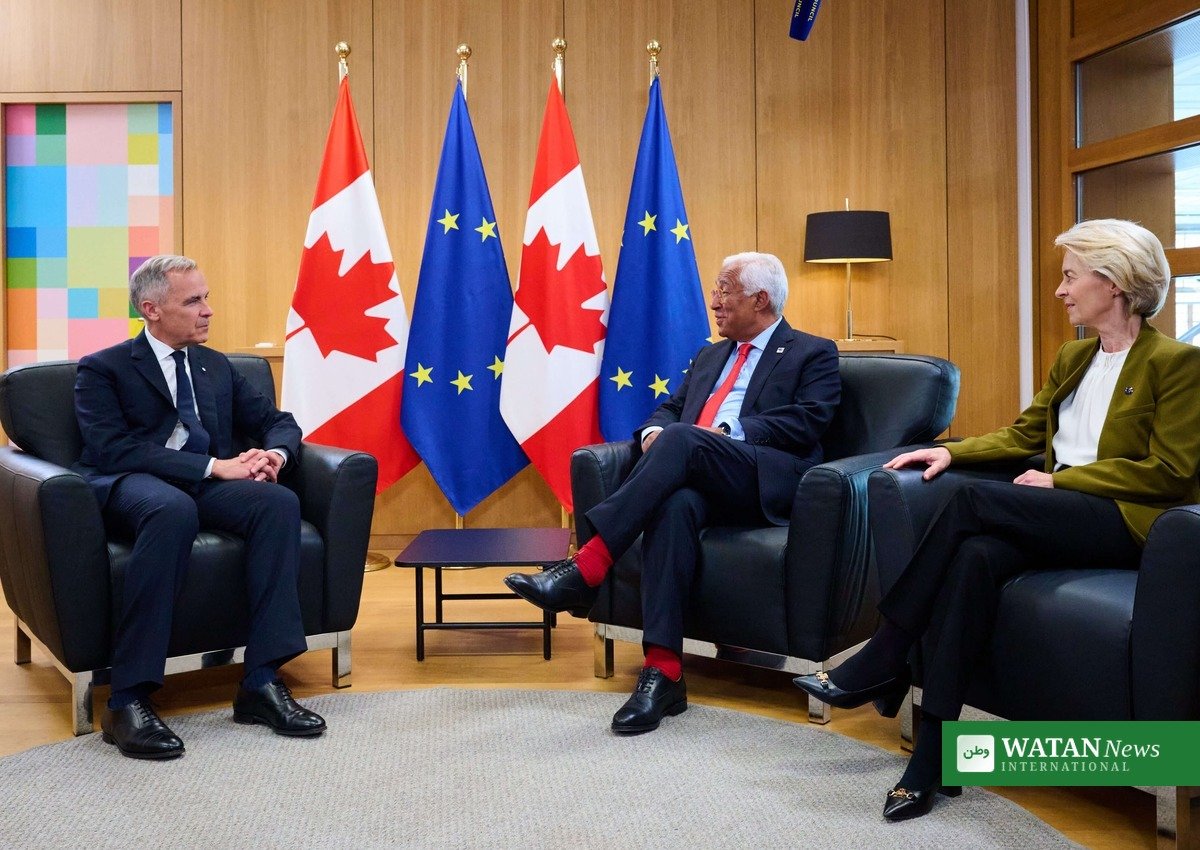
Canada and the European Union have launched a new “Alliance for the Future” after a two-day summit in Montreal, agreeing on more than twenty measures to deepen trade, defence, technology and energy cooperation. The Canada EU Alliance for the Future is described by its leaders as the deepest possible partnership short of full membership, and it will now be shaped in detail over the coming months.
FAKTA
- What happened: Canada and the EU launched the “Alliance for the Future” at their 21st summit in Montreal on 29–30 October 2026.
- Who took part: Canadian Prime Minister Mark Carney hosted European Commission President Ursula von der Leyen and European Council President António Costa.
- Associate membership: Mr Carney said Canada is working towards becoming the EU’s first “Associate Member”, but the joint statement itself speaks of an “ever closer association” and does not use that term.
- Ukraine support: Canada will contribute an initial €500 million to the EU’s €90 billion support loan for Ukraine.
- Next step: The two sides aim to define the new form of association by their 2027 summit.
Canada EU Alliance for the Future: what was agreed in Montreal
The summit produced a package of more than twenty measures, according to the Canadian Prime Minister’s Office. The two sides concluded a Digital Trade Agreement and concluded negotiations on a Competition Agreement. Canada also joined the European High Performance Computing Joint Undertaking, giving Canadian researchers access to the JUPITER supercomputer.
On critical minerals, Canada signed a treaty framework allowing the European Investment Bank to invest in Canadian projects. The two sides will also study increasing Canadian liquefied natural gas exports to Europe and building a new transatlantic data cable, and Canada will negotiate wider participation in Erasmus+ and joining the next Horizon Europe research programme.
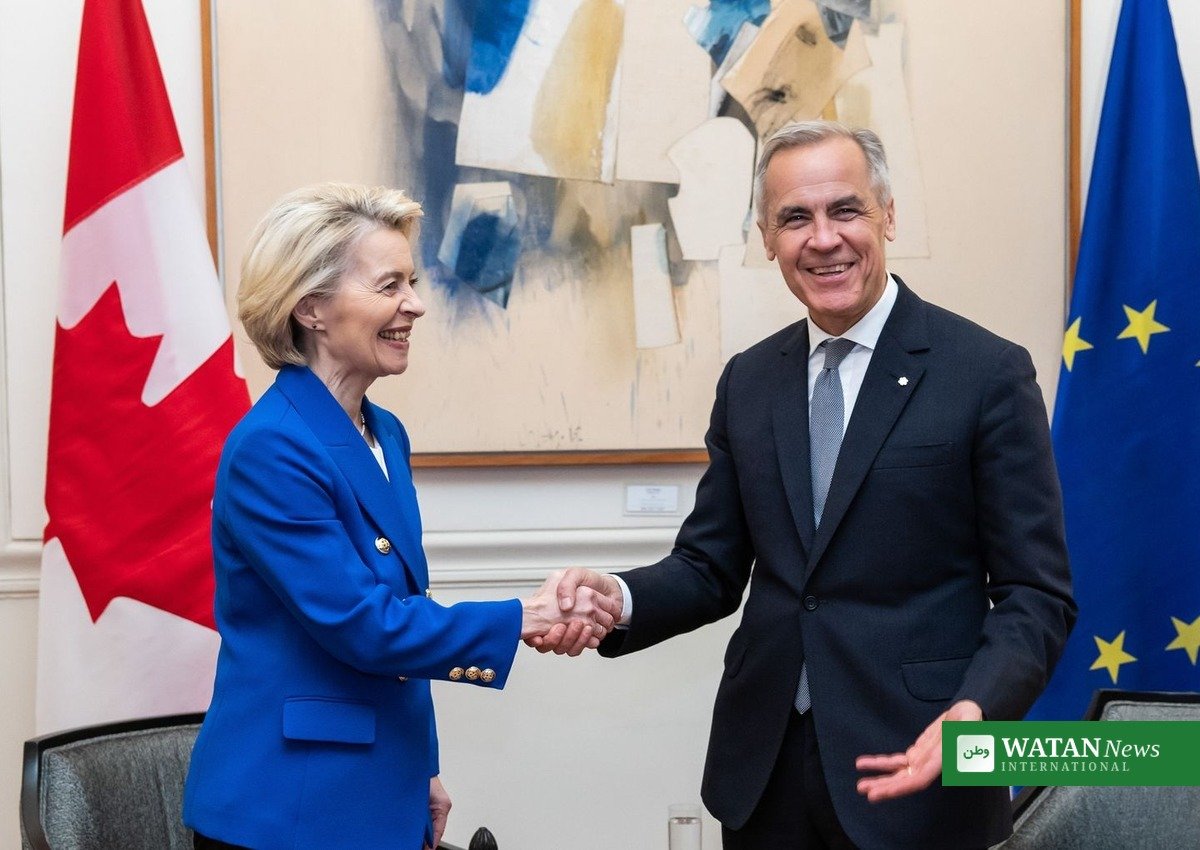
European Commission President Ursula von der Leyen shakes hands with Canadian Prime Minister Mark Carney. File photo.
The associate-member question
The most closely watched part of the summit was its language. In a post on X on Friday, Mr Carney wrote that Canada and the EU are “working towards the deepest possible partnership — short of full membership — with Canada becoming the European Union’s first Associate Member”.
European Council President António Costa struck a slightly different note, writing that the summit had made history and that the two sides had “agreed to an ever-closer association — everything short of a full EU membership”. Ms von der Leyen has described the idea as an “association without accession”.
The distinction matters because “associate member” has no legal meaning in EU law and no precedent. Reuters reported that Germany and several other EU member states opposed the term, and that it was dropped from the joint declaration in favour of “ever closer association”. The Canadian Prime Minister’s Office said the substance, scale and scope of the proposed form of membership will be determined over the coming months.
Defence, Ukraine and trade
On defence, the package announced Canada’s second contract under the EU’s Security Action for Europe (SAFE) initiative, worth more than $44 million, for Montreal-based Galvion to supply military helmets to Latvia. The leaders also said the alliance is open to other like-minded countries.
Canada’s initial €500 million contribution forms part of the EU’s €90 billion support loan for Ukraine, placing support for Kyiv alongside the wider effort to secure supply chains for materials and technologies both partners regard as important to their economic security.
The EU is Canada’s second-largest trading partner for goods and services, with total trade of about $178 billion in 2025, according to the Prime Minister’s Office. The deeper ties also form part of Mr Carney’s effort to reduce Canada’s economic and security reliance on the United States after US tariffs on Canadian goods, Reuters reported.
What happens next
For now, the alliance is a framework, not a finished treaty. Its practical scope will depend on the discussions leading to the 2027 summit, when the leaders aim to define the new form of association. No specific timetable for individual agreements to take effect has been set out, and any eventual arrangement would still fall short of full EU membership for Canada.
Read more Europe news on Watan News Europe.
Author

usmanch0013@gmail.com
Related Posts
UN Western Sahara Mission Left Without a Mandate as MINURSO Term Expires
- 0
- 996 words
The UN mission in Western Sahara has entered Saturday without a renewed mandate after the US and Russia vetoed each other's Security...
Read out all
Jordan Border Guards Stop 14 Armed Men Crossing From Syria
- 0
- 490 words
Jordanian border guards stopped 14 armed men trying to cross into northern Jordan from Syria on Friday, the armed forces said on...
Read out all
Qatar Sustainability Week 2026 Opens With Sustainability Ambassadors Race
- 0
- 988 words
Doha's 11th Qatar Sustainability Week opens on 31 October 2026 with a Sustainability Ambassadors Race, running until 7 November with community events...
Read out all
Pakistan Warns UN Over Terror Groups Operating From Afghan Soil
- 0
- 480 words
Pakistan has urged the UN to confront militant groups it says operate from Afghan territory, as UN expert Richard Bennett warns against...
Read out all
US Steps Up Alaska Senate Election Probe Days Before Midterms
- 0
- 497 words
Federal prosecutors in Alaska have intensified investigations into allegations over a second candidate named Dan Sullivan on the Senate ballot, days before...
Read out all
Maryam Golnaraghi Named Climate and Sustainability Champion of the Year 2026
- 0
- 854 words
Maryam Golnaraghi, Director of Climate Change and Environment at The Geneva Association, has been named Climate and Sustainability Champion of the Year...
Read out all