- 0
- 639 words
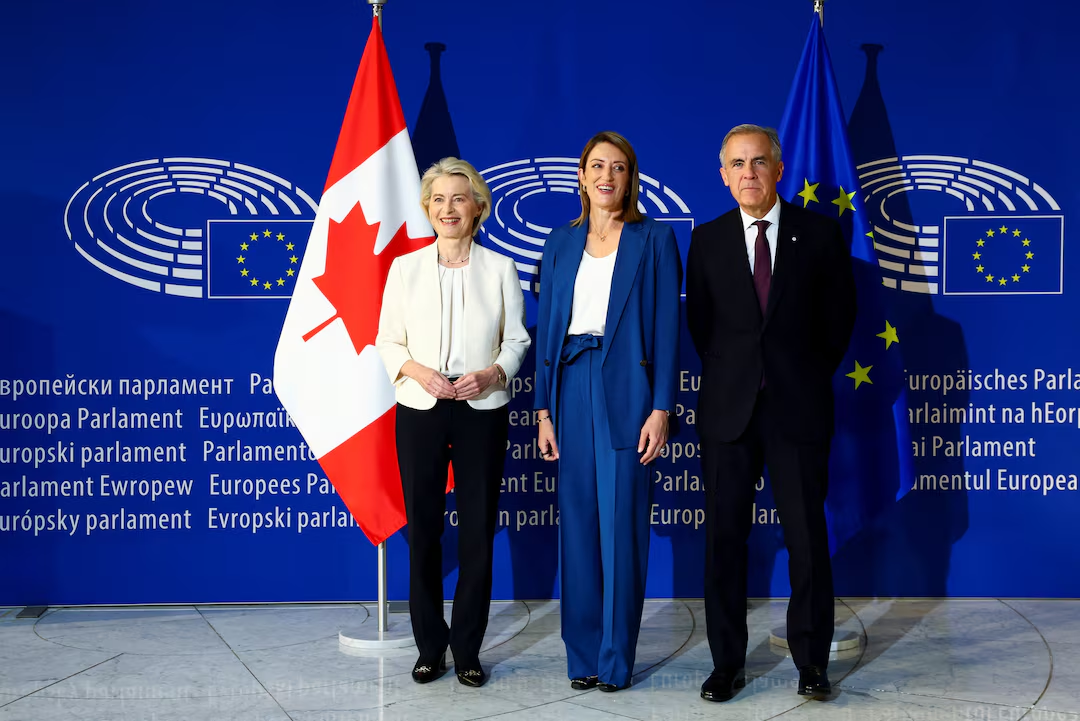
The president of the European Commission, Ursula von der Leyen, has backed proposals for Canada to become the EU’s first associate member. This move comes as Canadian Prime Minister Mark Carney seeks a unique alliance with the EU, amid tense relations with the US and President Donald Trump.
Von der Leyen told the European Parliament on Wednesday that she wanted to work on opening the door for Canada, which would involve closer ties on various key sectors. Without mentioning Trump by name, von der Leyen said offering Canada some sort of EU membership was not a partnership against anyone else, but for our common strength.
- Ursula von der Leyen has backed proposals for Canada to become the EU’s first associate member.
- Mark Carney is seeking a unique alliance with the EU amid tense relations with the US.
- The move involves closer ties on key sectors, including energy, critical minerals, and AI.
- Von der Leyen also proposed the formation of a European Security Council, including the UK and Ukraine.
Von der Leyen’s Address to the European Parliament
Von der Leyen told the EU’s State of the Union address that the bloc and Canada see the world with the same eyes, including on topics ranging from AI, to climate change and geopolitics. And we have stood together: on Ukraine, on defence, on raw materials and on supply chains. But above all…Europe and Canada believe in democracy.
A Response to the Fracture in the International Rules-Based System
Von der Leyen said that partnerships are a strategic choice for Europe. But they also respond to the fracture in the international rules-based system. The move comes as EU members have also been hit with trade tariffs under Trump’s administration.
Implications for EU-Canada Relations
The proposal has significant implications for EU-Canada relations, which have been strengthening in recent years. Canada has been seeking to diversify its trade relationships amid tensions with the US. The EU, meanwhile, is seeking to strengthen its partnerships with like-minded countries.
A New Era of Cooperation
Von der Leyen’s proposal marks a new era of cooperation between the EU and Canada. The two partners will work together on key sectors, including energy, critical minerals, and AI. This cooperation will help to strengthen the EU’s position on the global stage.
Conclusion
In conclusion, the EU’s proposal to make Canada an associate member marks a significant shift in EU-Canada relations. The move has significant implications for trade, security, and cooperation between the two partners.
FAQs
Q1: What is the significance of the EU’s proposal to make Canada an associate member?
A1: The proposal marks a significant shift in EU-Canada relations, with implications for trade, security, and cooperation between the two partners.
Q2: What are the key sectors that the EU and Canada will cooperate on?
A2: The key sectors include energy, critical minerals, AI, cyber, and economic security.
Q3: Why is the EU seeking to strengthen its partnerships with like-minded countries?
A3: The EU is seeking to strengthen its partnerships with like-minded countries in response to the fracture in the international rules-based system.
Q4: What is the significance of von der Leyen’s proposal for a European Security Council?
A4: The proposal marks a significant shift in EU security policy, with the aim of strengthening cooperation between EU member states and partner countries.
Q5: How will the EU’s proposal affect EU-US relations?
A5: The proposal is likely to have implications for EU-US relations, as the EU seeks to strengthen its partnerships with like-minded countries and diversify its trade relationships.
Q6: What is the next step in the process of making Canada an associate member of the EU?
A6: The next step will involve negotiations between the EU and Canada on the terms of the associate membership, including the key sectors for cooperation.
Author

usmanjaved13132@gmail.com
Related Posts
Deadly Clashes Erupt Along Sudan-South Sudan Border, Killing at Least 26
- 0
- 503 words
At least 26 people have been killed and 82 others injured in days of intercommunal fighting in a disputed region on the...
Read out all
Foreign Secretary Holds Farewell Interaction with Diplomatic Corps
- 0
- 587 words
Pakistan’s Foreign Secretary, Sohail Mahmood, held a farewell interaction with the diplomatic corps at the Foreign Office in Islamabad, marking the end...
Read out all
COP31 presidency and OECD announce Paris partnership on climate finance and delivery
- 0
- 504 words
President-Designate Murat Kurum frames climate finance as strategic security at OECD headquarters, cites Türkiye’s SURFF urban-resilience facility as an implementation bridge, and...
Read out all
Federal Urdu University launches beginner Russian language course
- 0
- 488 words
The Federal Urdu University of Arts, Science and Technology (FUUAST) has launched a beginner Russian language course. The one month course has...
Read out all
US House passes sweeping Russia sanctions bill, sending it to Trump
- 0
- 684 words
The US House of Representatives on Wednesday approved a sweeping package of sanctions aimed at squeezing Russia’s war economy, sending the legislation...
Read out all
Morocco’s 2026 Election: A Test of Political Trust and Engagement
- 0
- 532 words
Morocco’s 2026 parliamentary election is set to take place on September 23, with 27 political parties vying for 395 seats in the...
Read out all