- 0
- 1,566 word
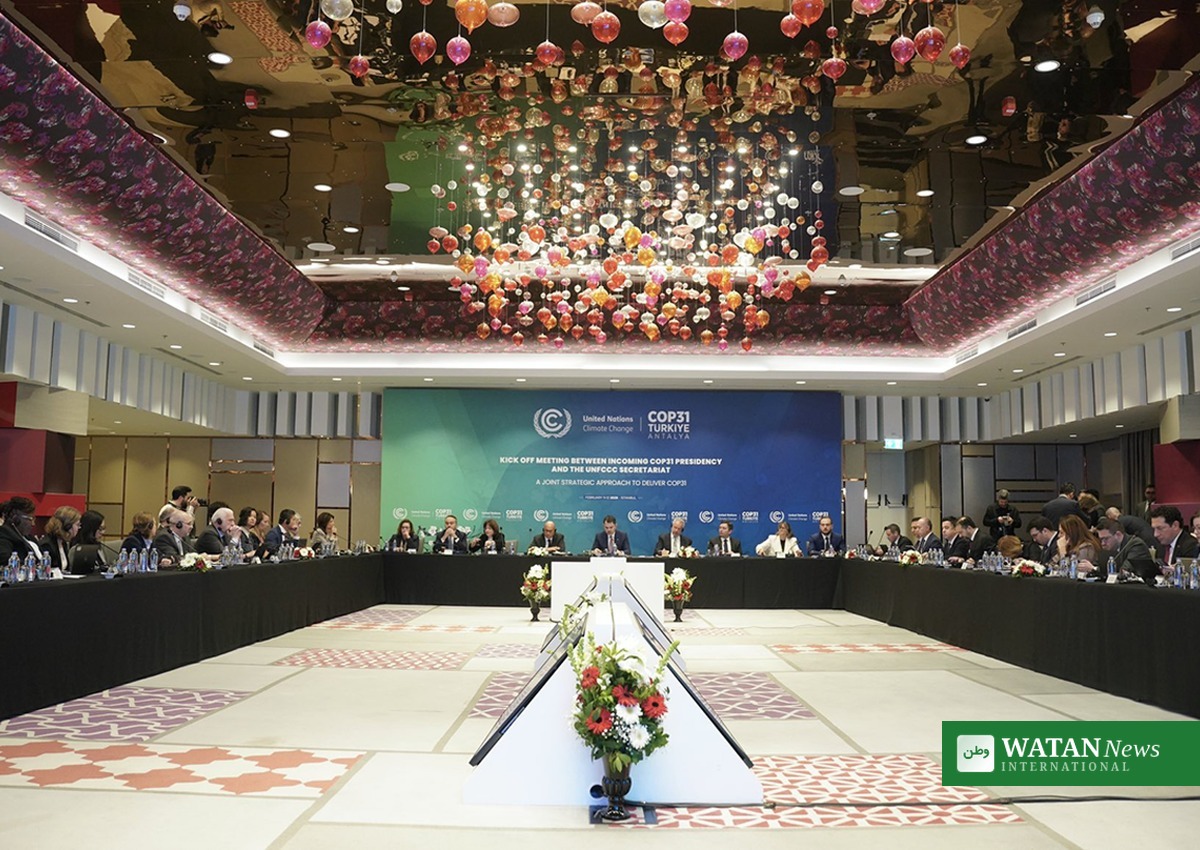
ANTALYA: Ministers took charge of the COP31 climate talks in Antalya on Tuesday, 17 November, as the first draft of a possible final deal came under fire from all sides — over its language on fossil fuels, a contested electrification target, and adaptation finance that campaigners say falls far short of what developing countries need.
The 18-page draft, containing 144 paragraphs, was published around midday on Monday by the Turkish and Australian presidencies. Australia’s climate minister Chris Bowen, who is leading the negotiations, said the text was designed to test what countries could accept rather than record only points of agreement. “It’s a genuine attempt to draw out parties on what they can support and what they can’t,” he said, adding that a text limited to broad agreement “would be a very thin document.” He has also said the final text will be different from the draft.
A draft designed to test positions
The draft was drawn up from about 500 pages of submissions received from around 60 countries in recent days, according to Australia. It is meant to be adopted as the conference’s overarching political decision when the talks close on Friday, 20 November — but it must be approved by all 194 delegations, and on Tuesday the document mostly reflected the fault lines that have begun to emerge.
Observers described the text as a “Christmas tree” — a draft that puts everything in and lets parties fight over the trade-offs. “It is incredibly long,” said Cosima Cassel, an expert at the E3G think tank, speaking to Le Monde. Gaïa Febvre, of the French branch of Climate Action Network, said the approach looked to be “putting it all in and letting parties fight for the trade-offs.”
The fossil-fuel fault line
The sharpest fight is over fossil fuels, the main source of greenhouse gas emissions. The draft carries two rival wordings: one repeating the 2023 pledge agreed at COP28 in Dubai to transition away from fossil fuels, and a stronger clause calling for an “immediate transition” and “accelerated action to phase out fossil fuels.” Either could still be dropped from a final deal.
The draft also proposes that developed countries reach carbon neutrality by 2030, within just four years, compared with the current 2050 target — language that observers say has virtually no chance of surviving the coming days of negotiation.
Russia, Saudi Arabia and the Arab group have objected to having a cover decision at all, even though such decisions have featured in most of the 30 previous climate summits. According to reporting from the Earth Negotiations Bulletin, the Like-Minded Developing Countries group — which includes China, India and Saudi Arabia — said the draft crosses their red lines, objecting in particular to the electrification target, the roadmap on transitioning away from fossil fuels and calls to rapidly reduce methane. The Arab Group and Russia went further, rejecting the draft text entirely. Even Azerbaijan, an ally of host country Türkiye, criticised the draft.
Bowen also refused to commit Australia, one of the world’s biggest coal producers, to phasing out fossil fuel exports, arguing that exporters did not carry more responsibility than importers.
The electrification fight
Another battle is expected over the draft’s electrification goal: raising electricity’s share of final energy use to 35 percent by 2035, from about 23 percent today. The goal is a priority for both Ankara and Canberra, and the European Union is backing it — European Commission President Ursula von der Leyen endorsed the global “35 by 35” pledge on 11 November, and the EU’s own Electrification Action Plan aims for electricity to reach 46 percent of final energy use by 2040.
But media and observers say only about 30 countries have so far declared their support for the global pledge. India and many developing countries have reservations. “India and a lot of developing countries have these reservations because one global target does not work for all countries,” Sameer Kwatra, director of the Natural Resources Defense Council in India, told Le Monde. “Electrification requires investment: in many of these areas, there is a high entry cost of capital.”
The European Union arrived in Antalya with a mandate to defend clean electrification — from low-carbon sources such as renewables and nuclear. But the EU’s climate commissioner, Wopke Hoekstra, has already suggested the bloc might drop this ambition. “Let’s also acknowledge that a certain degree of pragmatism is probably warranted and needed, to also make sure that the group of countries signing up is as large as possible,” he told Politico.
Campaigners also warned that the draft’s phrase “regardless of the electricity mix” could let rising power demand be met with fossil fuels instead of clean power.
Finance still far short
As at every COP, funding has again become a major point of contention. The draft proposes tripling adaptation finance to at least $120 billion a year by 2035 and asks developed countries to produce a roadmap with milestones to get there.
But $120 billion a year would cover only 20 to 29 percent of estimated needs, which the United Nations puts at around $305 billion a year by 2035, according to the UN Environment Programme’s Adaptation Gap Report. France uses a different baseline to calculate the tripling, arriving at just $60 billion a year, and like many other developed countries it does not intend to announce any financial commitments for 2026 and beyond at COP31.
Climate campaign group 350.org said the draft acknowledged the need to move away from fossil fuels but dropped any clear process to advance transition roadmaps, leaving the pledge without a way forward. The group warned that even tripling adaptation finance to $120 billion a year would remain well below the more than $420 billion developing countries need. It also cited Carbon Brief analysis showing public funding pledged to help developing countries address climate change had fallen by more than 70 percent in 2026.
Concerns are also growing about the fate of the Climate Finance Work Programme. The poorest countries want it to continue for two more years and to include a goal to triple adaptation finance. The EU and Switzerland have called for no text on this item, not wanting to take on new financial commitments. In a letter, NGOs under Climate Action Network International warned that a weak or procedural result only, “or worse, no text at all, would represent a failure and undermine the Paris Agreement’s finance architecture.”
What happens next
Negotiations on the cover decision resumed late on Tuesday afternoon, with ministers expected to keep responding to the draft through the week and further revisions anticipated before a final text is agreed. Heads of delegations and ministers are expected to keep narrowing the 144 paragraphs down to something all 194 parties can accept by Friday.
Representatives of civil society, meanwhile, believe the draft agreement is “a distraction.” They are calling on states to focus on the issues officially on the negotiation agenda, such as establishing a just transition mechanism or continuing work on mitigation — technical but essential topics on which progress so far has been, in their view, totally insufficient.
The draft decision itself is only the starting point. What survives into the final text — on fossil fuels, on electrification, on finance — will decide whether COP31 is remembered as the conference that turned promises into a plan, or as another summit that ended with the hardest choices postponed. Read what the first draft of the COP31 deal proposed.
FAKTA
- Draft published: around midday on Monday, 16 November 2026 — 18 pages, 144 paragraphs.
- Talks close: Friday, 20 November 2026; the final decision needs the approval of all 194 delegations.
- Adaptation finance proposed: at least $120 billion a year by 2035.
- Estimated adaptation needs: about $305 billion a year by 2035, according to the UN Environment Programme.
- Electrification goal: electricity to 35 percent of final energy use by 2035, from about 23 percent today.
Frequently asked questions
What is the COP31 draft cover decision?
It is the first draft of the political document the Turkish and Australian presidencies propose the conference adopt at its close. Published on 16 November 2026, it runs to 18 pages and 144 paragraphs and covers fossil fuels, electrification, adaptation finance, science and the 1.5°C goal. It is a starting point for negotiation, not a final agreement.
Why are countries objecting to the fossil-fuel language?
The draft carries two rival wordings — one repeating the 2023 pledge to transition away from fossil fuels, and a stronger clause calling for an immediate transition and accelerated phase-out. Oil-producing countries and the Arab Group object to the stronger language and to having a cover decision at all, while many developing countries say the draft crosses their red lines on electrification, the fossil-fuel transition roadmap and methane.
What is the 35-by-35 electrification target?
It is Türkiye’s goal, kept in the draft, to raise electricity’s share of global final energy use to 35 percent by 2035, from about 23 percent today. The European Union backs it, but only about 30 countries have declared their support so far, and countries such as India have reservations about a single global target.
How much adaptation finance does the draft propose?
The draft proposes tripling adaptation finance to at least $120 billion a year by 2035. That would cover only 20 to 29 percent of the estimated needs of about $305 billion a year by 2035, according to the UN Environment Programme’s Adaptation Gap Report, while campaigners say developing countries need more than $420 billion a year.
When will COP31 end?
The conference is scheduled to close on Friday, 20 November 2026. Ministers are negotiating the draft through the week, and the final cover decision must be approved by all 194 delegations before it can be adopted.
Author

usmanch0013@gmail.com
Related Posts
COP31-erklæring: Madspild skal ind i klimaplanerne
- 0
- 1,650 word
En COP31-erklæring, der støttes af fødevare- og klimagrupper, opfordrer regeringer til at skrive reduktion af madspild og fødevaretab ind i deres nationale...
Read out all
کاپ31 اعلامیہ: خوراک کے ضیاع کو موسمیاتی منصوبوں میں شامل کیا جائے
خوراک اور موسمیات کی تنظیموں کی حمایت سے جاری کاپ31 اعلامیہ حکومتوں سے مطالبہ کر رہا ہے کہ وہ خوراک کے نقصان...
Read out all
COP31 Declaration Asks Governments to Put Food Loss and Waste Into Climate Plans
- 0
- 1,595 word
A COP31 declaration backed by food and climate groups is asking governments to write food loss and waste reduction into their national...
Read out all
COP31-udkast under pres, da ministre overtager forhandlingerne i Antalya
- 0
- 1,711 word
Ministre overtog COP31-forhandlingerne i Antalya tirsdag, da det første udkast til en mulig slutafgørelse blev mødt med kritik over fossile brændstoffer, elektrificering...
Read out all
کاپ31: مسودہ معاہدے پر اعتراضات، وزرا نے مذاکرات سنبھال لیے
منگل کو وزرا نے انطالیہ میں کاپ31 مذاکرات کی قیادت سنبھال لی، جب کہ حتمی معاہدے کے پہلے مسودے پر فوسل فیول،...
Read out all
NATO Allies Discuss US Troop Levels in Europe as Pentagon Review Nears Deadline
- 0
- 889 words
NATO allies met Pentagon policy chief Elbridge Colby in Brussels on 17 November to discuss Washington's review of about 80,000 US troops...
Read out all