
- 0
- 1,595 word
ANTALYA: A declaration launched at COP31 is asking governments to treat wasted food as a climate issue — and to write food loss and waste reduction into their national climate plans, methane strategies and food security policies, as the conference enters its final week.
The COP31 Declaration on Reducing Food Loss and Waste for Climate Action, Food Security and Resilient Food Systems is open for endorsement by national governments and non-governmental organisations. It was opened for endorsement on 6 November by the Global Action Drive, a coalition of food loss and waste organisations, and outreach to governments is under way, with endorsements to be announced as they are confirmed.
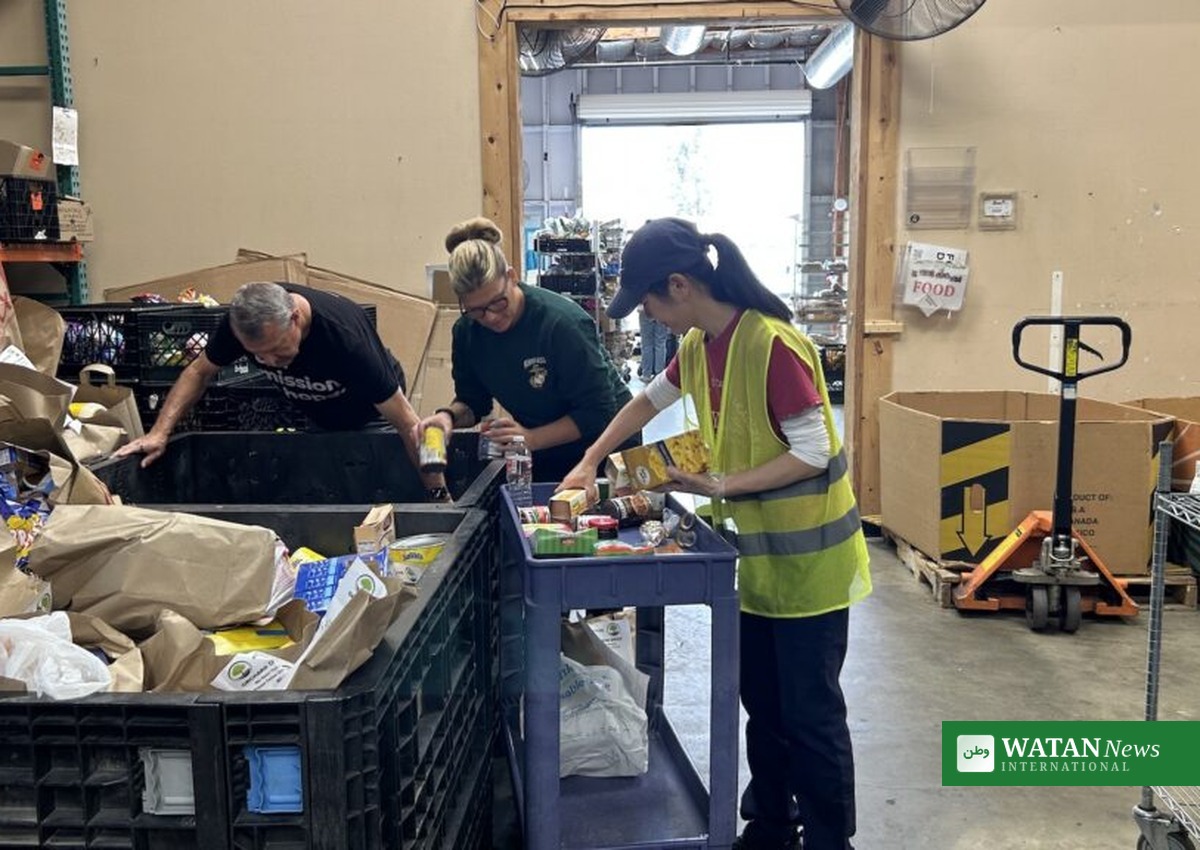
What the declaration asks
Governments endorsing the declaration commit to advancing food loss and waste reduction as a climate and food-systems solution, while being mindful of national circumstances. The commitments include setting reduction targets where appropriate, identifying the actors that implement food loss and waste reduction across the food value chain, and keeping food out of waste management and disposal streams — including open burning — to cut methane emissions.
Endorsing governments would also report the emissions avoided through the Paris Agreement’s transparency framework, in their Biennial Transparency Reports, and open climate finance to the food banks and other actors doing the work, for both mitigation and adaptation. Progress is to be reviewed together at COP32 and towards 2030, in cooperation with the Global Action Drive.
“Outreach to governments is under way, and endorsements will be announced as they are confirmed,” Ana Catalina Suárez Peña, senior director of Strategy and Innovation at the Global FoodBanking Network, told Nutrition Insight. The declaration is supported by the Academy of Global Food Economics and Policy, Ambition Loop, GAIA, Rethink Food Waste Through Economics and Data, Resilum, the Global FoodBanking Network, the World Resources Institute, the Waste and Resources Action Programme, and WWF.
The Global Action Drive is urging governments to include food loss and waste reduction in all their climate action plans — national climate plans, implementation plans, long-term strategies, national adaptation plans and methane mitigation strategies. “As countries move from their latest climate plans to implementation, the immediate opportunity lies in the implementation plans and methane strategies that turn those commitments into action, and in the next round of climate plans,” Suárez Peña said.
Why wasted food is a climate problem
Food loss and waste accounts for 8 to 10 percent of global greenhouse gas emissions, and more than one billion tonnes of food are lost or wasted every year, according to the UN Environment Programme. Food waste alone accounts for up to 14 percent of global methane emissions, and municipal waste and wastewater together generate almost 20 percent of human-caused methane, according to the Climate and Clean Air Coalition.
The declaration itself recalls that methane contributes around 0.5°C of current warming, and that global food production could fall by up to 14 percent by 2050 without effective adaptation. It cites UN Environment Programme reports finding that urgent reductions in methane, including through low-cost reductions of food loss and waste, can significantly lower peak warming — and that integrated climate and clean air action returns around 15 dollars in benefits for every dollar invested.
The declaration is framed around the 2030 Agenda for Sustainable Development, including target 12.3 on halving food waste by 2030, and it builds on earlier initiatives: the COP26 Global Methane Pledge, the COP28 UAE Declaration on Sustainable Agriculture, Resilient Food Systems and Climate Action, the COP29 Declaration on Reducing Methane from Organic Waste, and the Declaration on Surplus Food Sharing and Redistribution championed by Ireland.
Countries already moving
Several countries have already started putting food loss and waste into their climate plans. “Paraguay became the first country to address hunger and climate change together through food loss and waste prevention and food recovery in its climate plan, with quantified methane reduction targets and the national food bank designated as the official data provider,” Suárez Peña said.
“Mexico’s climate plan 3.0 includes food loss and waste measures in both the agriculture and waste sectors, including the recovery and distribution of food through food banks. Colombia’s climate plan 3.0 includes a food bank mitigation measure coordinated by the Association of Food Banks of Colombia,” she said. Colombia’s food bank measure is now reflected in its second Biennial Transparency Report, submitted in August 2026.
Chile’s climate plan 3.0 committed to developing a National Strategy to Prevent and Reduce Food Loss and Waste by 2026, while South Africa’s climate plan 3.0 identifies food loss and waste as a significant issue, citing its environmental and food security implications. In Côte d’Ivoire, the Ministry of Environment has acknowledged that the work of the national food bank is consistent with the country’s climate plan 3.0 and is moving toward formally recognising it as an initiative that contributes to climate change mitigation and adaptation.
Measuring the avoided emissions
Tracking progress is possible through the Paris Agreement’s transparency framework, through which governments can report how many emissions were avoided using data generated by the actors that deliver the measures. The Global FoodBanking Network’s FRAME methodology quantifies the methane emissions avoided by recovering food, and measures its contribution to four UN Sustainable Development Goals: Zero Hunger, Decent Work and Economic Growth, Responsible Consumption and Production, and Climate Action.
But targets can only succeed with funding. “The Declaration asks governments to enable food loss and waste reduction activities and the actors that deliver them to access climate finance for both mitigation and adaptation, and to encourage financial institutions, development banks, climate funds, philanthropy, and the private sector to finance and scale measurable reductions,” Suárez Peña said.
Early examples are emerging. In Ecuador, the Ministry of Environment recognised the Quito Food Bank as an official climate initiative and as a conditional mitigation measure, part of the national mitigation target in its second climate plan — and the food bank then secured UNIDO funding to upgrade its cold chain. FoodForward SA became the first food bank listed on South Africa’s Just Energy Transition Funding Platform, while Thailand, under its national voluntary emission reduction programme, approved a methodology for food surplus donated for human consumption, which opens a way into carbon markets.
Part of COP31’s zero-waste push
The declaration fits the COP31 Presidency’s decision to make zero waste and methane reduction one of its headline themes. The presidency has proposed halving the growth in global waste generation by 2035 and raising the global circular material use rate from 6.9 percent to at least 15 percent by 2035.
It also follows the launch, on 10 November, of the #OneBillion Challenge by COP31 Climate High-Level Champion Samed Ağırbaş, which aims to turn the one billion meals wasted daily into a global call to action and halve food waste by 2030. The challenge’s four priorities are to prevent food waste, redistribute surplus food, measure what is wasted, and recover what remains.
With the conference due to close on Friday, 20 November, the declaration’s supporters want food loss and waste written into the negotiated outcomes as well — so that the cheapest and fastest methane cuts available are no longer left out of the climate plans that are supposed to deliver them. Read how zero-waste approaches could avoid 149 billion tonnes of emissions by 2050.
FAKTA
- Declaration: COP31 Declaration on Reducing Food Loss and Waste for Climate Action, Food Security and Resilient Food Systems.
- Opened for endorsement: 6 November 2026, by the Global Action Drive coalition.
- Food loss and waste: 8 to 10 percent of global greenhouse gas emissions; more than one billion tonnes a year.
- Methane: food waste accounts for up to 14 percent of global methane emissions; methane contributes around 0.5°C of current warming.
- Global goal: halve food waste by 2030 under Sustainable Development Goal target 12.3.
Frequently asked questions
What is the COP31 Declaration on food loss and waste?
It is a declaration launched at COP31 in Antalya, open for endorsement by national governments and non-governmental organisations. It asks governments to treat food loss and waste reduction as a climate solution and to build it into their national climate plans, methane strategies and food security policies, with progress to be reviewed at COP32 and towards 2030.
Why is wasted food a climate issue?
Food loss and waste accounts for 8 to 10 percent of global greenhouse gas emissions, and rotting food in landfills produces methane, a powerful greenhouse gas. Food waste alone accounts for up to 14 percent of global methane emissions. Cutting food waste is therefore one of the fastest and cheapest ways to reduce methane and slow warming.
What do endorsing governments commit to?
They commit to working towards reduction targets where appropriate, identifying the actors that deliver food loss and waste reduction, keeping food out of waste streams including open burning, reporting the emissions avoided in their Biennial Transparency Reports, and opening climate finance to the food banks and other actors doing the work.
Which countries are already putting food waste into their climate plans?
Paraguay was the first country to address hunger and climate change together in its climate plan, with quantified methane targets. Mexico, Colombia, Chile and South Africa have included food loss and waste measures in their latest climate plans, and Côte d’Ivoire and Ecuador are moving to formally recognise their national food banks as climate initiatives.
How are the avoided emissions measured?
Governments can report avoided emissions through the Paris Agreement’s transparency framework, using data from the actors that deliver the measures. The Global FoodBanking Network’s FRAME methodology quantifies the methane emissions avoided by recovering food, and links the work to four Sustainable Development Goals: Zero Hunger, Decent Work and Economic Growth, Responsible Consumption and Production, and Climate Action.
Author

usmanch0013@gmail.com
Related Posts
COP31-erklæring: Madspild skal ind i klimaplanerne
- 0
- 1,650 word
En COP31-erklæring, der støttes af fødevare- og klimagrupper, opfordrer regeringer til at skrive reduktion af madspild og fødevaretab ind i deres nationale...
Read out all
کاپ31 اعلامیہ: خوراک کے ضیاع کو موسمیاتی منصوبوں میں شامل کیا جائے
خوراک اور موسمیات کی تنظیموں کی حمایت سے جاری کاپ31 اعلامیہ حکومتوں سے مطالبہ کر رہا ہے کہ وہ خوراک کے نقصان...
Read out all
COP31-udkast under pres, da ministre overtager forhandlingerne i Antalya
- 0
- 1,711 word
Ministre overtog COP31-forhandlingerne i Antalya tirsdag, da det første udkast til en mulig slutafgørelse blev mødt med kritik over fossile brændstoffer, elektrificering...
Read out all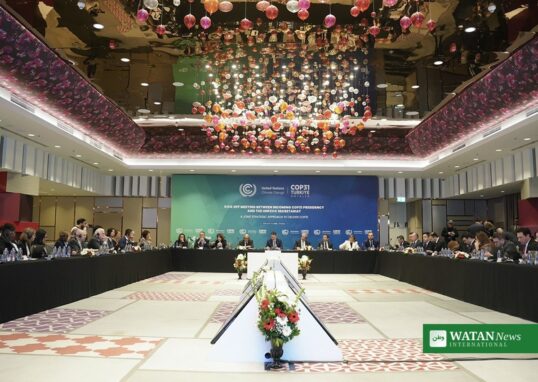
کاپ31: مسودہ معاہدے پر اعتراضات، وزرا نے مذاکرات سنبھال لیے
منگل کو وزرا نے انطالیہ میں کاپ31 مذاکرات کی قیادت سنبھال لی، جب کہ حتمی معاہدے کے پہلے مسودے پر فوسل فیول،...
Read out all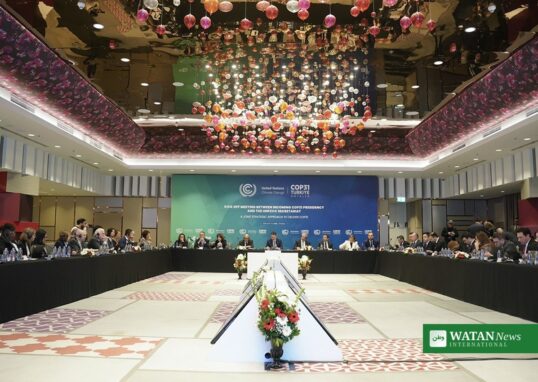
COP31 Draft Deal Under Fire as Ministers Take Over in Antalya
- 0
- 1,566 word
Ministers took over the COP31 talks in Antalya on Tuesday as the first draft of a possible final deal drew fire over...
Read out all
NATO Allies Discuss US Troop Levels in Europe as Pentagon Review Nears Deadline
- 0
- 889 words
NATO allies met Pentagon policy chief Elbridge Colby in Brussels on 17 November to discuss Washington's review of about 80,000 US troops...
Read out all