
- 0
- 1,587 word
Antalya — Countries launched the second Global Stocktake at COP31 on Wednesday, opening the Paris Agreement’s next five-yearly check on whether climate promises add up — even as ministers remained deadlocked over finance, fossil fuels and adaptation, with 21 issues still unresolved and new negotiating texts due early on Thursday.
The COP31 Presidency told delegations in a mid-week letter that 21 issues remain open, including adaptation, finance, mitigation and just transition, and that new texts on those negotiating tracks are due early on Thursday, with little room left for extra time. A fresh version of the wider political deal is also in the works after the first draft exposed divisions over fossil fuels, finance, the 1.5°C goal, electrification and science. COP31 is set to close on Friday, 20 November.
The second Global Stocktake begins
The second Global Stocktake is the Paris Agreement’s five-yearly reality check, measuring whether national plans and promises add up to enough action to cut emissions, adapt to climate change and support the countries most in need. The first Stocktake, completed at COP28 in Dubai in 2023, helped spur agreements to triple renewable energy capacity, double gains in energy efficiency and accelerate the transition away from fossil fuels in energy systems.
This one concludes in 2028 — the last before 2030. For UN climate chief Simon Stiell, the countdown has already begun. “We have two years,” he said, calling on governments to turn the first Stocktake’s targets into real-world progress. “Yes, geopolitical headwinds are fierce, but an ambitious outcome is within reach.”
Science itself is under pressure at the talks. The Intergovernmental Panel on Climate Change faces a dispute over timing: several vulnerable countries want its next major reports completed in time to inform the Stocktake, while others, including Russia, Saudi Arabia and China, argue the schedule is too compressed and could limit meaningful participation by developing-country scientists. IPCC Chair Jim Skea said the assessments would cover some of the biggest questions now facing negotiators. “The Working Group Two report… will cast light on collective progress towards achieving the global goal on adaptation,” he said. “It will address adaptation finance for the first time and responses to losses and damages.”
Twenty-one issues still open
Ministers met behind closed doors in the late afternoon for a Divan, a Turkish-style political open exchange aimed at narrowing their differences. Observers told UN News they were rather confident the conference would run at least one extra night beyond its scheduled Friday close.
Chris Bowen, Australia’s Minister for Climate Change and Energy and President of Negotiations, has said negotiators reached agreement on 48 items, while around 30 mandates still required outcomes. The first draft of the presidency-led cover decision, released on Monday, drew on more than 500 pages of submissions on behalf of more than 160 countries, and Bowen has stressed it was a starting point, not a final agreement. “This is a draft, a first draft. It won’t be the final draft,” he told reporters.
The transition away from fossil fuels remains one of the most contested issues. According to the Pacific Islands Climate Action Network, Russia rejected references to 1.5°C, while the Arab Group opposed including the transition away from fossil fuels in the programme. Türkiye’s 35×35 target — raising electricity’s share of global final energy use to 35 per cent by 2035 — now has the backing of 75 countries.
Finance talks ‘kicking the can down the road’
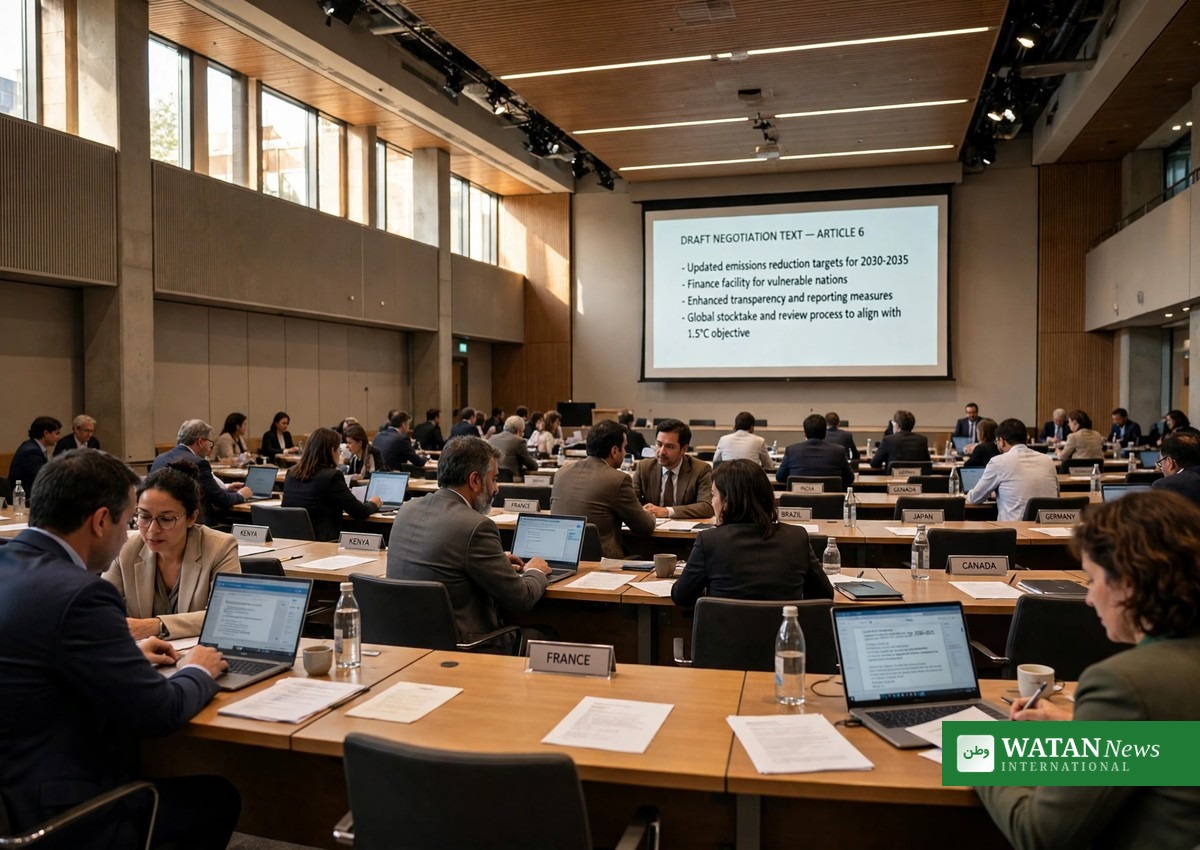
The sharpest exchanges on Wednesday were over who pays. Seher Raheja of India’s Centre for Science and Environment said finance talks were drifting towards delay rather than agreement, and that in one room the entire text remained in brackets — the negotiating shorthand for no agreement at all. “It’s kicking the can down the road,” she said. “You cannot demand ambition from developing countries while withholding the means to deliver it.”
On adaptation, Pooja Dave of Climate Action Network International was blunter still. “You made a promise, a commitment, and you are breaking that commitment,” she said. “This is literally about our survival.” She questioned the value of negotiating ever more elaborate ways to measure adaptation if countries lack the resources to protect people from worsening climate impacts. “When there is no adaptation on the ground, what are we monitoring?”
Negotiations on the Climate Finance Work Programme have broken down, with the G77 and China pushing for a formal launch centred on Article 9.1 of the Paris Agreement while the European Union favours a shorter procedural decision; the matter has now been referred to the COP Presidency, according to a WWF briefing issued on 18 November. The same briefing recorded new pledges of a combined 41 million euros to the Adaptation Fund from Germany, Ireland and Spain — a sum WWF described as far too small against the scale of need. The draft cover decision proposes tripling adaptation finance to at least 120 billion US dollars a year by 2035, against estimated needs of about 305 billion dollars a year by 2035, according to the UN Environment Programme’s 2026 Adaptation Gap Report.
Agriculture track collapses as food systems vanish from draft
The only agriculture track in the UN climate negotiations collapsed at COP31, with countries unable to find consensus on a text full of political red lines, including trade measures and adaptation finance. Its outcomes and future were once again kicked to the intersessional discussions in Bonn. Teresa Anderson, global climate-justice lead at ActionAid, told Carbon Brief that the introduction of trade measures to the negotiations “railroaded the whole thing”.
Despite appearing in the initial reflections on a cover decision, there was no mention of “food systems” in the draft cover text published on Monday. It did, however, include “nature-based solutions” and said it “welcomes” the Brazil-led roadmap on deforestation, which has broad support from countries. Oceans, meanwhile, were mentioned 21 times in the draft, including “deep concern” about the impacts of climate change on marine ecosystems and encouragement for parties to “accelerate” ocean-based action.
Wednesday was also Human, Social Development and Gender Day at the conference. At a high-level event, Brazilian climate negotiator Lilian Chagas argued that excluding women from climate planning makes action not only less fair but less effective. Tuvalu Prime Minister Feleti Teo spoke through the experiences of women on Funafuti, the country’s capital, who monitor disappearing shellfish, ration rainwater and move crops inland as seas rise. “They did not cause this crisis. Resilience has a limit. And beyond that limit is survival,” he said. Outside the negotiation rooms, civil society groups carried a giant signed banner demanding that workers and communities be protected as economies go green.
FAKTA
- What happened: COP31 launched the second Global Stocktake on Wednesday, 18 November 2026, in Antalya, Türkiye.
- Still open: 21 issues remain unresolved, including adaptation, finance, mitigation and just transition; new texts are due early on Thursday.
- Stocktake timeline: The second Stocktake concludes in 2028 — the last before 2030; the first, completed at COP28 in 2023, spurred the renewable energy and fossil fuel transition goals.
- Finance gap: The draft proposes at least 120 billion US dollars a year in adaptation finance by 2035; UNEP estimates needs of about 305 billion dollars a year by 2035.
- Electrification: Türkiye’s 35×35 target — 35 per cent of final energy from electricity by 2035 — is now backed by 75 countries.
- Collapsed track: The only agriculture track in the UN climate negotiations was sent back to intersessional talks in Bonn.
- Close: COP31 is scheduled to end on Friday, 20 November, but observers expect at least one extra night of talks.
What happens next
All eyes are now on the new negotiating texts due early on Thursday and on the fresh version of the wider political deal, which must bridge the divides the first draft exposed. Ministers will keep working through the remaining issues in the final two days, and the presidency’s letter leaves little room for delay: the texts must land, the differences must narrow, and the conference must close — on time or, as observers expect, a night late. The draft decision’s fate will show whether Antalya can turn a week of deadlock into an outcome the most vulnerable countries can live with. Read our earlier coverage of the first draft deal under fire as ministers took over and the fossil fuel transition roadmaps from 11 countries.
Frequently asked questions
What is the Global Stocktake?
It is the Paris Agreement’s five-yearly check on whether countries’ climate plans and promises add up to enough action on emissions, adaptation and support for vulnerable nations. The first Stocktake was completed at COP28 in Dubai in 2023; the second was launched at COP31 in Antalya and concludes in 2028.
Why is COP31 deadlocked?
Twenty-one issues remain unresolved, including adaptation, finance, mitigation and just transition. Countries are divided over fossil fuel language, the 1.5°C goal, electrification, science and how much money developed countries will provide.
What is the 35×35 target?
It is Türkiye’s COP31 presidency target to raise electricity’s share of global final energy use to 35 per cent by 2035, up from roughly 23 per cent today. According to UN News, 75 countries now back the target.
What happens if the talks run past Friday?
COP31 is scheduled to close on Friday, 20 November, but observers at the conference told UN News they were rather confident it would run at least one extra night. New negotiating texts are due early on Thursday, and a fresh version of the wider political deal is being prepared.
What happened to the agriculture negotiations?
Countries could not agree on the only agriculture track in the UN climate negotiations, so its outcomes were sent to the intersessional talks in Bonn. Trade measures and adaptation finance were among the political red lines that blocked consensus.
Author

usmanch0013@gmail.com
Related Posts
COP31-formandskabet bruger Tyrkiets Divan-tradition i det afsluttende pres for en aftale
- 0
- 989 words
COP31-præsident Murat Kurum og forhandlingspræsident Chris Bowen indkaldte til en Divan i Antalya for at hjælpe ministrene med at finde fælles grund...
Read out all
کاپ31: معاہدے کی حتمی کوشش میں صدارت نے ترکی کی دیوان روایت اپنائی
کاپ31 کے صدر مراد قوروم اور مذاکرات کے صدر کرس بوون نے انتالیہ میں دیوان بلایا، تاکہ ترکی کی صدیوں پرانی مشاورت...
Read out all
COP31 Presidency Turns to Türkiye’s Divan Tradition in Final Push for Agreement
- 0
- 957 words
COP31 President Murat Kurum and President of Negotiations Chris Bowen convened a Divan in Antalya, drawing on Türkiye's centuries-old tradition of counsel...
Read out all
Nul-affaldsbyer i centrum på COP31: Cirkulær handling skal ind i klimaplanerne
- 0
- 1,398 word
Nul-affaldsbyer indtog tirsdag centrum på COP31, da en session i Finland-pavillonen viste, hvordan byer omsætter cirkulære økonomiske idéer til praktisk klimahandling —...
Read out all
کاپ31: زیرو ویسٹ شہر مرکز توجہ، سرکلر معیشت موسمیاتی منصوبوں کا حصہ بنے گی
کاپ31 میں منگل کے روز زیرو ویسٹ شہر مرکز توجہ بن گئے، جب فن لینڈ پویلین کے سیشن نے دکھایا کہ شہر...
Read out all
Zero Waste Cities Take Centre Stage at COP31 as Circular Action Enters Climate Plans
- 0
- 1,385 word
Zero waste cities took centre stage at COP31 on Tuesday as a Finland Pavilion session showed how cities turn circular economy ideas...
Read out all