- 0
- 1,024 word
ANTALYA: Kazakhstan has brought a nine-million-tree reforestation plan to COP31, presenting its Halyk Ormany programme at the country’s national pavilion in Antalya as an example of how planting must be followed by years of care if new forests are to survive.
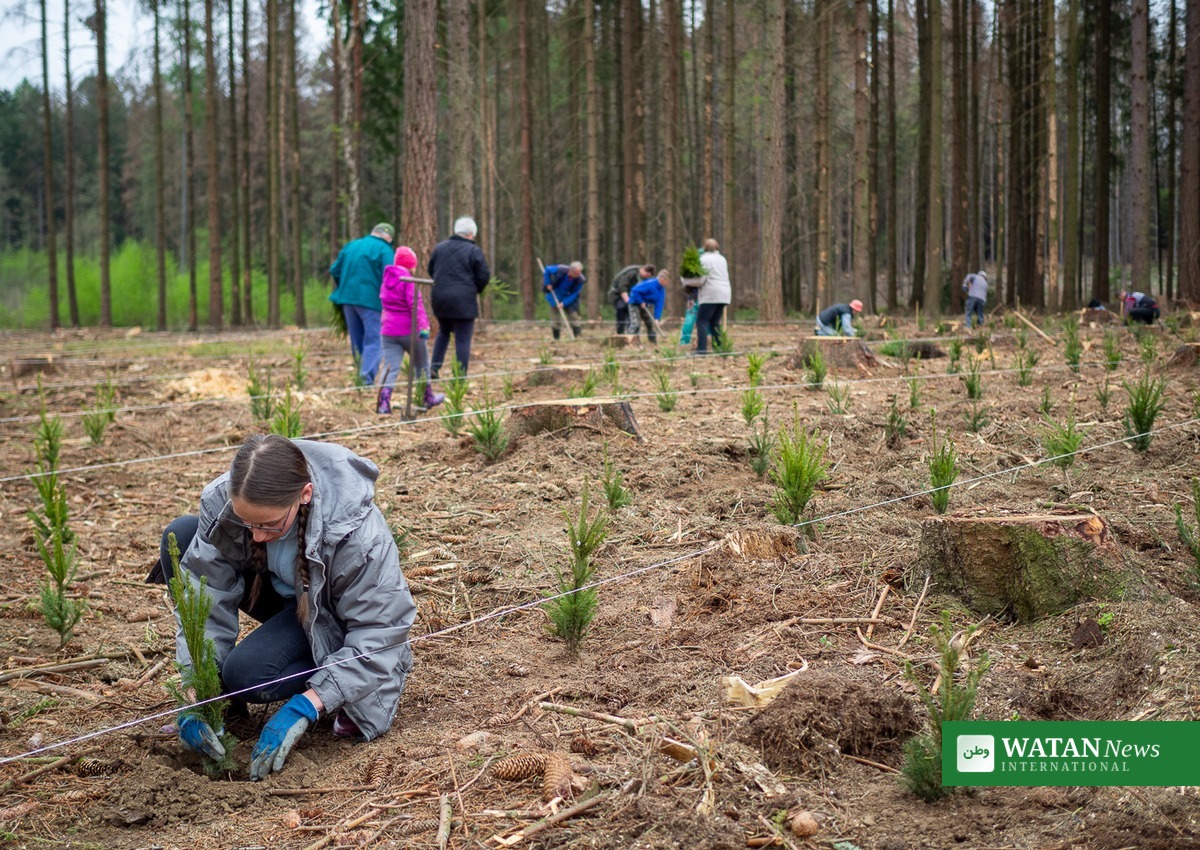
The five-year programme aims to plant nine million seedlings and saplings across more than 2,000 hectares, according to the presentation at COP31. More than three million have already been planted in 2025 and 2026, with over 2,000 volunteers taking part.
A five-year plan born from the 2023 fires
Halyk Ormany is run by the Halyk Charitable Foundation together with Kazakhstan’s Ministry of Ecology and Natural Resources. At the COP31 pavilion, Umut Shayakhmetova, a trustee of the foundation and chair of Halyk Bank’s management board, briefed Prime Minister Olzhas Bektenov on the project.
The programme was launched in autumn 2025 to restore forests damaged by wildfire, above all in the Semey Ormany State Forest Nature Reserve in the Abai Region, where fires in 2023 destroyed more than 60,000 hectares of forest. Fourteen forestry workers died protecting the reserve in those fires, the Times of Central Asia reported.
Planting is taking place at three sites: the Semey Ormany reserve, Ile-Alatau National Park and the green belt around the capital, Astana. The foundation has committed one billion tenge to the programme.
How the planting works
Halyk Ormany says its approach covers the whole cycle, from growing planting stock and preparing land to planting, aftercare and monitoring survival. The organisers describe it as a long-term investment rather than a one-off greening campaign.
In Semey Ormany the project uses two-year-old Scots pine seedlings, a species native to the area and suited to its soil, climate and rainfall. Cones are collected locally, dried and processed, seeds are quality-tested, and seedlings are grown in nurseries and hardened before transfer to forest sites. Planting is carried out and closely monitored by forestry specialists. Expected survival rates are between 70 and 90 per cent, with failed seedlings replaced.
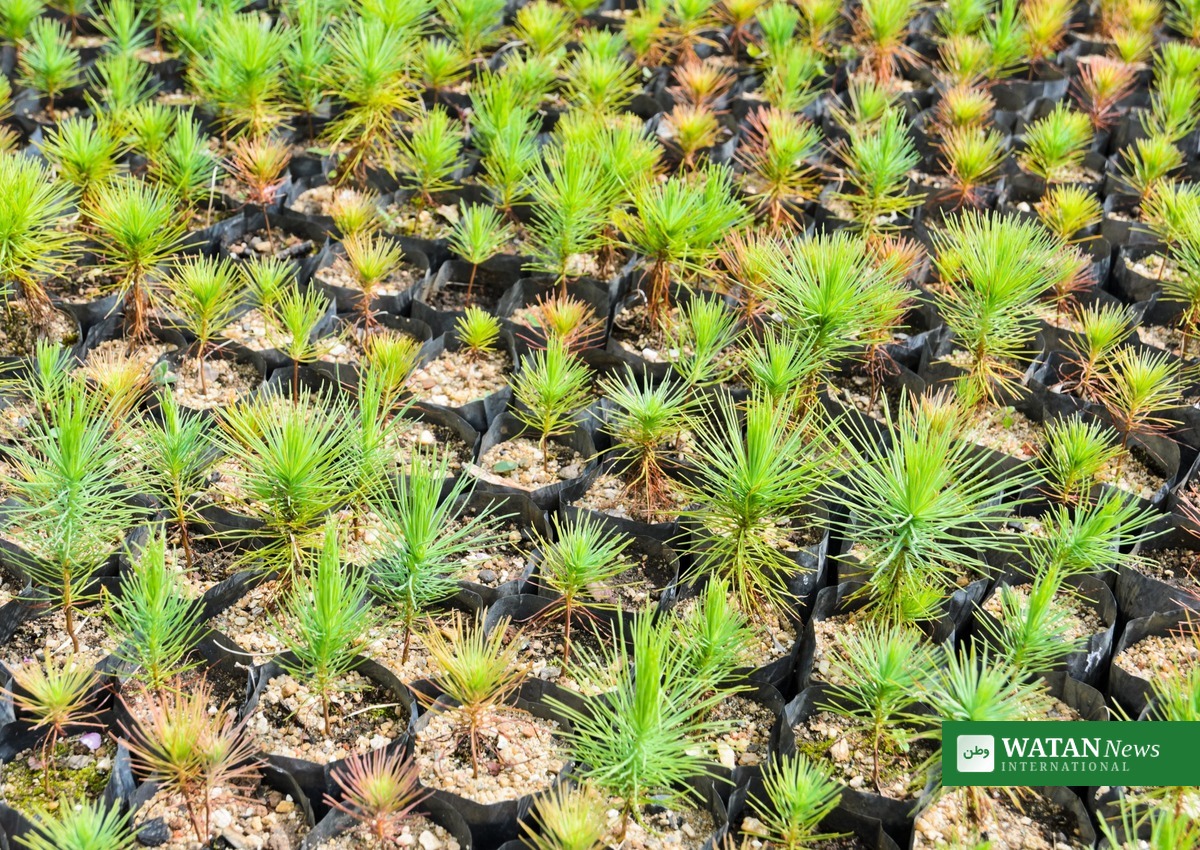
The programme has also funded irrigation modernisation in Semey Ormany worth more than 146 million tenge, about 321,000 US dollars, including new water-storage tanks, pipelines, pumps and sprinkler systems. In one experiment cited by the Times of Central Asia, locally grown seedlings achieved a 97 per cent survival rate, compared with 25 per cent for non-local stock tested elsewhere.
Since the launch, more than one million seedlings have been planted across 400 hectares in Semey Ormany alone, with a further 1,600 hectares to follow. During the autumn 2025 planting season, about 850,000 seedlings and saplings were planted and around 1,500 people, including activists, families and government representatives, took part.
A national planting drive behind the project
Halyk Ormany sits inside a much larger national effort. The Government of Kazakhstan said at COP31 that about 1.7 billion trees have been planted across the country in the past five years, and that a further 270 million seedlings are planned for 2027, taking the country towards the president’s goal of two billion trees.
More than six million Kazakhstanis take part in nature protection activities under the Taza Kazakhstan, or Clean Kazakhstan, initiative, which the government says has become a nationwide movement. Kazakhstan’s pavilion at COP31, a 250-square-metre space hosting 38 events, also presents reforestation and methane-reduction projects, a green energy corridor across the Caspian Sea, and work to restore the North Aral Sea.
Forests on the COP31 agenda
The Kazakh presentation came in a week when forests and the finance to protect them were central at COP31. At the leaders’ summit on forests on 11 November, philanthropies pledged 88 million US dollars to the Tropical Forest Forever Facility, a fund designed to pay tropical forest countries for keeping their forests standing.
Canada then announced on 15 November an initial contribution of up to 393 million US dollars to the facility. Carbon Brief reported on 18 November that the facility has so far mobilised 8.2 billion dollars, leaving it 1.8 billion short of its 10-billion-dollar target for public and philanthropic capital this year. Sixty-seven countries representing more than 90 per cent of the world’s tropical forests back the initiative, with at least 20 per cent of funding directed to Indigenous Peoples and local communities.
Republic of the Congo President Denis Sassou Nguesso told the COP31 leaders’ summit that countries should join the UN Decade for Afforestation and Reforestation, which runs from 2027 to 2036 after approval by the UN General Assembly in April 2025. His country planted nearly 200,000 trees on 6 November to mark its National Tree Day.
For more on forest pledges at COP31, read about Kenya renewing its pledge to end deforestation by 2030 and Ethiopia bringing 56 billion seedlings to COP31.
Key facts
- Programme: Halyk Ormany, a five-year reforestation programme in Kazakhstan.
- Target: Nine million seedlings and saplings on more than 2,000 hectares.
- Progress: More than three million planted in 2025–2026, with over 2,000 volunteers.
- Sites: Semey Ormany forest reserve, Ile-Alatau National Park and the Astana green belt.
- Funding: One billion tenge committed by the Halyk Charitable Foundation.
- Trigger: Wildfires in 2023 destroyed more than 60,000 hectares in Semey Ormany.
- COP31 link: Presented at Kazakhstan’s national pavilion in Antalya.
Frequently asked questions
What is Halyk Ormany?
Halyk Ormany is a five-year reforestation programme in Kazakhstan, run by the Halyk Charitable Foundation together with the Ministry of Ecology and Natural Resources. It aims to plant nine million trees across three ecologically important sites.
Why was the programme started?
It was launched in autumn 2025 to restore forests damaged by wildfire, above all in the Semey Ormany reserve, where fires in 2023 destroyed more than 60,000 hectares and 14 forestry workers lost their lives.
How many trees have been planted so far?
According to the presentation at COP31, more than three million seedlings and saplings have been planted in 2025 and 2026, including more than one million across 400 hectares in Semey Ormany alone.
Why does the programme focus on survival rates?
Mass planting campaigns often fail when nobody returns to water and care for seedlings. Halyk Ormany covers the whole cycle, from nurseries to aftercare, and expects 70 to 90 per cent of seedlings to survive, replacing those that fail.
How does this fit into COP31?
The programme was presented at Kazakhstan’s COP31 pavilion, where forests and forest finance were a major theme, including the Tropical Forest Forever Facility and the UN Decade for Afforestation and Reforestation running from 2027 to 2036.
Author

usmanch0013@gmail.com
Related Posts
Kasakhstan bringer en plan om 9 millioner træer til COP31 for at genoprette brandskadede skove
- 0
- 1,017 word
Kasakhstan præsenterede sit Halyk Ormany-genopretningsprogram ved COP31 i Antalya: ni millioner træer over fem år til at genoprette skove, der blev skadet...
Read out all
کاپ31 میں قازقستان کا 90 لاکھ درخت لگانے کا منصوبہ: ہالک اورمانی سے جنگلات کی بحالی
قازقستان نے کاپ31 میں اپنا ہالک اورمانی شجرکاری پروگرام پیش کیا: 2023 کی آگ سے متاثرہ جنگلات کی بحالی کے لیے پانچ...
Read out all
US and Venezuela Sign Military Deal as Hegseth Visits Caracas
- 0
- 1,206 word
The United States and Venezuela have signed a deal to reestablish military ties, US Defense Secretary Pete Hegseth announced during a visit...
Read out all
COP31-formandskabet bruger Tyrkiets Divan-tradition i det afsluttende pres for en aftale
- 0
- 989 words
COP31-præsident Murat Kurum og forhandlingspræsident Chris Bowen indkaldte til en Divan i Antalya for at hjælpe ministrene med at finde fælles grund...
Read out all
کاپ31: معاہدے کی حتمی کوشش میں صدارت نے ترکی کی دیوان روایت اپنائی
کاپ31 کے صدر مراد قوروم اور مذاکرات کے صدر کرس بوون نے انتالیہ میں دیوان بلایا، تاکہ ترکی کی صدیوں پرانی مشاورت...
Read out all
COP31 Presidency Turns to Türkiye’s Divan Tradition in Final Push for Agreement
- 0
- 957 words
COP31 President Murat Kurum and President of Negotiations Chris Bowen convened a Divan in Antalya, drawing on Türkiye's centuries-old tradition of counsel...
Read out all