- 0
- 1,206 word
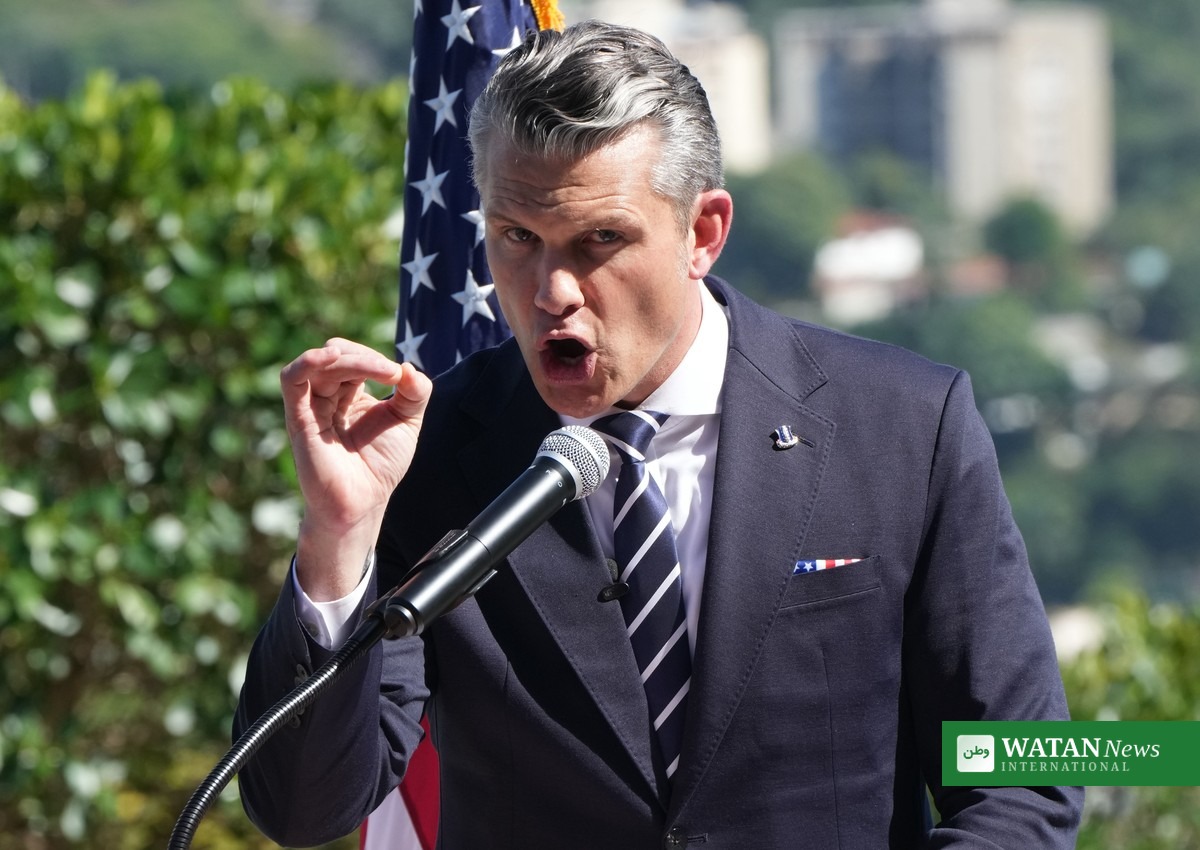
The United States and Venezuela have signed a US Venezuela military deal to reestablish military ties, US Defense Secretary Pete Hegseth announced on Wednesday during a visit to Caracas, in a dramatic reversal of relations more than 10 months after American forces captured Venezuelan leader Nicolas Maduro.
Hegseth signed the agreement with Venezuelan Defense Minister Gustavo Gonzalez Lopez at the presidential palace, according to footage broadcast on state television, and met interim President Delcy Rodriguez at Miraflores Palace. He described the deal as “historic” and said it would allow American and Venezuelan forces to train together and share intelligence, defence equipment and other capabilities.
FAKTA
- What happened: The United States and Venezuela signed an agreement to restore military cooperation on Wednesday, 18 November, during a visit to Caracas by US Defense Secretary Pete Hegseth, the first by a US defence secretary to the country.
- What the deal covers: Joint military training, intelligence sharing, defence equipment and other capabilities, according to Hegseth. The Pentagon has released no further details, and the timeline and scope of the agreement remain unclear.
- What Hegseth said: “Venezuela has gone from our most aggressive regional threat to a compliant security partner,” he said outside the US Embassy in Caracas, adding that the partnership would not be “cosmetic”.
- The background: US forces captured then-President Nicolas Maduro on 3 January. Delcy Rodriguez, a Maduro ally, took over as interim president; her court-allowed term expired in July, but she continues to function as Venezuela’s head of state.
- What comes next: Hegseth is scheduled to visit Colombia on Wednesday to discuss security ties and deliver military equipment, and is also expected to travel to Ecuador and Honduras as part of a tour of Latin America.
A historic reversal in Caracas
Hegseth signed the agreement with Gonzalez Lopez in the Simon Bolivar Hall at Miraflores Palace, in front of Rodriguez, with Venezuelan state television broadcasting the ceremony live. In a televised meeting with Rodriguez, he said the US looked forward to deepening defence cooperation “to ensure that the Venezuelan people are not threatened by foreign actors or narco-terrorists or criminals and that they are safe and secure inside sovereign borders.”
“The weight of this moment does not escape me,” Hegseth said outside the US Embassy. “Just one year ago, my presence here, our presence here would have been deemed impossible.”
Rodriguez welcomed the renewed cooperation, saying the two countries had turned difficult moments into an opportunity. “We have turned very difficult and very harsh moments for our people … into an extraordinary space for cooperation and the mutual benefit of our countries,” she said. She said she hoped the technical-military cooperation “can be brought to its highest possible level, so that … we may address common threats.”
The visit was not announced in advance, and the Defence Department did not provide a daily schedule for the secretary on the day of his visit. The Pentagon did not immediately offer further details on the new partnership.
What the US Venezuela military deal covers
Hegseth offered few specifics on what the military agreement would entail, beyond saying that the two countries’ militaries would be “training together, partnering together, sharing intelligence, more defense equipment and capabilities together.”
He insisted that the partnership would not be “cosmetic” and would require defence and security reforms in Venezuela to modernise its military and eliminate what he called “persistent threats” to both nations. Rodriguez said the training would help the country’s armed forces improve their operational equipment and gain access to new technologies.
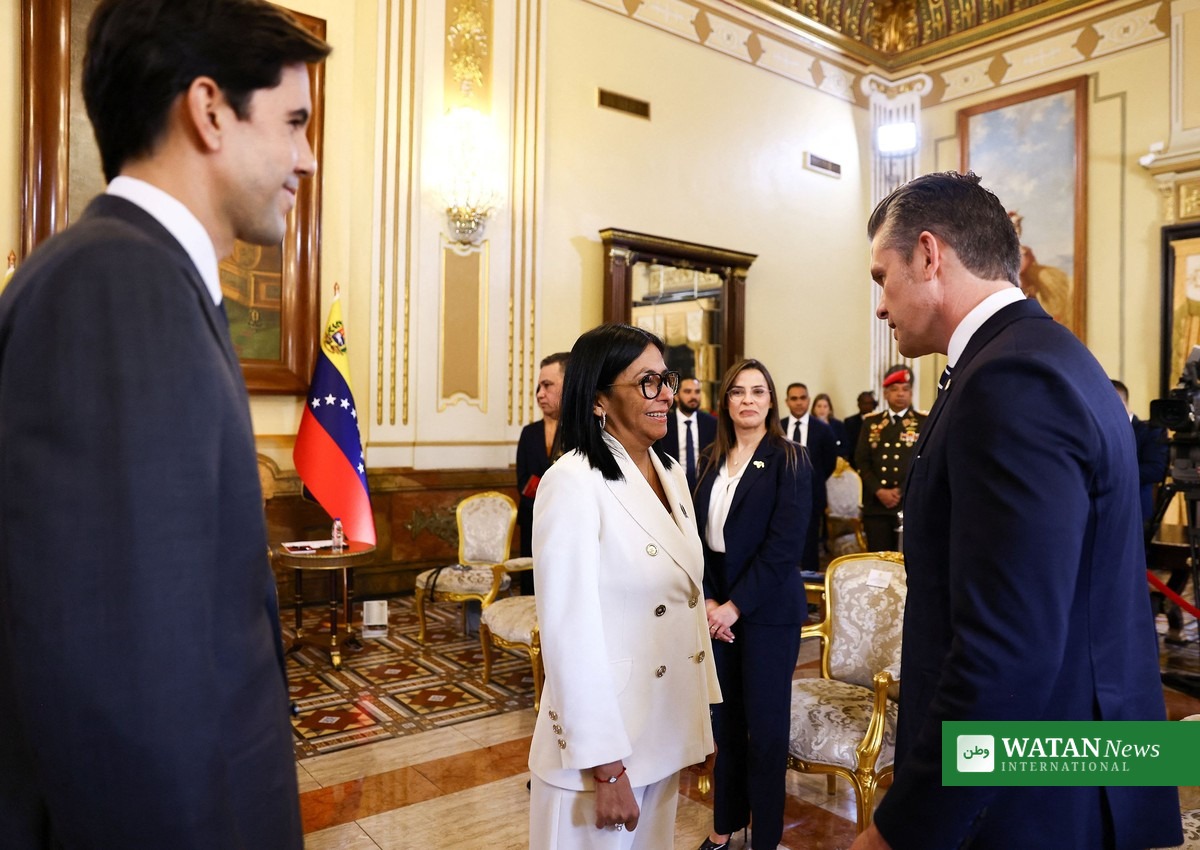
US Defense Secretary Pete Hegseth meets Venezuela’s interim President Delcy Rodriguez at Miraflores Palace in Caracas on 18 November.
The New York Times reported weeks earlier that the administration was negotiating a status-of-forces agreement that could lay the groundwork for a long-term US military presence in Venezuela, covering ship visits, training, exercises and humanitarian aid. It is not clear whether the agreement signed on Wednesday is that document, and neither side has published its text.
A wider US push in the region
Hegseth’s visit underscores efforts by President Donald Trump’s administration to deepen its influence in Venezuela since US forces ousted Maduro in January. He is the latest member of Trump’s Cabinet to travel to the country, following visits this year by the Interior and Energy secretaries, who focused on efforts to tap its oil reserves and critical minerals.
Trump said in August that Hegseth helped broker a sweeping deal for the US to take control of some Venezuelan oil reserves. The Trump administration says it has returned more than $12 billion, or almost 99%, of the revenue obtained from the sales of Venezuelan oil back to the country under the terms of the energy deal reached with Rodriguez’s government, according to a report released this month.
The head of US military operations in Latin America, Gen. Francis Donovan of US Southern Command, has also met interim authorities in Venezuela at least twice this year. The US military has been expanding its attention on the region since Trump returned to the White House, with the president promising to focus more on the Western Hemisphere and battle Latin American drug cartels.
To try to stem the flow of narcotics into the US, American forces have been attacking boats the Trump administration says are smuggling drugs in the Caribbean Sea and the eastern Pacific Ocean. At least 240 people have been killed since the administration began targeting those it calls “narcoterrorists” in September 2025, although US officials have released little evidence publicly to support claims the vessels were carrying drugs.
Watan News reported in November that Venezuela struck an ELN camp near the Colombian border, with at least 19 reported dead, as the interim government pressed its campaign against armed groups.
Uncertainty over Venezuela’s future
Hegseth’s visit comes at a time of uncertainty for Venezuelans regarding who will lead the nation in the coming months and years. No date has been announced for Venezuela’s next presidential election, and Rodriguez’s court-allowed interim term expired in July, although she continues to function as head of state.
Opposition leader Maria Corina Machado recently returned to Venezuela from exile following seven failed attempts that opposition activists claimed were thwarted by the government. US Secretary of State Marco Rubio has said her “safe” return was the result of “reconciliation talks” supported by his country, which he considered the “best opportunity” Venezuela has had in three decades to achieve free and fair elections and a lasting democracy.
Since Maduro’s capture, the US has been working with the acting Venezuelan government on the country’s democratic transition and political reconciliation. Rodriguez has met just about every demand from Washington, including releasing hundreds of political prisoners and making it easier for US companies to invest in the country.
The lack of a date for the next presidential election has left many Venezuelans conflicted. While relieved that Maduro is no longer president, many believe that the White House’s decision to prioritise reviving Venezuela’s oil industry over pro-democracy steps was the wrong approach for meaningful change in their country.
The deal adds a security dimension to Washington’s growing involvement in Venezuela. The Pentagon has given no date for when joint training or intelligence sharing under the agreement will begin.
Author

usmanch0013@gmail.com
Related Posts
COP31 Presidency Turns to Türkiye’s Divan Tradition in Final Push for Agreement
- 0
- 957 words
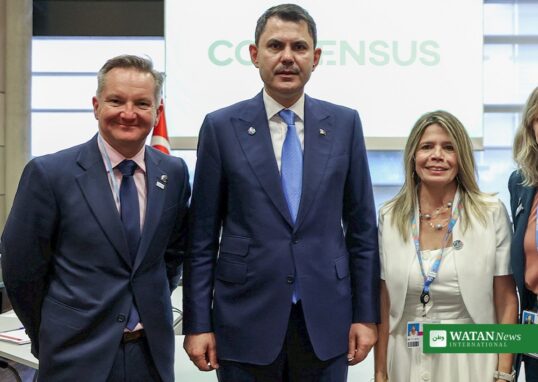
COP31 President Murat Kurum and President of Negotiations Chris Bowen convened a Divan in Antalya, drawing on Türkiye's centuries-old tradition of counsel...
Read out all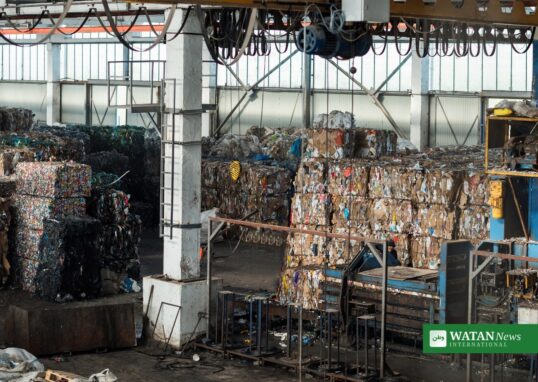
Zero Waste Cities Take Centre Stage at COP31 as Circular Action Enters Climate Plans
- 0
- 1,385 word
Zero waste cities took centre stage at COP31 on Tuesday as a Finland Pavilion session showed how cities turn circular economy ideas...
Read out all
COP31 Deadlock Deepens as Second Global Stocktake Launches and New Texts Due Thursday
- 0
- 1,587 word
Countries launched the second Global Stocktake at COP31 on Wednesday as ministers remained deadlocked over finance, fossil fuels and adaptation — with...
Read out all
UPSIDE Foods Launches Cultivated Chicken at Commercial Scale
- 0
- 804 words
UPSIDE Foods has launched the first cultivated meat product available at high-volume commercial scale, bringing lab-grown chicken to California restaurant menus at...
Read out all
Nvidia Reports Record $115.8 Billion Quarter as AI Demand Surges
- 0
- 790 words
Nvidia has reported record quarterly revenue of $115.8 billion, more than doubling from a year earlier as AI demand surged.
Read out all
Hakeem Jeffries Wins House Speaker Nomination, Set to Make History
- 0
- 817 words
House Democrats have nominated Hakeem Jeffries as speaker, putting him on course to become the first Black speaker in US history.
Read out all