- 0
- 550 words
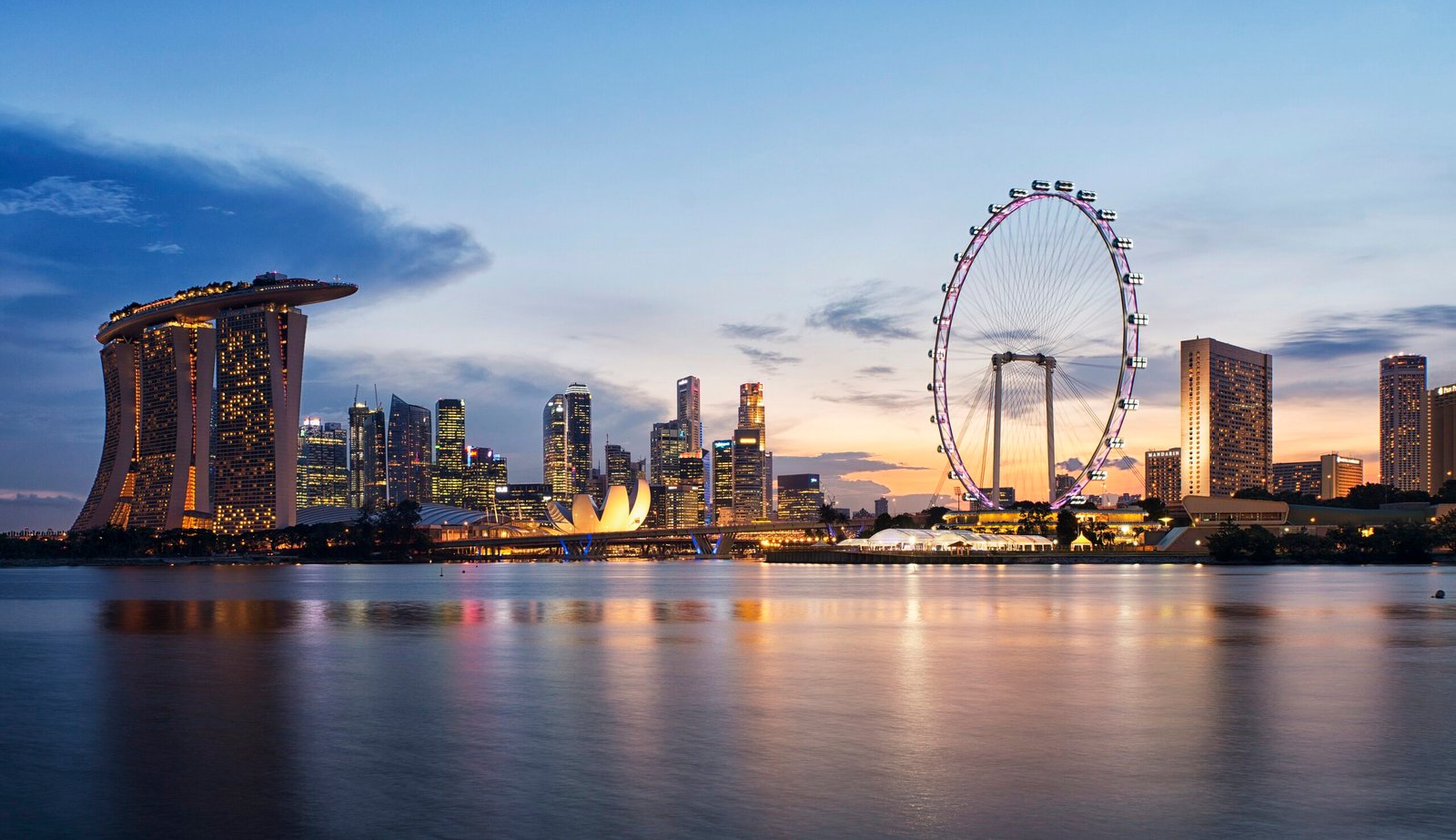
SINGAPORE — Governments, cities and industry partners announced a package of sustainable-cooling measures on 17 September 2026 at the Global Cooling Pledge Assembly in Singapore, according to the United Nations Environment Programme (UNEP). The package centres on a Global Roadmap on Heat Resilience for a Warming World and a Nature for Cooling Challenge, alongside finance and industry platforms intended to turn Global Cooling Pledge commitments into practical delivery.
UNEP says global demand for cooling is rising rapidly and that the worldwide stock of air conditioners could reach 5.6 billion by 2050 — nearly three times today’s levels — underscoring pressure to expand heat protection without locking in higher energy use and greenhouse gas emissions.
Nature for Cooling Challenge draws Brazil, Cambodia and Côte d’Ivoire
Brazil, Cambodia and Côte d’Ivoire have joined the Nature for Cooling Challenge, UNEP reported. The competition is led by UNEP and Sustainable Energy for All (SEforALL) and is backed by a US$3 million Global Environment Facility (GEF) grant and US$33 million in co-financing. Organisers say it will identify and support projects that use urban forests, parks, green roofs and other nature-based approaches; UNEP states such measures can reduce peak summer temperatures by up to 5°C.
The framing is deliberately dual-purpose: cooling people while cutting the climate footprint of conventional refrigeration and air conditioning. That links adaptation for extreme heat with mitigation of cooling-related emissions — a theme UNEP Executive Director Inger Andersen also emphasised in a 16 September speech in Nairobi ahead of New York Climate Week and COP31.
Heat-resilience roadmap and manufacturing platform
At the Assembly, governments began shaping the Global Roadmap on Heat Resilience for a Warming World. UNEP describes it as a flexible framework to help countries protect people and essential services — including schools, hospitals, workplaces and energy infrastructure — while integrating adaptation, resilience and mitigation objectives.
The meeting also introduced a Manufacturing Platform convened under the Cool Coalition and operationalised by UNEP’s United for Efficiency (U4E). The voluntary initiative is designed to expand efficient cooling equipment and accelerate the shift toward low- and ultra-low-global-warming-potential (GWP) refrigerants, with industry participants expected to set measurable commitments and report progress.
Assemblies and committees do not, by themselves, cut emissions. UNEP notes that financial support is being mobilised from governments including Denmark, Italy, Switzerland and the United Kingdom, and from philanthropies such as the Children’s Investment Fund Foundation, ClimateWorks Foundation (via its Clean Cooling Collaborative), the William and Flora Hewlett Foundation and Sequoia Climate Foundation. The Assembly also marked the first meeting of an Intergovernmental Committee on Cooling to track Global Cooling Pledge implementation.
What the Global Cooling Pledge aims to deliver
Launched at COP28 in 2023, the Global Cooling Pledge aims to reduce cooling-related emissions by at least 68% below 2022 levels by 2050, significantly expand access to sustainable cooling by 2030, and raise the global average efficiency of new air-conditioning equipment sold by 50% by 2030 from the 2022 installed baseline, UNEP says.
The Singapore announcements are presented as delivery tools — roadmap, nature challenge, manufacturing platform and finance — rather than a new negotiated treaty. Separate inaugural Cool Leaders awards were also named at the same Assembly; this report focuses on the heat-resilience and nature-cooling instruments.
How quickly countries translate the roadmap and challenge into funded urban projects and appliance standards will determine whether the Pledge’s 2030 and 2050 targets remain credible as heat risk rises.
Author

watannews321@gmail.com
Related Posts

xAI Launches Grok 4.7 for Coding and Knowledge Work — Stronger Than 4.6, Still Mid-Pack on Independent Scores
- 0
- 532 words
xAI’s Grok 4.7 ships at the same $2/$6 token price as Grok 4.6, with company gains on coding benches and a GitHub...
Read out all
Apple Special-Projects Veteran Emerges With $100M to Put Dual-Arm Robots on Warehouse Floors
- 0
- 709 words
Hamza Derbas co-founded Maven Robotics in 2024 with little more than a robot sketch. Two years later, the Santa Clara startup exits...
Read out all
At 27, Tsinghua’s Youngest AI Professor Raises Nearly $50M for Self-Evolving Models
- 0
- 727 words
Yongchao Chen turned down a DeepMind path to found Beijing-based Apex Intelligence, betting that recursive self-improvement—not bigger chatbots—will define the next wave...
Read out all
Africa No Filter opens 2026 Voices for Climate Justice storytelling grants — deadline 25 September
- 0
- 444 words
Africa-focused green journalism call: 15–20 storytellers, up to US$4,000 grants, training on climate–debt–gender–fossil fuels; applications close 25 Sep 2026.
Read out all
Turkey’s ecological spotlight: Hrant Dink Award meets hard realities for environmental reporters
- 0
- 451 words
Süheyla Doğan’s 15 Sep 2026 Hrant Dink Award elevates Kazdağları ecology as ECPMF and RSF document SLAPPs and information barriers facing Turkey’s...
Read out all
After COP29, Azerbaijan journalists push deeper climate investigations through EaP network
- 0
- 428 words
n-ost’s EaP climate investigations programme pairs Azerbaijan and regional reporters with EU mentors for energy, forest and climate-justice probes after Baku’s COP29...
Read out all