- 0
- 543 words
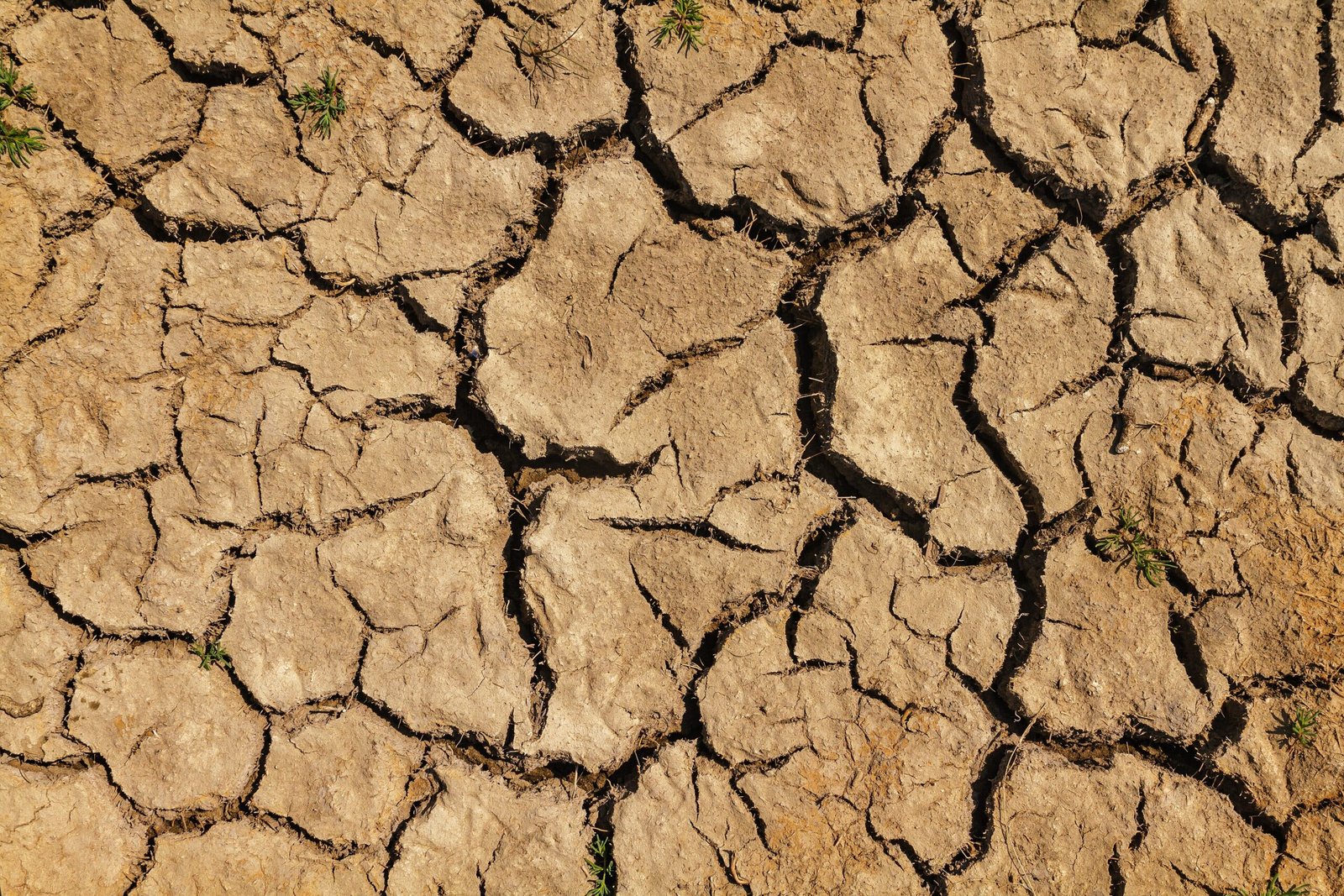
NAIROBI — Global temperature rise is set to cross 1.5°C above pre-industrial levels, likely within the next few years, according to a United Nations Environment Programme (UNEP) report released on 2 September 2026. The agency argues that an “overshoot, peak and decline” pathway remains the best remaining option to limit how high and how long warming stays above the Paris Agreement’s 1.5°C guardrail — and to try to return below it.
The spotlight report, Limiting Overshoot — Navigating exceedance of 1.5°C and pathways towards return, treats overshoot not as a destination but as a dynamic sequence: crossing 1.5°C, peaking, then bringing temperatures down again. UNEP says that framing is meant to clarify public and policy choices as exceedance becomes widely assessed as unavoidable under current policies.
What “overshoot, peak and decline” means
In UNEP’s account, the pathway rests on three linked strands. First, immediate and sustained cuts in greenhouse gas emissions — including methane — on the road to net-zero, to keep the peak as low as possible. Second, adaptation that reduces vulnerability to impacts that cannot be avoided, recognising that adaptation has limits and that some losses may be irreversible if peaks are not minimised. Third, long-term net-negative emissions, with carefully governed carbon dioxide removal (CDR) as part of the mix.
The most optimistic scenario cited in the press release sees temperature rise peak around 1.8°C. Most other scenarios imply higher peaks. Above 1.5°C, UNEP warns, risks intensify with every extra fraction of a degree and every additional year of exceedance — from more extreme weather and ecosystem loss to greater likelihood of tipping points such as ice-sheet destabilisation, Amazon degradation or disruption of the Atlantic Meridional Overturning Circulation.
UNEP stresses that CDR is additional to, not a substitute for, deep emissions cuts. It says removals can only contribute credibly to a return below 1.5°C if peak warming remains well below 2°C and residual emissions are reduced, with strong governance for environmental integrity and equity.
Mitigation and adaptation must move together
The report’s central public message is urgency rather than resignation. Mitigation and adaptation are described as mutually reinforcing; interventions that deliver both — for example nature-based cooling — should be prioritised. Equity and justice are cast as enabling conditions: countries with greater responsibility for climate change should move fastest and with the greatest ambition.
UN Secretary-General António Guterres, quoted in the UNEP release, urged making the overshoot “as small and short as possible,” calling for an “overshoot of ambition.” UNEP Executive Director Inger Andersen said impacts already show that climate risks strike faster and last longer, and that exceedance of 1.5°C must be kept as small and short as possible.
Carrying the science into Climate Week and COP31
On 16 September, Andersen told UNEP’s Committee of Permanent Representatives that she would take Limiting Overshoot messages to the UN General Assembly and New York Climate Week, and similar science into COP31 in Antalya, Türkiye, in November — alongside upcoming Adaptation Gap and Emissions Gap reports then still moving toward completion.
For readers, the practical takeaway is stark but bounded: crossing 1.5°C is now treated as near-term likely; the height and duration of that exceedance still depend on how fast emissions fall, how seriously adaptation scales, and whether CDR is governed rather than used as an excuse for delay.
Author

watannews321@gmail.com
Related Posts
xAI Launches Grok 4.7 for Coding and Knowledge Work — Stronger Than 4.6, Still Mid-Pack on Independent Scores
- 0
- 532 words
xAI’s Grok 4.7 ships at the same $2/$6 token price as Grok 4.6, with company gains on coding benches and a GitHub...
Read out all
Apple Special-Projects Veteran Emerges With $100M to Put Dual-Arm Robots on Warehouse Floors
- 0
- 709 words
Hamza Derbas co-founded Maven Robotics in 2024 with little more than a robot sketch. Two years later, the Santa Clara startup exits...
Read out all
At 27, Tsinghua’s Youngest AI Professor Raises Nearly $50M for Self-Evolving Models
- 0
- 727 words
Yongchao Chen turned down a DeepMind path to found Beijing-based Apex Intelligence, betting that recursive self-improvement—not bigger chatbots—will define the next wave...
Read out all
Africa No Filter opens 2026 Voices for Climate Justice storytelling grants — deadline 25 September
- 0
- 444 words
Africa-focused green journalism call: 15–20 storytellers, up to US$4,000 grants, training on climate–debt–gender–fossil fuels; applications close 25 Sep 2026.
Read out all
Turkey’s ecological spotlight: Hrant Dink Award meets hard realities for environmental reporters
- 0
- 451 words
Süheyla Doğan’s 15 Sep 2026 Hrant Dink Award elevates Kazdağları ecology as ECPMF and RSF document SLAPPs and information barriers facing Turkey’s...
Read out all
After COP29, Azerbaijan journalists push deeper climate investigations through EaP network
- 0
- 428 words
n-ost’s EaP climate investigations programme pairs Azerbaijan and regional reporters with EU mentors for energy, forest and climate-justice probes after Baku’s COP29...
Read out all