- 0
- 1,057 word
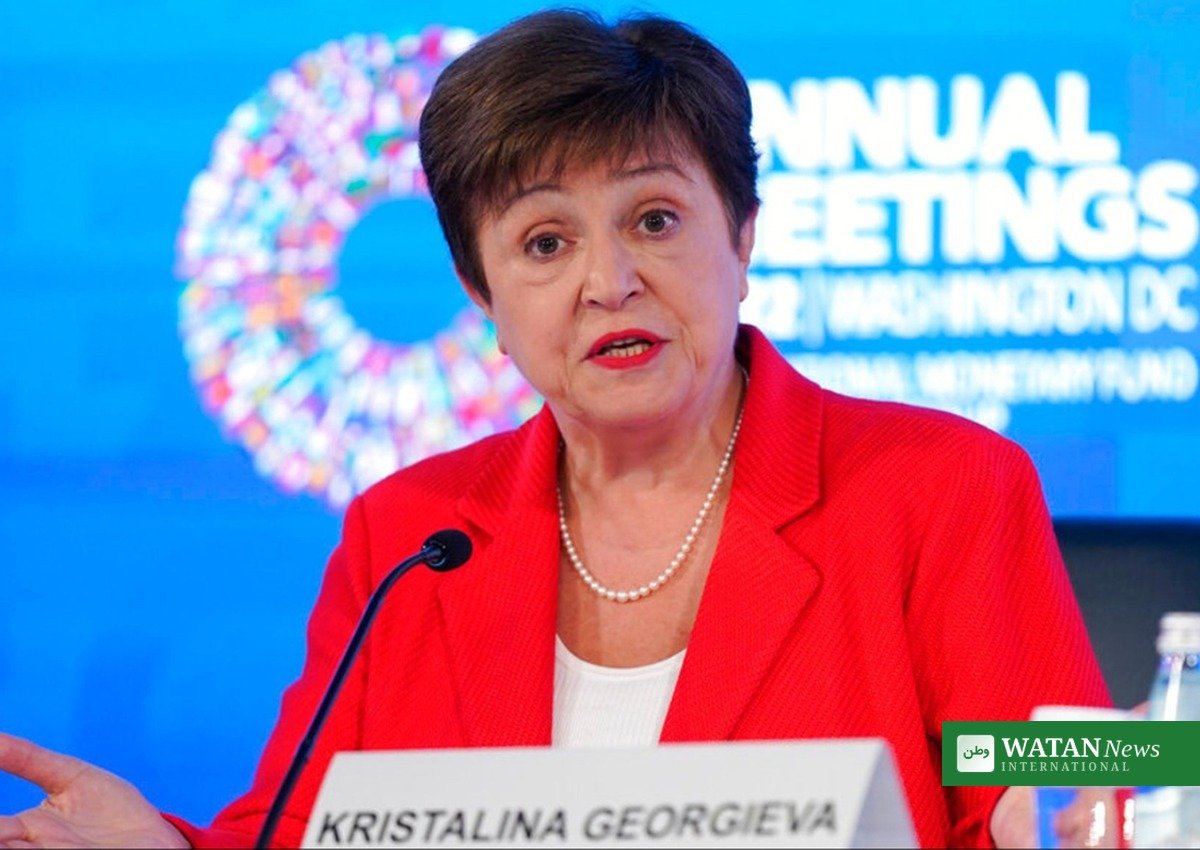
The global economy is under threat from persistently high energy prices, record public debt and risks from the AI investment boom, International Monetary Fund Managing Director Kristalina Georgieva warned on Wednesday, urging governments to implement protective fiscal and monetary policy measures. The IMF Georgieva warning came in a speech previewing the IMF and World Bank Annual Meetings next week in Bangkok.
FAKTA: The IMF Georgieva Warning at a Glance
- Who: IMF Managing Director Kristalina Georgieva, in a speech in Singapore on 7 October 2026.
- Warning: High energy prices, record public debt near 100% of GDP, and AI investment risks threaten global growth.
- Energy: Oil prices remain at $100 a barrel; US, German and Japanese 10-year yields at multi-decade highs.
- Debt: Global public debt is at its highest level since World War Two and is projected to exceed 100% of GDP before 2030.
- Policy call: “Prudently hawkish” monetary policy; rate hikes by the Fed, ECB and Bank of Japan called “highly appropriate.”
IMF Georgieva Warning: Two Shocks Pull the World Apart
Ms. Georgieva said the world was being pulled in two directions — a negative energy supply shock from the Middle East conflicts and a positive demand shock from artificial intelligence that is also fuelling inflation. She said the combined impact of these two forces was highly uneven across the world, adding that the AI boom was bypassing many countries.
New IMF growth forecasts to be released during the Bangkok meetings will show the biggest growth downgrades in economies ravaged by war, Ms. Georgieva said. These include Ukraine, suffering significant damage to civilian and economic infrastructure, and Gulf countries hit by Iranian strikes and sharply reduced energy exports.
The July World Economic Outlook had forecast sluggish 3.0% global growth in 2026 with a rebound to 3.4% in 2027 — but that assumed the Strait of Hormuz would start to reopen in mid-July and return to pre-war conditions by March 2027, with oil averaging $89 a barrel in 2026 and $78 in 2027.
Energy Prices and Bond Yields at Multi-Decade Highs
Ms. Georgieva said oil prices remain at $100 a barrel, with impaired refining capacity adding another $100 in “crack-spread” margins per barrel for key products including diesel. The winter heating season will boost demand even as natural gas supplies remain restricted by threats to LNG shipping through the Strait of Hormuz.
She said the problem of high energy prices would likely persist for some time even if the war in the Gulf ended soon, adding that Brent crude oil futures predict high oil prices through 2027.
Higher energy prices are pushing up inflation, policy rates and benchmark bond yields, she noted: US, German and Japanese 10-year sovereign yields are now at their highest levels since 2007, 2009 and 1996 respectively, and still climbing.
Record Public Debt Nears 100% of GDP
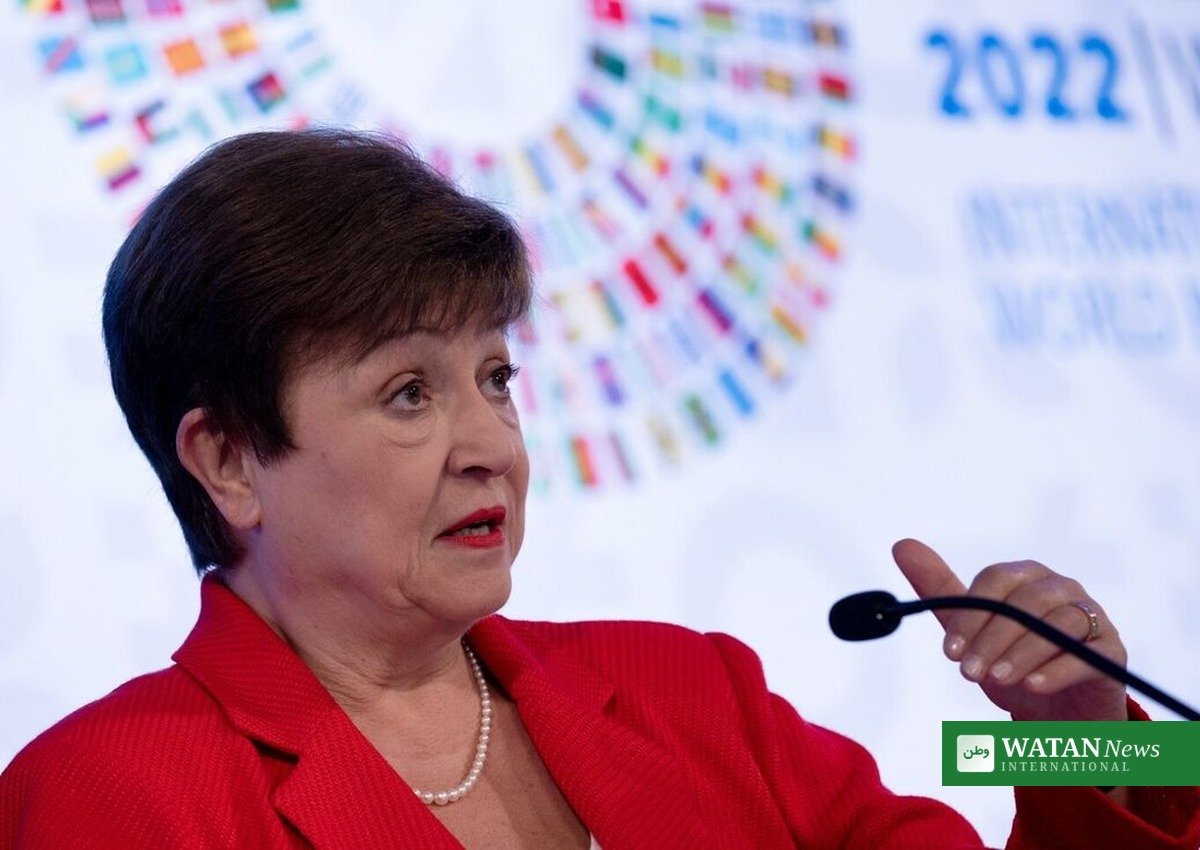
Adding to the worries to be discussed by the IMF’s 191 member countries next week is a growing public debt burden that is sapping growth and adding inflationary pressures. The IMF says public debt is at the highest level since World War Two and is projected to exceed 100% of GDP before 2030.
Ms. Georgieva singled out advanced economies, led by the United States, as the “worst offenders” on debt loads, with debt-to-GDP ratios higher than emerging markets and low-income countries. Policymakers can no longer rely on higher growth rates alone to solve fiscal problems, she said.
She said she did not see decisive action in the high-debt advanced economies, where the need of the hour is for credible medium-term fiscal consolidation plans — supported in some cases by upfront fiscal measures — to take some pressure off monetary policy.
After five-and-a-half years of above-target inflation, she said inflationary pressures were persisting — from the AI build-out, energy and food price shocks, tariffs, higher defence spending and higher debt service costs. She said it may be a good time for a prudently hawkish bias in many countries’ monetary policy, calling rate hikes by the US Federal Reserve, the ECB and the Bank of Japan “highly appropriate.”
AI Investment Boom: Boom or Bubble?
Ms. Georgieva highlighted risks from AI, where investment as a share of GDP is likely to exceed that of railroads, electricity grids or telecommunications infrastructure. The rising economic and financial concentration puts pressure on AI companies to deliver productivity and earnings gains to justify lofty valuations — warning that market disappointment could turn into “a far-reaching shock.”
But she said IMF research suggests that AI, done right, could add half a percentage point of extra world growth annually. AI preparedness is key, she said, including regulatory guardrails to manage AI’s substantial perils — including large-scale labour market fallout, serious cyber and stability risks, and frontier models threatening to escape human control.
Separately, the IMF’s October 2026 Fiscal Monitor has urged governments to redesign tax systems to raise revenue without discouraging private investment, innovation and job creation — noting that global public debt is projected to exceed 100% of GDP before 2030 while medium-term global growth stays subdued at about 3%.
For more on markets and the economy, see Watan News business coverage.

Conclusion
Georgieva’s message is one of the IMF’s starkest in years: the combination of an energy shock, record debt and a credit-fuelled AI boom leaves little room for error. Her call for fiscal consolidation and hawkish monetary policy will be politically painful — especially in Europe’s heavily indebted governments — but she argues the alternative is worse.
FAQ
What did the IMF chief warn about?
Kristalina Georgieva warned that persistently high energy prices, record public debt nearing 100% of global GDP, and risks from the AI investment boom threaten global economic growth.
Why are energy prices so high?
An energy supply shock from the Middle East conflicts has kept oil at $100 a barrel, while threats to LNG shipping through the Strait of Hormuz are restricting natural gas supplies.
What is “prudently hawkish” monetary policy?
It means central banks should lean toward keeping interest rates higher to fight inflation rather than cutting them — Georgieva said rate hikes by the US Federal Reserve, the ECB and the Bank of Japan were “highly appropriate.”
When are the IMF Annual Meetings?
The IMF and World Bank Annual Meetings take place next week in Bangkok, where new IMF growth forecasts will be released.
Author

usman2344913@gmail.com
Related Posts
French Students Demand More Funding in New Protests
- 0
- 808 words
French high school and university students were called out to protest again on Thursday, two days after a large turnout demanding more...
Read out all
Ireland Funds €1.5M Drive to Restore 50 Hectares of Mangroves in South-East Liberia
- 0
- 593 words
Ireland has committed €1.5 million to rehabilitate 50 hectares of mangrove forests and 20 hectares of coastal coconut plantations in south-east Liberia,...
Read out all
Plastic Bank Seeks More Philippine Partners to Scale Plastic Waste Collection
- 0
- 684 words
Plastic Bank, the Canadian social enterprise behind one of the world’s largest bottle collection networks, is courting more Philippine companies to join...
Read out all
UN Chief Guterres Urges Developed Nations to Deliver Climate Finance Ahead of COP31 in Türkiye
- 0
- 543 words
UN Secretary-General António Guterres on Tuesday urged developed nations to deliver on their promises of climate finance and technology to build resilience...
Read out allTrump falsely claims Iran could destroy Los Angeles or San Diego
- 0
- 708 words
Former President Donald Trump has once again repeated his unsubstantiated claim that Iran, a nation without nuclear weapons, possesses the capability to...
Read out allDNC Sues Trump Administration Over Taxpayer-Funded Presidential Ads
- 0
- 904 words
The Democratic National Committee (DNC) has filed a lawsuit against President Donald Trump’s administration, alleging the illegal use of taxpayer funds for...
Read out all