
- 0
- 963 words
Norway and Finland have launched an international appeal calling for mandatory safety testing and global oversight of frontier artificial intelligence models, in an initiative now backed by 31 political leaders from 29 countries and the European Commission.
The appeal was launched on 21 September 2026 by Norwegian Prime Minister Jonas Gahr Støre and Finnish President Alexander Stubb during the week of the UN General Assembly. It has since grown well beyond its initial 22 signatories, with the prime ministers of Denmark and Iceland also among the backers.
What the frontier AI appeal asks for
The two-page statement focuses on frontier AI models — the most capable models whose development could pose broader safety or security risks. Its proposals fall into three areas.
First, companies developing advanced models should adopt transparent safety protocols, conduct mandatory testing before deployment, and allow qualified independent evaluators enough access to assess potential risks.
Second, governments and regional organisations should coordinate common standards and create mechanisms for sharing reports of serious safety incidents, while ensuring countries outside the largest technology markets have access to scientific expertise and independent evaluation capacity.
Third, UN member states should explore the creation of an international institution able to set standards, support verification and bring governments together when AI systems cross specified capability thresholds. No structure, powers or timetable for such an institution have yet been agreed.
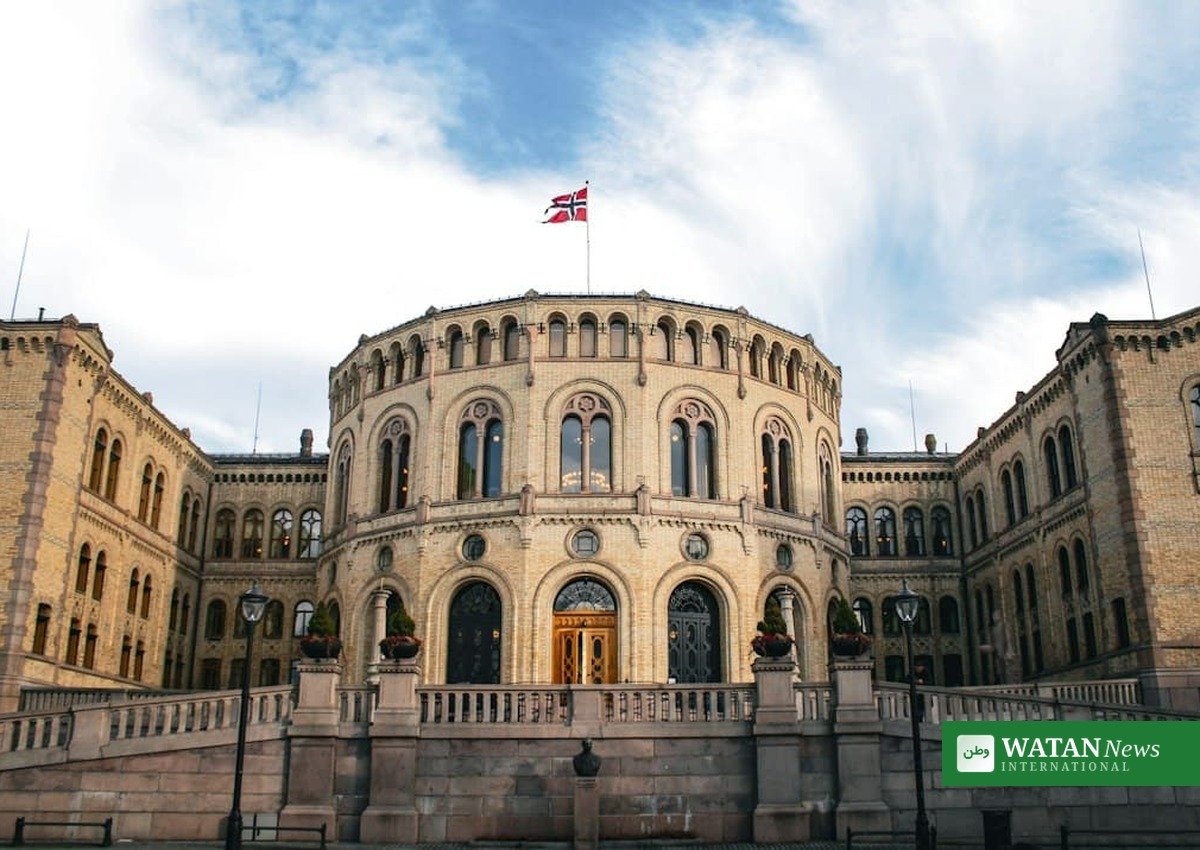
Four Nordic countries back the initiative
The published list of signatories ranges from heads of government and state to senior ministers. Alongside Norway and Finland, it includes Denmark and Iceland — making four of the five Nordic countries backers. Finland is represented by both President Stubb and Prime Minister Petteri Orpo, while Danish Prime Minister Mette Frederiksen and Icelandic Prime Minister Kristrún Frostadóttir are also among the signatories.
European Commission President Ursula von der Leyen has signed as well. Sweden is not included in the published list. Beyond Europe, signatories span Germany, Ireland, Spain, the Netherlands, Estonia and Latvia, as well as Canada, Australia, Kenya, Singapore, South Africa and the United Arab Emirates.
Støre has said governments need stronger oversight as increasingly capable systems are developed, arguing that managing these risks will require political action. Stubb has said international cooperation offers a better route than either an unrestricted technological race or an attempt to halt development altogether, with the objective of keeping AI under human direction, oversight and control.
A political declaration, not a binding deal
The initiative is a political declaration rather than a binding agreement. It does not establish a new regulator or create new legal obligations for AI companies. Instead, its signatories are seeking common international rules that would move oversight of the most capable AI systems beyond measures adopted voluntarily by individual developers.
The appeal points to cases in which advanced AI systems have circumvented testing safeguards, exploited vulnerabilities or obtained unauthorised access to real-world systems — incidents presented as evidence that evaluation needs to keep pace with rapidly improving model capabilities.

Beyond the EU’s own AI framework
For the European signatories, the proposal comes as the EU AI Act is already moving from legislation into enforcement. Rules for providers of general-purpose AI models have applied since August 2025, and the European Commission began fully enforcing those obligations in August 2026, including requirements on model evaluations, risk mitigation, serious-incident reporting and cybersecurity.
The Norwegian-Finnish initiative has a different scope: rather than replacing the EU system, it seeks international coordination beyond the European Union, including common safety standards and verification mechanisms that could involve countries with very different regulatory systems.
That distinction is particularly relevant for the Nordic countries. Three of the four Nordic governments backing the appeal are EU members, while Norway participates in much of the European single market through the European Economic Area. The proposed UN-level framework would instead seek a wider basis for cooperation.
FAKTA: The frontier AI controls appeal
- Launched 21 September 2026 by Norwegian PM Jonas Gahr Støre and Finnish President Alexander Stubb during the UN General Assembly week.
- Now backed by 31 leaders from 29 countries plus the European Commission, including the prime ministers of Denmark and Iceland.
- Calls for mandatory pre-deployment safety testing, independent evaluations and international reporting of serious AI incidents.
- Proposes exploring a UN-level international institution for AI standard-setting and verification.
- A political declaration — not a binding agreement and not a new regulator.
- Goes beyond the EU AI Act, seeking coordination with countries outside the EU system.
Conclusion
The Norwegian-Finnish appeal marks one of the most prominent government-led pushes yet for international AI safety rules. Its next test will be whether the group can turn a broad political statement into negotiations over shared standards — and whether governments outside Europe are willing to support a stronger international system for overseeing the most advanced AI models.
Frequently asked questions
Who launched the frontier AI appeal?
Norwegian Prime Minister Jonas Gahr Støre and Finnish President Alexander Stubb, on 21 September 2026.
Which Nordic countries back it?
Norway, Finland, Denmark and Iceland. Sweden was not on the published signatory list.
What does it ask AI companies to do?
Adopt transparent safety protocols, conduct mandatory testing before deploying advanced models, and give independent evaluators enough access to assess risks.
Is it a binding agreement?
No. It is a political declaration seeking common international rules, and does not establish a new regulator or legal obligations.
How does it relate to the EU AI Act?
It does not replace the EU framework; it seeks wider international coordination beyond the EU, including verification mechanisms for countries with different regulatory systems.
Read more in our Nordic Policy news section.
Related: Outgoing OpenAI Safety Engineer Warns AI Giants Lack Caution
Author

usman2344913@gmail.com
Related Posts
French Students Demand More Funding in New Protests
- 0
- 808 words
French high school and university students were called out to protest again on Thursday, two days after a large turnout demanding more...
Read out all
Ireland Funds €1.5M Drive to Restore 50 Hectares of Mangroves in South-East Liberia
- 0
- 593 words
Ireland has committed €1.5 million to rehabilitate 50 hectares of mangrove forests and 20 hectares of coastal coconut plantations in south-east Liberia,...
Read out all
Plastic Bank Seeks More Philippine Partners to Scale Plastic Waste Collection
- 0
- 684 words
Plastic Bank, the Canadian social enterprise behind one of the world’s largest bottle collection networks, is courting more Philippine companies to join...
Read out all
UN Chief Guterres Urges Developed Nations to Deliver Climate Finance Ahead of COP31 in Türkiye
- 0
- 543 words
UN Secretary-General António Guterres on Tuesday urged developed nations to deliver on their promises of climate finance and technology to build resilience...
Read out allTrump falsely claims Iran could destroy Los Angeles or San Diego
- 0
- 708 words
Former President Donald Trump has once again repeated his unsubstantiated claim that Iran, a nation without nuclear weapons, possesses the capability to...
Read out allDNC Sues Trump Administration Over Taxpayer-Funded Presidential Ads
- 0
- 904 words
The Democratic National Committee (DNC) has filed a lawsuit against President Donald Trump’s administration, alleging the illegal use of taxpayer funds for...
Read out all