- 0
- 884 words
WASHINGTON – The Washington Post’s sweeping investigation into the world’s rising flood danger, Floods Above, has won the inaugural Poynter Journalism Prize for Excellence in Climate Change Reporting, a new award for scientifically grounded climate journalism announced by the Poynter Institute.
The prize, sponsored by the Hennecke Family Foundation, recognizes rigorous reporting that enlightens and informs the public about climate change through high-quality, science-based work. In its first year the honor went to the Post’s staff for a series that paired big data with people on the ground — and carried a clear warning: communities everywhere must reassess their flood risk and improve their alert systems.
Invisible rivers in the sky
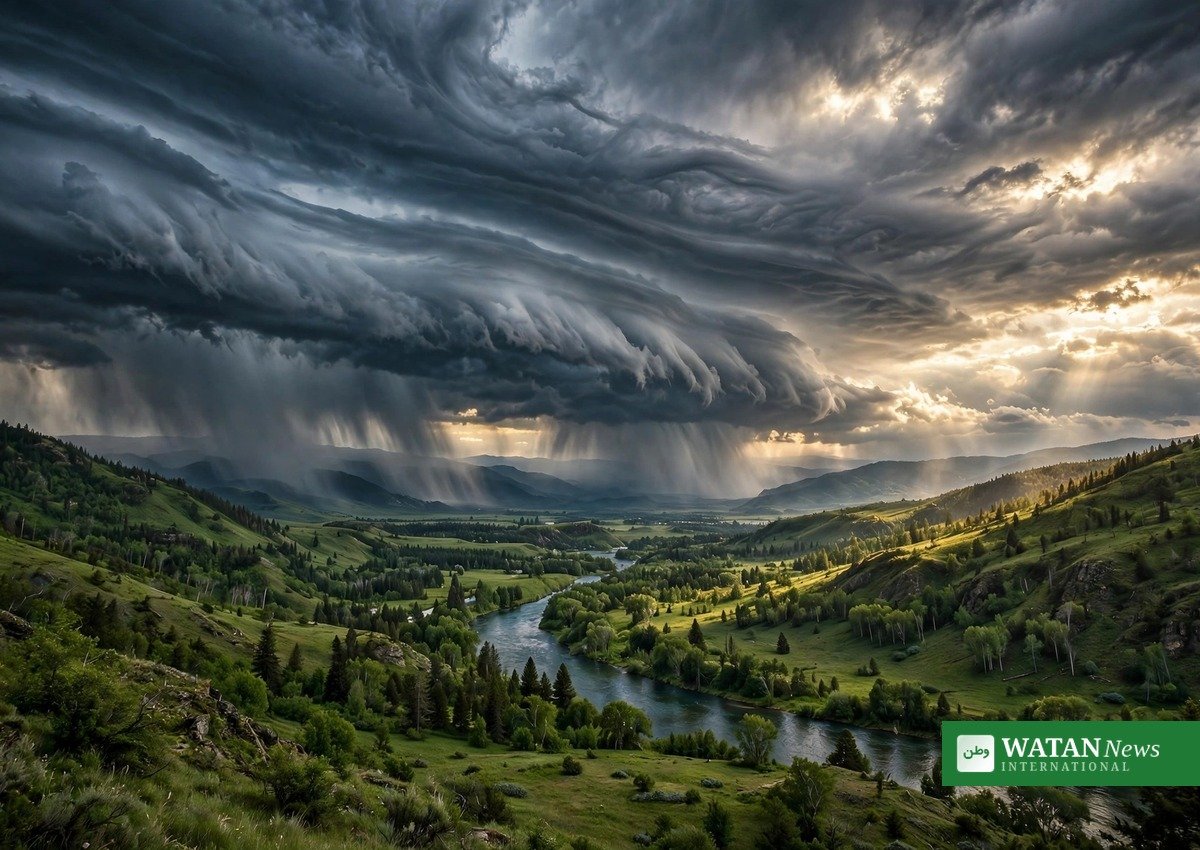
The series began with a striking image: invisible rivers in the sky — enormous plumes of moisture borne over the oceans that, when released back to Earth, can bring a drizzle or a deluge.
The reporting team developed creative new tools to analyze where atmospheric moisture is intensifying and mapped where inland flooding risk is rising. Reporters then projected that risk onto infrastructure from India to Appalachia, showing how extreme rainfall threatens communities far from any coast.
How the idea took shape
The seed of the series was planted more than a year ago by meteorologist Ben Noll. Before joining the Post in 2024, Noll worked for the New Zealand government for nearly a decade. The island nation is heavily exposed to extreme rainfall and flooding, and Noll grew interested in a pattern he kept seeing in the atmosphere: increasing moisture.
Month after month, the moisture in the atmosphere was setting records — and alongside those records, flooding events and heavy rainfall kept arriving. Noll describes global moistening as a “cousin phenomenon” of global warming: the two are interconnected, but warming has received far more attention than moistening.
When Noll brought the idea to the Post, a team assembled around it: data journalist Kevin Crowe, graphics reporters John Muyskens and Niko Kommenda — who led the graphics on the series’ “Deadly Rivers in the Sky” installment — graphics reporter Naema Ahmed of the paper’s climate and environment team, and lead climate reporter Sarah Kaplan.
Data on one side, people on the other
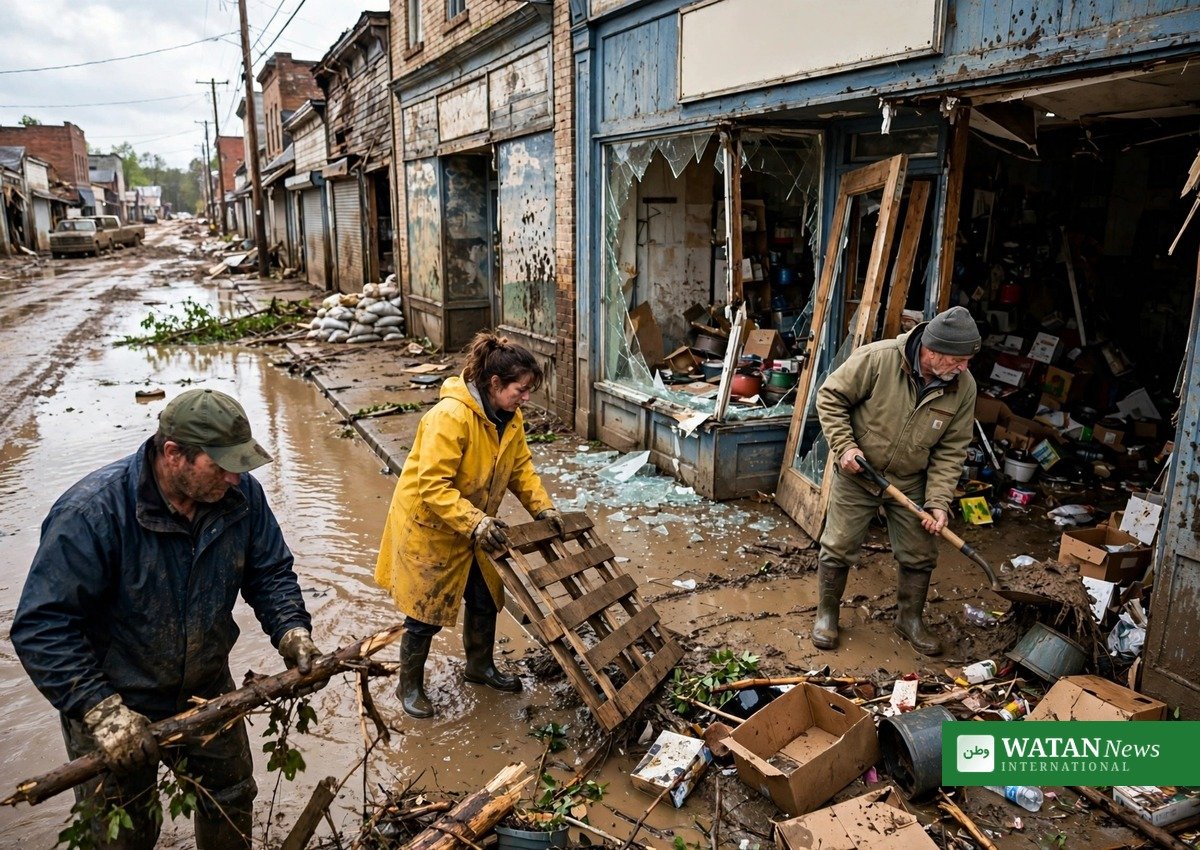
The series combined the data analysis with on-the-ground storytelling. In Asheville, North Carolina, a woman fled her home as floodwaters arrived; her apartment was later washed away by Hurricane Helene. In Welch, West Virginia, Carol Lester watched a deluge arrive unlike anything she had seen: water came down and rose so fast, she recalled, that it appeared in places she had never seen water before.
The reporting stretched well beyond the United States — to flooding in India, and to extreme rainfall in Oman and Dubai — underlining that the intensifying water cycle is a global story.

What the judges saw
The judges praised the series for its innovative graphics and effective storytelling, calling it a valuable tool and an important account of the human cost of inaction as the climate warms. Data journalist Kevin Crowe said the project’s goal was to make the science understandable: the stories are grounded in data, but ultimately speak to the dangers facing people on the ground.
Graphics reporter John Muyskens said the visualizations help readers grasp something abstract and planetary in scale — perspectives that, as he put it, normally only astronauts see.
The finalists
Two teams were named finalists: Corbin Hiar and Karl Mathiesen of Politico for “The Risky Rise of Solar Geoengineering,” and Alex Harris and Susan Merriam of the Miami Herald for “Floods of Trouble.” According to Poynter, the climate reporting category carries a $10,000 prize.
Training the next flood reporters
The prize is also feeding back into the profession. On October 8, Poynter hosted a free Beat Academy webinar with Sarah Kaplan on covering the rising risk of flooding: how journalists can find reliable local data, identify vulnerable communities, and develop stories before severe weather strikes. Flooding, the session noted, is no longer just a coastal story.
Poynter says the award aims to inspire similar work — rigorous, science-based climate reporting that shows audiences not only what is changing, but what it means for the streets they live on.
Watan News International has previously covered the growing recognition of climate journalism, including the 2026 Romeo Bassoli award for reporting on climate and sustainability: the 2026 Romeo Bassoli award for reporting on climate and sustainability
FAKTA
- Winner: Staff of The Washington Post, for the “Floods Above” investigation
- Award: Poynter Journalism Prize for Excellence in Climate Change Reporting — inaugural year, sponsored by the Hennecke Family Foundation
- Subject: the global rise of dangerous rainfall and intensifying atmospheric moisture
- Key figures: meteorologist Ben Noll, data journalist Kevin Crowe, graphics reporters John Muyskens, Niko Kommenda and Naema Ahmed, climate reporter Sarah Kaplan
- Finalists: Politico (“The Risky Rise of Solar Geoengineering”) and the Miami Herald (“Floods of Trouble”)
- Follow-up: free Poynter Beat Academy webinar (October 8) teaching journalists to cover rising flood risks
Conclusion
Floods Above shows what climate journalism can do at its best: take an invisible, planetary-scale process and make it concrete enough to act on. For newsrooms covering climate change — and for the audiences who depend on them — that remains the benchmark.
Author

usman2344913@gmail.com
Related Posts
Sådan vandt Washington Posts ‘Floods Above’ Poynters klimajournalistik-pris
- 0
- 910 words
WASHINGTON – The Washington Posts omfattende undersøgelse af verdens stigende oversvømmelsesfare, Floods Above, har vundet den første Poynter Journalism Prize for Excellence...
Read out all
پوئنٹر موسمیاتی صحافت انعام: واشنگٹن پوسٹ کی «فلڈز اباو» تحقیق کو اعزاز
واشنگٹن – واشنگٹن پوسٹ کی سیلاب کے بڑھتے خطرے پر جامع تحقیق «فلڈز اباو» نے موسمیاتی تبدیلی کی رپورٹنگ میں نمایاں کارکردگی...
Read out all
EU’s nye regler mod greenwashing er trådt i kraft: ‘Miljøvenlig’ skal bevises
- 0
- 701 words
EU's regler mod greenwashing gælder nu i hele Europa: uklare 'miljøvenlige' udsagn er forbudt, og bæredygtighedsmærker skal være uafhængigt certificerede.
Read out all
یورپی یونین کے گرین واشنگ مخالف نئے قوانین نافذ: ‘ماحول دوست’ کا دعویٰ اب ثابت کرنا ہوگا
یورپی یونین کے گرین واشنگ مخالف قوانین پورے یورپ میں نافذ ہو گئے ہیں: مبہم 'ماحول دوست' دعوے ممنوع اور پائیداری کے...
Read out all
EU Anti-Greenwashing Rules Now in Force: ‘Eco-Friendly’ Claims Must Be Proven
- 0
- 638 words
The EU's anti-greenwashing rules now apply across Europe: vague 'eco-friendly' claims are banned and sustainability labels must be independently certified.
Read out all
Navi Pillay Wins 2026 Nobel Peace Prize for Championing International Law
- 0
- 513 words
OSLO: The Norwegian Nobel Committee has awarded the 2026 Nobel Peace Prize to South African jurist Navanethem “Navi” Pillay for her efforts...
Read out all