
- 0
- 717 words
Makati: Philippine property developer Ayala Land Inc. has signed a two-year agreement with Crown Asia Chemicals Corp. to recycle construction PVC waste, cutting the plastic scrap that building sites send to landfill. The memorandum of understanding was signed on 21 October 2026 and announced on 26 October, according to Ayala Land and BusinessWorld.
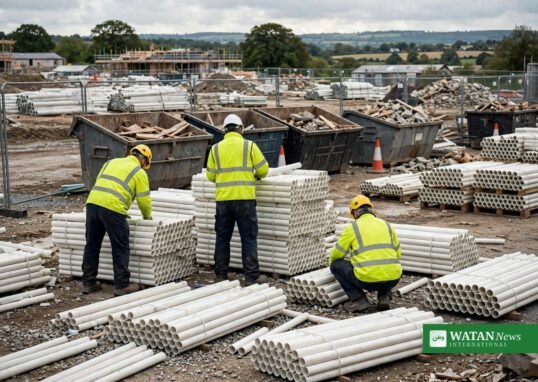
At the centre of the deal is the PVC Cuttings Take-Back Program. Pipe offcuts and scrap from selected Ayala Land construction sites will be segregated, collected and returned to Crown Asia Chemicals — known as Crown Pipes — for recycling, reprocessing or repurposing into new products. The partners will measure and report the exact volume of PVC waste diverted from landfills.

More than a take-back scheme
The agreement goes beyond collecting offcuts. The two companies will also develop environmental, social and governance (ESG) performance criteria for green vendors, build capacity among suppliers, and evaluate eligible Crown facilities for a switch to renewable energy through the Green Energy Option Program. They will share knowledge and report jointly on the partnership’s progress.
Crown Asia Chemicals was chosen from among Ayala Land’s accredited vendors because of its established sustainability framework. The company already supplies PVC pipes and fittings to several Ayala Land projects, including Avida Towers Centralis, Patio Madrigal, Greenbelt 1 and The Lattice at Parklinks.
Part of a zero-waste-to-landfill goal
The collaboration supports Ayala Land’s sustainability commitments: net-zero greenhouse gas emissions by 2050 and zero waste to landfill by 2030. Ayala Land says it applies a circular-economy approach across its developments, and reports that in 2025 half of the 35,556 metric tons of waste from its operating properties was diverted from landfills through recycling, composting and processing at accredited facilities.
Construction plastics are a stubborn problem for the sector. PVC offcuts are produced on every project that uses plastic piping, and without a collection route they are easily lost to mixed waste. A take-back loop keeps the material in use and gives the developer measured data on what its sites actually divert — the same measurement discipline behind other recent zero-waste gains, such as the 70 percent lift in food diversion from depackaging technology covered earlier by Watan News.
What the partners say
Ayala Land Chief Sustainability Officer Robert S. Lao said reaching net-zero ambitions requires tackling emissions at the source by engaging directly with trusted material suppliers. Crown Asia Chemicals President Derrick P. Villanueva said the partnership aims to translate sustainability commitments into operating initiatives across the construction supply chain.
Key facts
- Ayala Land and Crown Asia Chemicals signed a two-year memorandum of understanding on 21 October 2026.
- The PVC Cuttings Take-Back Program collects pipe offcuts from selected construction sites for recycling, reprocessing or reuse.
- Volumes diverted from landfills will be measured and reported; expansion to other plastic-based materials will be studied.
- The deal also covers green-vendor ESG criteria, supplier capacity-building and renewable-energy evaluation for Crown facilities.
- It supports Ayala Land’s targets of net-zero emissions by 2050 and zero waste to landfill by 2030.
Conclusion
The Ayala–Crown deal is small in its first step — offcuts from selected sites — but it is designed as a measurable loop: collect, recycle, report, then expand. If the volumes hold up, it gives other developers a template for taking construction plastic out of the waste stream.
Frequently asked questions
What is PVC construction waste?
PVC, or polyvinyl chloride, is a widely used plastic for pipes and fittings. On building sites, cutting and installing pipes produces offcuts and scrap that, without a collection route, often end up in mixed construction waste.
How does the take-back program work?
Pipe cuttings and scraps from selected Ayala Land projects are segregated on site, collected and returned to Crown Asia Chemicals, which recycles, reprocesses or repurposes them into new products. The diverted volume is measured and reported.
What else does the agreement cover?
Beyond take-back, it covers ESG performance criteria for green vendors, capacity-building for suppliers, evaluation of eligible Crown facilities for renewable energy, knowledge sharing and joint progress reporting.
What are Ayala Land’s wider waste targets?
Ayala Land aims for net-zero greenhouse gas emissions by 2050 and zero waste to landfill by 2030. It reports that in 2025, half of the waste from its operating properties was diverted from landfills.
Could the program expand?
Yes. The partners say they will study whether the take-back model can be extended to other plastic-based construction materials beyond PVC pipe cuttings.
Author

usmanch0013@gmail.com
Related Posts
Ayala Land og Crown Pipes lancerer PVC-tilbagetagning mod byggeaffald
- 0
- 718 words
Den filippinske udvikler Ayala Land og Crown Asia Chemicals har underskrevet en toårig aftale om at genbruge byggeriets PVC-affald gennem et tilbagetagningsprogram...
Read out all
ایالا لینڈ اور کراؤن پائپس کا پی وی سی واپسی پروگرام، تعمیراتی فضلہ کم ہوگا
فلپائن کی ایالا لینڈ اور کراؤن ایشیا کیمیکلز نے پائپوں کی کترنوں کی واپسی کے پروگرام کے ذریعے تعمیراتی پی وی سی...
Read out all
Lula deltager i COP31 i Antalya, hvor Brasilien overdrager formandskabet til Tyrkiet
- 0
- 583 words
Brasiliens præsident Luiz Inácio Lula da Silva deltager i COP31 i Antalya for ledertopmødet den 11.–12. november, mens Brasilien overdrager COP-formandskabet til...
Read out all
لولا کاپ31 میں شرکت کریں گے، برازیل صدارت ترکیہ کے حوالے کرے گا
برازیل کے صدر لوئیز اناسیو لولا ڈا سلوا 11 تا 12 نومبر کے رہنماؤں کے اجلاس کے لیے انطالیہ میں کاپ31 میں...
Read out all
Lula to Attend COP31 in Antalya as Brazil Hands Presidency to Türkiye
- 0
- 641 words
Brazil's President Luiz Inácio Lula da Silva will attend COP31 in Antalya for the 11–12 November leaders' summit, as Brazil hands the...
Read out all
Tens of Thousands Take to Italy’s Streets in Nationwide Strike Over Living Costs
- 0
- 573 words
Tens of thousands of workers and students marched across Italy on 30 October in a nationwide strike called by the USB union,...
Read out all