- 0
- 1,061 word
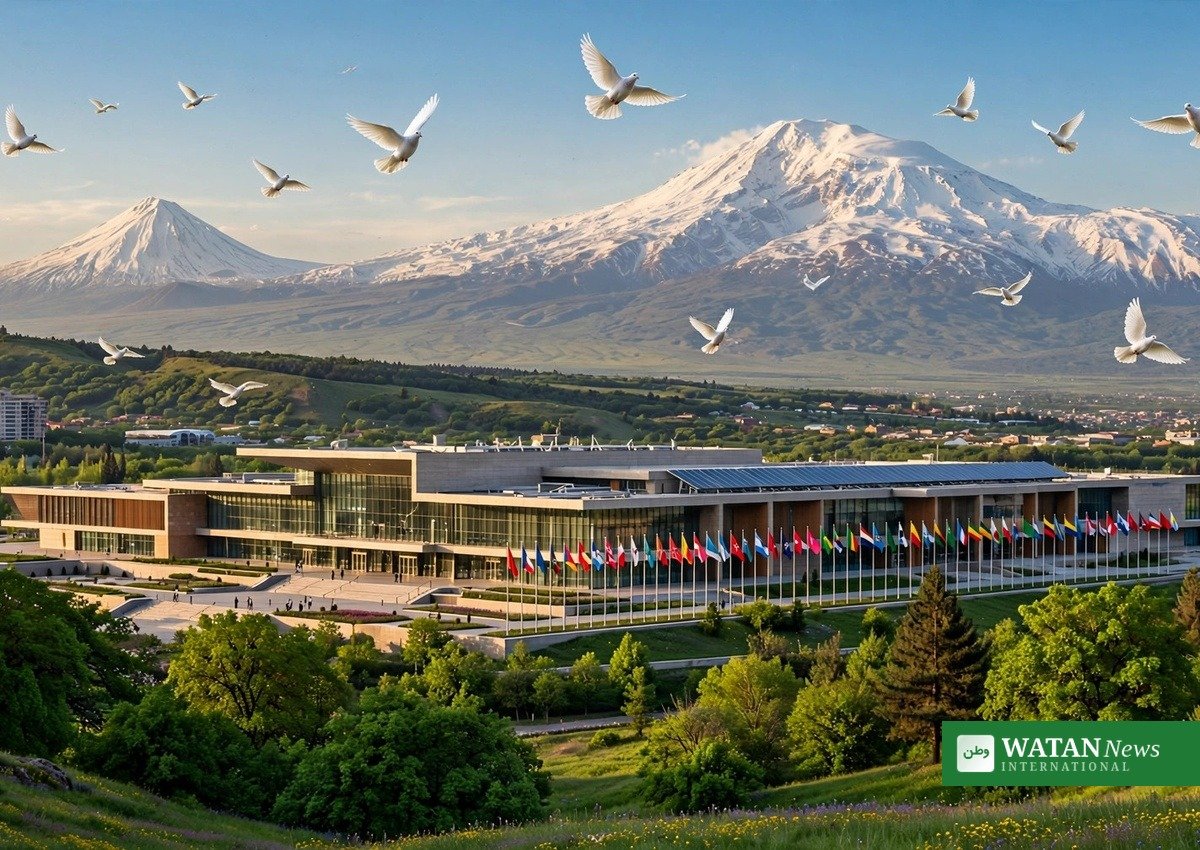
YEREVAN: The 2026 United Nations Biodiversity Conference — COP17 Yerevan — opened in Armenia’s capital on Sunday evening, 18 October, with host Prime Minister Nikol Pashinyan declaring that governments have run out of time for promises and must now “move from words to action” to stop the destruction of nature.
The opening ceremony at the Aragats Plenary Hall of the Meridian Expo and Event Centre brought together government delegations, scientists, Indigenous Peoples, youth representatives and civil society groups, according to conference coverage. Formal negotiations under the Convention on Biological Diversity (CBD) begin on Monday, 19 October, and continue until 30 October under the slogan “Taking Action for Nature”.
First global review exposes slow progress
COP17 will conduct the first global review of the Kunming-Montreal Global Biodiversity Framework, the landmark agreement adopted in December 2022 that set 23 targets for 2030 — including conserving at least 30 per cent of the world’s land, inland waters and marine areas, restoring degraded ecosystems, cutting environmentally harmful subsidies and mobilising $200 billion a year for biodiversity by 2030 — alongside four long-term goals for 2050.
The UN’s State of Biodiversity Action report, launched ahead of the conference, found that nearly 90 per cent of countries have now set national biodiversity targets, but fewer than half of the targets assessed by governments are on track. Assessments cited in conference coverage indicate that existing commitments could protect roughly 27 per cent of land and inland waters and only 12 per cent of marine areas by 2030 — both short of the agreed 30 per cent goal.
COP17 Yerevan: finance emerges as the sticking point
Money is expected to be the most contentious issue in Yerevan. An assessment by the Organisation for Economic Co-operation and Development (OECD), published on 1 October, found that global biodiversity finance averaged between $74.9 billion and $92.4 billion a year during 2023–2025 — far below the $200 billion annual mobilisation target for 2030.
Developing countries, especially the least developed countries and small island developing states, are expected to press for predictable, accessible and fair financial support to put their national biodiversity plans into practice.
Pashinyan: nature protection is inseparable from human well-being
Opening the conference, Prime Minister Pashinyan warned that humanity’s approach of treating natural resources as inexhaustible had become unsustainable, pointing to floods, forest fires, ecosystem degradation and species extinction as the price of that attitude. He stressed that biodiversity protection was inseparable from human well-being, economic development and the future of coming generations, and called for meaningful engagement by women, young people, Indigenous Peoples, scientists, businesses and civil society.
Foreign Minister Ararat Mirzoyan underlined the importance of multilateral cooperation at a time of geopolitical tension, and said biodiversity protection was closely linked to climate change, food security and sustainable development — requiring closer coordination across international processes. Watan News has followed national preparations for the conference, including Canada’s delegations for COP17 and COP31, which put Indigenous leadership at the centre of its biodiversity and climate agenda.
New species-recovery coalition and the Yerevan Pathway
Incoming COP17 President Hambardzum Matevosyan, Armenia’s environment minister, urged delegates to overcome differences through dialogue. He highlighted the Coalition of Action to Recover Endangered Species (CARES), a joint initiative launched by Armenia and Colombia that brings together 17 founding countries to speed up the recovery of threatened species — supporting Target 4 of the Kunming-Montreal framework on preventing human-driven extinctions.
Delegates will also consider the proposed “Yerevan Pathway”, designed to turn the findings of the first global biodiversity review into faster implementation of conservation commitments, with stronger national strategies, better monitoring and deeper cooperation among governments, businesses and civil society.
The conference follows the Leaders for Nature Summit held in Yerevan on 16 October, where world leaders adopted the Yerevan Declaration on Taking Action for Nature, reaffirming the pledge to halt and reverse biodiversity loss by 2030 and to live in harmony with nature by 2050, alongside calls for more finance, ecosystem restoration and the participation of women, young people and marginalised communities.
What comes next
The high-level segment of COP17 takes place on 27–28 October, when the European Union’s negotiating team — led by Commissioner Jessika Roswall — is expected to launch a new “Friends of Credits for Nature and Biodiversity” initiative. The conference runs alongside the 12th meeting of the parties to the Cartagena Protocol on Biosafety and the sixth meeting of the parties to the Nagoya Protocol on access and benefit-sharing.
With only four years left until the 2030 deadline, the decisions taken in Yerevan will help determine whether governments can reverse the decline of the natural world — or whether the gap between promise and delivery keeps widening.
FAKTA
- Event: 17th meeting of the Conference of the Parties (COP17) to the Convention on Biological Diversity
- Venue and dates: Yerevan, Armenia, 19–30 October 2026 (opening ceremony 18 October)
- Theme: “Taking Action for Nature”
- Main task: the first global review of the Kunming-Montreal Global Biodiversity Framework (adopted December 2022)
- Targets at stake: 23 targets for 2030, including 30 per cent of land and seas protected and $200 billion a year in biodiversity finance
- Progress so far: nearly 90 per cent of countries have set national targets, but fewer than half are on track, according to the UN’s State of Biodiversity Action report
- Finance gap: $74.9–92.4 billion a year in 2023–2025, against the $200 billion target (OECD)
Frequently asked questions
What is COP17?
COP17 is the 17th meeting of the Conference of the Parties to the UN Convention on Biological Diversity. It is being held in Yerevan, Armenia, from 19 to 30 October 2026, with the opening ceremony on 18 October.
What is the Kunming-Montreal Global Biodiversity Framework?
Adopted in December 2022, it is the world’s biodiversity blueprint: 23 targets for 2030 — including protecting 30 per cent of land and seas and mobilising $200 billion a year — and four goals for living in harmony with nature by 2050.
Why is COP17 called a midterm review?
It is the first global review of the framework, held with only four years left until 2030. The UN’s State of Biodiversity Action report found that while nearly 90 per cent of countries have set national targets, fewer than half are on track.
What is expected to be the hardest issue?
Finance. Developing countries want predictable and fair funding; an OECD assessment put recent biodiversity finance at $74.9–92.4 billion a year, far short of the $200 billion annual target.
What happens after the opening?
Formal negotiations run until 30 October, with a high-level segment on 27–28 October. Delegates will consider the proposed “Yerevan Pathway” to accelerate implementation of the 2030 targets.
Author

usman2344913@gmail.com
Related Posts
Rubio Urges Russia and Ukraine to End the War From Central Asia
- 0
- 471 words
US Secretary of State Marco Rubio used a weekend visit to Central Asia to press Russia and Ukraine to end their four-year...
Read out all
COP17 åbner i Yerevan med opfordring til at omsætte løfter til handling
- 0
- 1,073 word
YEREVAN: FN’s biodiversitetskonference 2026 — COP17 Yerevan — åbnede søndag aften den 18. oktober i Armeniens hovedstad, hvor værtslandets premierminister Nikol Pashinyan...
Read out all
یرےوان میں کاپ17 کا افتتاح: وعدوں کو عمل میں بدلنے کی اپیل
- 0
- 4 words
یرےوان: اقوام متحدہ کی 2026 کی حیاتیاتی تنوع کانفرنس — کاپ17 یرےوان — کا افتتاح اتوار کی شام 18 اکتوبر کو آرمینیا...
Read out all
US Diplomats Visit Taybeh After Settler Attacks on Diplomats, Journalist
- 0
- 468 words
American diplomats visited the Palestinian village of Taybeh in the occupied West Bank on Sunday, October 18, following a series of Taybeh...
Read out all
Austrian Airlines Flight from Tel Aviv Diverts to Sofia After Bomb Threat
- 0
- 516 words
Austrian Airlines flight OS82 from Tel Aviv to Vienna diverted to Sofia, Bulgaria, on Sunday evening after a bomb threat. All 57...
Read out allPlan International lancerer ‘Change Her Forecast’: Piger i hjertet af klimaindsatsen
- 0
- 1,110 word
Plan Internationals Change Her Forecast-rapport viser, hvordan klimakriser øger risikoen for børneægteskaber, teenagegraviditet og vold mod piger — og lancerer en global...
Read out all