- 0
- 994 words
The Pakistan Global Mental Health Summit 2026 concluded in Islamabad on 2 October 2026, with Federal Minister for Poverty Alleviation and Social Safety Syed Imran Ahmed Shah attending the closing ceremony. The two-day event at the Serena Hotel brought together around 800 participants and saw the launch of Pakistan’s National Mental Health Policy 2026–2035. Held under the theme “Building Climate-Resilient and Future-Ready Mental Health Systems for Children, Young People and Communities”, the summit also moved towards the adoption of the Islamabad Declaration on Mental Health.
FAKTA: Pakistan Global Mental Health Summit 2026
- Event: Pakistan Global Mental Health Summit 2026, held 1–2 October 2026 at the Serena Hotel, Islamabad
- Host: Ministry of National Health Services, Regulations & Coordination, with WHO, UNICEF and the Global Institute of Human Development (Shifa Tameer-e-Millat University)
- Theme: “Building Climate-Resilient and Future-Ready Mental Health Systems for Children, Young People and Communities”
- Participants: around 800 in-person and online, including federal and provincial officials, parliamentarians, UN partners, experts, civil society and people with lived experience
- Key outcome: launch of the National Mental Health Policy 2026–2035; move towards adopting the Islamabad Declaration on Mental Health
- The burden: WHO estimates 32.4 million Pakistanis need mental health care, yet only about 5 per cent have access; Pakistan has roughly 0.19 psychiatrists per 100,000 people
- Closing ceremony: attended by Federal Minister for Poverty Alleviation and Social Safety Syed Imran Ahmed Shah
Pakistan Global Mental Health Summit 2026: Policy Launch and Outcomes
The Government of Pakistan launched the National Mental Health Policy 2026–2035 at the summit, in partnership with the WHO, UNICEF and the Global Institute of Human Development at Shifa Tameer-e-Millat University. The policy is meant to translate national commitments into actionable provincial strategies and to guide investment towards community-based services over the next decade.
Health Minister Mustafa Kamal called mental health a national emergency, as well as a security and economic issue, while Minister of State for National Health Services Dr Malik Mukhtar Ahmad Bharath said the government would work with the provinces to deliver care through schools, primary healthcare and communities. WHO Director-General Tedros Adhanom Ghebreyesus noted that every dollar invested in mental health yields about four in returns, and UNICEF’s Pernille Ironside urged that children and adolescents be placed at the centre of reform efforts.

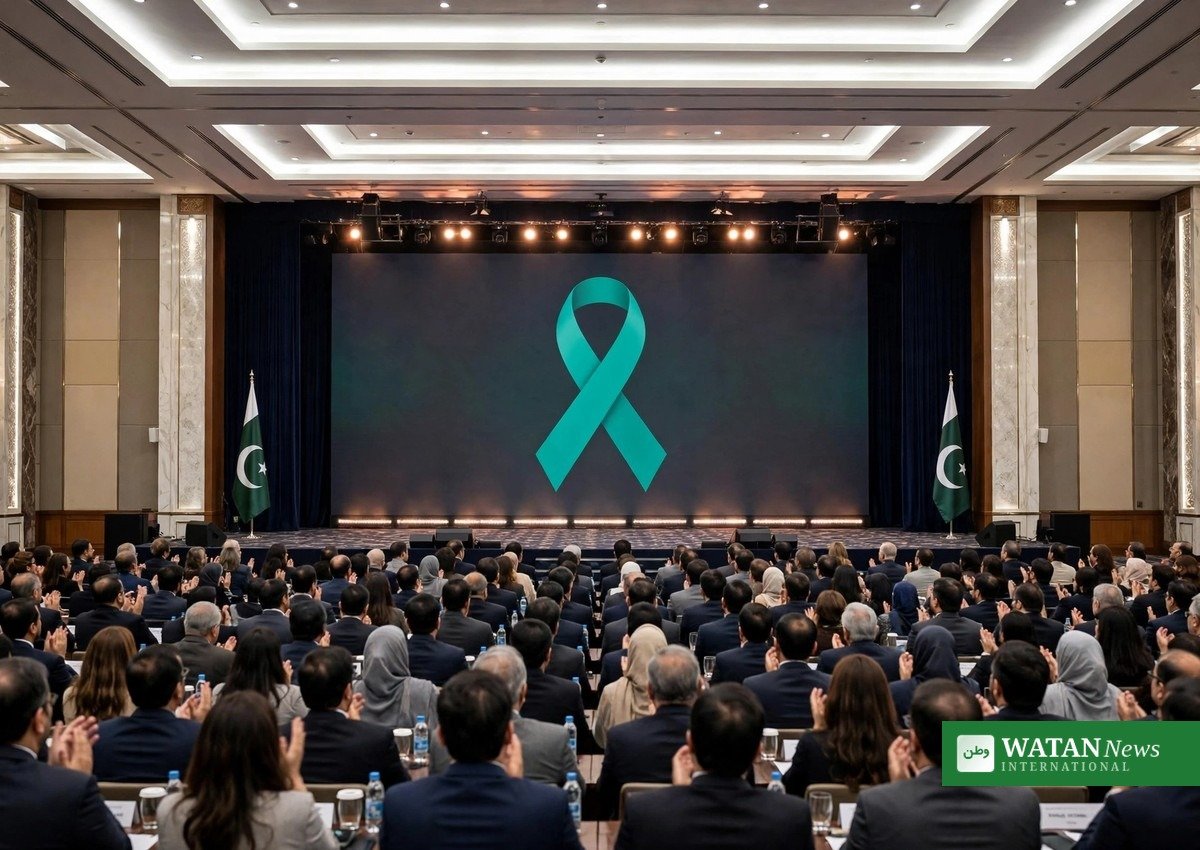
Experts exchange views during a session at the Pakistan Global Mental Health Summit 2026 in Islamabad. (Illustration)
Ministerial Presence at the Closing Ceremony
Federal Minister for Poverty Alleviation and Social Safety Syed Imran Ahmed Shah attended the closing ceremony of the summit, where his presence linked the mental health agenda with the government’s social protection mandate for vulnerable and underprivileged communities. The minister’s participation underscored the government’s intent to keep mental well-being on Pakistan’s national development agenda.
The two-day programme focused on child and adolescent mental health, suicide prevention, substance use, digital mental health and innovation, alongside the development of climate-resilient mental health systems. Sessions also featured the launch of the South Asia Child and Adolescent Mental Health Landscape Analysis, and the summit proposed integrating mental health care into primary healthcare, schools and disaster preparedness plans.
The Scale of Pakistan’s Mental Health Challenge
The summit’s discussions were framed by stark figures. WHO estimates that 32.4 million Pakistanis need mental health care, yet only about five per cent have access to services, leaving a treatment gap of roughly 95 per cent. Pakistan has an estimated 0.19 psychiatrists per 100,000 people, compared with about seven in high-income countries. An estimated 10–16 per cent of adults live with a mild-to-moderate psychiatric condition and a further 1–2 per cent with severe mental illness, while 80 per cent or more of people with a diagnosable mental illness receive no formal care in a given year.
According to the coverage of the summit, Pakistan aims to make the event its flagship global mental health platform going forward.
International Backing and Next Steps
The summit drew strong international backing from WHO and UNICEF, with development partners supporting the move towards the adoption of the Islamabad Declaration on Mental Health, expected to outline priority actions for equitable, community-based and climate-resilient services. Organisers also promoted the meaningful involvement of people with lived experience in policymaking, research and service design.
The outcomes of the summit are expected to guide future policy decisions and programmatic interventions, with the declared goal of universal mental health coverage built on partnerships between government, provinces, UN agencies and civil society.
Conclusion
The Pakistan Global Mental Health Summit 2026 closed with the launch of a ten-year national policy and a clear political message: mental health is now framed as a national emergency and a development priority, not a peripheral concern. Whether the Islamabad Declaration and the new policy translate into funded services in schools, clinics and communities will determine the summit’s real legacy. Read this story on our main site or browse more Pakistan news on Watan News.
Frequently Asked Questions
When and where was the Pakistan Global Mental Health Summit 2026 held?
The summit was held on 1–2 October 2026 at the Serena Hotel in Islamabad, hosted by the Ministry of National Health Services, Regulations & Coordination.
What was launched at the summit?
The Government of Pakistan launched the National Mental Health Policy 2026–2035, developed with WHO, UNICEF and the Global Institute of Human Development at Shifa Tameer-e-Millat University, and moved towards adopting the Islamabad Declaration on Mental Health.
Who attended the closing ceremony?
Federal Minister for Poverty Alleviation and Social Safety Syed Imran Ahmed Shah attended the closing ceremony, alongside government officials, mental health experts, UN partners and civil society representatives.
What was the theme of the summit?
“Building Climate-Resilient and Future-Ready Mental Health Systems for Children, Young People and Communities”, held in conjunction with World Mental Health Day 2026.
How large is Pakistan’s mental health treatment gap?
WHO estimates 32.4 million Pakistanis need mental health care, but only about five per cent have access — a treatment gap of roughly 95 per cent — with just 0.19 psychiatrists per 100,000 people.
Which organisations supported the summit?
The World Health Organization (WHO), UNICEF and the Global Institute of Human Development at Shifa Tameer-e-Millat University partnered in the event and the policy launch.
Author

usmanjaved13132@gmail.com
Related Posts

Christa Pike on Ventilator After Botched Tennessee Execution
- 0
- 435 words
Christa Pike is unconscious, intubated and on a ventilator in a Nashville-area hospital two days after Tennessee's failed execution attempt, her attorneys...
Read out all
In Pictures: Lahore in Autumn — Mughal Splendour in Golden Light
- 0
- 367 words
Lahore in autumn — Badshahi Mosque, Lahore Fort and Shalimar Gardens glow in golden October light.
Read out all
In Pictures: Autumn in Dyrehaven — Deer in the Rutting Season
- 0
- 310 words
Autumn in Dyrehaven — red deer in the rutting season, morning mist and the Hermitage lodge in pictures.
Read out all
In Pictures: The Markhor — Pakistan’s National Animal
- 0
- 294 words
The markhor — Pakistan's national animal — with its astonishing corkscrew horns on the cliffs of the Karakoram.
Read out all
In Pictures: Northern Lights Cast Their Spell Over Scandinavia
- 0
- 280 words
The magic of the northern lights over Scandinavia — fjords, coastal villages and Lapland lakes in pictures.
Read out all
Deputy Prime Minister/Foreign Minister Senator Muhammad Ishaq Dar giving a briefing on Pakistan’s engagements
- 0
- 917 words
Deputy PM and Foreign Minister Ishaq Dar briefed the media in Islamabad on Pakistan's engagements at the 81st UNGA session — 28...
Read out all