- 0
- 1,033 word
Chinese scientist Professor Bojie Fu has received the 2026 Volvo Environment Prize in Stockholm for decades of research that helped bring large areas of China’s Loess Plateau back from ecological collapse. The award, announced by the Volvo Environment Prize Foundation in September 2026 and presented on 2 November 2026, recognises work that turned one of the world’s most eroded landscapes into a science-based example of restoration for dry regions facing land degradation, water scarcity and food insecurity.
Fu is Professor of Geography and Landscape Ecology at the Research Center for Eco-Environmental Sciences at the Chinese Academy of Sciences. According to Xinhua, which reported the ceremony on 2 November, he described the prize as recognition of Chinese scientists’ work in ecological restoration and sustainability research, and of China’s progress in environmental protection.
The award in Stockholm
The Volvo Environment Prize has been awarded annually since 1990 by an independent foundation, and is regarded as one of the scientific world’s most respected environmental prizes. It consists of a hand-crafted diploma, a glass sculpture and SEK 1.5 million.
The prize jury recognised Fu’s pioneering contributions to social-ecological systems and sustainability science, and his ability to connect local restoration with global sustainable development. The jury particularly highlighted how his work on the Loess Plateau created science-based pathways for ecological recovery, human well-being and effective policy across the Global South.
A plateau brought back from collapse
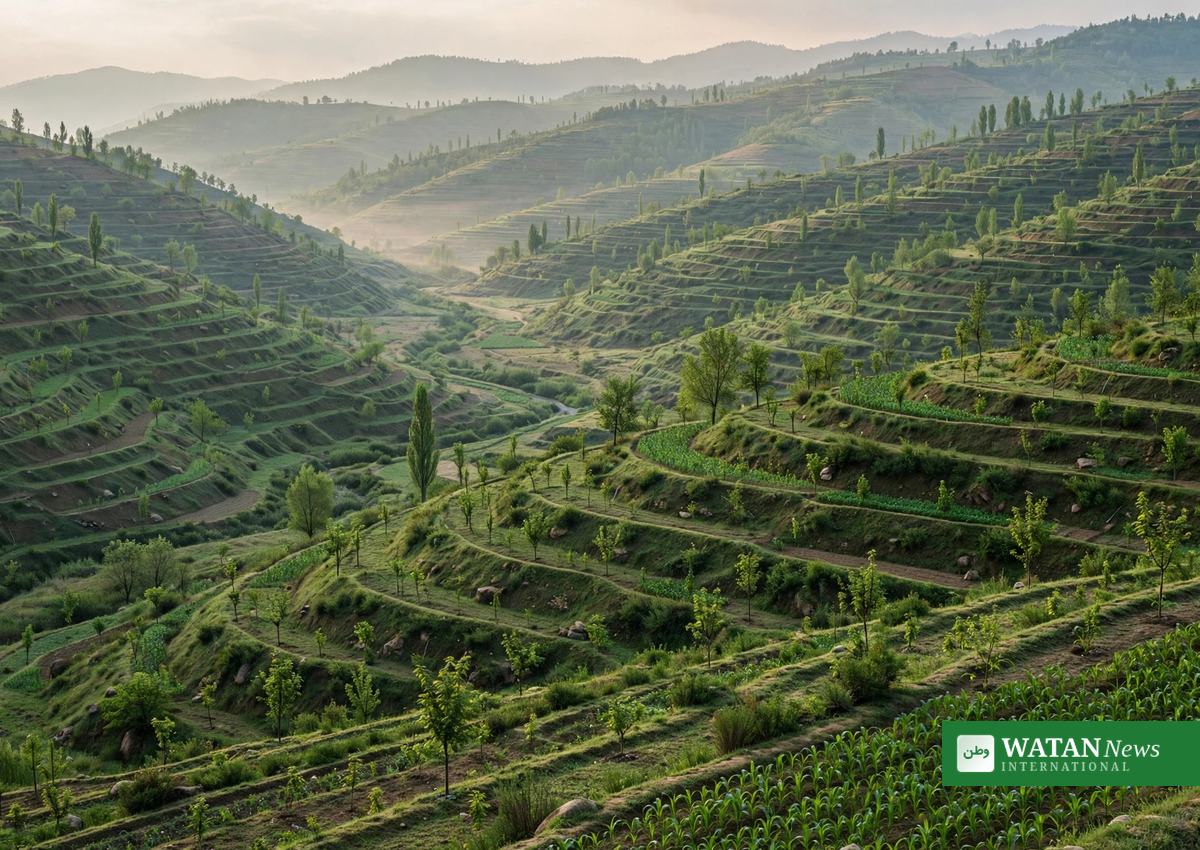
The Loess Plateau was a major cradle of early Chinese civilisation. Centuries of intensive cultivation and overgrazing, however, pushed the huge area towards ecological collapse. Vegetation disappeared, soil was swept away, and vast quantities of sediment poured into the Yellow River, making the landscape a stark symbol of unsustainable land use.
Today, large areas of the plateau are green again, according to the Volvo Environment Prize Foundation’s announcement. That revival followed one of the world’s most ambitious landscape-restoration efforts, backed by decades of scientific research into how damaged ecosystems can be rebuilt without exhausting the scarce resources on which both nature and people depend.
Why planting alone was not enough
Through extensive field studies and landscape-scale analysis, Fu and his team investigated the complex relationships between land use, vegetation, water, soil, biodiversity and local livelihoods. Their research showed that restoring vegetation could reduce soil erosion, increase carbon storage and improve biodiversity.
It also showed the risks. Planting unsuitable species, or planting too densely, could worsen water scarcity and undermine long-term restoration. That evidence helped shift restoration practice away from mass planting campaigns towards carefully adapted, sustainable land management — practical guidance on which species to plant, where they could thrive, and how to balance restoration with agriculture and local communities’ needs.
The foundation stressed that restoring the plateau was a complex, long-term undertaking, and that increasing vegetation alone could not guarantee sustainable recovery.
Grain for Green and local livelihoods
One major obstacle was resistance from farmers who feared for their livelihoods if they could no longer keep livestock or cultivate the land as before. The project known as Grain for Green helped overcome that resistance by compensating local communities and farmers.
Fu credited the achievement to sustained collective effort. “The work on the Loess Plateau was not mine alone. It was the result of sustained efforts by my team members and generations of students who have worked there over the years,” he told Xinhua. He also attributed the achievement to nearly three decades of environmental conservation efforts in China and long-term research support from the Chinese Academy of Sciences, the National Natural Science Foundation of China and the Ministry of Science and Technology.
Early demonstration projects received World Bank funding, while most subsequent investment came from the Chinese government, according to the prize announcement. Success depended not only on sustained financial and political commitment, but also on continuous scientific monitoring and a willingness to adapt when evidence showed that established approaches were not working.
What the lesson means beyond China
The foundation said the Loess Plateau experience offered valuable lessons for other dryland regions facing ecological degradation and water shortages. Fu expressed hope that future research would continue to provide scientific support for development in harmony between humanity and nature and contribute to global sustainable development.
For climate policy, the story carries a practical warning and a hopeful message together: restoration can store carbon, protect soil and support livelihoods, but only when it is matched to local water, soil and community conditions. Planting trees is not, by itself, a climate solution.
Read more climate news on Watan News International.
Key facts
- Who: Professor Bojie Fu, Professor of Geography and Landscape Ecology at the Research Center for Eco-Environmental Sciences, Chinese Academy of Sciences.
- What: The 2026 Volvo Environment Prize, awarded annually since 1990 by an independent foundation.
- When and where: Ceremony in Stockholm, Sweden, on 2 November 2026; winner announced 23 September 2026.
- Prize: A hand-crafted diploma, a glass sculpture and SEK 1.5 million.
- Why: Pioneering work on social-ecological systems and the ecological restoration of China’s Loess Plateau, with lessons for dry regions worldwide.
Frequently asked questions
Who is Bojie Fu?
Bojie Fu is a professor of geography and landscape ecology at the Research Center for Eco-Environmental Sciences at the Chinese Academy of Sciences, and an academician of the Chinese Academy of Sciences. His research focuses on social-ecological systems and landscape restoration.
What is the Volvo Environment Prize?
It is an annual scientific environmental prize, first awarded in 1990 and presented by an independent foundation. It recognises scientists whose research has made significant contributions to environmental protection, sustainability and policymaking.
Where is the Loess Plateau, and why was it degraded?
The Loess Plateau is in China. Centuries of intensive cultivation and overgrazing stripped vegetation, caused severe soil erosion and sent large amounts of sediment into the Yellow River, pushing the area towards ecological collapse.
Why can planting trees sometimes harm restoration?
According to Fu’s research, vegetation can reduce erosion, store carbon and support biodiversity, but planting unsuitable species or planting too densely can worsen water scarcity and threaten the long-term survival of the restored landscape.
What is Grain for Green?
Grain for Green is a long-running Chinese ecological restoration programme that compensated local communities and farmers, helping overcome resistance from farmers who feared losing their livelihoods when land use changed.
Author

usmanch0013@gmail.com
Related Posts
EU Parliament Committee Backs Weaker 2035 Car CO2 Targets
- 0
- 572 words
The European Parliament's Environment Committee has voted to lower the EU's 2035 CO2 target for new cars from 100% to 87.5%, with...
Read out all
Antalya-aftalen sætter energieffektive bygninger i centrum for COP31
- 0
- 1,057 word
Få dage før COP31 åbner i Antalya har det tyrkiske COP31-formandskab inviteret landene til at tilslutte sig Antalya-aftalen for energieffektive bygninger, der...
Read out all
Antalya Compact Puts Energy-Efficient Buildings at the Heart of COP31
- 0
- 1,043 word
Ahead of COP31 in Antalya, the COP31 Presidency of Türkiye has invited countries to join the Antalya Compact for Energy Efficient Buildings,...
Read out all
انتالیا معاہدہ: کاپ31 میں توانائی کی بچت والی عمارتوں کو مرکزی حیثیت مل گئی
انتالیا میں کاپ31 کے آغاز سے چند دن پہلے ترکیہ کی کاپ31 صدارت نے ممالک کو انتالیا معاہدہ برائے توانائی کی بچت...
Read out all
Houthi Missile Attack Kills 14 at Yemen Military Camp in Al-Dhalea
- 0
- 482 words
At least 14 people were killed and more than 30 wounded when missiles struck a military training camp near Qatabah in northern...
Read out all
Iran Claims Four Oil Tankers Destroyed by Mines Near Strait of Hormuz
- 0
- 878 words
Iran’s Revolutionary Guard says four oil tankers were destroyed after striking naval mines south of the Strait of Hormuz, with two other...
Read out all