
- 0
- 1,325 word
Global carbon dioxide emissions from fossil fuels are projected to fall slightly in 2026, the first decline since the pandemic year of 2020, according to the Global Carbon Budget 2026 presented at COP31 in Antalya on Tuesday. The fall is small — just 0.4 per cent — and it is driven as much by high energy prices and supply disruptions as by clean energy. But the report’s central message for the energy transition is clear: solar power, wind power and electric vehicles are now meeting two-thirds of the growth in world energy demand.
The annual assessment, produced by the Global Carbon Project and published in the journal Earth System Science Data, projects fossil fuel carbon dioxide emissions of about 38.2 billion tonnes in 2026, down from the record level of 2025. At the same time, the report warns that total carbon dioxide emissions — including emissions from deforestation and land-use change — are still projected to reach a record 43.3 billion tonnes this year.
What the Global Carbon Budget 2026 found
Emissions from oil are projected to fall by about 2 per cent in 2026, and emissions from natural gas by 0.3 per cent, while coal emissions are projected to rise by 0.6 per cent. The overall fossil fuel decline is the first since 2020, when the pandemic shut down economies around the world.
The picture differs sharply by country. The European Union is projected to record the largest fall among major emitters, at 1.5 per cent, followed by the United States at 1.3 per cent and Japan at 1 per cent. China, the world’s largest emitter, is projected to cut its emissions by close to 1 per cent, mostly because of a 5 per cent fall in oil use. India, by contrast, has seen its emissions grow strongly, mostly from increased coal use, even as its oil use has declined slightly.
The report was presented on Tuesday morning at the COP31 climate talks in Antalya, where negotiators are meeting for a fortnight under the presidency of Türkiye. The conference’s second day was dedicated to energy and transport, with the COP31 presidency’s 35-by-35 electrification pledge — to raise electricity’s share of global energy use to 35 per cent by 2035 — at the centre of the agenda.
Renewables are doing the heavy lifting
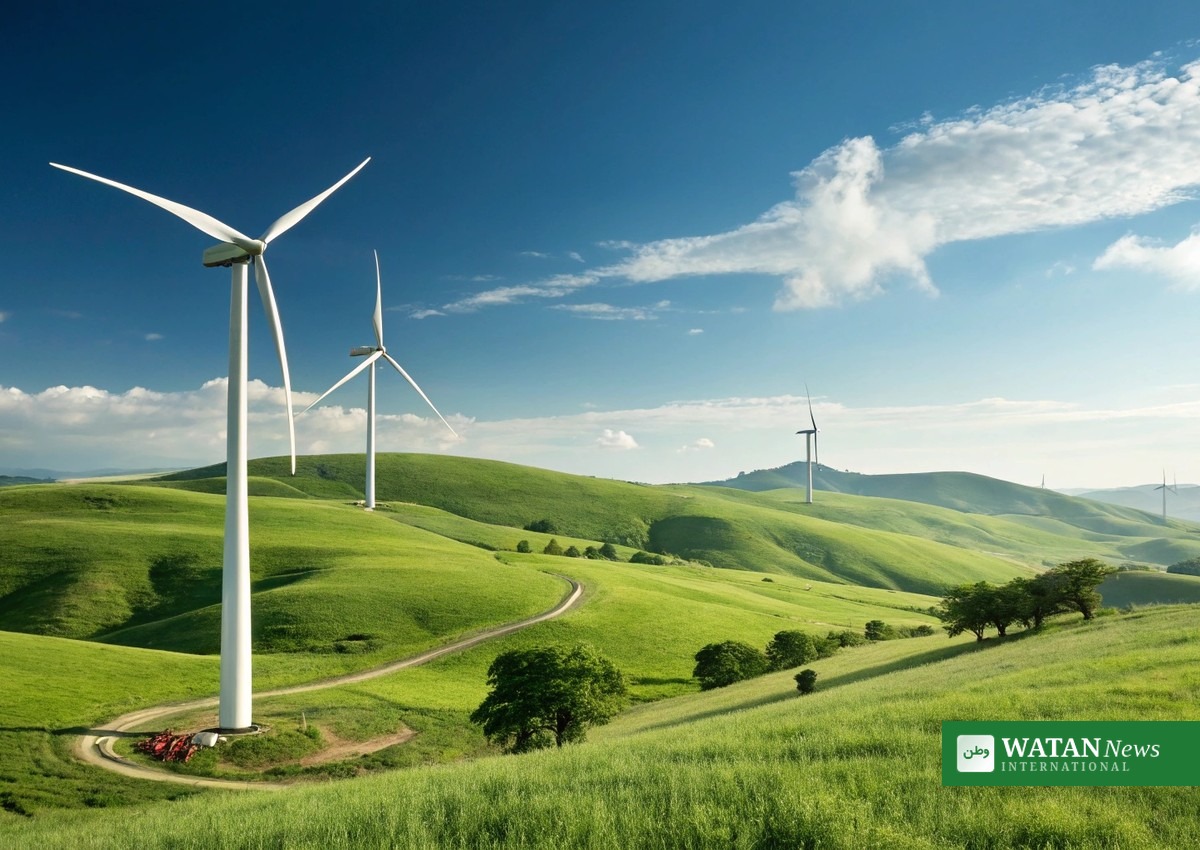
Behind the headline figure, the report credits the rapid expansion of renewable energy. About two-thirds of the increase in world energy demand is now being met by rising generation from the sun and wind, together with the uptake of electric vehicles, according to the report’s authors.
China accounts for about half of the emissions avoided through renewable energy deployment and electric vehicle adoption, the report finds. The Science Media Centre noted that New Zealand is among 40 countries that have cut fossil fuel emissions while growing their economies over the past decade — a sign that growth and emissions cuts can go together where clean energy is scaled up.
Professor Pierre Friedlingstein of the University of Exeter, who leads the Global Carbon Budget Office, said faster expansion of renewables and electrification is required for worldwide emissions to peak and then enter a lasting decline. The report’s authors stress that much greater investment in renewable energy and low-carbon technology such as electric vehicles is still needed to make the fall permanent.
Why the fall is not yet a turning point
Scientists involved in the report caution against reading too much into a single year’s figures. Part of the 2026 decline comes from supply restrictions and higher fuel prices, which have reduced demand, rather than from structural change in energy systems. Glen Peters, a research professor at the CICERO Centre for International Climate Research and a co-author of the report, said: “A drop in emissions in one year is not a peak, unless it is driven by structural change.”
Bill Hare, chief executive of Climate Analytics, who was not involved in the research, was more blunt, describing the picture as “a flatline, not a decline — a projected fall of just 0.4% in 2026, a figure that is unfortunately statistically indistinguishable from zero”.
The warning is reinforced by the land-use figures. Emissions from deforestation, peat fires and forest degradation — driven in part by El Niño conditions in South-East Asia — are projected to reach 5.1 billion tonnes in 2026, more than offsetting the fossil fuel fall and pushing total carbon dioxide emissions to the record 43.3 billion tonnes.
FAKTA
- Fossil fuel CO2 in 2026: 38.2 billion tonnes, down 0.4% from 2025 — the first fall since 2020.
- Oil, gas and coal: oil down about 2%, gas down 0.3%, coal up 0.6%.
- Total CO2 including land use: 43.3 billion tonnes, a record, up from 42.8 billion tonnes in 2025.
- Remaining carbon budget for 1.5°C: about 150 billion tonnes — less than four years at current rates.
- Renewables’ role: solar, wind and electric vehicles meet about two-thirds of the growth in world energy demand.
What it means for COP31
The report lands in the middle of COP31’s energy debate. More than 90 heads of state and government are expected in Antalya this week, and the presidency is pressing governments to back clean electrification as the route to cutting emissions. The Global Carbon Budget shows that the clean energy tools exist and are already bending the curve — but also that the bend is far too shallow, and far too fragile, to hold without stronger action.
Temperatures have already exceeded the 1.5°C threshold for more than two years, according to the report’s authors, and El Niño conditions are heating the sea and air further. The scientists warn that global emissions must peak imminently and fall rapidly in the years that follow if the world is to have a chance of limiting the overshoot above 1.5°C. The remaining carbon budget of about 150 billion tonnes — less than four years at the current rate — is the measure of how little time is left.
For the negotiators in Antalya, the message is that renewables are working, but the job is nowhere near done. As Peters put it, accelerated deployment of solar, wind, batteries and electric vehicles is pushing emissions down in dozens of countries — yet the changes are not sufficient to lock in a peak in global emissions.
Frequently asked questions
What is the Global Carbon Budget?
The Global Carbon Budget is an annual scientific assessment produced by the Global Carbon Project, a network of scientists from scores of universities and research institutions around the world. It tracks carbon dioxide emissions from fossil fuels and land-use change, and the carbon absorbed by oceans and land. The 2026 edition was published in the journal Earth System Science Data and presented at COP31 in Antalya on 10 November 2026.
Are global emissions falling?
Only slightly, and only for fossil fuels. Fossil fuel carbon dioxide emissions are projected to fall 0.4% in 2026, to 38.2 billion tonnes. But total carbon dioxide emissions, including deforestation and land-use change, are projected to rise to a record 43.3 billion tonnes. Scientists caution that the fossil fuel fall is small, partly driven by high energy prices, and not yet proof of a lasting peak.
How are renewables helping to cut emissions?
Solar and wind power, together with electric vehicles, are now meeting about two-thirds of the growth in world energy demand, according to the report. That means new demand for electricity and transport is increasingly supplied without burning more fossil fuel. China accounts for about half of the emissions avoided through renewable energy and electric vehicle deployment.
What is the remaining carbon budget for 1.5°C?
The report puts the remaining carbon budget — the amount of carbon dioxide that can still be emitted before global warming is likely to permanently exceed 1.5°C above pre-industrial levels — at about 150 billion tonnes. At current emission rates, that is less than four years of emissions.
What does the report mean for COP31?
It gives negotiators in Antalya both encouragement and urgency. The data show that clean energy is already bending the emissions curve, which supports COP31’s push for clean electrification. But the report also shows the bend is too shallow and too fragile, and that emissions must peak imminently and fall rapidly to keep the 1.5°C goal within reach.
Author

usmanch0013@gmail.com
Related Posts

Most Americans Want New Congress to End Iran War, Poll Finds
- 0
- 480 words
A Reuters/Ipsos poll finds 71% of Americans want the newly elected Democratic-led Congress to end the war with Iran, as voters press...
Read out all
Globalt CO2-budget 2026: Fossile emissioner falder, mens vedvarende energi vokser
- 0
- 1,279 word
Global Carbon Budget 2026 anslår, at CO2-emissionerne fra fossile brændsler falder 0,4 % i 2026, fordi sol, vind og elbiler dækker to...
Read out all
عالمی کاربن بجٹ 2026: قابلِ تجدید توانائی کی بدولت جیواشم ایندھن کے اخراج میں کمی متوقع
- 0
- 2 words
عالمی کاربن بجٹ 2026 کے مطابق 2026 میں جیواشم ایندھن سے کاربن ڈائی آکسائیڈ کے اخراج میں صفر اعشاریہ چار فیصد کمی...
Read out all
Manchester United Poised to Sack Michael Carrick After Worst Start in 40 Years
- 0
- 777 words
Manchester United look increasingly likely to sack head coach Michael Carrick, with senior executives set to meet co-owner Sir Jim Ratcliffe in...
Read out all
Police Officer Killed in Oviedo Backpack Explosion After Shooting
- 0
- 542 words
A Spanish police officer was killed and a bomb disposal expert seriously injured when an explosive device hidden in a backpack blew...
Read out all
GCC States Approve New Joint Military Headquarters in Kuwait
- 0
- 490 words
The six Gulf Cooperation Council states have approved a new advanced headquarters for their Unified Military Command in Kuwait, with forces to...
Read out all