- 0
- 1,115 word
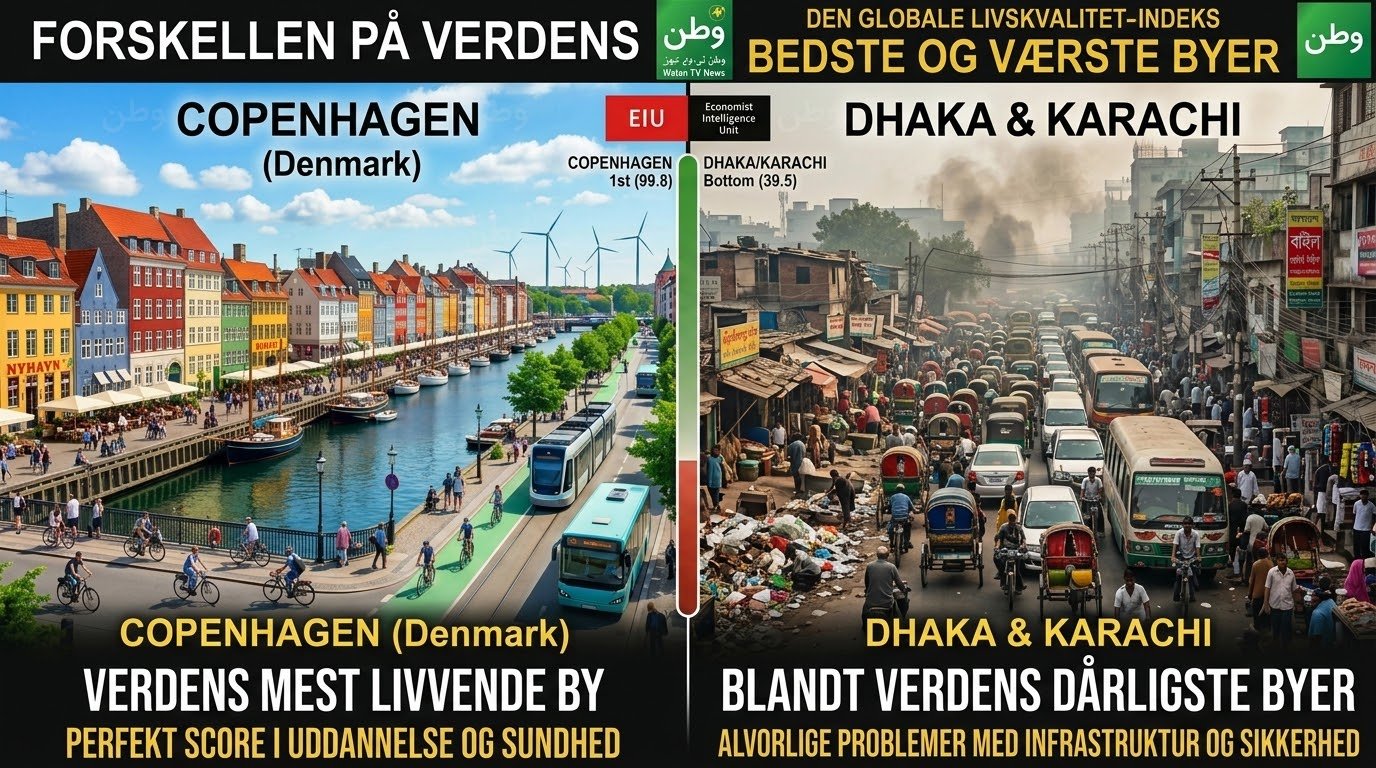
Global Liveability Index 2026 The Economist Intelligence Unit (EIU) has released its annual report on the world’s most liveable cities for the year 2026, presenting a detailed analysis of urban life quality across major cities around the globe.
According to the latest EIU Liveability Index, Denmark’s capital city, Copenhagen, has once again achieved the honour of being ranked as the world’s most liveable city. The city maintained its leading position due to its excellent performance in key areas including infrastructure, education, healthcare, stability, and overall quality of life.
On the other hand, Pakistan’s largest metropolitan city and financial hub, Karachi, unfortunately remains among the world’s least liveable cities. Bangladesh’s capital Dhaka also appeared among the cities facing major challenges in providing a comfortable and secure living environment for residents.
The report highlights the growing difference between cities that have successfully developed strong public systems and those struggling with issues such as infrastructure shortages, security concerns, transportation problems, and limited public services.
What is the Ranking Criteria?
The Economist Intelligence Unit’s Liveability Index evaluates 173 cities worldwide through a comprehensive assessment system. The ranking is based on five major categories that determine the overall quality of life in each city.
These categories include:
Stability
This category measures factors such as crime rates, political stability, social unrest, and the overall safety environment for citizens.
A stable city provides residents with security, confidence, and a peaceful atmosphere for daily life.
Healthcare
Healthcare evaluation focuses on the availability, quality, and accessibility of medical services. Cities with strong healthcare systems receive higher scores due to better facilities, professional services, and public health support.
Culture & Environment
This category examines cultural opportunities, environmental conditions, pollution levels, recreational facilities, and the overall lifestyle experience available to citizens.
Education
Education is another important factor in determining a city’s liveability. Cities with high-quality schools, universities, and educational opportunities receive stronger rankings.
Infrastructure
Infrastructure assessment includes transportation systems, housing facilities, roads, public services, and technological development.
Efficient infrastructure plays a major role in making daily life easier and more comfortable for residents.
Top 10 Cities: Dominated by Europe and Australia
According to the EIU report, Copenhagen secured the first position globally with outstanding performance across multiple categories.
The Danish capital achieved a perfect score of 100 out of 100 in infrastructure, education, and stability. The city’s clean environment, efficient public transportation, high-quality healthcare system, and strong social structure were among the major reasons behind its continued success.
Austria’s capital, Vienna, secured the second position. Vienna has long been recognised as one of the world’s most attractive cities due to its excellent public services, cultural richness, and high standard of living.
Australian cities also performed strongly in the ranking. Melbourne secured the third position, while Sydney ranked fourth. Both cities continue to receive international recognition for their healthcare facilities, education systems, cultural diversity, and modern infrastructure.
Switzerland also maintained a strong presence, with Zurich ranked fifth and Geneva placed sixth. These cities benefited from Switzerland’s strong economy, public services, safety standards, and organised urban planning.
Japan’s Osaka ranked seventh, highlighting the country’s strength in technology, infrastructure, safety, and efficient public systems.
The remaining cities in the global top ten included:
- Adelaide, Australia – eighth position
- Vancouver, Canada – ninth position
- Tokyo, Japan – tenth position
The rankings show that cities in Europe, Australia, Canada, and Japan continue to dominate the list due to their focus on sustainable development, public welfare, and citizen-focused policies.
Overall Global Trend in 2026
The 2026 report also examined broader global trends affecting urban life.
The global average liveability score stood at 76.1 during the year. However, international conflicts, particularly tensions in the Middle East and the ongoing situation in Ukraine, contributed to a decline in global stability scores.
Despite these challenges, improvements in healthcare systems across several Asian countries helped reduce the impact of declining stability scores. China, in particular, showed progress in healthcare development, contributing positively to regional improvements.
The report indicates that while some cities continue to face challenges due to global uncertainty, investment in public services and urban development remains a key factor in improving quality of life.
Least Liveable Cities: Damascus and Karachi at the Bottom
While some cities achieved remarkable success, the report also highlighted cities where residents continue to face serious difficulties.
Syria’s capital, Damascus, was ranked as the world’s least liveable city. Years of conflict and instability have severely affected public services, infrastructure, and daily life.
Pakistan’s financial capital, Karachi, once again appeared among the lowest-ranked cities, alongside Tripoli in Libya, Dhaka in Bangladesh, and Algiers in Algeria.
According to the report, several factors contributed to Karachi’s low ranking. These include:
- Declining law and order situation
- Rising street crime concerns
- Severe traffic congestion
- Limited public transportation facilities
- Poor sanitation systems
- Pressure on urban infrastructure due to rapid population growth
As one of the world’s largest cities, Karachi plays a crucial role in Pakistan’s economy. However, the report highlights the urgent need for improvements in urban planning, public services, and basic facilities.
Challenges Facing Growing Metropolitan Cities
Large cities in developing countries often face difficulties due to rapid population growth, limited resources, and outdated infrastructure.
Cities like Karachi and Dhaka continue to expand quickly, creating additional pressure on transportation networks, healthcare systems, housing facilities, and environmental management.
Experts believe that improving urban management, strengthening governance systems, and investing in sustainable infrastructure are essential steps for improving future rankings.
Successful cities around the world demonstrate that liveability is not only connected to economic growth but also depends on providing citizens with safety, cleanliness, education, healthcare, and reliable public services.
Analysis and the Need of the Hour
According to analysts at Watan News International, the latest EIU report serves as an important wake-up call for policymakers in developing countries.
The success of cities like Copenhagen and Vienna is not based merely on modern buildings or large construction projects. Their achievements are the result of effective governance, long-term planning, strong public institutions, and a focus on citizens’ everyday needs.
Clean environments, efficient public transportation, affordable healthcare, quality education, and safe communities are the real foundations of a liveable city.
For megacities like Karachi and Dhaka, improving urban conditions requires comprehensive reforms and long-term commitment. Authorities must focus on upgrading infrastructure, improving public transport, controlling pollution, enhancing security, and ensuring better access to essential services.
Until governance systems and basic urban facilities are significantly improved, many developing cities will continue to struggle in the global competition for liveability.
The 2026 EIU Liveability Index once again demonstrates that successful cities are built not only with concrete and technology but with strong planning, responsible leadership, and a commitment to improving the lives of ordinary citizens.
Author

usmanch0013@gmail.com
Related Posts

COP31 presidency and OECD announce Paris partnership on climate finance and delivery
- 0
- 504 words
President-Designate Murat Kurum frames climate finance as strategic security at OECD headquarters, cites Türkiye’s SURFF urban-resilience facility as an implementation bridge, and...
Read out all
US House passes sweeping Russia sanctions bill, sending it to Trump
- 0
- 684 words
The US House of Representatives on Wednesday approved a sweeping package of sanctions aimed at squeezing Russia’s war economy, sending the legislation...
Read out all
Himalayan warming linked to conditions behind Nepal’s deadly rock-ice cascade
- 0
- 570 words
A catastrophic rock-ice avalanche that turned into a high-speed debris flood along the Nepal–China border on 26 August has been examined by...
Read out all
EU Chief Opens Door for Canada to Become ‘Associate Member’
- 0
- 639 words
The president of the European Commission, Ursula von der Leyen, has backed proposals for Canada to become the EU’s first associate member....
Read out all
WMO warns very strong El Niño likely to persist into early 2027
- 0
- 609 words
Global forecasts show near-certain continuation through February, with warmer land temperatures and classic rainfall shifts for September–November.
Read out all
Pacific Pre-COP logistics ramp up ahead of Antalya COP31
- 0
- 1,030 word
Organisers say more than 2,000 delegates are expected in Fiji next month, with a leaders’ convening in Tuvalu, as the Türkiye–Australia presidency...
Read out all