- 0
- 1,375 word
Germany has launched a Global SF6 Pledge at the COP31 climate summit in Antalya, rallying 35 countries behind a phase-down of sulphur hexafluoride — the most potent greenhouse gas known — from the power grids that the world’s electrification drive is expanding.
FAKTA
- What: The Global SF6 Pledge — a voluntary initiative to cut sulphur hexafluoride (SF6) emissions from the power sector and accelerate climate-friendly alternatives.
- Launched: 19 November 2026, at COP31 in Antalya, Türkiye, by Germany’s Federal Environment Minister Carsten Schneider.
- Support: 35 countries representing roughly a third of the global economy; the European Union joined on the same day. The World Bank and the Climate and Clean Air Coalition also support the pledge.
- The gas: SF6 warms the planet about 24,000 times more than carbon dioxide over 100 years and stays in the atmosphere for more than 1,000 years.
- Funding: Germany is providing €15 million over several years. Implementation runs through GIZ, the World Bank and the UN Climate Technology Centre and Network.
- Goal: SF6-free switchgear wherever technically feasible, better management of existing equipment, and no lock-in of the gas as grids expand.
The most potent greenhouse gas — hiding in plain sight
SF6 is found in almost every power grid in the world. In switchgear — the equipment that controls and protects electricity networks — the gas serves as an insulating and arc-quenching medium: it interrupts electric arcs, prevents short circuits and fires, and has kept grids safe for decades.
The problem is what happens when it escapes. SF6 has a global warming potential about 24,000 times greater than carbon dioxide over a 100-year span, according to Germany’s Federal Environment Ministry, and the gas remains in the atmosphere for more than 1,000 years. The European Commission puts its warming potential at around 25,000 times that of carbon dioxide. Global emissions are rising, mainly due to leakage from transmission and distribution grids — and around 80 per cent of global SF6 consumption is associated with electricity transmission and distribution, according to gasworld analysis.
“SF6 is the most potent greenhouse gas there is. Phasing out its use is entirely possible and offers enormous climate benefits,” Schneider said at the launch in Antalya. “As electricity grids expand worldwide, it is vital to deploy climate-friendly technologies from day one.”
Four commitments under the pledge
By endorsing the voluntary pledge, governments commit to four lines of action:
1. Improve data
Many countries do not yet know how much SF6 is in their grids. Better monitoring, reporting and verification lays the foundation for all further steps.
2. Manage existing grid infrastructure
Equipment that works does not necessarily have to be replaced. The first priority is to deal with older, leaking equipment, together with the recovery and recycling of the gas.
3. Deploy SF6-free technology
New equipment should, wherever technically feasible, operate without SF6. The pledge is not limited to specific technologies or manufacturers: SF6-free switchgear is commercially available for medium voltage and for high voltage up to 145 kilovolts, and pilot projects are under way for the highest voltage levels.
4. Mobilise finance
With the World Bank as a partner, the aim is to close financing gaps and prepare and pool projects. Countries that cannot make the transition without financial support will receive subsidies to cover the cost difference, organised through the World Bank and GIZ, Schneider said, according to Argus reporting from the launch.
Why grids are the front line
The pledge lands as COP31 pushes electrification to the centre of climate action. The COP31 presidency’s goal is to raise electricity’s share of total final energy consumption from about 21 per cent today to 35 per cent by 2035, backed by about 90 countries — and that means grids will expand fast, in every region.
That expansion is exactly the risk. Equipment installed today stays in operation for decades, and Schneider warned that modernising power grids risks locking in SF6 emissions for at least 50 years if new switchgear keeps using the gas. The pledge is designed to break that lock-in before it happens: clean-air insulation and vacuum technology for arc interruption are already available as alternatives, and the European Union has already legislated a phase-out — since January 2026, new medium-voltage switchgear up to 24 kilovolts may no longer contain SF6, with further voltage levels following by 2032 under the EU F-gas Regulation.
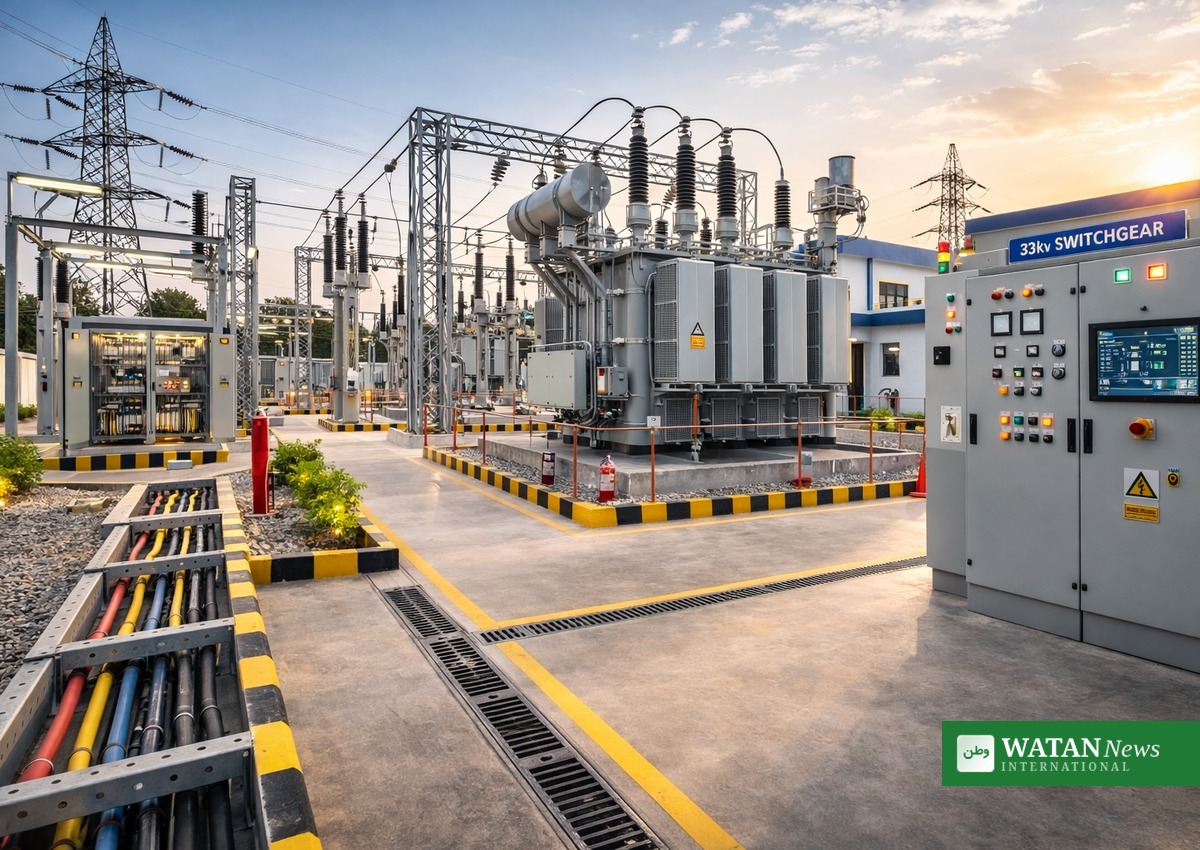
A modern electricity substation with 33kV switchgear. The equipment that keeps grids safe runs on SF6 gas — the pledge aims to replace it with climate-friendly alternatives as grids expand.
Who has signed — and who is still missing
Canada, Cambodia, the European Union, France, Kenya, Nigeria, Senegal, Spain, Uganda and the United Kingdom had already announced their support before the launch, and the European Commission confirmed on 19 November that 35 countries have now signed on. “SF6 has got to go. Alternatives exist and we invite all countries to join us in signing the Global SF6 Pledge and phasing out this gas,” EU Climate Commissioner Wopke Hoekstra said.
China, the world’s largest builder of power grids, has not signed yet. Schneider met Li Gao, head of China’s delegation at COP31, to invite the country to join. China pledged to tackle SF6 emissions in a five-year plan released in July, and Chinese officials and State Grid executives have outlined efforts to capture and recycle the gas and substitute SF6-free switchgear, according to reporting from the summit. The pledge remains open to further countries: a first meeting of supporters took place on 4 November 2026 in Kigali, during the 38th Meeting of the Parties to the Montreal Protocol.
One of COP31’s concrete action outcomes
The pledge is part of COP31’s Global Climate Action Agenda, which has delivered concrete results outside the contested negotiation text. It follows the more than $480 million pledged on 12 November to cut methane and other super pollutants — read our coverage of the COP31 methane pledge — and the Electrification Delivery Package presented on 19 November, which you can read about in our report on the COP31 electrification package.
As negotiators worked into overtime on Sunday on the summit’s final cover decision — a ten-page text put to parties in the early hours of Sunday, with the closing plenary that would adopt it pushed back as objections grew — the SF6 pledge showed the action agenda delivering results that do not depend on the outcome of the negotiation. The text itself remains a draft until parties adopt it.
For a gas that most people have never heard of, the pledge is a reminder of how much of the climate fight now runs through the unglamorous machinery of the energy transition: the switchgear, the grids and the standards that decide what gets built for the next fifty years.
Frequently asked questions
What is SF6?
Sulphur hexafluoride is a synthetic gas used as an insulating and arc-quenching medium in electrical switchgear — the equipment that controls and protects power grids. It interrupts electric arcs and prevents short circuits and fires, and it is found in almost every power grid in the world.
Why is SF6 so harmful for the climate?
It is the most potent greenhouse gas known: its global warming potential is about 24,000 times greater than carbon dioxide over 100 years, and it remains in the atmosphere for more than 1,000 years. Even small leaks matter, and global emissions are rising, mainly from leakage in transmission and distribution grids.
What does the Global SF6 Pledge actually require?
It is voluntary. Governments that endorse it commit to improving data on SF6 stocks and emissions, minimising emissions through environmentally sound management of existing equipment, promoting SF6-free technologies, and mobilising finance. It does not require the immediate replacement of all existing equipment.
Which countries have joined the pledge?
Thirty-five countries representing roughly a third of the global economy have signed on, including the European Union, the United Kingdom, France, Spain, Canada, Cambodia, Kenya, Nigeria, Senegal and Uganda. The World Bank and the Climate and Clean Air Coalition support it. China has been invited but had not signed at the time of the launch.
Are SF6-free alternatives ready?
Yes, for most uses. SF6-free switchgear is commercially available for medium voltage and for high voltage up to 145 kilovolts, and is already being used by major grid operators; pilot projects are under way for the highest voltage levels. The EU has already begun phasing SF6 out of new switchgear, starting with medium-voltage equipment up to 24 kilovolts in January 2026.
Author

usmanch0013@gmail.com
Related Posts
کاپ31 میں دنیا کی سب سے طاقتور گرین ہاؤس گیس کے خلاف عالمی ایس ایف 6 عہد کا آغاز
35 ممالک کاپ31 میں جرمنی کے عالمی ایس ایف 6 عہد میں شامل ہو گئے ہیں تاکہ دنیا کی سب سے طاقتور...
Read out all
Global SF6-pledge lanceret ved COP31 skal fjerne verdens kraftigste drivhusgas fra elnettet
- 0
- 1,336 word
Femogtredive lande har tilsluttet sig Tysklands globale SF6-pledge ved COP31 for at udfase svovlhexafluorid, verdens kraftigste drivhusgas, fra verdens voksende elnet.
Read out all
FBI, DHS and TSA Warn US Airlines of al-Qaeda Calls for Copycat Attacks
- 0
- 635 words
US security agencies have warned airlines and airports that al-Qaeda supporters are urging copycat attacks on commercial flights, citing September’s attempted hijacking...
Read out all
Bolsonaro in Intensive Care with Intestinal Obstruction
- 0
- 531 words
Former Brazilian President Jair Bolsonaro is in intensive care in Brasilia with an acute intestinal obstruction. The hospital says the 71-year-old is...
Read out all
Egyptian Institute Pitches 20-Country Climate Ambassador Network at COP31
- 0
- 1,047 word
Egypt’s Institute of Sustainability and Carbon Footprint pitched a 20-country climate ambassador network at COP31 in Antalya, targeting 20 countries, 20 academic...
Read out all
Earthshot Prize 2026-vindere: Bhutan, Mahindra, Ørsted, Niue og PFAS-Free France får 1 million pund hver
- 0
- 1,226 word
Fem vindere blev kåret ved The Earthshot Prize 2026 i Mumbai den 17. november 2026: Bhutan, Mahindra Last Mile Mobility, Ørsted, Niue...
Read out all