- 0
- 1,653 word
ANTALYA — Kenya has renewed its deforestation pledge at COP31, committing to halt and reverse forest loss by 2030 as world leaders put forest finance and wildfire prevention at the centre of the Antalya summit’s second week.
Environment Cabinet Secretary Deborah Mlongo Barasa made the commitment on Friday, 14 November, addressing the All-Member Ministerial Meeting of the Forest and Climate Leaders’ Partnership (FCLP), the coalition of countries working to protect forests and tackle climate change. “Kenya remains convinced that sustainable forest management must deliver both climate resilience and economic prosperity,” she said.
The pledge comes as Kenya’s forest programme gains recognition at the summit for turning a national tree-planting target into coordinated action on the ground — and as new international backing for wildfire prevention gives planted forests a better chance of surviving to maturity.
Kenya to co-lead two forest work streams
Barasa told the ministerial meeting that Kenya is co-leading two work streams under the Forest and Climate Leaders’ Partnership. Together with Canada, Kenya is leading the Green Construction initiative, which promotes the use of sustainably sourced timber and other low-carbon building materials. The programme seeks to develop viable wood value chains, improve policy frameworks, encourage innovation and attract investment in climate-resilient construction. At home, the Kenya Forestry Research Institute is working on innovations in sustainable wood utilisation to support the initiative.
Kenya is also working with Peru to lead the Integrated Fire Management and Wildfire Resilience work stream. The initiative focuses on preventing forest fires through better preparedness, early-warning systems, community involvement and sustainable management of landscapes, rather than relying mainly on firefighting after outbreaks occur. Barasa said the Kenya Forest Service was strengthening forest-fire surveillance, early-warning capacity and coordinated emergency response, and she welcomed the United Kingdom’s decision to join Kenya and Peru in co-leading the fire-management initiative.
Antalya Action Plan backed by 23 countries
Kenya is also supporting the Antalya Action Plan on Integrated Fire Management, developed under Türkiye’s COP31 Presidency alongside Brazil and the Republic of Korea. On Monday, 16 November, the Food and Agriculture Organization of the United Nations (FAO) welcomed the endorsement of the plan by 23 countries at COP31.
The country-led, voluntary plan aims to turn political commitments on wildfire resilience into coordinated action through greater collaboration, shared learning and practical solutions. “The scale and complexity of wildfire risks mean that countries cannot solve this challenge in isolation,” said Zhimin Wu, FAO Assistant Director-General and Director of the Forestry Division.
The plan is structured around four outcomes: strengthening international cooperation, using science and local knowledge to prevent and reduce wildfire risks, managing landscapes adaptively, and improving access to resources for integrated fire management and wildfire resilience, especially in developing countries. The Global Fire Management Hub Secretariat, hosted by FAO, will serve as the plan’s secretariat. The plan was launched at the COP31 event “High-Level Dialogue on Technology and Innovation for Integrated Fire Management and Wildfire Resilience” in Antalya.
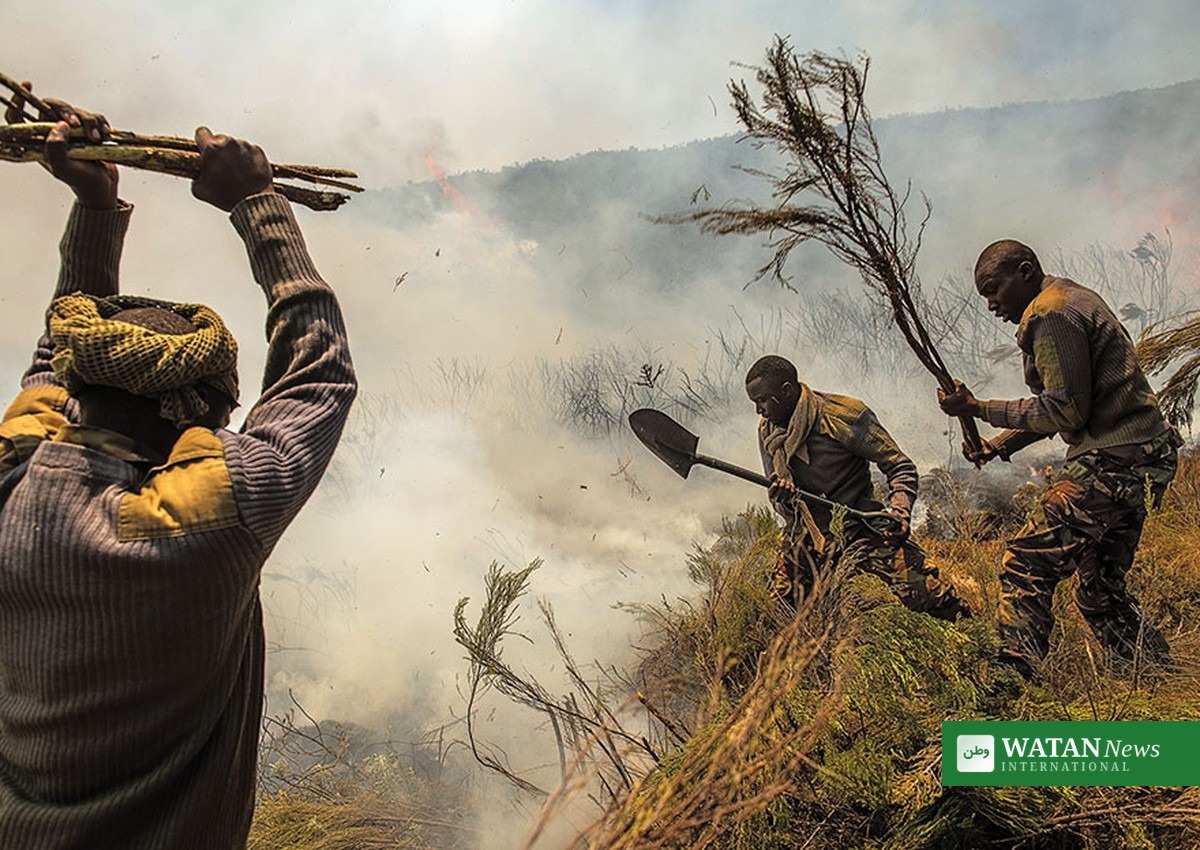
The need for such a plan is stark. Wildfires are becoming more frequent and more severe, driven by climate change and changes in land use, with extreme fire events projected to increase by up to 50 percent by the end of this century. On average, 261 million hectares of land was affected by fire annually in 2007–2019, almost half of which was forested, according to the Global Forest Resources Assessment 2025.
Kenya’s deforestation pledge: planting at the centre
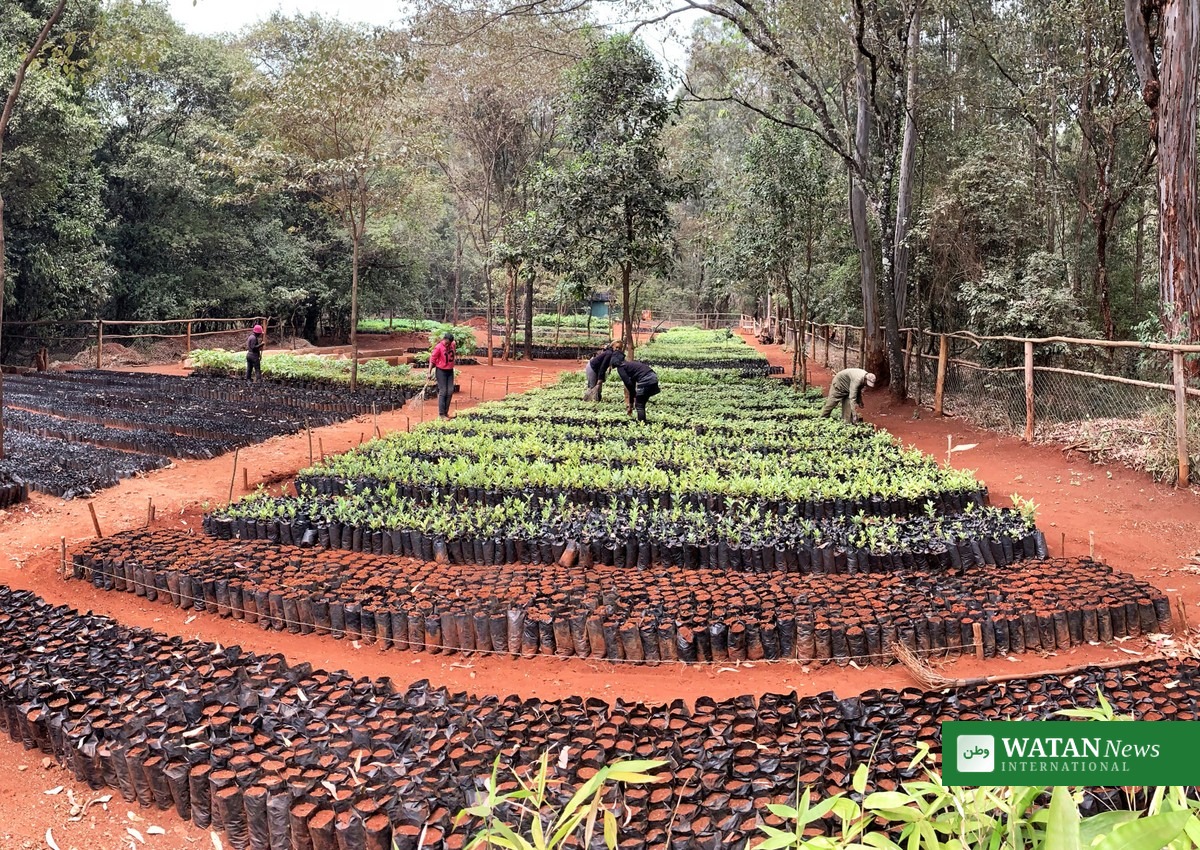
At the heart of Kenya’s pledge is the 15 Billion Trees by 2032 Programme, which targets 30 percent national tree cover and the restoration of 10.6 million hectares of degraded landscapes by 2032. The programme has brought together political leaders, opinion shapers, thought leaders and citizens behind a shared national goal, and Kenya’s approach to forest restoration — anchored in government coordination, political leadership and community participation — has received recognition at the summit.
The efforts are complemented by stronger forest protection, integrated fire management, implementation of Reducing Emissions from Deforestation and Forest Degradation (REDD+), and the development of sustainable forest-based livelihoods. Kenya planted 17.24 million trees during Mazingira Week in October, a milestone on the way to the 2032 target.
Kenya’s pledge sits alongside other forest announcements at COP31. Ethiopia brought its Green Legacy programme of 56 billion seedlings to the summit as a model for halting deforestation by 2030, while Indonesia launched forest carbon trading across 38.6 million hectares under the Architecture for REDD+ Transactions framework.
The money question
The summit also exposed the gap between forests’ climate value and the money they receive. Forests currently receive less than one percent of global climate finance, although they offer approximately one-fifth of the world’s cost-effective climate mitigation potential, according to figures cited at the summit.
At the Leaders’ Summit event on forests on 11 November, philanthropies announced plans to commit US$88 million to the Tropical Forest Forever Facility, a financing mechanism seeking to raise US$10 billion in initial capital. The Netherlands reaffirmed its commitment to contribute US$500 million over ten years, and Norway said it was prepared to contribute up to 20 percent of the facility’s initial capitalisation target, while extending its International Climate and Forests Initiative to 2035.
The summit also highlighted the United Nations Decade of Afforestation and Reforestation, scheduled to run from 2027 to 2036 and spearheaded by the Republic of Congo.
Barasa used the conference to call for increased financing to help African countries respond to climate change, arguing that Africa should not continue bearing the financial burden of a crisis it did not create. She said climate finance was an obligation under the Paris Agreement rather than charity, citing Article 9.1 of the agreement, and called for grants, highly concessional financing and clearer definitions of climate finance. She urged developed countries to deliver on the US$300 billion annual climate finance goal, called for a tripling of adaptation finance, and backed the Baku Adaptation Roadmap, the Loss and Damage Fund, the Green Climate Fund and the Adaptation Fund. She cited Kenya’s 2020–2023 drought and the 2024 floods as examples of the need for investment in preparedness and resilience, and pointed to Kenya’s Financing Locally Led Climate Action programme, which channels resources to counties and communities for locally identified climate projects.
Pledge under scrutiny at home
Kenya’s international forest commitments come amid debate at home over logging in the Aberdare Forest. Democratic Party leader Justin Muturi has called for an independent environmental audit of the forest and transparent access for opposition leaders, civil society groups, environmental experts and journalists, and has questioned whether timber from the forest is being used in affordable housing projects.
Kenya Forest Service officials and sawmillers have defended the harvesting of mature exotic trees in commercial plantations, saying the activities are conducted under approved work plans and support timber supply and revenue generation alongside subsequent replanting, rather than the indiscriminate clearing of indigenous forests. Residents and some county leaders have nevertheless raised concerns about the possible effects of logging on streams and water sources.
Barasa pledged that Kenya would continue working with international partners in 2027 to expand sustainable construction, improve wildfire resilience, facilitate technology transfer and mobilise climate finance.
Key facts
- Kenya renewed its commitment to halt and reverse forest loss by 2030 at the Forest and Climate Leaders’ Partnership ministerial meeting on 14 November 2026 at COP31 in Antalya.
- Kenya co-leads the Green Construction work stream with Canada and the Integrated Fire Management and Wildfire Resilience work stream with Peru; the United Kingdom has joined the fire-management work.
- 23 countries endorsed the Antalya Action Plan on Integrated Fire Management at COP31 on 16 November 2026.
- Kenya’s 15 Billion Trees programme targets 30 percent tree cover and the restoration of 10.6 million hectares of degraded landscapes by 2032.
- On average, 261 million hectares of land was affected by fire each year in 2007–2019, almost half of it forested, according to the Global Forest Resources Assessment 2025.
Frequently asked questions
What did Kenya pledge at COP31?
Kenya renewed its commitment to halt and reverse forest loss by 2030. Environment Cabinet Secretary Deborah Mlongo Barasa made the commitment on 14 November 2026 at the Forest and Climate Leaders’ Partnership All-Member Ministerial Meeting in Antalya, calling for sustainable forest management that delivers both climate resilience and economic prosperity.
What is the Antalya Action Plan on Integrated Fire Management?
It is a country-led, voluntary plan spearheaded by Türkiye in its COP31 Presidency and co-led by Brazil and the Republic of Korea, with support from FAO through the Global Fire Management Hub and from the Forest and Climate Leaders’ Partnership. Endorsed by 23 countries at COP31, it aims to turn wildfire-resilience commitments into coordinated action through cooperation, science and local knowledge, adaptive landscape management and better access to resources, especially for developing countries.
What is Kenya’s 15 Billion Trees programme?
It is Kenya’s national tree-growing programme, targeting 15 billion trees by 2032, 30 percent national tree cover and the restoration of 10.6 million hectares of degraded landscapes. Kenya planted 17.24 million trees during Mazingira Week in October 2026 as a milestone towards the target.
Why do wildfires matter for the climate?
Wildfires release the carbon stored in trees and soils, destroy the forests that absorb carbon dioxide, and produce smoke and pollution that cross borders and harm human health and biodiversity. Extreme fire events are projected to increase by up to 50 percent by the end of this century, and on average 261 million hectares of land was affected by fire each year in 2007–2019.
How is forest protection being financed?
Through a mix of public and philanthropic money. At COP31, philanthropies announced plans to commit US$88 million to the Tropical Forest Forever Facility, which seeks US$10 billion in initial capital; the Netherlands reaffirmed US$500 million over ten years, and Norway said it was prepared to contribute up to 20 percent of the target. Even so, forests still receive less than one percent of global climate finance.
Kenya’s pledge will be judged not by the words spoken in Antalya but by whether the trees planted survive — protected from fire, funded well enough to grow, and counted honestly. On that test, the Antalya Action Plan and the forest finance announcements are the measures to watch in 2027.
Author

usmanch0013@gmail.com
Related Posts
Kenya fornyer løftet om at stoppe skovrydning inden 2030 ved COP31, mens 23 lande bakker op om Antalya-brandplanen
- 0
- 1,688 word
Kenya fornyede ved COP31 i Antalya sit løfte om at stoppe og vende skovtabet inden 2030 og leder arbejdet med grønt byggeri...
Read out all
کاپ31: کینیا کا 2030 تک جنگلات کی کٹائی ختم کرنے کا عزم، 23 ممالک نے انطالیہ منصوبے کی حمایت کی
کینیا نے انطالیہ میں کاپ31 کے موقع پر 2030 تک جنگلات کی کٹائی ختم کرنے کے عزم کی تجدید کی اور سبز...
Read out all
Hormuz Tanker Attack Near Khasab Disables Vessel, Crew Safe
- 0
- 762 words
A tanker transiting the Strait of Hormuz was attacked about seven nautical miles north of Khasab, Oman, on Monday evening, leaving it...
Read out all
COP31: Nul affald kan undgå 149 milliarder ton emissioner i 2050, viser ny rapport
- 0
- 1,474 word
En ny rapport, der lanceres ved COP31 i Antalya, siger, at nul-affald-tilgange i materialeøkonomien kan undgå 149 milliarder ton drivhusgasemissioner i 2050...
Read out all
COP31: Zero Waste Could Avoid 149 Billion Tonnes of Emissions by 2050, New Report Finds
- 0
- 1,473 word
A new report launched at COP31 in Antalya says zero-waste approaches across the materials economy could avoid 149 billion tonnes of greenhouse...
Read out all
کاپ31: صفر فضلہ 2050 تک 149 ارب ٹن اخراج سے بچا سکتا ہے، نئی رپورٹ
انطالیہ میں کاپ31 کے موقع پر جاری ہونے والی ایک نئی رپورٹ کے مطابق مواد کی معیشت میں صفر فضلہ کے طریقے...
Read out all