- 0
- 677 words
The head of Britain’s domestic intelligence service MI5 said on Tuesday that Iran is stepping up attempts to strike sensitive military targets in the United Kingdom, describing a “major shift” in Tehran’s ambitions toward “harder targets, like military sites.”
FAKTA
- MI5 Director General Ken McCallum delivered the warning in his annual threat speech at MI5 headquarters on Tuesday, October 13, 2026.
- McCallum said Iran-linked operations over the past year had led to 50 arrests in the United Kingdom.
- He said the suspected September plot against RAF Fairford, a British airbase used by US bombers, was “not unique” and that Iranian interest extended to other military sites at home and abroad.
- Prime Minister Andy Burnham told Parliament the Fairford incident was “almost certainly” directed by Iran’s Islamic Revolutionary Guard Corps; the United States withdrew its B-1 and B-52 bombers from the base on October 4.
- Britain has sanctioned two Iranian nationals over alleged hostile activity linked to the airbase plot.
- Tehran denies any involvement in the Fairford incident or other alleged activity in Britain; Iran’s foreign ministry summoned the British ambassador and demanded concrete evidence.
McCallum warns of Iran targeting UK military sites
In his annual speech, McCallum said there had been a major shift in Tehran’s calculus this year. He said Iran had previously relied on lower-level criminal proxies in Britain but was now showing ambitions to come at harder targets, including military sites, intelligence facilities and other high-security targets.
“The RAF Fairford incident … is not unique. There have been other examples, not just in the UK but around the world,” he told reporters after the speech, though he declined to discuss the Fairford case in detail because the investigation is ongoing.
RAF Fairford plot and other incidents
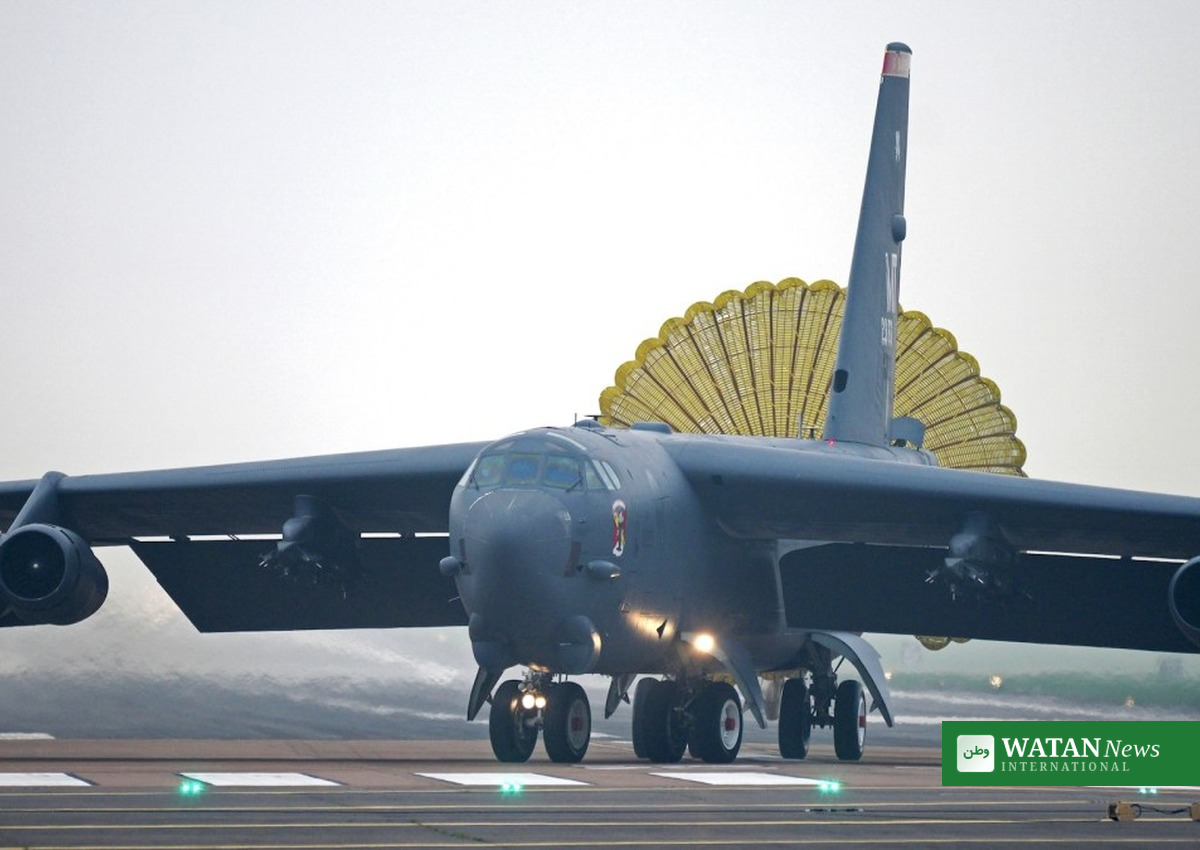
British police declared a major incident on September 27 after three suspicious vans drove close to RAF Fairford in Gloucestershire, an airbase used by US bombers for strikes on Iran. Five British men in their 20s were arrested on suspicion of explosives offences, and two more were arrested later; police found a supply of petrol in the vans but no explosives. All were released on bail, and none has been charged.
The scare prompted the United States to withdraw its B-1 Lancer and B-52 bombers from the facility on October 4 over security concerns. Two Latvian men were also arrested for trespassing at RAF Molesworth, another base used by the US military and NATO for intelligence operations.
Separately, UK Foreign Secretary Ed Miliband announced sanctions against two Iranian nationals — Ruhollah Bazghandi, described as the head of IRGC counterespionage operations, and Shahram Ali Reza Tamarzadeh Jakki, described as a facilitator for Iran’s Zindashti criminal network — for their alleged role in hostile activity on behalf of the Iranian regime.
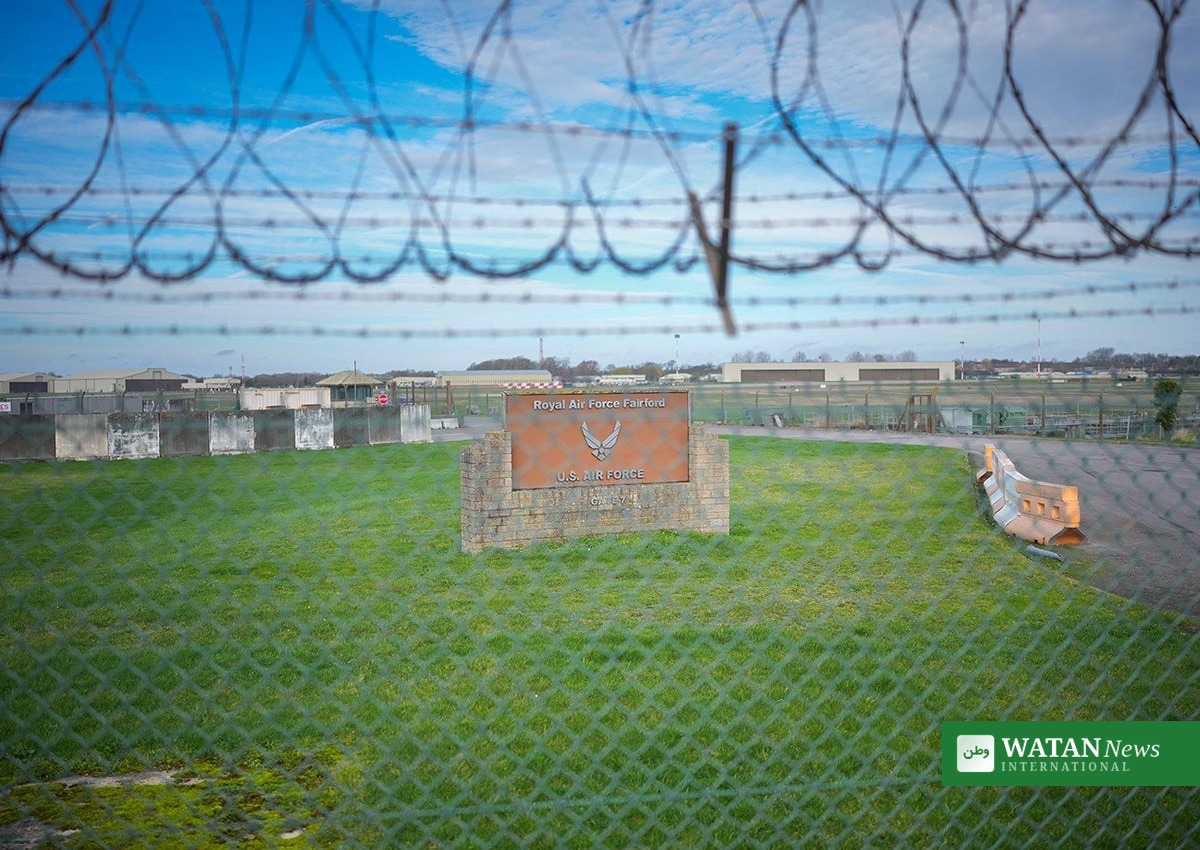
RAF Fairford, the British airbase used by US bombers, was at the centre of the suspected plot MI5 chief Ken McCallum discussed on Tuesday.
Iran denies involvement
Tehran has rejected the accusations, saying Britain has provided no concrete evidence. Iran’s Foreign Ministry described the British claims as a “sordid conspiracy,” and the Iranian ambassador in London urged the British government to present evidence rather than issue unsubstantiated statements.
McCallum acknowledged that Iran’s operatives in Britain had shown limited sophistication so far, saying he doubted Tehran’s ability to launch complex attacks such as explosive-drone strikes in the UK. “Given what we’ve actually seen in practice in the UK in recent years, that has not been anywhere near [that] level of capability,” he said — though he warned the IRGC had demonstrated deeper and more aggressive capabilities closer to its own borders.
AI and the new threat landscape
The MI5 chief also warned that artificial intelligence could “change the stakes” on bioweapons and said the agency had set up a new AI Threat Assessment Centre. He said state threats had quadrupled over the past decade, with Russia and Iran expanding hybrid warfare campaigns against the United Kingdom, and called the shift comparable to the period after the September 11 attacks.
Read more European coverage in the Europe news section on Watan News.
Author

usman2344913@gmail.com
Related Posts

Russian Missile Strikes Kill One in Kyiv, Damage Energy Facilities
- 0
- 448 words
Russian air strikes hit Ukraine’s capital on Wednesday morning, killing one person, injuring another and damaging energy facilities across Kyiv, city mayor...
Read out all
Ireland Launches GreenFutures: First Programme to Link AI Literacy and Climate Education
- 0
- 420 words
DUBLIN — Ireland has launched the first national school programme to link artificial intelligence literacy with climate education. GreenFutures, a free four-lesson...
Read out all
Hawaii Youth Climate Summit 2026: Young People Head to State Capitol to Shape Climate Law
- 0
- 422 words
HONOLULU, Hawaii — Young people across Hawaii are being invited to take over the State Capitol and turn their climate ideas into...
Read out all
White House Ousts Kimberly Guilfoyle as US Ambassador to Greece
- 0
- 636 words
The White House on Tuesday asked United States Ambassador to Greece Kimberly Guilfoyle to resign following a string of reports alleging misconduct,...
Read out all
Night Trains Are Back: Europe’s Sleeper Revival and the Low-Carbon Way to Travel
- 0
- 1,060 word
Night trains are returning across Europe as a low-carbon alternative to short-haul flights. This awareness explainer looks at the official emissions figures,...
Read out all
SK Innovation Expands Mangrove Restoration in Vietnam with 200-Hectare Can Tho Plan
- 0
- 679 words
SK Innovation has signed an MOU with Can Tho City and MangLub to expand its mangrove restoration programme in Vietnam, targeting 200...
Read out all