- 0
- 785 words
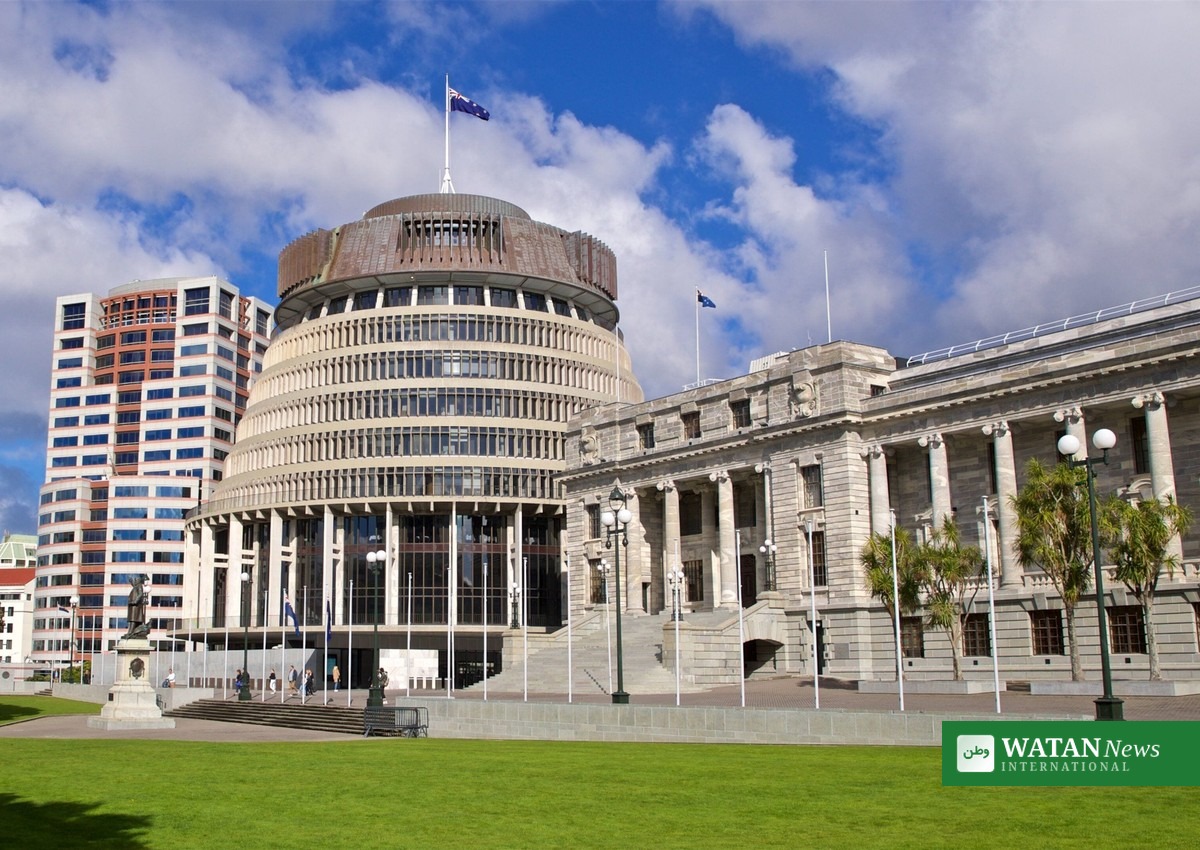
The New Zealand election deadlock is now official: the final vote count published on Friday showed neither the right-wing incumbents nor the left-wing opposition won enough seats to form a majority government, leaving a centrist newcomer party holding the balance of power.
New Zealand’s Electoral Commission released the official results of the 7 November election after counting nearly 485,000 special votes, including ballots cast by New Zealanders living overseas. The count stripped the governing coalition of the wafer-thin majority it held on election night and set up weeks of negotiations over the shape of the next government.
FAKTA
- National won 40 seats, ACT 13 and New Zealand First 12 — a right-wing bloc of 65 seats in the 130-seat Parliament, one short of the 66 needed for a majority.
- Labour won 36 seats, the Greens 17 and Te Pāti Māori five — a left-wing bloc of 58 seats.
- The centrist Opportunity Party won seven seats, entering Parliament for the first time, and now holds the deciding role.
- Nearly 485,000 special votes were counted, flipping two electorates to Labour — Wairarapa by 81 votes and Hamilton East by 172 votes.
- National took 28.35% of the party vote and Labour 29.88%; both major parties finished below 30%.
- Parliament must meet by 14 January, and the current government stays on in caretaker mode until a new one is sworn in.
How the New Zealand election deadlock happened
On election night, the conservative bloc finished ahead with a slim majority of 67 seats. But the final count told a different story. National lost two seats once special votes were tallied, while the Greens gained one, leaving both blocs short of a majority in an expanded 130-seat Parliament.
Labour overturned narrow National leads in two electorates. In Wairarapa, Labour’s Kieran McAnulty beat National’s Mike Butterick by just 81 votes. In Hamilton East, Labour’s Georgie Dansey overtook National’s Ryan Hamilton by 172 votes. With margins that tight, National is expected to seek recounts, which must be applied for within three working days.
A total of 2.8 million votes were cast, with turnout at 77.2% of enrolled voters. The result delivered a rebuke to the two parties that have long dominated New Zealand politics: it was the second-lowest turnout on record and the lowest combined vote share ever for National and Labour.
A newcomer holds the balance of power
The Opportunity Party, led by 38-year-old business consultant and political newcomer Qiulae Wong, is the story of the election. The centrist party, formed in 2016, entered Parliament for the first time after winning 6.1% of the party vote, and its seven seats now decide what government New Zealand gets.

Opportunity Party leader Qiulae Wong outside Parliament in Wellington. Her party’s seven seats will decide the shape of New Zealand’s next government.
Wong, who became leader less than a year ago after answering a job advertisement for the role, has said she could work with either side. Her party’s options include a formal coalition deal or a confidence-and-supply agreement, under which its lawmakers would back a government on key votes case by case.
“We’re ready to go, straight away,” Wong said of the negotiations. But her party’s leverage has limits: even if Opportunity joined the left, the combined bloc would reach only 65 seats — still one short of a majority — so the party can realistically only help reinstall the right-wing coalition or leave the country facing a fresh election.
Luxon reverses course on Opportunity
Prime Minister Christopher Luxon had vehemently ruled out working with Opportunity before the election. On Friday, he reversed that position, telling reporters at Parliament that he expected to form a coalition between the four parties.
“These negotiations may be challenging and they could take some time,” Luxon said. “But getting it right matters far more than getting it done quickly.”
The talks will not be simple. Opportunity’s five so-called “bottom line” policies include stronger measures on climate change and an end to bottom-trawling fisheries — both in direct opposition to the stances of NZ First and ACT, the parties Luxon would need alongside Opportunity to govern.
What happens next
Negotiations had not started before Friday’s final result, because the close finish on election night prompted party leaders to wait for the confirmed totals. With the numbers now official, Luxon faces a gruelling negotiation to build a four-way government, while Labour leader Chris Hipkins and his allies watch from a bloc that cannot reach a majority even with Opportunity’s support.
If no government can be formed, New Zealand could face a fresh vote. For now, the country waits on Wong — a political novice who, in her first election as leader, has become the most important person in New Zealand politics. This story is also available at New Zealand Election Deadlock Leaves Centrist Newcomer as Kingmaker.
Author

usmanch0013@gmail.com
Related Posts

Public Ahead of Leaders on Climate After COP31 Collapse, GlobeScan Finds
- 0
- 980 words
New GlobeScan research finds the public far ahead of its leaders on climate: in every major oil-producing market surveyed, at least three...
Read out all
WWF and Amano So Name 24 Young Leaders for 2027 Fellowship Across Africa
- 0
- 1,331 word
WWF and Amano So have named 24 young leaders from 10 African countries for the 2027 WWF-Amano Fellowship, a nine-month programme of...
Read out all
Heathrow Offers Airlines £81 Million for Greener Fuel in 2027 as Sign-Up Deadline Hits Today
- 0
- 930 words
Airlines have until 5pm UK time today, 27 November 2026, to sign up for Heathrow's £81.24 million sustainable aviation fuel incentive for...
Read out all
QTS Plants 50 Trees in Irving to Kick Off 5,000-Tree Drive Across North Texas
- 0
- 752 words
QTS Data Centers, the Texas Trees Foundation and the City of Irving have planted 50 trees at Lanotte-Spurlock Park, kicking off a...
Read out all
Pablo Hernández de Cos Picked as Next ECB President, Succeeding Lagarde in February
- 0
- 621 words
Leaders of the eurozone countries have chosen Spain's Pablo Hernández de Cos as the next ECB president. He succeeds Christine Lagarde in...
Read out all
COP31 forest fund reaches $8.3 billion — but $1.7 billion short of its launch target
- 0
- 1,273 word
The Tropical Forest Forever Facility raised $8.3 billion at COP31, but with $1.7 billion still to find before 31 December, Norway's $3...
Read out all