- 0
- 1,206 word
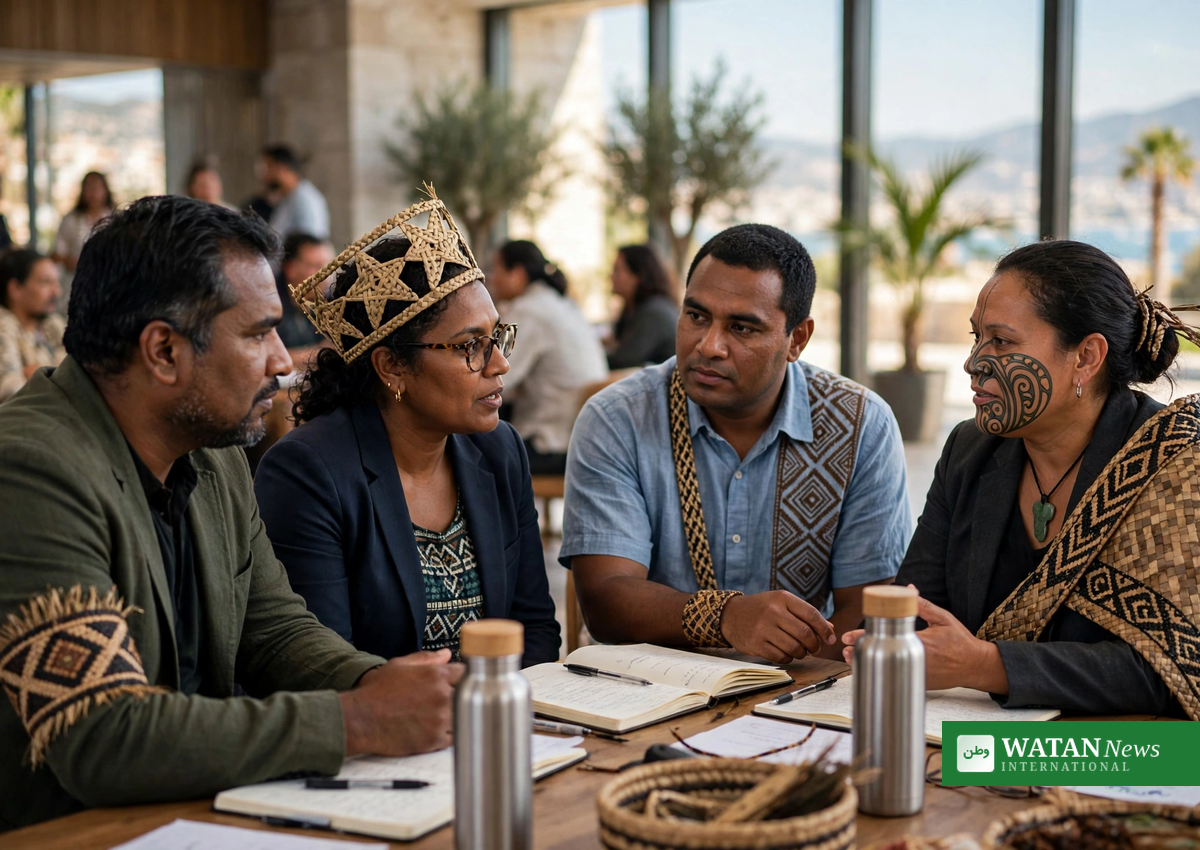
A delegation of Indigenous climate advocates from Australia and the Pacific will travel to COP31 in Antalya, Türkiye, to press governments for direct access to climate finance, a just transition away from fossil fuels, and Indigenous Peoples’ rights, leadership and knowledge at the heart of climate decisions. The WWF-supported Oceania First Voices delegation was announced on 5 November, four days before the UN climate summit opens on Monday, 9 November 2026.
The delegation brings together leaders from Aboriginal Australian, Torres Strait Islander, Fijian, Solomon Islands and Māori communities. Its members will meet governments and decision-makers throughout the summit, which runs until 20 November, and will be available to offer insights and analysis before and during the negotiations.
Key facts
- Who: The Oceania First Voices delegation — eight Indigenous climate advocates and WWF staff from Australia and the Pacific, supported by WWF.
- Where: COP31, the 31st UN Climate Change Conference, in Antalya, Türkiye.
- When: 9–20 November 2026; the delegation was announced on 5 November.
- Demands: Fair and direct access to climate finance for Indigenous Peoples and local communities; a just transition away from fossil fuels; and Indigenous Peoples’ rights, leadership and knowledge at the heart of climate decisions.
- Context: Türkiye hosts COP31 and Australia leads the negotiations as President of Negotiations, with a World Leaders’ Summit in Antalya on 11 and 12 November.
Who is travelling to Antalya
Takesa Frank, an Aboriginal conservation and climate advocate from Murramarang Yuin Country on the New South Wales South Coast, is one of Australia’s most compelling young voices for conservation. Raised in the Shoalhaven among forests and rivers, she turned to climate advocacy after the 2019–20 bushfires came within a kilometre of her family home. In 2023, her tree-sit protest halted logging operations, and she was named the Bob Brown Foundation’s Young Environmentalist of the Year the same year.
Lala Gutchen, a Torres Strait Islander advocate for language and cultural preservation, belongs to the Meuram tribe of Erub (Darnley) Island. In 2022, she was a pivotal cultural witness in the landmark Queensland Land Court case against Waratah Coal’s Galilee Coal Project, giving evidence about climate impacts on the Torres Strait Islands and helping to facilitate the court’s historic first on-Country visit. She is an Ailan Pawa Ambassador within the Our Islands Our Home campaign and serves on the First Nations Clean Energy and Climate Change Advisory Committee.
Lavenia Naivalu, the sole female representative for Nacula District to the Ba Provincial Council in Fiji, has represented Pacific Indigenous Peoples at COP28 and COP29, the UN Ocean Conference and regional Indigenous meetings. She is a co-founder of the Fiji Community Symposium, advocating for climate resilience, food security and sustainable development.
Talei Silibaravi, an Indigenous iTaukei community and youth leader from Kavewa Island in Fiji, is President of the Macuata Provincial Youth Council and Project Coordinator for the Cagimaiwai Women’s Cooperative, working on youth empowerment, women’s economic participation, marine conservation and community resilience.
Anahera Nin, an Indigenous Māori climate policy strategist and youth leader from Aotearoa New Zealand, works at the intersection of Indigenous rights, climate policy and economic development. She is a co-founder of 4DF, a global Indigenous-led renewable energy fund working to move capital directly into Indigenous-owned and Indigenous-governed clean energy.
The delegation also includes Kesaia Vasutoga, Program Coordinator for Regenerative Climate at WWF-Australia; Alfred Ralifo, Pacific Conservation Director at WWF-Pacific, who has worked for more than 20 years across the region; and Mosese Volavola, a Fijian Indigenous community leader who advocates for Indigenous Peoples’ participation in climate decisions, recognition of traditional knowledge and free, prior and informed consent.
What they are asking for
The delegation’s central demand is that climate finance reaches the communities on the frontline of the climate crisis directly, without long chains of intermediaries and conditions that keep money out of reach. Human Rights Watch, in its call ahead of COP31, has made a similar point: governments and climate funds should ensure adaptation finance flows to displaced and frontline communities, and the planned relocation of whole communities — already happening in Panama, Senegal, the Philippines and Solomon Islands — needs funding that reaches people directly.
The scale of the gap is stark. According to UNEP’s Adaptation Gap Report 2025, developing countries need at least US$310 billion a year for adaptation by 2035, while international public adaptation finance was only US$26 billion in 2023. The delegation argues that Indigenous-led solutions, grounded in knowledge built over generations of caring for land and sea, deserve direct support rather than being filtered through distant institutions.
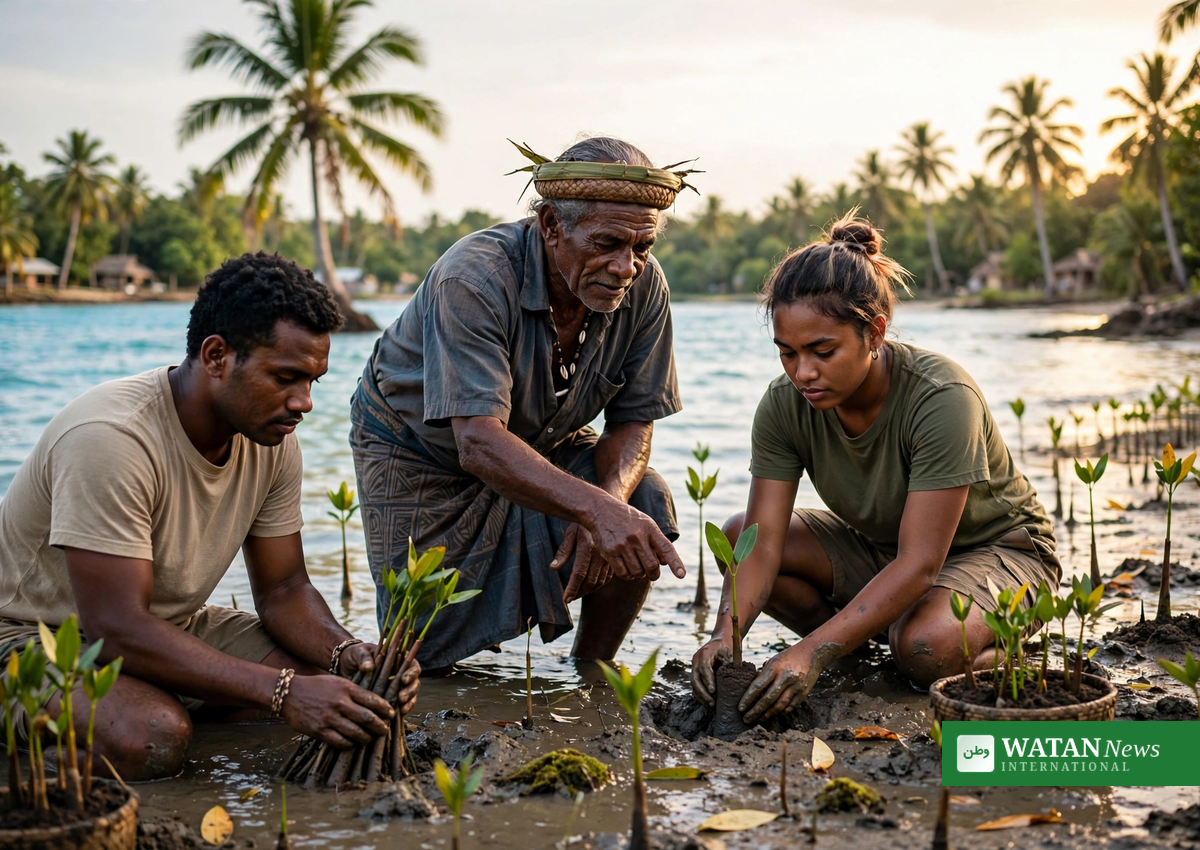
Its second demand is a just transition away from fossil fuels — a shift that protects workers and communities rather than leaving them behind. Its third is that Indigenous Peoples’ rights, leadership and knowledge sit at the heart of climate decisions, not at the margins of them.
Why Indigenous voices matter at COP31
COP31 is being shaped by an unusual shared leadership: Türkiye hosts the summit while Australia, as President of Negotiations, leads the formal talks. Australia’s government says its approach will be shaped by First Nations voices, knowledge and leadership — knowledge formed over 65,000 years of caring for Country — and it has appointed Sally Higgins as the COP31 Presidency Youth Climate Champion. The International Indigenous Peoples Forum on Climate Change is the official Indigenous Peoples’ constituency within the UN climate convention, and its caucus is co-chaired for COP31 and COP32 by Larissa Baldwin-Roberts, co-founder of the Indigenous organisation Common Threads.
For the Oceania First Voices delegation, the test of the summit will be practical: whether finance, rights and recognition reach the villages, islands and communities already living with rising seas, hotter days and failing harvests. COP31 opens in Antalya on Monday: what is at stake at the UN climate summit.
Frequently asked questions
What is Oceania First Voices?
Oceania First Voices is a WWF-supported delegation of Indigenous leaders from Australia and the Pacific who are taking their communities’ climate priorities into international negotiations. Its members come from Aboriginal Australian, Torres Strait Islander, Fijian, Solomon Islands and Māori communities.
When and where is COP31?
COP31, the 31st UN Climate Change Conference, runs from 9 to 20 November 2026 in Antalya, Türkiye. Türkiye hosts the summit, Australia leads the negotiations as President of Negotiations, and a World Leaders’ Summit takes place on 11 and 12 November.
What does direct access to climate finance mean?
It means funding that reaches Indigenous Peoples and local communities without long delays, heavy conditions and layers of intermediaries. The delegation and Human Rights Watch both argue that finance should flow directly to the people planning and carrying out adaptation on the ground.
Who is in the delegation?
The eight named members are Takesa Frank, Lala Gutchen, Lavenia Naivalu, Talei Silibaravi, Anahera Nin, Kesaia Vasutoga, Alfred Ralifo and Mosese Volavola — advocates, community leaders and WWF staff from Australia, Fiji, the Torres Strait, Solomon Islands and Aotearoa New Zealand.
Why do Indigenous Peoples want a central role at COP31?
Indigenous communities live on the frontline of climate impacts — rising seas, extreme heat and changing seasons — while holding generations of knowledge about caring for land and sea. They argue that climate decisions are stronger when the people most affected help shape them, and the UN climate process recognises Indigenous Peoples through their own official constituency, the International Indigenous Peoples Forum on Climate Change.
Author

usmanch0013@gmail.com
Related Posts
Oceaniens oprindelige klimafortalere tager deres budskab med til COP31 i Antalya
- 0
- 1,192 word
Den WWF-støttede delegation Oceania First Voices bringer oprindelige klimaledere fra Australien og Stillehavet til COP31 i Antalya, hvor de kræver direkte adgang...
Read out all
اوشیانا فرسٹ وائسز: مقامی موسمیاتی رہنما کاپ31 میں انصاف کا مطالبہ لے کر انطالیہ جا رہے ہیں
ڈبلیو ڈبلیو ایف کی حمایت یافتہ اوشیانا فرسٹ وائسز کا وفد آسٹریلیا اور بحر الکاہل کی مقامی اقوام کے موسمیاتی رہنماؤں کو...
Read out all
Iran’s Khamenei Warns of Wider War if US Resumes Attacks
- 0
- 914 words
Iran's Supreme Leader Mojtaba Khamenei has warned that any renewed US attack would draw a far wider response, dismissing hopes that the...
Read out all
North Korea Tests New Air-Defence Missile System and Stages Cruise Missile Drill
- 0
- 499 words
North Korea has test-fired a newly designed air-defence missile system and staged a long-range cruise missile drill, state media KCNA reported on...
Read out all
COP31 åbner i Antalya på mandag: Hvad står på spil ved FN’s klimatopmøde
- 0
- 1,311 word
COP31 åbner i Antalya mandag den 9. november, hvor mere end 190 lande samles til to ugers klimaforhandlinger. Finansiering, retfærdig omstilling, tilpasning...
Read out all
کاپ31 پیر سے انطالیہ میں شروع: اقوام متحدہ کی موسمیاتی کانفرنس میں کیا داؤ پر ہے
کاپ31 پیر 9 نومبر کو انطالیہ میں شروع ہو رہی ہے، جہاں 190 سے زیادہ ممالک دو ہفتوں تک موسمیاتی مذاکرات کریں...
Read out all