- 0
- 494 words
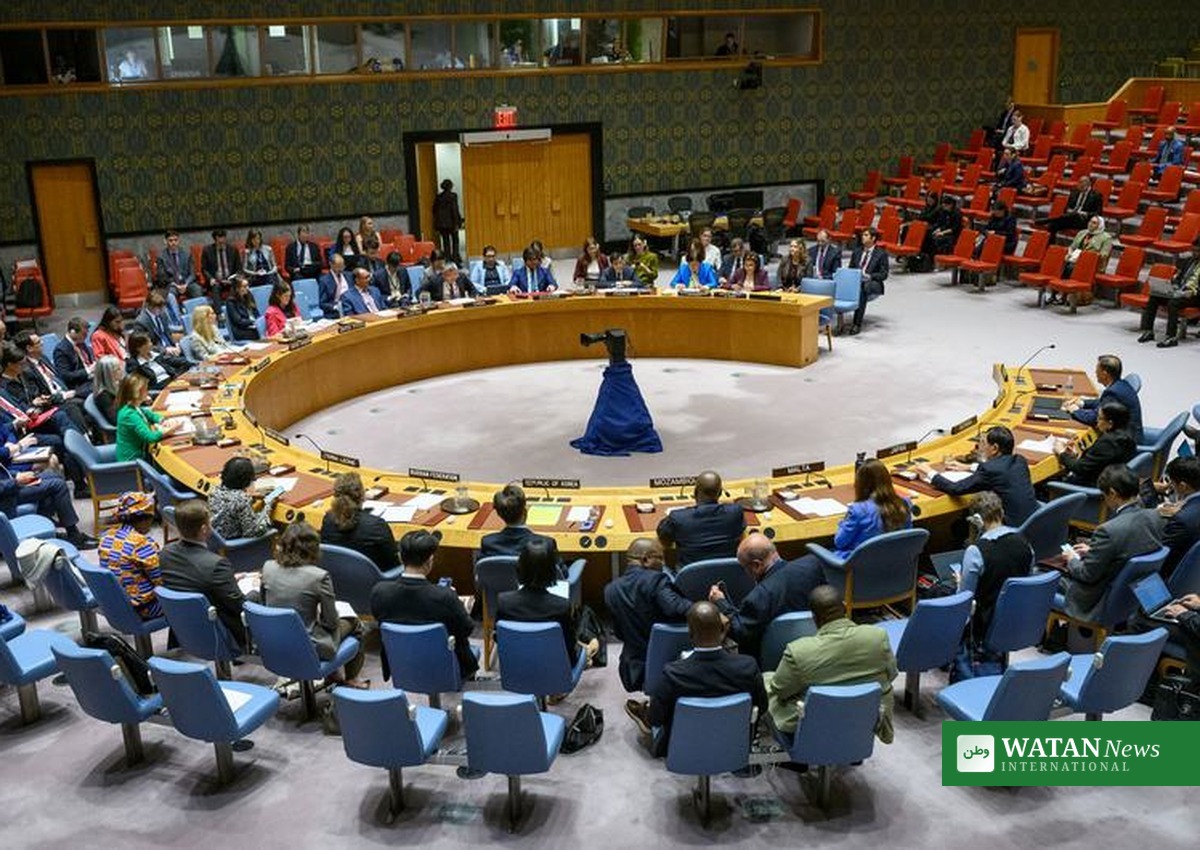
Pakistan has told the United Nations Security Council that no artificial intelligence system should ever decide whether nuclear weapons are used, warning that the technology could make a catastrophic mistake more likely. Ambassador Syed Haider Shah, Pakistan’s Permanent Representative to the United Nations, delivered the warning on Tuesday during a high-level council debate on resolving conflicts in an era of rapid technological change.
Shah told the 15-member council that AI in military systems is shortening the time leaders have to think in a crisis, raising the danger of errors and rushed decisions. In the nuclear field, he said, such a mistake could have consequences no country could undo.
FAKTA
- Who: Ambassador Syed Haider Shah, Pakistan’s Permanent Representative to the United Nations
- Where: UN Security Council high-level open debate, New York, Tuesday 24 November 2026
- Core demand: decisions on the use of nuclear weapons must remain under human control
- Red line: AI must never be used to target nuclear command, control and communications systems
- Context: nine states hold nuclear weapons; the Stockholm International Peace Research Institute estimates 9,745 warheads worldwide
AI Shortens the Time to Decide
Shah warned that AI built into military operations compresses decision-making, leaving commanders less room to check information or correct a false alarm. That danger, he said, is sharpest where nuclear weapons are involved.
“This is most critical in the nuclear domain, where decisions on the use of nuclear weapons must remain under human control, and AI systems must never be used to target nuclear command, control and communications systems,” Shah told the council.
He also urged governments to show restraint and build trust, so that new military technology does not deepen the global arms race. Confidence-building steps between states, he said, can lower the risk of mistakes during a crisis.
AI and Nuclear Weapons: A Call for Global Rules
The Pakistani envoy called for inclusive global rules on emerging technologies, saying all countries, including developing nations, should help shape the technologies that affect them. The process, he said, should be fair and open to everyone.
UN Secretary-General Antonio Guterres has made the same point, saying that as long as nuclear weapons exist, only humans should decide whether to use them. The debate, held under the Latvian presidency, examined how fast-moving technology is changing the way conflicts start and escalate.
Nine Nuclear-Armed States
Pakistan is one of nine countries that hold nuclear weapons. The others are the United States, Russia, China, France, the United Kingdom, India, North Korea and Israel. The Stockholm International Peace Research Institute estimates that the nine together hold 9,745 nuclear warheads, with Russia holding about 4,400 and the United States around 3,700.
Pakistan’s warning comes as armed forces around the world weave AI into surveillance, targeting and command systems. Shah’s message was that the technology should serve peace rather than fuel conflict, and that the decision to use the most destructive weapons ever built must never be handed to a machine.
Read more world news at Watan News.
Author

usmanch0013@gmail.com
Related Posts
Pablo Hernández de Cos Picked as Next ECB President, Succeeding Lagarde in February
- 0
- 621 words
Leaders of the eurozone countries have chosen Spain's Pablo Hernández de Cos as the next ECB president. He succeeds Christine Lagarde in...
Read out all
COP31 forest fund reaches $8.3 billion — but $1.7 billion short of its launch target
- 0
- 1,273 word
The Tropical Forest Forever Facility raised $8.3 billion at COP31, but with $1.7 billion still to find before 31 December, Norway's $3...
Read out all
Philadelphia Council Advances Zero-Waste Bill Targeting 60% Trash Diversion by 2046
- 0
- 1,016 word
Philadelphia City Council's Commerce Committee has unanimously advanced the Zero Waste and Circular Economy Act, requiring the city to divert 60% of...
Read out all
Guinea-Bissau Elections Delayed Until 2028 as Military Government Extends Rule
- 0
- 434 words
Guinea-Bissau's military government has postponed presidential and legislative elections due in December by roughly two years, until November 2028, extending the transition...
Read out all
World’s Best Destinations for 2027: From Santorini to Samarkand
- 0
- 1,685 word
Lonely Planet and National Geographic have named the world's best destinations for 2027, from the Veneto and the California redwoods to Chengdu,...
Read out all
1.3 Million New Yorkers Rely on Food Pantries as Hardship Bites
- 0
- 1,047 word
Nearly 1.3 million New Yorkers used food pantries in 2025 and 2.6 million experienced food hardship, a Robin Hood and Columbia University...
Read out all