
- 0
- 701 words
The Philippines is charting a course toward greener skies. The country’s Department of Energy is pushing for a 1% blend of sustainable aviation fuel in all jet fuel used in the country by 2030 — a proposal officials say could turn the archipelago into a regional production hub for cleaner air travel.
Key facts
- The Philippines’ Department of Energy proposes a 1% sustainable aviation fuel blending requirement by 2030.
- The recommendation was announced by DOE Undersecretary Alessandro O. Sales on October 6, 2026, at the ASEAN Energy Business Forum.
- The country currently has no domestic SAF production; aviation fuel was 3% of national fuel demand in 2025.
- SAF costs three to four times more than conventional jet fuel because of limited production.
- A memorandum of understanding between the Board of Investments and the Asia Sustainable Aviation Fuel Association was signed to grow the local SAF industry.
What the plan involves
Undersecretary Alessandro O. Sales said the National Biofuels Board’s SAF Committee, headed by the Civil Aviation Authority of the Philippines, is working on a 1% SAF mandate. The announcement came on the sidelines of the ASEAN Energy Business Forum 2026 in Pasay City.
“The recommendation is to have a 1% SAF mix by 2030. It allows for a long enough runway before the mandate kicks in,” Sales said, adding that the Philippines would have three to four years to build up local supply before the requirement takes effect.
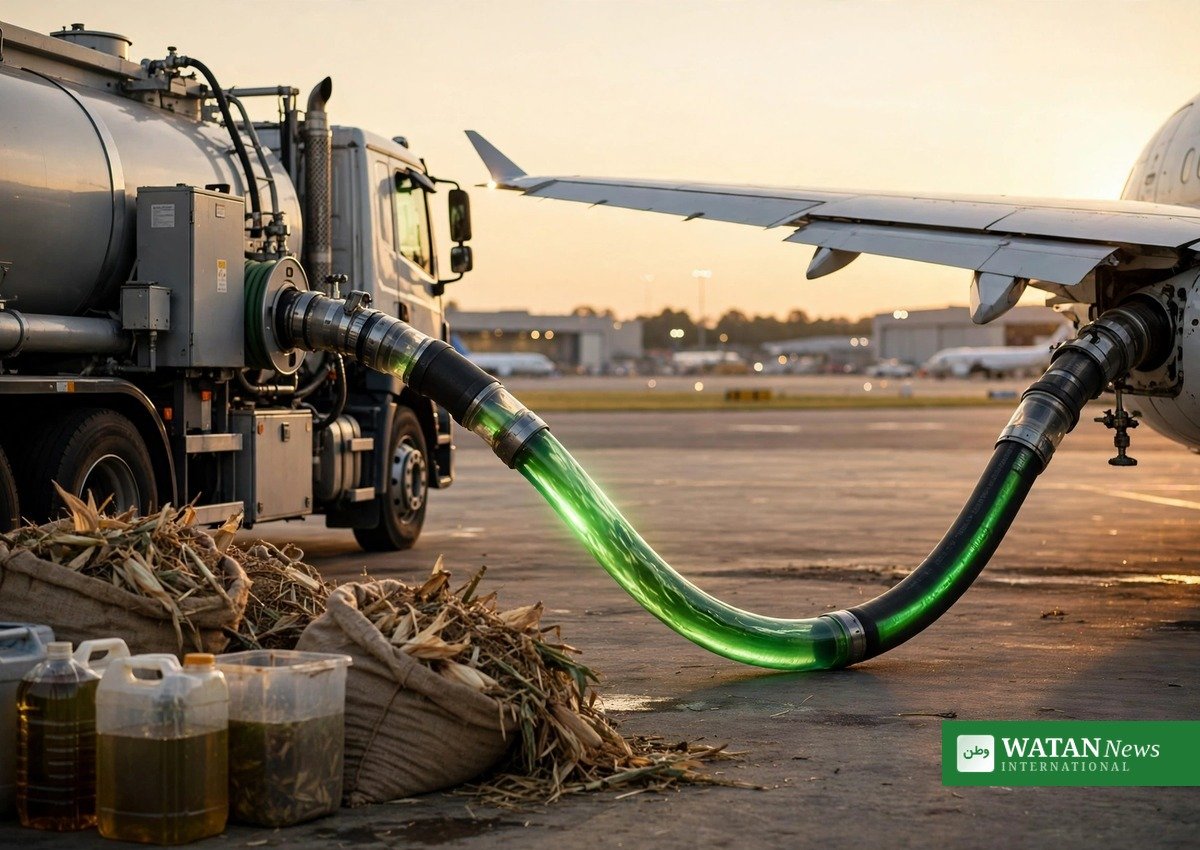
Why sustainable aviation fuel matters for green travel
Aviation remains one of the hardest sectors to decarbonize, and the global industry has committed to net-zero carbon emissions by 2050. Sustainable aviation fuel is a drop-in replacement for fossil jet fuel that can be produced from plant and used-oil feedstock such as forestry and agricultural waste and used vegetable oils. According to the International Air Transport Association, SAF can cut lifecycle CO2 emissions by up to 80% compared with conventional jet fuel.
For travelers, the shift means the flights they book can gradually run on cleaner fuel without any change to aircraft or airport infrastructure.
The cost hurdle
Sales acknowledged that SAF is currently three to four times more expensive than fossil-based aviation fuel because of limited production. He said the government will also need to assess logistics costs in bringing feedstock to production facilities.
“I think the main thrust there is really to increase production, which would allow you to bring the price down,” he said, while conceding that how close SAF can get to fossil-fuel price levels remains uncertain. The Philippines has no domestic SAF production today, though it has been identified as part of the Department of Energy’s Fuel Transition Plan.
An ASEAN hub ambition
Energy Secretary Sharon S. Garin told the forum that the Philippines is building the policy and regulatory foundations for domestic SAF production, supported by a national feasibility study and by naming SAF a strategic industry in the 2026 Strategic Investment Priority Plan. The country wants to draw on its agricultural and biomass resources to attract investment, build supply chains and advance energy security.
Undersecretary Sales said ASEAN is in “a unique position” to be “both the demand center, buyer, and producer” of SAF. In a parallel development, the Board of Investments signed a memorandum of understanding with the Asia Sustainable Aviation Fuel Association during the first ASEAN Sustainable Aviation Fuel Convergence Forum in Pasay City, covering investment promotion, policy dialogue and capacity building.
The global picture
The Philippines is joining a fast-moving global trend. Singapore introduced the world’s first SAF levy on departures, effective October 2026, to fund a 1% SAF target at its airports, while the European Union’s ReFuelEU Aviation rules require fuel suppliers at EU airports to raise the SAF share from 2% in 2025 toward 6% in 2030.
What it means for travelers
Officials say starting at 1% keeps the cost impact on airlines and airfares minimal, while the guaranteed demand gives investors the confidence to build production plants. For green travel supporters, it is another sign that flying — long considered the least sustainable way to travel — is beginning a slow turn toward cleaner fuel. Read more of our climate coverage in English at watannews.dk/en.
Author

usman2344913@gmail.com
Related Posts

Florida klimaledelsestopmøde 2026: Tilmelding lukker 16. oktober
- 0
- 695 words
FORT LAUDERDALE — Broward County forbereder sig på at være vært for det 18. årlige Southeast Florida Climate Leadership Summit fra 4....
Read out all
فلوریڈا کلائمیٹ لیڈرشپ سمٹ 2026: رجسٹریشن 16 اکتوبر تک
فورٹ لاڈرڈیل — بروورڈ کاؤنٹی 4 سے 6 نومبر 2026 تک فورٹ لاڈرڈیل کے نئے توسیع شدہ بروورڈ کاؤنٹی کنونشن سینٹر میں...
Read out all
Florida Climate Leadership Summit 2026: Registration Closes October 16
- 0
- 712 words
FORT LAUDERDALE — Broward County is preparing to host the 18th Annual Southeast Florida Climate Leadership Summit from November 4 to 6,...
Read out all
Filippinerne planlægger 1 % bæredygtigt flybrændstof i 2030
- 0
- 685 words
Filippinernes energiministerium arbejder på et krav om 1 % bæredygtigt flybrændstof fra 2030.
Read out all
فلپائن کا 2030 تک ایک فیصد پائیدار ہوا بازی ایندھن کا ہدف
- 0
- 3 words
فلپائن کی محکمہ توانائی 2030 تک ایک فیصد پائیدار ہوا بازی ایندھن ملانے کی تجویز پر کام کر رہی ہے۔
Read out all
Three killed, 36 injured as Houthi attacks hit Saudi airports in Riyadh and Abha
- 0
- 1,114 word
Three people were killed and 36 injured in Houthi attacks on airports in Riyadh and Abha, Saudi Arabia confirmed. Airlines have suspended...
Read out all