- 0
- 768 words
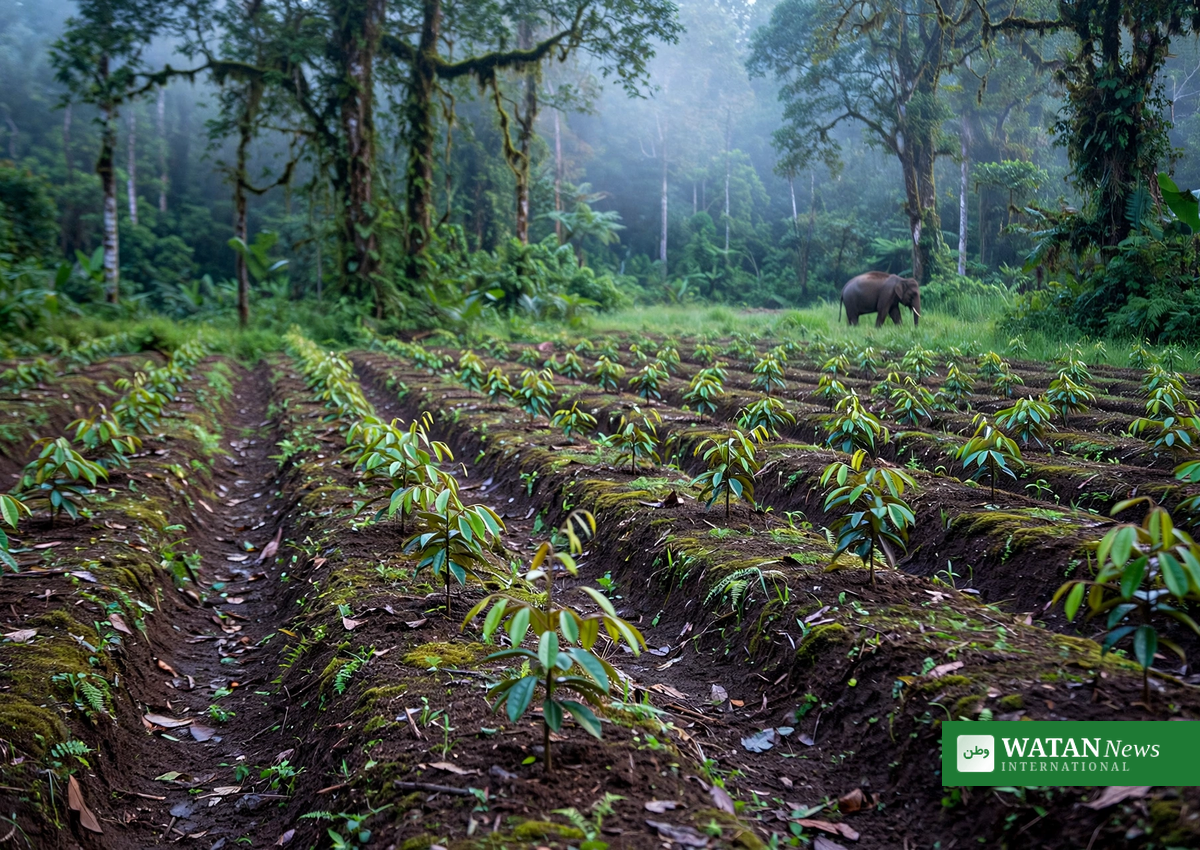
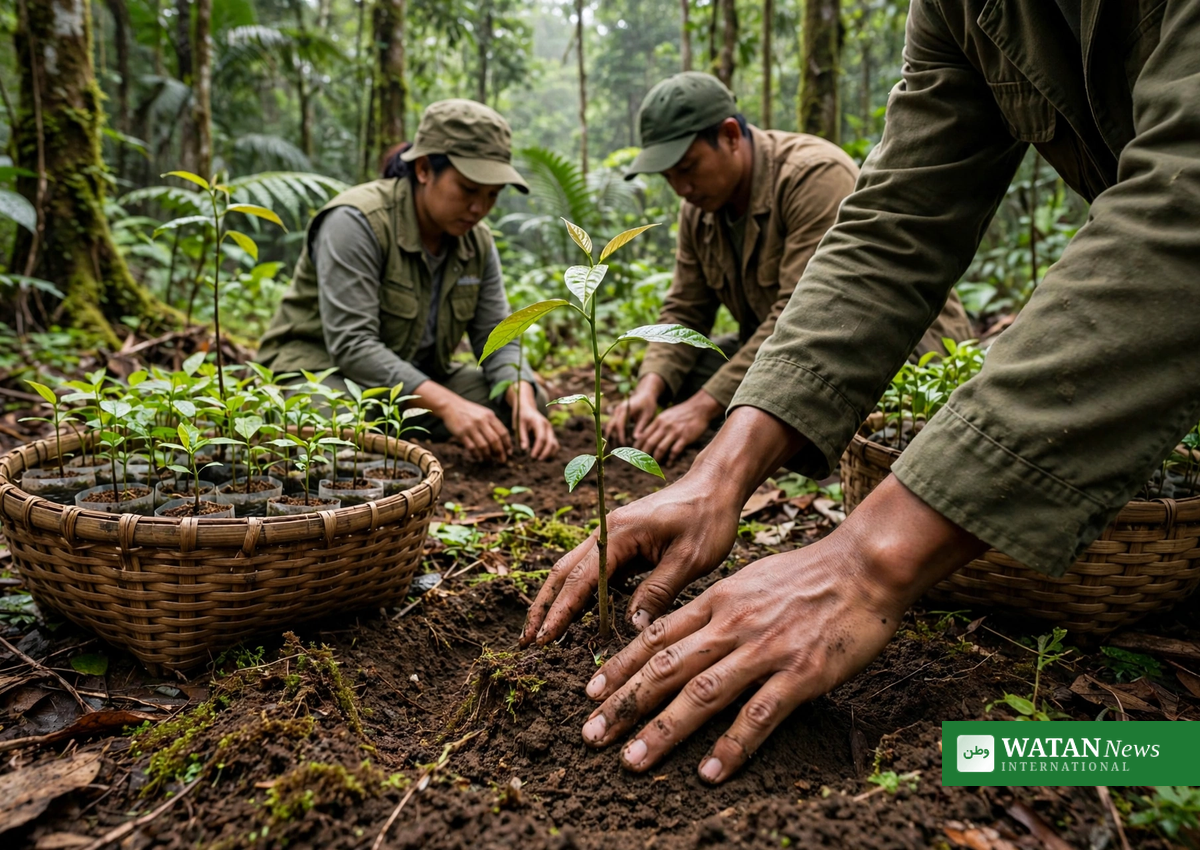
A conservation consortium has planted a 17-hectare forage area of local fruit trees in Sumatra’s Bukit Tigapuluh landscape, creating new food sources and habitat connections for the critically endangered Sumatran elephant. The planting, announced on 28 October 2026, is one of the first on-the-ground steps of PROTECT30, a landscape-scale conservation initiative launched in February 2026.
APP Group is working on the initiative with a consortium of Proforest, WWF-Indonesia and KKI WARSI. The programme covers roughly 400,000 hectares of forest and community villages across the Jambi and Riau provinces of Sumatra, one of the island’s last significant natural forest landscapes.
Why Bukit Tigapuluh matters
Bukit Tigapuluh is home to globally important wildlife. According to the consortium, the landscape holds roughly 10 per cent of the Sumatran elephant population, a substantial share of wild Sumatran tigers, and orangutans at reintroduction sites. The newly planted forage area, sown with species such as jackfruit and cempedak, is designed to increase food availability for elephants and support habitat connectivity across the landscape.
The landscape also supports communities whose cultural identity and livelihoods are closely tied to the forest, and PROTECT30 is designed to combine habitat conservation with community resilience.
How PROTECT30 works
WWF-Indonesia describes PROTECT30, whose full name is Promoting Sustainable Landscape Management through Biodiversity Conservation and Forest Positive Action in Bukit Tigapuluh, as a long-term collaborative platform that integrates habitat conservation, landscape connectivity and community livelihoods.
The consortium is working with Indonesia’s Natural Resources Conservation Agency (BKSDA), the Jambi Provincial Forestry Service (DISHUT) and the Bukit Tigapuluh National Park Office (BTNBT) to establish shared governance structures and agreed methods for managing the landscape. The initiative will also contribute to remediation activities aligned with the Forest Stewardship Council (FSC) Remedy Framework.
Voices from the consortium
“Lasting success depends on businesses, conservation organizations, government agencies, and local communities staying committed to the work together,” said Elim Sritaba, Chief Sustainability Officer of APP Group. “By putting strong foundations in place now – shared governance, agreed methods, and trust on the ground, we’ll transform a conservation and restoration program into holistic, long-term sustainability across an entire landscape.”
Taufiq Alimi, Executive Director of Proforest Southeast Asia, said the initiative aims to ensure that interventions are both ecologically and socially relevant, while contributing to the sustainable management of landscapes.
Part of a wider restoration push
The planting sits within APP’s Regenesis platform, launched in September 2025 and backed by 30 million dollars a year, which focuses first on conserving and restoring one million hectares of critical ecosystems. The company says Regenesis acts as a catalyst for the restoration and resilience of forests and the communities connected to them.
For readers following forest restoration closer to home, Watan News recently reported on Ghana’s two-year restoration of the Subri River Forest Reserve, another partnership-led effort to bring degraded forest land back to life.
FAKTA
- What: A 17-hectare (42-acre) forage area planted with local fruit trees for Sumatran elephants.
- Where: Bukit Tigapuluh landscape, Jambi and Riau provinces, Sumatra, Indonesia.
- Who: APP Group with Proforest, WWF-Indonesia and KKI WARSI, working with Indonesian government agencies.
- Programme: PROTECT30, launched February 2026, covering roughly 400,000 hectares.
- Wildlife: The landscape holds about 10 per cent of Sumatran elephants, plus wild tigers and reintroduced orangutans.
Conclusion
The forage area is a small patch within a very large landscape, but it is the kind of practical step conservationists say matters most: food on the ground for an endangered species, planted with local species, inside a governance framework built to last. Whether PROTECT30 delivers on its wider promise will depend on the years of management that follow this first planting.
Frequently asked questions
What is PROTECT30?
PROTECT30 is a conservation initiative launched in February 2026 that promotes sustainable landscape management in Sumatra’s Bukit Tigapuluh landscape through biodiversity conservation and forest-positive action, run by APP Group with Proforest, WWF-Indonesia and KKI WARSI.
Why plant a forage area for elephants?
Sumatran elephants are critically endangered, and the forage area, planted with local fruit trees such as jackfruit and cempedak, increases food availability and supports habitat connectivity for the population living in Bukit Tigapuluh.
How large is the PROTECT30 programme area?
The programme covers roughly 400,000 hectares, including forests and community villages across the Jambi and Riau provinces of Sumatra.
Which agencies are involved?
Alongside the consortium, Indonesia’s Natural Resources Conservation Agency, the Jambi Provincial Forestry Service and the Bukit Tigapuluh National Park Office are helping establish governance structures and shared methods.
What is the FSC Remedy Framework link?
According to the consortium, PROTECT30 will contribute to remediation activities aligned with the requirements of the Forest Stewardship Council Remedy Framework, reflecting a commitment to responsible forestry practices.
Author

usmanch0013@gmail.com
Related Posts
PROTECT30 planter foderområde for elefanter i Sumatras Bukit Tigapuluh
- 0
- 758 words
Et 17 hektar stort foderområde med lokale frugttræer er plantet i Sumatras Bukit Tigapuluh-landskab for at støtte de kritisk truede sumatraelefanter, som...
Read out all
سماٹرا کے بکیت تیگاپولو میں ہاتھیوں کے لیے چارہ گاہ لگائی گئی
سماٹرا کے بکیت تیگاپولو میں خطرے سے دوچار ہاتھیوں کے لیے 17 ہیکٹر پر مقامی پھلوں کے درختوں کی چارہ گاہ لگائی...
Read out all
Zelensky Expects Ukraine-Russia Peace Talks in Abu Dhabi Between November 6 and 10
- 0
- 759 words
Ukrainian President Volodymyr Zelensky says he expects trilateral peace talks with Russia and the United States to take place in Abu Dhabi...
Read out all
Danone retter ‘100 % genanvendt’-mærker på flasker efter EU-undersøgelse
- 0
- 736 words
Danone har indvilget i at rette genbrugsangivelserne på sine plastikvandflasker og er den sidste af tre drikkevaregiganter i en europæisk greenwashing-klage, der...
Read out all
ڈینون نے بھی پلاسٹک بوتلوں پر ری سائیکلنگ کے دعووں کی اصلاح پر اتفاق کر لیا
ڈینون نے اپنی پلاسٹک کی پانی کی بوتلوں پر ری سائیکلنگ کے دعووں کی اصلاح پر اتفاق کر لیا ہے، اور یورپی...
Read out all
Danone Joins Coca-Cola and Nestlé in Fixing ‘100% Recycled’ Bottle Labels After EU Probe
- 0
- 740 words
Danone has agreed to revise the recycling claims on its plastic water bottles, becoming the last of the three drink giants in...
Read out all