- 0
- 1,033 word
London: The UK government has quietly dropped its wildfire preparedness plan for England, an investigation published today has revealed — despite a record summer of fires and new data showing many fire services lack specialist protective equipment. The 2023–2027 wildfire risk programme, promised in the third national climate adaptation programme under then-prime minister Rishi Sunak, was never implemented. The revelation comes after the Met Office confirmed that summer 2026 was the UK’s hottest on record, with the most England wildfires ever recorded.
Key facts
- The dropped plan: A 2023–2027 wildfire risk programme for England, committed in the July 2023 national climate adaptation programme under Rishi Sunak, was never implemented and has now been quietly scrapped.
- The revelation: Environmental campaigner and author Guy Shrubsole uncovered the decision through a freedom of information request.
- The kit gap: Research by the Country Land and Business Association found that 14 of 29 fire services have no wildfire-specific personal protective equipment (PPE) — including Suffolk Fire and Rescue Service.
- The record summer: Summer 2026 was the UK’s hottest on record, with five widespread heatwaves and 40 days above 30°C; fire services attended 458 wildfires in July, the highest in any month on record.
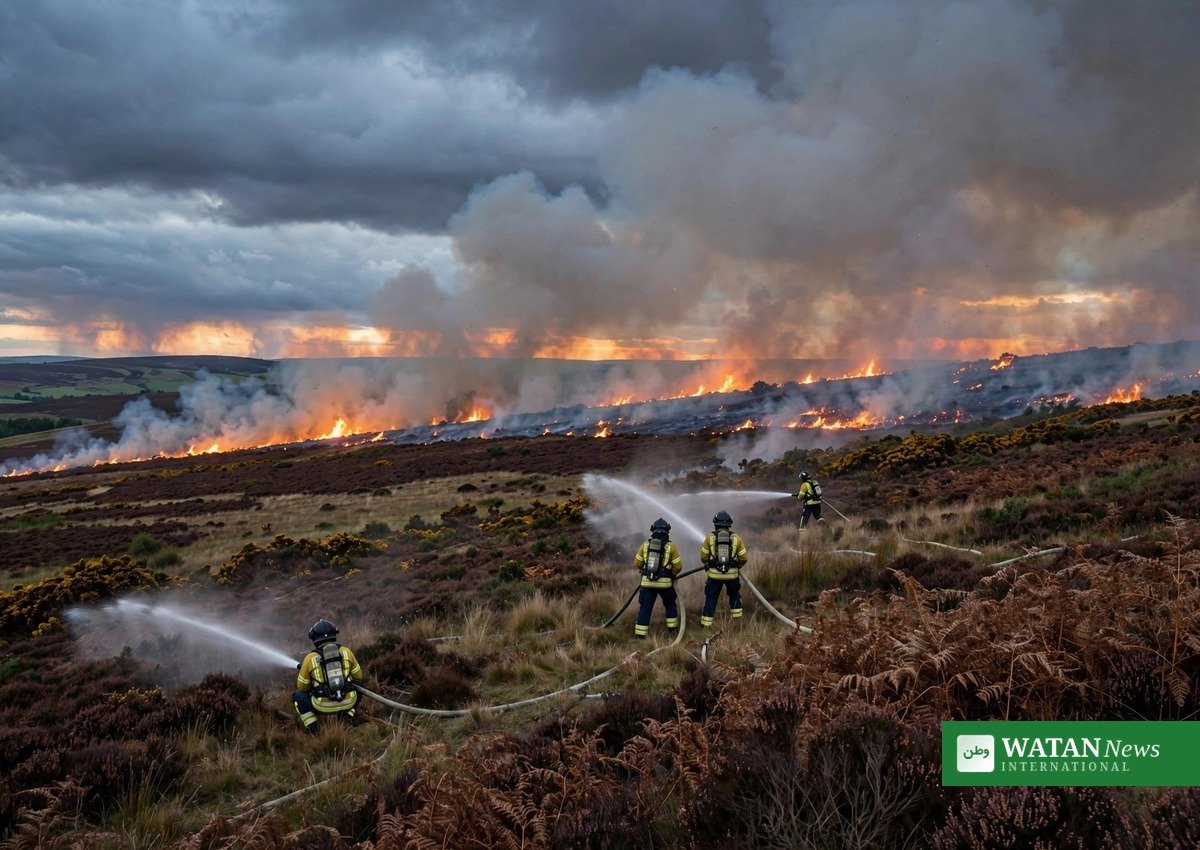
- The Suffolk fire: The August 2026 Dunwich Heath fire burned about 150 hectares, forced evacuations and reached close to the Sizewell B nuclear power station; around 370 acres of protected heathland were damaged.
- The response: The government is belatedly convening a wildfire summit, has announced £97 million for fire and rescue assets, and is deploying specialist wildfire teams in five areas of England and Wales.
The programme that was never implemented
The Conservative government outlined its commitment in the third national climate adaptation programme in July 2023: a wildfire risk programme that would adapt land management across England from 2023 to 2027 to reduce the danger of wildfires. According to the investigation, the programme was never put into effect — and has since been dropped without any public announcement.
The current government has said the commitment was made by the previous administration but was never brought into action. Environmental campaigner Guy Shrubsole, who obtained the information through a freedom of information request, called the inaction “appalling”, saying the government “couldn’t be bothered to pay attention to wildfire risks until jolted into doing so by Britain burning this summer”.
Record summer exposes the gap
The Met Office confirmed that summer 2026 was the UK’s hottest on record: five widespread heatwaves, 40 days with temperatures above 30°C, and the most wildfires ever recorded. England and Wales each recorded their driest July on record, and fire and rescue services attended 458 wildfires in July — the highest figure for any month on record.
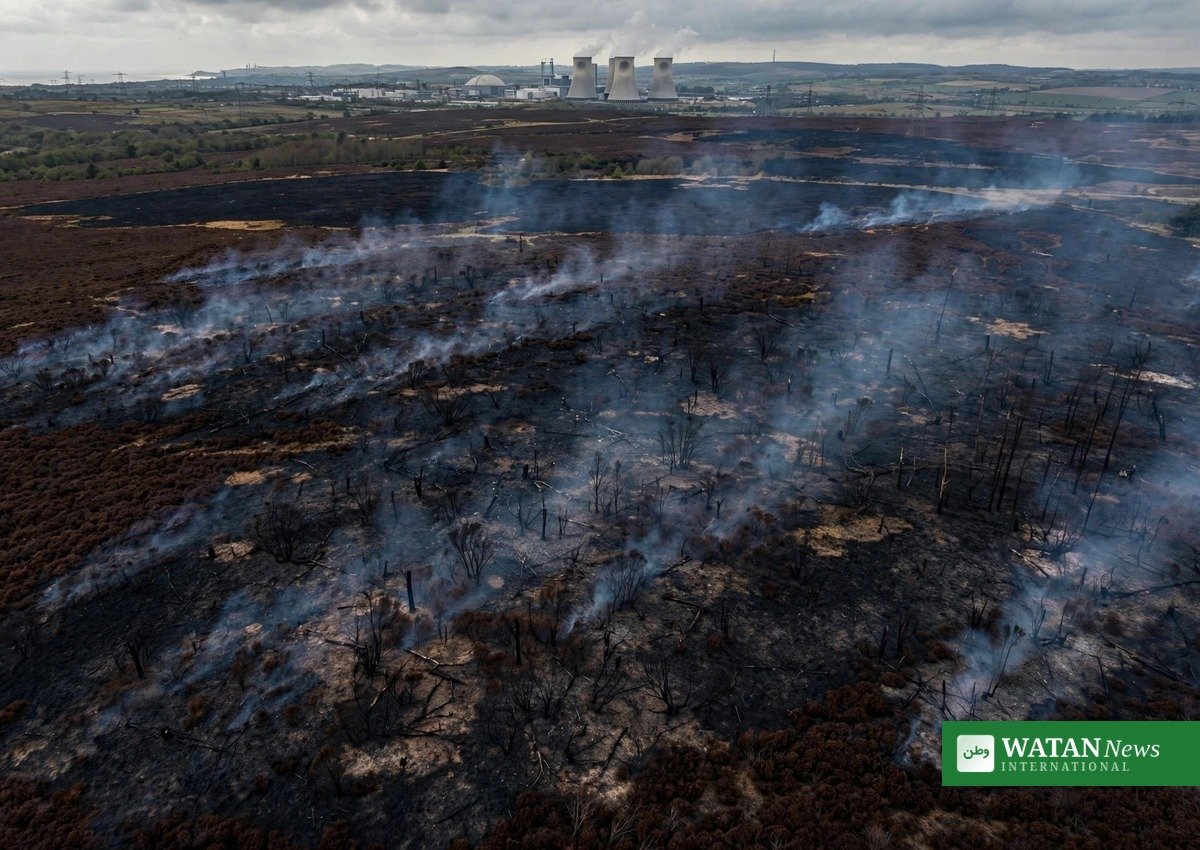
The fire on the Suffolk coast in August showed how close the danger came to critical infrastructure. The Dunwich Heath blaze burned about 150 hectares — roughly 210 football pitches — destroying 90% of its nationally important ancient heathland and damaging around 370 acres of protected reserves at Dunwich Heath and RSPB Minsmere. Eighteen fire engines and more than 100 firefighters tackled the flames; about 50 people were evacuated and the Cliff House holiday park was cleared as a precaution. The fire reached close to the Sizewell B nuclear power station, though operator EDF said its operations were unaffected. Elsewhere, 19 houses in Stourbridge were destroyed in August, with major incidents forcing further evacuations.
England wildfires: fire services short of protective gear
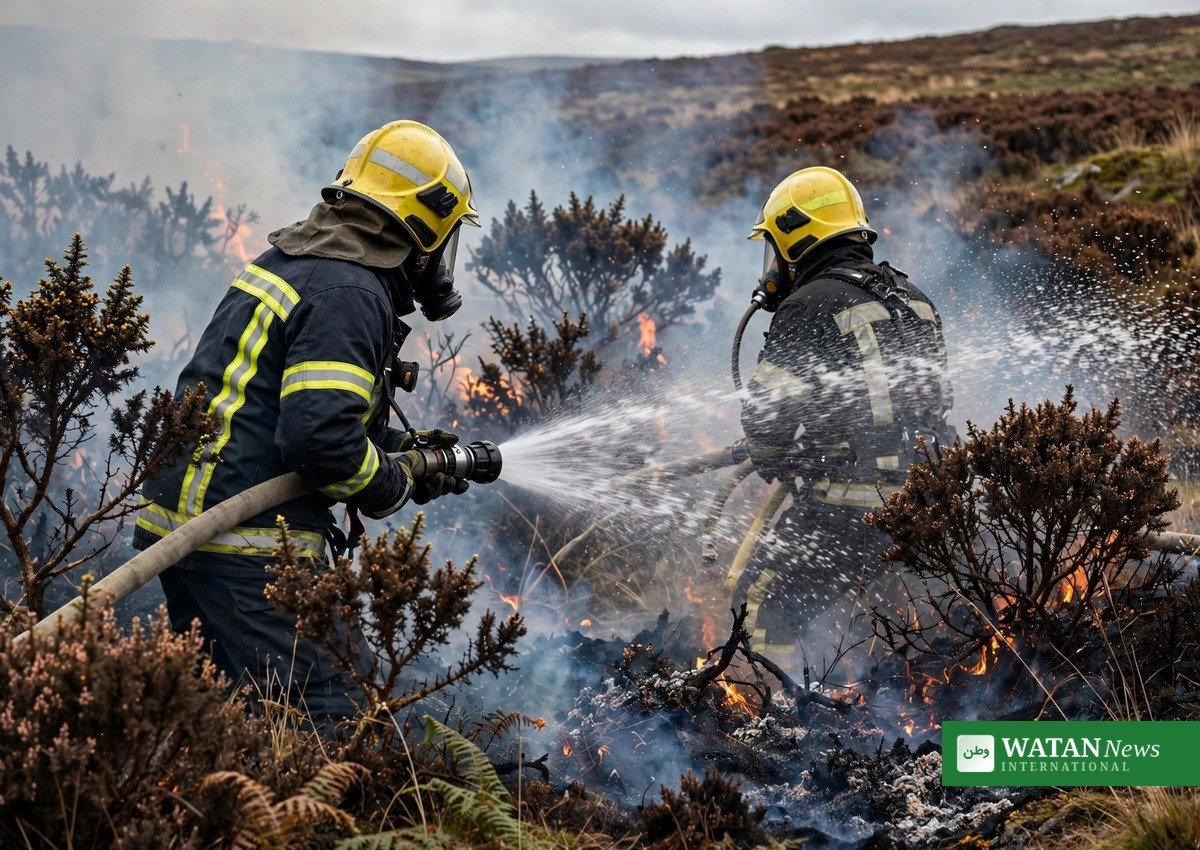
Research by the Country Land and Business Association, cited in the investigation, found that 14 of 29 surveyed fire services have no wildfire-specific personal protective equipment. Suffolk Fire and Rescue Service — the service that faced this summer’s Dunwich Heath blaze — is among those without the specialist kit.
The Fire Brigades Union has warned that firefighters were deployed without lightweight specialist equipment, and that some crews were sent into fires with only online training, or none at all. Analysis by Ordnance Survey found that 1.8 million homes in Britain are now exposed to increasing wildfire risk, which is no longer confined to remote areas.
Government response and what’s next
The government says it is belatedly convening a wildfire summit and has announced £97 million of investment in fire and rescue assets. Specialist wildfire firefighter teams are being deployed in Lancashire, Greater Manchester, Northumberland, London and South Wales. A Liberal Democrat conference motion accused ministers of failing to publish a Wildfire Action Plan for England despite repeated warnings from fire and rescue services about the escalating risk.
Shrubsole has urged the government to commit to re-wetting the UK’s peat bogs, restoring lost ponds in farmers’ fields, and halting the practice of grouse moor owners deliberately setting fire to moorland. The Climate Change Committee warned in its May 2026 report that by 2050 the number of high fire-risk days could double and the wildfire season could extend into late summer and early autumn — as extreme weather intensifies around the world.
Conclusion
The quiet abandonment of England’s wildfire preparedness plan represents a significant failure of climate adaptation — exposed by the hottest summer on record and fire services unequipped for the fires that followed. With wildfire risk set to grow, the government now faces pressure to replace a plan that was never implemented with one that actually is.
Frequently asked questions
What was the government’s wildfire risk programme?
A 2023–2027 programme, promised in the July 2023 national climate adaptation programme, to adapt land management across England to reduce wildfire risk. It was never implemented.
How was the plan’s cancellation revealed?
Environmental campaigner Guy Shrubsole uncovered it through a freedom of information request; the government had made no public announcement.
How bad was the summer of 2026?
The Met Office confirmed it was the UK’s hottest summer on record, with five heatwaves, 40 days above 30°C and 458 wildfires attended in July — the highest monthly figure on record.
Do fire services have the right equipment?
Many do not: 14 of 29 surveyed fire services have no wildfire-specific protective gear, and the Fire Brigades Union has warned about inadequate training and kit.
What is the government doing now?
It is convening a wildfire summit, has announced £97 million for fire and rescue assets, and is deploying specialist wildfire teams in five areas.
Author

usmanjaved13132@gmail.com
Related Posts
Former Prince Andrew Files High Court Challenge Over Epstein-Linked Search Warrants
- 0
- 636 words
Andrew Mountbatten-Windsor has filed a High Court claim challenging the search warrants used in his February arrest, with a private hearing set...
Read out allCommissioner Inspects Progress on One Unit Staff Colony Sewerage Project
- 0
- 629 words
Bahawalpur Division Commissioner Irfan Ali Kathia conducted an inspection of the newly initiated sewerage project at One Unit Staff Colony. He reviewed...
Read out all
Pedro Sánchez Calls Snap Election for November 29 After Parliament Rejects Housing Measures
- 0
- 655 words
Spain's Pedro Sánchez has called a snap election for November 29 after parliament rejected his government's emergency housing measures, betting a fresh...
Read out allDennis Hastert, longtime Republican House speaker who went to prison, dies at age 84
- 0
- 752 words
Dennis Hastert, the longest-serving Republican Speaker of the House, has died at the age of 84. His political career, once marked by...
Read out allFrench School Protests: 15-Year-Old Loses Hand After Picking Up Stun Grenade
- 0
- 820 words
Hundreds of schools across France faced partial or full closures on Monday as a significant youth protest movement continued, escalating concerns over...
Read out all
Trio Wins 2026 Nobel Prize in Medicine for Optogenetics Discovery
- 0
- 612 words
Karl Deisseroth, Peter Hegemann and Georg Nagel have won the 2026 Nobel Prize in Physiology or Medicine for their discoveries concerning light-gated...
Read out all