- 0
- 1,092 word
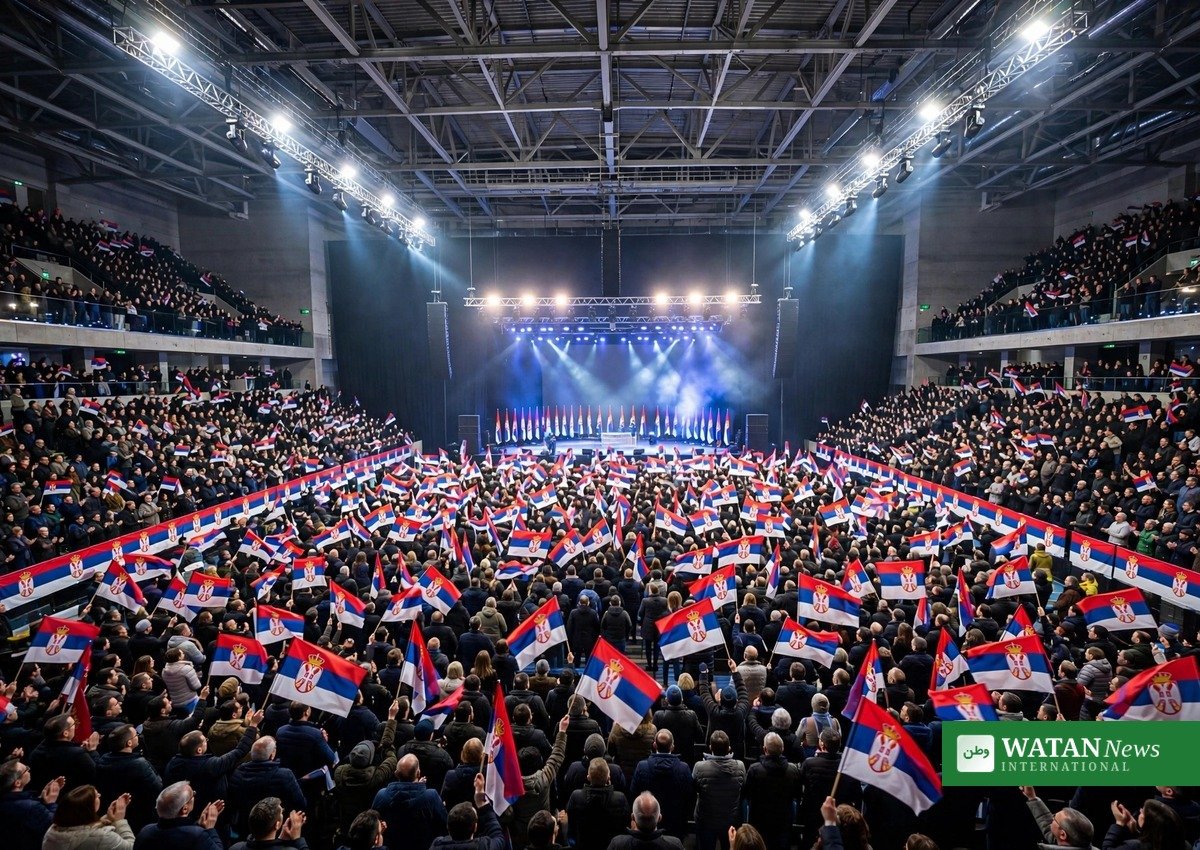
Thousands of supporters of Aleksandar Vucic packed Belgrade’s largest indoor arena on Saturday as Serbia’s former president launched his Vucic prime minister campaign ahead of the country’s pivotal October 25 snap parliamentary election. The rally, staged six days after Vucic resigned the presidency and cut short his second term by more than seven months, marks his bid to return to the premiership he held from 2014 to 2017 at the head of the Serbian Progressive Party’s “United Serbia” electoral list.
Key Facts: Vucic’s campaign launch
- The launch: Saturday, October 3, 2026, at Belgrade Arena — the Serbian capital’s largest indoor arena — where thousands of supporters gathered with Serbian flags and banners bearing Vucic’s picture. Dozens of buses from across the country clogged streets around the venue, and the event was televised by dozens of channels.
- The election: Snap parliamentary election on October 25, 2026, for all 250 seats of the National Assembly under proportional representation, with a 3 percent threshold.
- Why he resigned: Vucic announced his resignation on September 27, 2026, ending his second five-year term seven months before it was due to expire in May 2027. Serbia’s constitution bars a third presidential term, so he is seeking the premiership instead; if his list wins a majority, parliament is expected to elect him prime minister.
- Interim presidency: Outgoing Parliament Speaker Ana Brnabic serves as acting president. A presidential election must be completed within 90 days, with the first round expected by the end of December 2026.
- The challengers: The youth-led Student List (“Students Win”), the electoral arm of the anti-corruption protest movement, holds ballot number 3 with academic Ilija Srdanovic as ballot holder. A Factor Plus poll cited by regional media put the SNS-led “United Serbia” list at 49 percent and the Student List at 37 percent.
Thousands pack Belgrade Arena for Vucic prime minister campaign launch
Supporters carrying Serbian flags and banners with Vucic’s picture filled the arena floor and stands on Saturday, capping a week in which Vucic toured towns and villages across the country in an apparent bid to shore up his popularity. The event was televised by dozens of channels across Serbia.
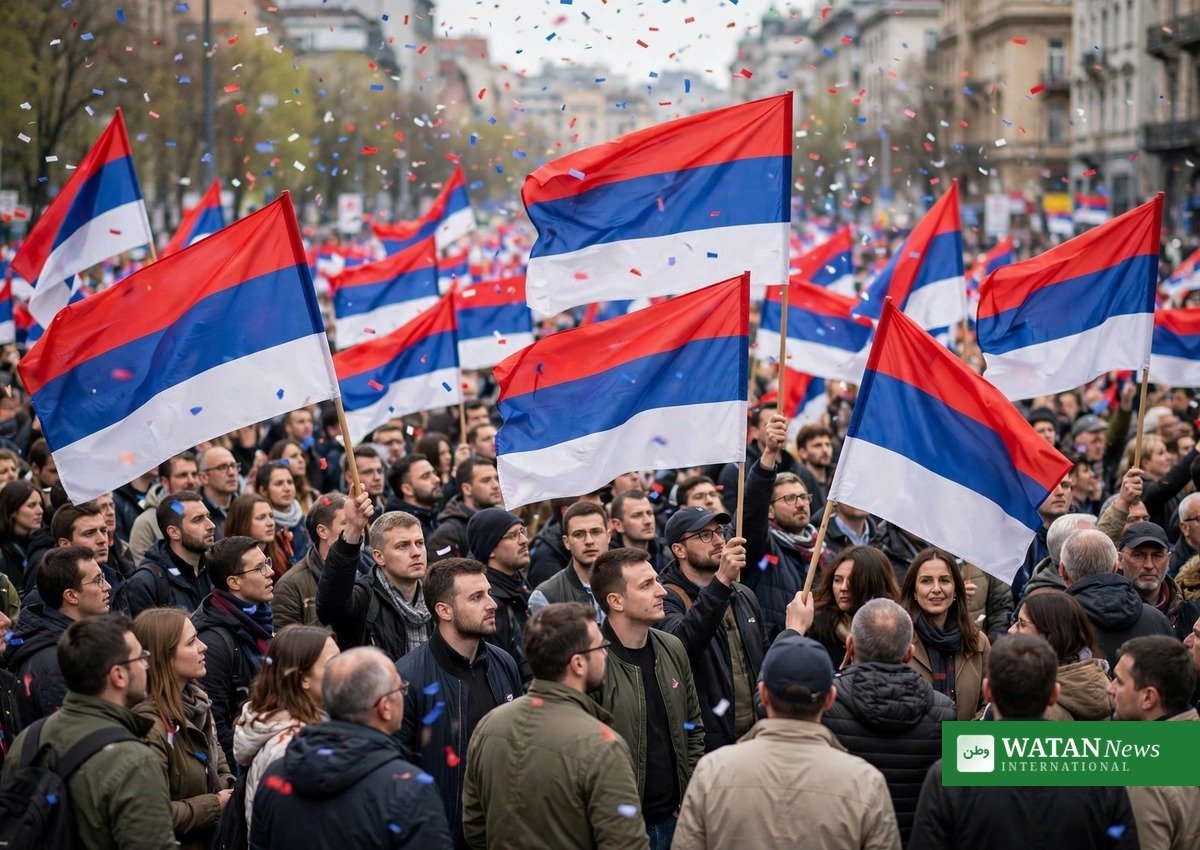
Vucic has been either prime minister or president of Serbia for the past 12 years, and his SNS has governed the country since 2012. At the rally he accused the leaders of the student-led protest movement of trying to “bring Serbia to a halt” and alleged, without presenting evidence, that they are backed by foreign intelligence services. “Absent an intervention of some [foreign intelligence] service, we will defeat them. And they know that,” he told the crowd.
From president to prime minister: the power play
Vucic announced his resignation on Sunday, September 27, telling supporters outside the presidency building in Belgrade: “I am resigning as president. I have faithfully served you and my fatherland, Serbia. I am proud of what we have done together.” He had signalled the move as early as June, when he told supporters he intended to step down and that Serbia would hold early parliamentary and presidential elections.
Under Serbia’s parliamentary system, a prime minister backed by a majority commands broader day-to-day power than the largely ceremonial presidency. Vucic previously served as prime minister from 2014 to 2017 before winning the presidency in 2017 and again in 2022. His second five-year term would have expired in May 2027.
The Student List challenge
The most serious threat to Vucic’s grip on power comes from the student-led anti-corruption movement that has sustained protests for almost two years. The movement grew out of outrage over the November 1, 2024, collapse of a concrete canopy at the Novi Sad railway station, which killed 16 people and triggered some of Serbia’s largest demonstrations since the fall of Slobodan Milosevic in 2000.
Its electoral arm, the Student List, formally joined the race in September 2026 with backing from academics, teachers, professionals and opposition groups including the Democratic Party, the Green-Left Front and Kreni-Promeni. The list gathered nearly 70,000 signatures and was certified number 3 on the ballot by the Republic Electoral Commission. The movement has demanded accountability for the Novi Sad disaster, transparency in public contracts and an end to corruption.
The main contenders
| Electoral list | Figurehead | Polling (Factor Plus) | Platform |
|---|---|---|---|
| “Aleksandar Vucic – United Serbia” (SNS-led) | Aleksandar Vucic | 49% | Continuity, stability and development projects |
| Student List – Students Win | Ilija Srdanovic (ballot holder) | 37% | Anti-corruption, accountability for the Novi Sad disaster |
| European Serbia (pro-Western opposition alliance) | Dragan Djilas | — | Pro-Western opposition coalition |
Conclusion
The October 25 election is shaping up to be Serbia’s most consequential vote in more than a decade: a contest between Vucic’s entrenched political machinery and a protest-born movement testing whether street energy can translate into votes. Polls suggest a tight race, and turnout — along with the ruling camp’s control of media and state resources — will likely decide whether Vucic completes his return to the premiership or the Student List delivers Serbia’s first real transfer of power in 14 years.
Frequently Asked Questions
Who is Aleksandar Vucic?
Serbia’s former president and the country’s dominant political figure for more than a decade — prime minister from 2014 to 2017, president from 2017 until his resignation in September 2026, and leader of the Serbian Progressive Party (SNS).
Why did Vucic resign as president?
Serbia’s constitution bars a third presidential term, and his second term was due to expire in May 2027. By resigning seven months early, he freed himself to head the SNS list in the October 25 snap parliamentary election and seek the premiership.
When is the Serbian election?
The snap parliamentary election is scheduled for October 25, 2026. All 250 seats of the National Assembly are contested, with a 3 percent threshold for representation.
What is the Student List?
The electoral arm of the student-led anti-corruption protest movement (“Students Win”), formed in September 2026 with academics, professionals and opposition backing. Academic Ilija Srdanovic is its ballot holder, and the list is number 3 on the ballot.
What sparked the protests in Serbia?
The collapse of a concrete canopy at Novi Sad railway station on November 1, 2024, which killed 16 people. Protesters blamed corruption and demanded accountability, sparking almost two years of nationwide demonstrations.
Who is Serbia’s acting president?
Outgoing Parliament Speaker Ana Brnabic, who took over presidential duties when Vucic resigned. A presidential election must be completed within 90 days, with the first round expected by the end of December 2026.
Follow Watan News’ continued coverage of world news for updates on the Serbian election.
Author

usmanjaved13132@gmail.com
Related Posts
COP31 in Antalya: Finance, Fossil-Fuel Roadmap and Belém Action Mechanism Take Shape on Negotiation Agenda
- 0
- 734 words
With just over a month to go before COP31 opens in Antalya, Türkiye, the contours of the negotiation agenda are coming into...
Read out all
Flávio Bolsonaro Stuns Lula in Brazil Election First Round, Oct 25 Runoff Set
- 0
- 923 words
Brazil’s presidential election has delivered a shock: right-wing Senator Flávio Bolsonaro, the 45-year-old son of imprisoned former president Jair Bolsonaro and an...
Read out allOne Nation to establish headquarters in multimillion-dollar Brisbane office bought by Gina Rinehart
- 0
- 841 words
One Nation will establish its national headquarters in a multimillion-dollar Brisbane office building recently purchased by mining magnate Gina Rinehart’s property investment...
Read out all
Man shot dead after crashing car and allegedly pointing gun at NSW police
- 0
- 722 words
A man believed to be 45 was shot dead by NSW police after a car crash north of Yass, allegedly pointing a...
Read out all
Iran’s Oil Minister Mohsen Paknejad Resigns Amid US Oil Export Blockade
- 0
- 617 words
Iran's Oil Minister Mohsen Paknejad has resigned, state media announced on Sunday, with NIOC chief Hamid Bovard named acting minister as a...
Read out all
Iran Ready for US Attacks Amid Intensified Yemen Fighting
- 0
- 1,163 word
Yemen's government has announced a major offensive to retake all Houthi-held territory, while Iran says its armed forces are ready to confront...
Read out all