- 0
- 1,257 word
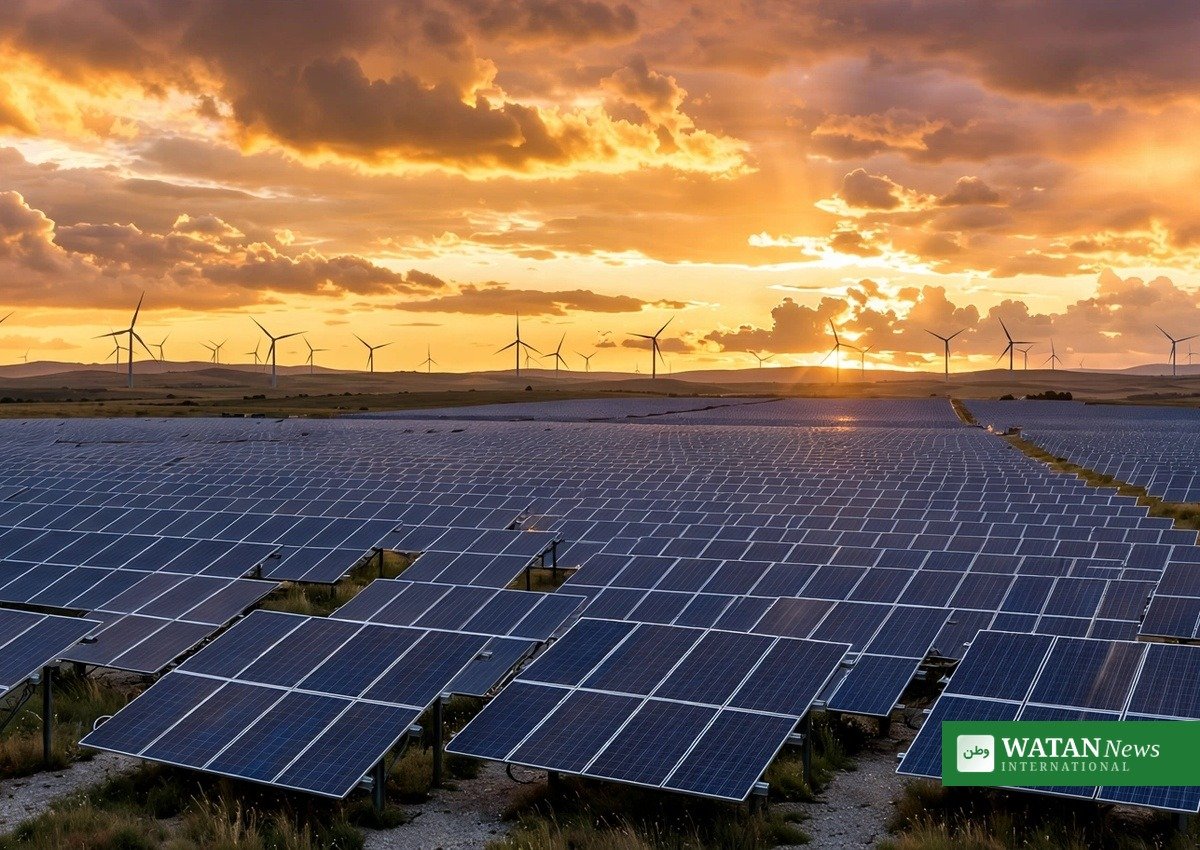
For the first time in history, global solar power generation has overtaken nuclear power over a full calendar year. The milestone, documented in the World Nuclear Industry Status Report 2026, marks the moment solar overtakes nuclear as a source of the world’s electricity — a symbolic turning point in the global energy transition.
The 596-page annual report, coordinated by French independent energy consultant Mycle Schneider and launched in Istanbul this week, tracks every commercial nuclear reactor in the world. Its headline finding is stark: despite a record year for nuclear output, solar and wind are expanding so much faster that the atomic age’s share of electricity keeps shrinking.
A historic first: solar overtakes nuclear over a full year
In 2025, solar electricity generation surpassed nuclear generation for the first time across a complete year. The crossover had been building month by month. In March 2025, wind power alone exceeded nuclear generation on a monthly basis; in April 2025, solar did the same — the first month in history that global solar output exceeded nuclear output.
The monthly record since spring 2025
The lead then changed hands repeatedly, but renewables stayed on top. From March 2025 through June 2026, either solar or wind individually generated more electricity than nuclear in every single month. In March, April and May 2026, both solar and wind each out-generated nuclear.
Independent confirmation from Ember
A separate review by the energy think tank Ember reached a similar conclusion: solar and nuclear generation were nearly tied across 2025, with solar ahead of nuclear from April through September. The two independent datasets agree that 2025 was the year the lines crossed.
Nuclear output at a record — but losing share
Nuclear power is not collapsing. The world’s reactors generated a record 2,703 terawatt-hours in 2025, up 1.1 percent on the previous year. The World Nuclear Association’s own review also found 2025 nuclear generation at a record level (2,702 TWh), broadly confirming the report’s figures.
The China effect
But the entire global increase came from one country. Chinese nuclear output rose 7.6 percent in 2025; outside China, nuclear generation actually fell 0.2 percent. Growth in the sector is now almost entirely a Chinese story.
Share at a 45-year low
Against a fast-growing power grid, record output was not enough to hold nuclear’s share. Nuclear’s share of global electricity fell from 9 percent to 8.8 percent in 2025 — the lowest in nearly 45 years, and roughly half of its 1996 peak of 17.5 percent.
The build race: 73 reactors under construction
The report is not all gloom for the nuclear industry. As of 1 July 2026, 73 reactors were under construction in 14 countries — the highest number since 1987. Thirty-seven of them are in China, Russian technology is involved in 29 (22 of them outside Russia), and nine out of ten reactors under construction are in Asia or Eastern Europe.
Construction starts reached 12 in 2025 — the highest annual figure since 2010 — with nine in China, two in Russia and one in South Korea. Meanwhile the operating fleet stood at 411 reactors in 31 countries, up three from a year earlier but still 27 below the 2002 peak of 438. Thirty reactors sit in long-term outage, including 18 in Japan.
A shrinking fleet outside China
In 2025, four reactors began supplying electricity while seven were permanently closed — the first negative annual balance since 2021. The longer view is starker: between 2006 and 2025, 104 reactors started up and 106 closed. China accounted for 53 startups and no closures, meaning the rest of the world saw a net decline of 55 reactors, representing about 30.7 gigawatts of capacity.
Capacity frozen for a quarter-century
Nuclear capacity is essentially standing still. Installed nuclear capacity grew by just 1.5 gigawatts to 399.5 GW in 2025, while actual operating capacity declined by 0.5 GW to 368.6 GW. The report notes nuclear capacity has been essentially flat for more than 25 years.
The contrast with renewables could hardly be sharper. Solar generation grew 30 percent and wind 8 percent in 2025. Solar capacity jumped by 510 GW to 2,383 GW — up 27 percent in a single year — while wind capacity rose 159 GW to 1,291 GW, up 14 percent. According to IRENA figures published in April 2026, 692 GW of new renewable capacity was added worldwide in 2025, taking total global renewable capacity to 5,149 GW.
FAKTA
- In 2025, solar generation surpassed nuclear generation over a full year for the first time.
- Wind first beat nuclear monthly in March 2025; solar followed in April 2025.
- Nuclear output hit a record 2,703 TWh (+1.1%), all of the growth in China (+7.6%); outside China it fell 0.2%.
- Nuclear’s share of global electricity dropped to 8.8%, the lowest in nearly 45 years.
- Solar capacity grew 510 GW (+27%) to 2,383 GW; wind +159 GW (+14%) to 1,291 GW; nuclear capacity flat for 25+ years.
- 73 reactors under construction (highest since 1987); 411 operating reactors, 27 below the 2002 peak.
- 104 GW / 257 GWh of grid-scale batteries connected in 2025; over 78% of all cumulative storage installed in 2023–2025.
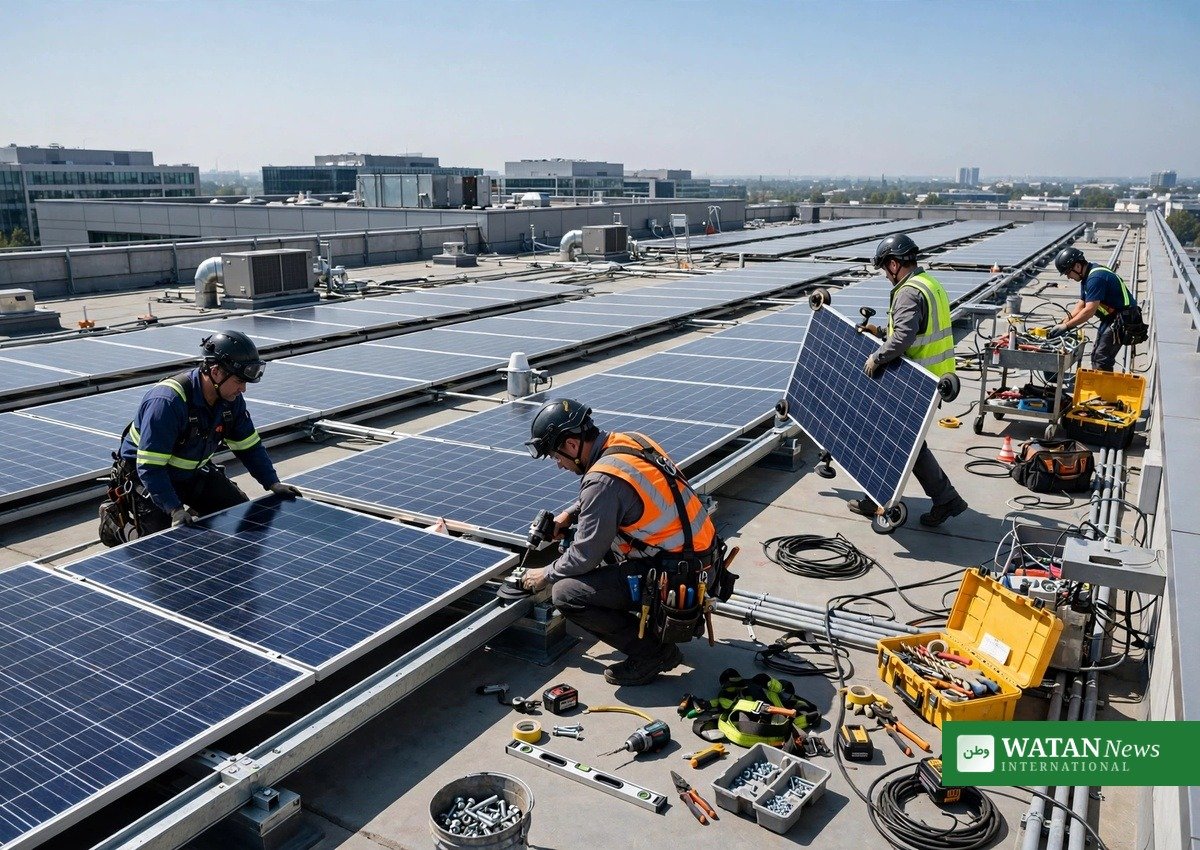
Technicians install solar panels on a commercial rooftop. Solar capacity grew by a record 510 gigawatts in 2025 — up 27 percent in a single year.
Storage scales up, SMR promises remain distant
One of the year’s most striking data points concerns batteries: 104 GW and 257 GWh of grid-scale battery storage were connected in 2025, and more than 78 percent of all cumulative battery storage was installed between 2023 and 2025. Storage is arriving fast enough to cushion the variability of wind and solar.
Small modular reactors, long touted as nuclear’s nimble future, show limited progress. Canada began construction of GE-Hitachi’s BWRX-300 in 2026, but the report remains skeptical that SMRs can deliver on promises made over many years.
What the numbers mean
The 2026 report paints a dual picture. Nuclear power achieved record generation and is building more reactors than at any time since 1987 — yet its share of the world’s electricity keeps falling, its capacity is frozen, and outside China the fleet is shrinking. Renewables, meanwhile, are adding capacity at a pace nuclear has never matched.
Mycle Schneider, the report’s coordinator, told pv magazine the 2025 figures were “quite sobering for those who expected to find a booming sector.” The report is an independent assessment and its authors are known for their skepticism about nuclear power’s prospects — but the numbers it cites are drawn from industry and official data.
Frequently asked questions
Did solar overtake nuclear in 2025?
Yes, according to the World Nuclear Industry Status Report 2026. Global solar generation grew by about 30 percent and surpassed nuclear’s record 2,703 TWh over a full calendar year. A separate review by the energy think tank Ember found the two nearly tied, with solar ahead from April through September.
Does solar overtaking nuclear mean nuclear power is declining?
Not exactly. The world’s reactors generated a record 2,703 TWh in 2025, up 1.1 percent on the previous year. But all of the growth came from China, where output rose 7.6 percent; outside China, nuclear generation fell 0.2 percent. Nuclear’s share of global electricity nevertheless slipped to 8.8 percent — its lowest in nearly 45 years.
Who publishes the World Nuclear Industry Status Report?
It is an independent annual report coordinated by Paris-based energy consultant Mycle Schneider. Its authors are known for their skepticism about nuclear power’s prospects, but the figures they cite are drawn from industry and official data.
Why are batteries such a big part of this story?
Because they make variable renewables more usable. In 2025, 104 GW and 257 GWh of grid-scale battery storage were connected worldwide, and more than 78 percent of all cumulative storage was installed between 2023 and 2025. Falling battery costs are seen as a key enabler of continued solar expansion.
Where is nuclear construction actually growing?
As of 1 July 2026, 73 reactors were under construction in 14 countries — the highest number since 1987. China accounted for 37 of them, and Russian technology was involved in 29. Nine out of ten reactors being built are in Asia or Eastern Europe.
More climate stories: Watan News climate coverage. Source: pv magazine — Solar surpasses nuclear power globally for first time.
Author

usman2344913@gmail.com
Related Posts
Trump Rules Out Nuclear Strike on Iran, Warns of New Strikes on Pickaxe Mountain
- 0
- 694 words
Washington, D.C. — President Donald Trump has ruled out using nuclear weapons against Iran in the ongoing war, but warned that the...
Read out all
Cyprus Israel Lobby Row: Pro-Israel Parliamentary Group Sparks Political Dispute
- 0
- 480 words
NICOSIA — A Cyprus Israel lobby row has erupted on the divided Mediterranean island after six lawmakers launched a new parliamentary chapter...
Read out all
Brewers Sweep Dodgers to Reach World Series for First Time Since 1982
- 0
- 580 words
The Milwaukee Brewers are going to the World Series for the first time in 44 years. Down 4-0 in the early innings...
Read out all
Lukashenko Says Trump Should Not Dictate Ukraine’s Future
- 0
- 497 words
Belarusian President Alexander Lukashenko said on Friday that US President Donald Trump should not dictate Ukraine’s political future, declaring that only the...
Read out all
Russian Drone Strikes Kill Three Across Ukraine, Cut Power to 370,000
- 0
- 419 words
Russian drone strikes across Ukraine killed at least three people and knocked out electricity to around 370,000 residents in the northwestern Volyn...
Read out all
Israeli Settlers Torch Olive Trees, Injure Photojournalist in West Bank Harvest Attack
- 0
- 484 words
Dozens of Israeli settlers attacked Palestinian olive harvesters in Abu Falah, West Bank, torching olive trees and injuring two people, including a...
Read out all