- 0
- 505 words
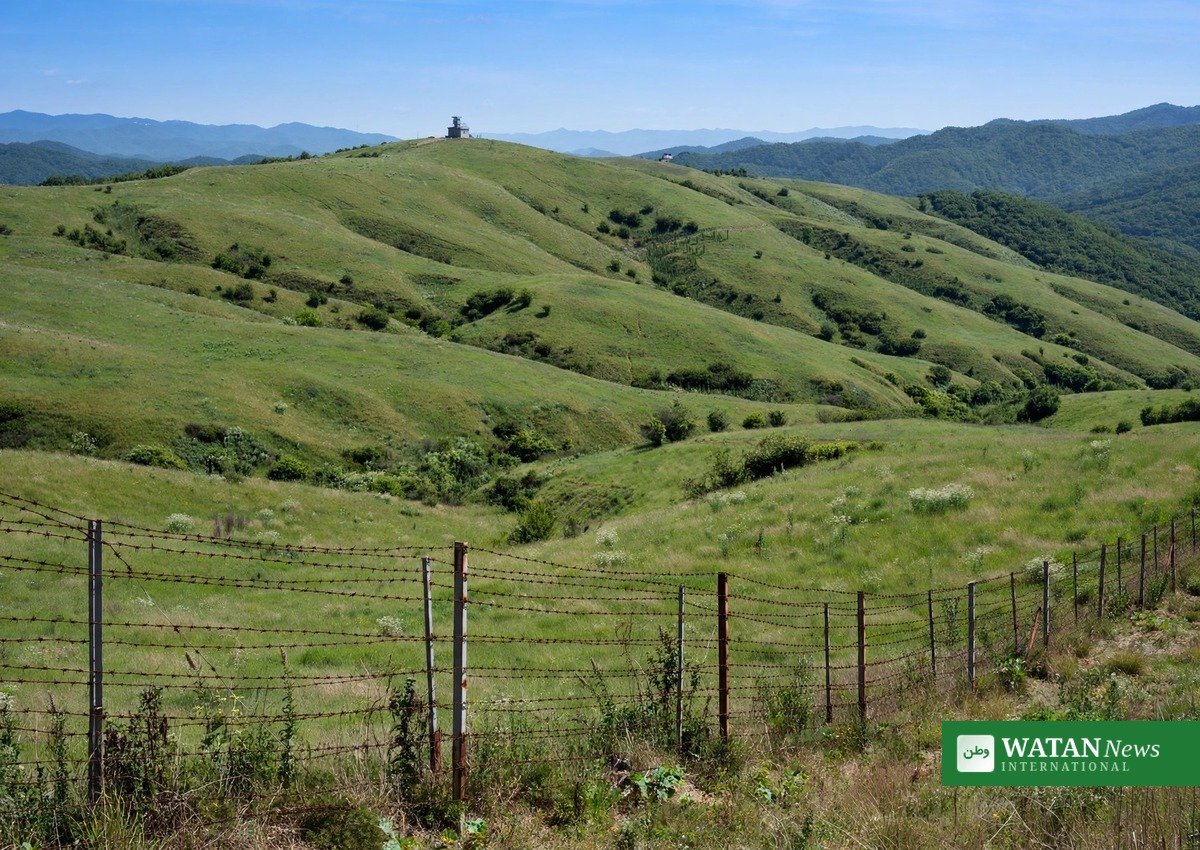
South Korea has again asked North Korea to hold military talks to settle exactly where the land border between the two countries runs, hoping to lower the risk of accidental clashes along one of the world’s most heavily guarded frontiers. The defence ministry in Seoul announced the proposal on Friday, 23 October. It said a clearer agreed border would help troops on both sides avoid straying into each other’s territory. The offer follows a landmine blast in the Demilitarised Zone (DMZ) last month that seriously wounded two South Korean soldiers.
FAKTA
- Proposed by: South Korea’s defence ministry, announced by Deputy Minister for National Defense Policy Kim Hong-cheol.
- The proposal: Military talks to agree on the exact location of the land border between the two Koreas.
- The reason: North Korean troops have built roads and fences and laid mines near the Military Demarcation Line, at times crossing the line during that work.
- The trigger: A DMZ landmine blast last month seriously injured two South Korean soldiers; Seoul blames North Korean mines placed south of the line, a finding Pyongyang rejects.
- History and status: Seoul made a similar offer last November and received no reply; the new offer awaits Pyongyang’s response.
South Korea North Korea Military Talks: What Seoul Is Proposing
At the heart of the proposal is a disagreement over geography. The Military Demarcation Line runs through the DMZ separating the two Koreas, but the two sides do not fully agree on where it lies in every stretch. South Korean officials say that uncertainty matters because soldiers working near the line can cross it without intending to, and any such crossing in so tense an area can quickly escalate.
Seoul argues that direct talks could settle the line’s precise course and set clearer ground rules for work near it. Agreeing the border beyond doubt, officials say, would remove one obvious source of friction.
A Border Where Small Errors Carry Big Risks
The DMZ is one of the most militarised strips of land anywhere, with large forces on either side and decades of mistrust behind them. In such a setting, even an unintended encounter can be read as a provocation, which is why Seoul presents the talks as a safety measure rather than a political gesture.
The September blast brought that danger into focus. South Korea’s military concluded that the mines which wounded its soldiers had been buried south of the demarcation line by the North. Pyongyang dismissed that conclusion, leaving the two sides publicly at odds, with no agreed military channel to discuss such incidents.
An Offer Still Awaiting an Answer
Whether talks happen now depends entirely on Pyongyang. The previous offer, made last November, drew no reply, and North Korea has given no public sign yet that it will accept the renewed invitation. Seoul’s hope is simple: agreeing the line on the ground can stop a misunderstanding becoming a confrontation. Until North Korea answers, the border stays as sensitive as ever. For more international coverage, visit Watan News International.
Author

usman2344913@gmail.com
Related Posts

COP17 Finance Fight: Who Should Pay to Save Nature as Yerevan Talks Reach Decisive Week
- 0
- 1,503 word
In Yerevan, the first global review of the world’s plan to halt nature loss has run into its hardest question: who should...
Read out all
New Zealand Defence Chief Tony Davies Resigns Over Undisclosed Relationship
- 0
- 496 words
New Zealand’s most senior military officer has stepped down after admitting that he failed to disclose an inappropriate relationship from his time...
Read out all
Euromed Climate Education Survey Extended to 30 October Ahead of COP31 in Antalya
- 0
- 834 words
Mediterranean universities have one more week to join a region-wide mapping of climate teaching, after the organisers of the Euromed climate education...
Read out all
Irene Dankelman Young Ecofeminist Award 2026: Three Young Leaders Honoured at COP17
- 0
- 1,193 word
Three young environmental leaders from Uganda, Barbados and the Philippines have won the Irene Dankelman Young Ecofeminist Award 2026, honoured at a...
Read out all
US Bans BYD Cars From Kadena Air Base in Japan Over Security Concerns
- 0
- 686 words
The United States will bar Chinese carmaker BYD’s electric vehicles from Kadena Air Base in Okinawa, Japan, from Monday, 26 October, over...
Read out all
Pacific Tourism Climate Action Plan Advances in Honiara
- 0
- 1,021 word
SPTO's board advanced the Pacific Tourism Climate Change Action Plan in Honiara, with a first draft ahead and a regional launch planned...
Read out all