
- 0
- 604 words
SHANGHAI: Researchers at the Chinese Academy of Sciences have developed a new chemical catalyst that converts wood waste into sustainable aviation fuel more efficiently and more cheaply than before — a breakthrough that could finally make green jet fuel a profitable business.
The advance was announced on 9 October 2026 by the CAS Shanghai Advanced Research Institute. It takes aim at the single biggest barrier to cleaner flying: cost. Aviation accounts for roughly 2 to 3 percent of global carbon dioxide emissions, yet sustainable aviation fuel still makes up under 1 percent of the jet fuel consumed worldwide, largely because it costs far more to produce than conventional kerosene.
A catalyst that beats the classic trade-off
The team designed a cobalt-manganese catalyst supported on etched Beta zeolites for Fischer-Tropsch synthesis — the key chemical route that turns synthesis gas (syngas) from woody biomass into liquid jet fuel.
Industrial catalysts usually suffer from a painful compromise: speed the reaction up and you get unwanted gases instead of the precise hydrocarbons a jet engine needs. The new material, the researchers report, optimises processing speed and product selectivity at the same time.
In laboratory tests it converted nearly 83 percent of carbon monoxide while directing more than 67 percent of the resulting hydrocarbons into the carbon range required for jet fuel. Formed into solid pellets, the catalyst produced more than 5.15 grams of product per gram of cobalt per hour — and 79 percent of the resulting liquid consisted of jet-fuel hydrocarbons.
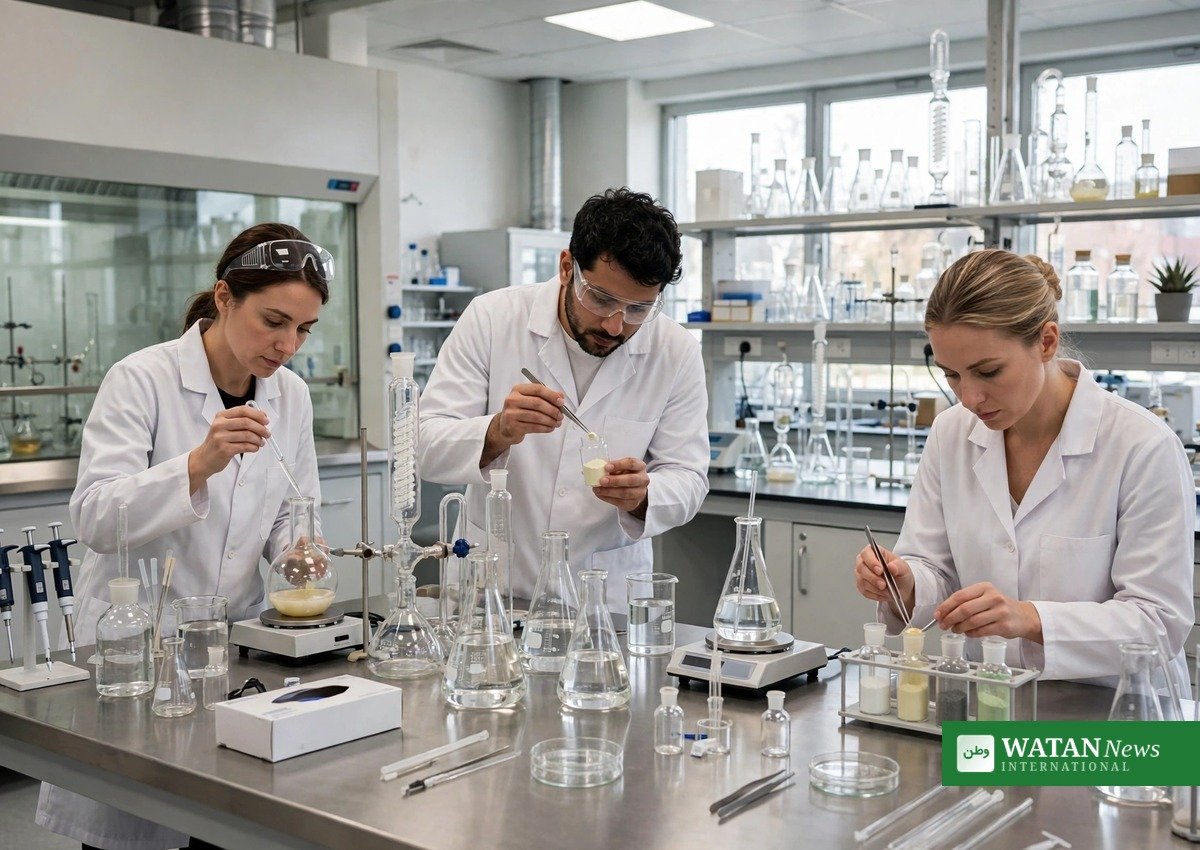
Scientists at the CAS Shanghai Advanced Research Institute developed the cobalt-manganese catalyst. (Illustration: Watan News)
Built for the real world: scaling sustainable aviation fuel
The catalyst also showed strong stability and tolerated carbon-dioxide-rich feeds, meaning it can process real-world, unrefined syngas rather than only purified laboratory gas. The study paper notes that its remarkable stability and strong tolerance to CO2-rich feeds enable it to process real-world syngas feedstocks.
A 1,000-tonne pilot test confirmed the results at industrial scale: combining woody biomass syngas with the new catalyst enabled the highly efficient synthesis of jet fuel.
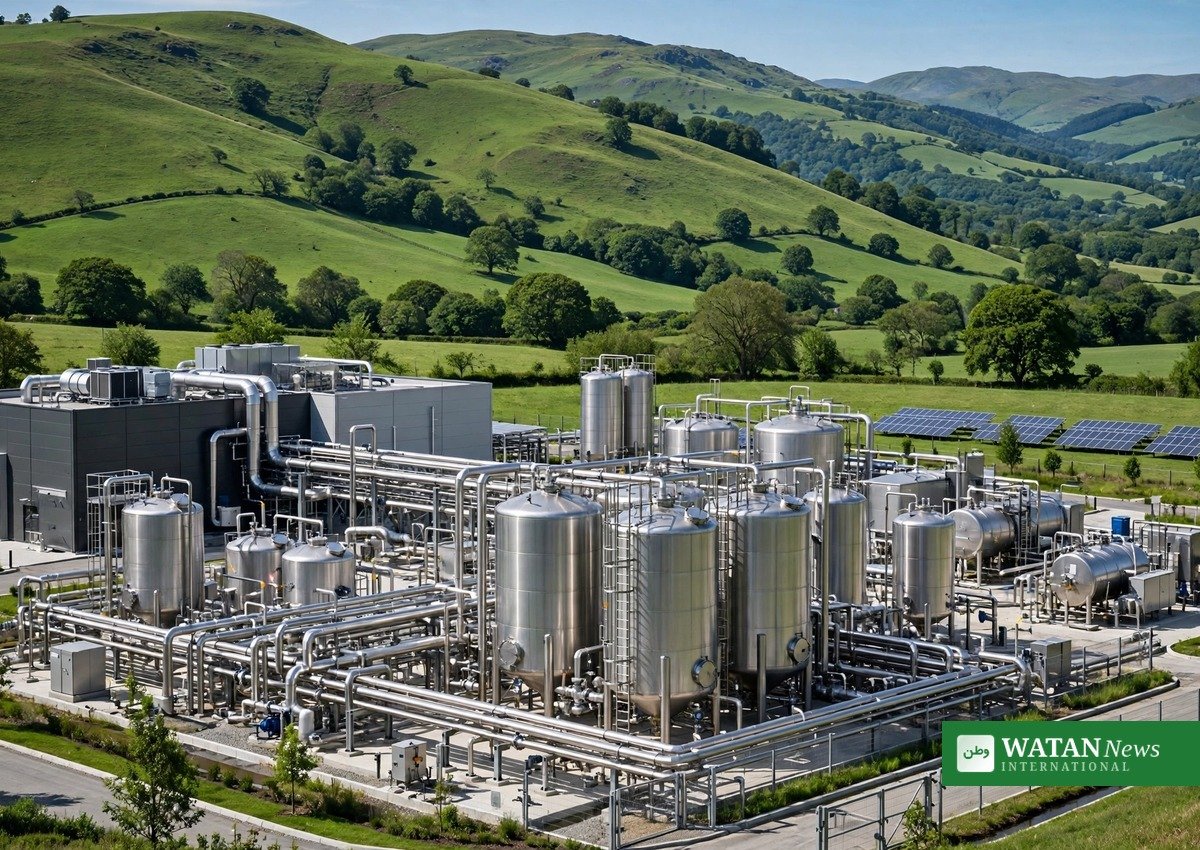
A planned 100,000-tonne sustainable aviation fuel plant in Sichuan province is projected to be highly profitable. (Illustration: Watan News)
A 55 percent margin changes the math
According to the South China Morning Post, a planned 100,000-tonne facility in Sichuan province is expected to generate $302 million in annual revenue by 2028 against operating costs of $114 million — an estimated gross profit margin near 55 percent.
“Excellent performance in industrial test and techno-economic analysis further demonstrates the strong potential of this catalyst for scalable production of SAF,” the researchers wrote in their study paper.
Profitability could be the ultimate driver of adoption. With the European Union requiring airlines to blend sustainable fuel at its airports and similar mandates spreading worldwide, a catalyst that makes green jet fuel genuinely profitable could speed the transition far faster than subsidies alone. Read more green travel and climate news on Watan News.
FAKTA
- What: A cobalt-manganese catalyst on etched Beta zeolites that converts wood-derived syngas into sustainable aviation fuel.
- Who: Researchers at the Chinese Academy of Sciences’ Shanghai Advanced Research Institute; announced 9 October 2026.
- Lab results: 83% carbon monoxide conversion; over 67% of hydrocarbons in the jet-fuel range; 5.15 g of product per gram of cobalt per hour.
- Scale: A 1,000-tonne pilot test succeeded; a planned 100,000-tonne plant in Sichuan targets ~55% gross margin by 2028.
- Why it matters: Aviation causes 2–3% of global CO2 emissions, but green fuel is still under 1% of jet fuel used — cost is the main barrier.
In short, the new catalyst does not just promise cleaner skies — it promises a business case strong enough to fill them. For an industry racing toward net zero, that combination may matter more than any single technical record.
Author

usman2344913@gmail.com
Related Posts

Trump Claims Russia-Ukraine ‘Energy Ceasefire’ Agreed; Kyiv Surprised, Moscow Silent
- 0
- 708 words
Donald Trump announced an immediate 'energy ceasefire' between Russia and Ukraine, claiming both sides had agreed. Kyiv said the announcement was news...
Read out all
Kinesisk gennembrud: Træaffald bliver til rent flybrændstof
- 0
- 633 words
En ny kobolt-mangan-katalysator fra det kinesiske videnskabsakademi omdanner træaffald til bæredygtigt flybrændstof med en ventet margin på 55 % — et gennembrud...
Read out all
چینی سائنسدانوں کا کامیاب تجربہ: لکڑی کے فضلے سے سستا سبز جہازی ایندھن
چینی اکیڈمی آف سائنسز کا نیا کیٹالسٹ لکڑی کے فضلے کو 55 فیصد متوقع منافع کے ساتھ سبز جہازی ایندھن میں بدلتا...
Read out all
At Least 72 Gold Miners Killed in Airstrike Near Egypt-Sudan Border, Rights Group Says
- 0
- 588 words
At least 72 civilian gold prospectors were killed in airstrikes on artisanal mining sites near the Egypt-Sudan border on Saturday, the Sudanese...
Read out all
139 Migrants Dead, Including 15 Children, After Boat Capsizes Off Djibouti
- 0
- 557 words
At least 139 migrants, including 15 children, died after an overcrowded boat carrying 305 people capsized off Djibouti's coast en route to...
Read out all
Northwest Territories har fuldført et af sine største træplantningsprojekter
- 0
- 484 words
YELLOWKNIFE, Canada — Northwest Territories har fuldført et af de største træplantningsprojekter i sin historie og har genoprettet skovbrændte skove nær Sambaa...
Read out all