- 0
- 568 words
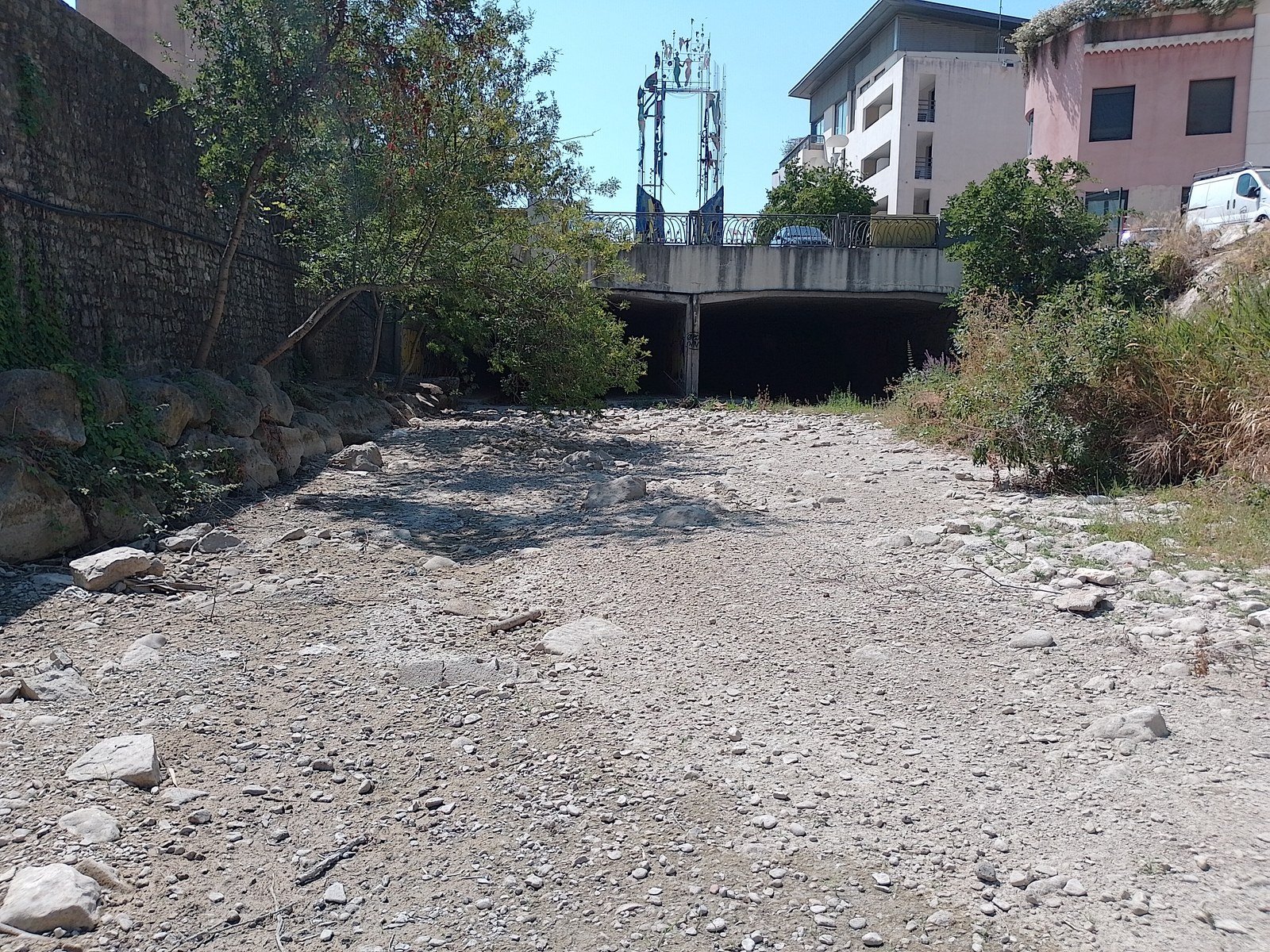
GENEVA — Rivers worldwide had one of the driest years for discharge in more than three decades in 2025, the World Meteorological Organization said in its State of Global Water Resources report released on 17 September 2026, warning that freshwater buffers on land are eroding on a multi-year timescale.
Below-normal river flows covered about 36% of global basin area in 2025, based on an ensemble of 13 global hydrological models driven by observed weather data, WMO reported. For a seventh consecutive year, basins with historically “normal” flows were in a clear minority — roughly 34–38%, against a 1991–2020 average near 46%.
Savings account under strain
“Traditionally these slow reserves have acted as the planet’s savings account: a buffer that absorbs bad years so that a single drought or a single dry season does not translate directly into a water crisis,” said WMO Secretary-General Celeste Saulo. “We are depleting that savings account.”
Global terrestrial water storage — groundwater, lakes and rivers, soil moisture, vegetation, ice and snow — has shown a declining trend since about 2014–2016, Saulo said, calling it “a persistent, decade-long signal,” language echoed in UN News coverage of the launch. Nearly two-thirds of monitored wells worldwide showed conditions outside the historical norm in 2025, with the balance shifting further toward deficit rather than recovery, according to WMO.
Regional patterns were mixed. Recurring below-normal discharge over 2021–2025 hit major parts of the Amazon and La Plata basins, North America, Central and East Africa, Central Asia and the Middle East. In 2025, above-normal to much-above-normal annual discharge appeared across South and South-East Asia and parts of northern South America, while much of North America, the La Plata and São Francisco basins, Eastern Europe, the Middle East and Central Asia saw below-normal to much-below-normal flows. Africa was split: above-normal flows in the Senegal, Niger, Lake Chad, Orange and Limpopo basins contrasted with much-below-normal discharge in the Nile, Congo and Zambezi.
Fourth year of widespread glacier loss
2025 marked the fourth consecutive year in which every major glaciated region recorded net ice loss. Cumulative global glacier mass loss for 2023–2025 reached about 1,400 gigatonnes of water — roughly one-third of annual freshwater withdrawals, WMO said. In hydrological year 2025 alone, glaciers lost about 408 (±132) gigatonnes, equivalent to roughly 1.1 (±0.4) mm of sea-level rise.
Some regions dominated by smaller glaciers, including the Caucasus, Western Canada and the USA, and Central Europe, may already have reached “peak water,” after which meltwater runoff declines because less ice remains, the report notes.
Extremes, monitoring gaps — and what the report does not claim
Asia and Africa together accounted for at least half of recorded water-related extreme events and more than 80% of reported associated deaths over the past five years, WMO said — yet both remain among the least represented regions for hydrological observations in the assessment. Coverage has expanded sharply since the first edition, but data gaps persist where impacts are heaviest.
UN News noted that the report does not attribute every observed change to climate change alone; pressure on water resources and natural variability also contribute. Separately, Saulo said a strengthening El Niño would raise drought risk in some areas and flooding in others — a forward-looking hazard statement, not an attribution of 2025 conditions.
“Water respects no borders,” Saulo said, calling for shared data, standards and early warning. The report’s message is urgency grounded in measured hydrology: river dryness in 2025 sits inside a longer stretch of abnormal flows, shrinking land water storage, and multi-year glacier loss — trends WMO says carry serious implications for people and economies.
Author

watannews321@gmail.com
Related Posts

Merz Vows to Keep Ruling Coalition Together for Germany’s ‘Democratic Future’
- 0
- 532 words
German Chancellor Friedrich Merz has vowed to keep his ruling coalition together for the sake of his country s democratic future, following...
Read out all
Asia Technology Future: Digital Edge Over Europe, Americas
- 0
- 823 words
Asia’s tech future looks bright vs Europe and the Americas—chips, mobile markets, startups and digital FDI, with geopolitics still in view.
Read out all
Three South Korean Officers Wounded in Border Explosion
- 0
- 371 words
Three South Korean military officers were wounded in an explosion in the western sector of the Demilitarized Zone (DMZ) that separates North...
Read out all
German Chancellor Merz Defiant After CDU Suffers Double Election Blow
- 0
- 557 words
German Chancellor Friedrich Merz has called his party’s recent election loss in Mecklenburg-Vorpommern a ‘disaster’, but has vowed to remain in office...
Read out all
Trump’s Proposed Arch Near National Mall to Serve as Military Complex with Drones and Snipers
- 0
- 420 words
President Trump has proposed a military complex near the National Mall in Washington D.C. that would include snipers and drones. The project...
Read out all
Exploring the Latest Wellness Trends Among Youth in 2026
- 0
- 597 words
Introduction The world of wellness is constantly evolving, and the latest trends among youth in 2026 are no exception. As young people...
Read out all