- 0
- 489 words
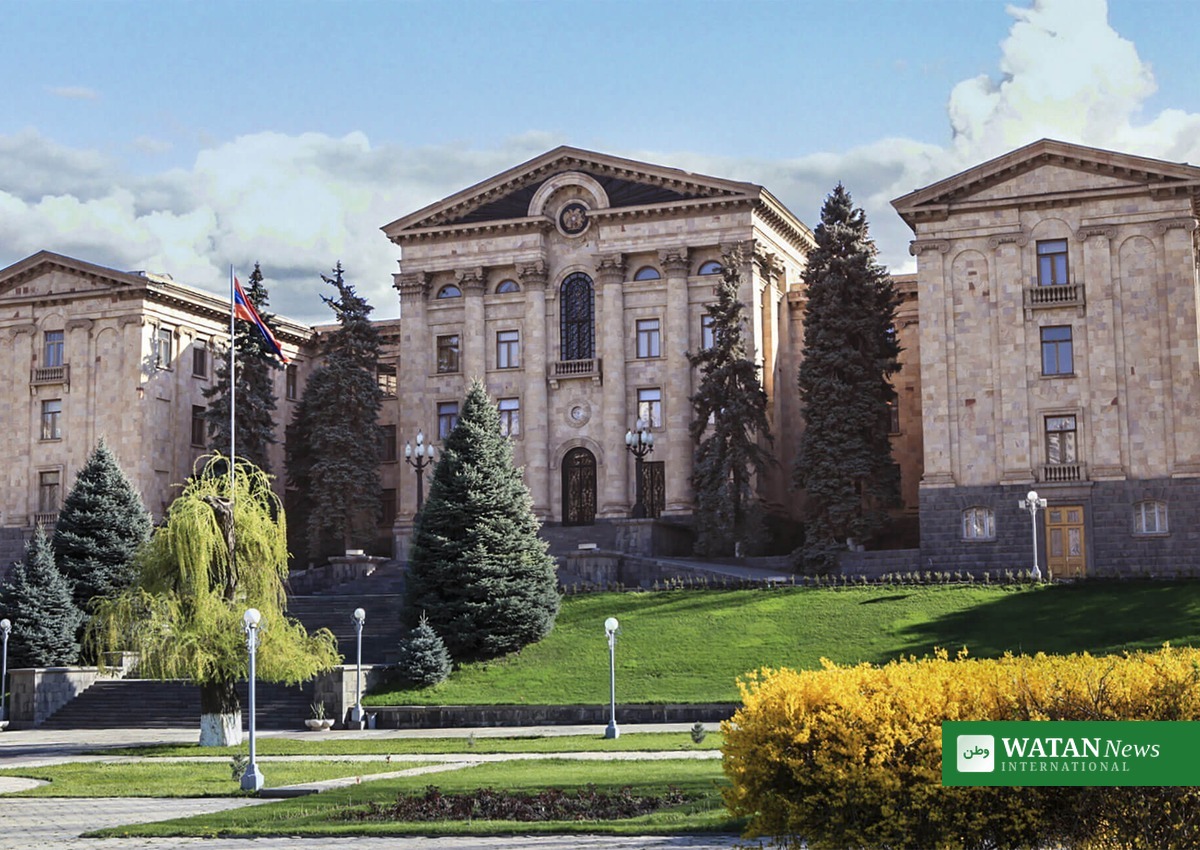
Armenia has published a draft of a new constitution that removes the passage Azerbaijan has long described as a barrier to a formal peace treaty, a move Prime Minister Nikol Pashinyan calls a decisive step towards ending decades of conflict. The Justice Ministry released the text on Monday, and Pashinyan is due to address the nation as public debate begins over a document that could reshape Armenia’s politics and its relations with its neighbour.
It is the most consequential political step since the two countries initialled a preliminary peace deal at United States-brokered talks in Washington, and it tests whether Armenia can settle a dispute that has shaped its politics for nearly four decades.
FAKTA
- What happened: Armenia published a draft new constitution on Monday, 23 November 2026.
- The core change: The rewritten preamble drops the reference to the 1990 Declaration of Independence, which cited a 1989 decision on uniting Armenia with Nagorno-Karabakh.
- Baku’s condition: President Ilham Aliyev has made signing a formal peace treaty conditional on the constitutional change.
- The hurdle: At least 70 of 105 votes are needed to call a referendum; the ruling Civil Contract party holds 64.
- The context: The neighbours fought over Nagorno-Karabakh from the late 1980s; Azerbaijan regained it in September 2023, and more than 100,000 ethnic Armenians fled.
A clause at the centre of the dispute
For Baku, the preamble was the central sticking point: it points to a Soviet-era document calling for the reunification of Armenia and Nagorno-Karabakh, then an autonomous region inside Soviet Azerbaijan. Baku has treated that reference as a territorial claim. The new draft rewrites the preamble and removes it.
Pashinyan says the text follows his “Real Armenia” approach, anchored in Armenia’s internationally recognised borders. The draft also proposes wider changes, including expanded authority for the president and parliament and votes of no confidence in individual ministers.
A difficult vote ahead
Publishing the draft is only the start of a long process. Civil Contract holds 64 of 105 seats, six short of the 70 needed to call a referendum, and both opposition factions have already rejected the plan, accusing Pashinyan of conceding too much to Baku. Pashinyan has offered to resign within a week if voters reject it, and says he will not stand for prime minister again if it is approved.
The Constitutional Reform Council was itself divided: on 13 November, most members opposed releasing the text without further revision. Public debate and legal scrutiny will follow before any vote can be called.
A region watching closely
If the draft survives debate and a referendum, it would remove the last stated obstacle to a formal treaty after years of war, closed borders and broken talks. Trade links have begun to reopen, and both leaders have spoken of real peace.
But politics inside Armenia remain unsettled, and the outcome will shape the country’s direction for years: towards a settled peace with Azerbaijan, or a new round of domestic confrontation. More international news is available on Watan News.
Author

usmanch0013@gmail.com
Related Posts

WWF and Amano So Name 24 Young Leaders for 2027 Fellowship Across Africa
- 0
- 1,331 word
WWF and Amano So have named 24 young leaders from 10 African countries for the 2027 WWF-Amano Fellowship, a nine-month programme of...
Read out all
Heathrow Offers Airlines £81 Million for Greener Fuel in 2027 as Sign-Up Deadline Hits Today
- 0
- 930 words
Airlines have until 5pm UK time today, 27 November 2026, to sign up for Heathrow's £81.24 million sustainable aviation fuel incentive for...
Read out all
QTS Plants 50 Trees in Irving to Kick Off 5,000-Tree Drive Across North Texas
- 0
- 752 words
QTS Data Centers, the Texas Trees Foundation and the City of Irving have planted 50 trees at Lanotte-Spurlock Park, kicking off a...
Read out all
Pablo Hernández de Cos Picked as Next ECB President, Succeeding Lagarde in February
- 0
- 621 words
Leaders of the eurozone countries have chosen Spain's Pablo Hernández de Cos as the next ECB president. He succeeds Christine Lagarde in...
Read out all
COP31 forest fund reaches $8.3 billion — but $1.7 billion short of its launch target
- 0
- 1,273 word
The Tropical Forest Forever Facility raised $8.3 billion at COP31, but with $1.7 billion still to find before 31 December, Norway's $3...
Read out all
Philadelphia Council Advances Zero-Waste Bill Targeting 60% Trash Diversion by 2046
- 0
- 1,016 word
Philadelphia City Council's Commerce Committee has unanimously advanced the Zero Waste and Circular Economy Act, requiring the city to divert 60% of...
Read out all