- 0
- 1,249 word
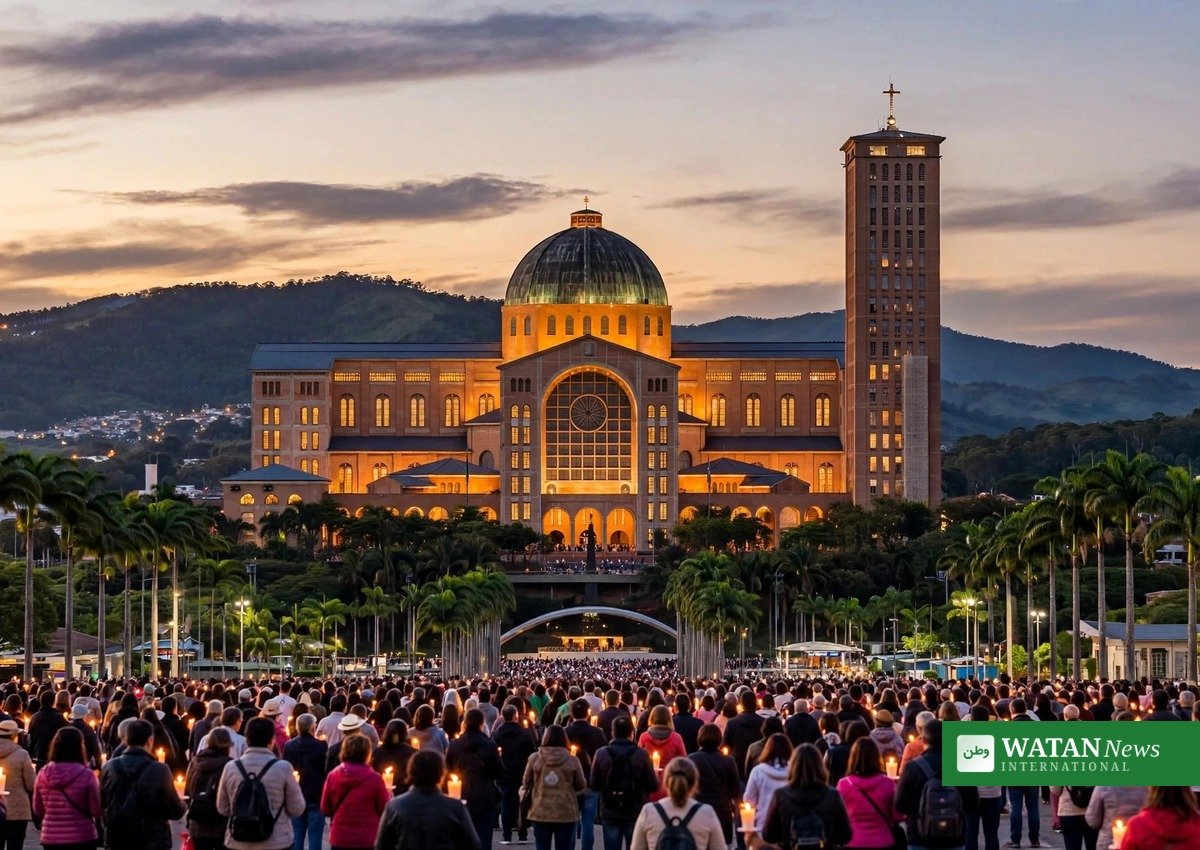
Brazil votes on Sunday in a presidential first round shaken by a row over Our Lady of Aparecida, the nation’s patron saint. The Brazil patron saint row began with a false claim that challenger Flávio Bolsonaro would strip the saint of her title — a hoax that went viral, split the country’s Supreme Court justices, and has become one of the most talked-about issues of the campaign. With incumbent Luiz Inácio Lula da Silva at 39 percent and Bolsonaro at 34 in the latest Quaest poll, the religious furor could tip a knife-edge race.
KEY FACTS: The patron-saint row
The vote: First round on Sunday, October 4; a runoff would follow on October 25. A Quaest poll published this week gives Lula 39 percent and Flávio Bolsonaro 34 percent, with a prospective runoff tied at 42–42.
The claim: That Flávio Bolsonaro, if elected, would strip Our Lady of Aparecida of her title as Brazil’s patron saint. The claim is false — it recycles a 2007 bill introduced by then-deputy Victório Galli, which was shelved by the Chamber of Deputies in August 2008 and has no connection to Bolsonaro.
The court fight: On September 25, TSE vice-president André Mendonça ordered 1,125 posts spreading the rumor removed, calling them “notoriously untrue.” On September 28, Supreme Court Justice Flávio Dino overturned the order on freedom-of-expression grounds and called for a full-court session.
The authority: Our Lady of Aparecida was declared Brazil’s patroness by the Vatican in 1930. Only the Holy See can change that designation — no president can.
The stakes: Catholics make up about 57 percent of Brazil’s population. In 2022, Lula defeated Jair Bolsonaro by less than two percentage points.
The ‘decree’ that started it all
The commotion traces back to a video Flávio Bolsonaro published on August 23, after skipping the first presidential debate on Band. In it, the senator and presidential candidate said one of his first acts as president would be “to decree that Brazil belongs to the Lord Jesus Christ.” The remark gained renewed attention in September, when social-media posts linked the declaration to an alleged plan to remove Our Lady of Aparecida’s title — a link the August video itself never made.
Bolsonaro has vehemently denied any such plan, calling the story “fake news” and “the biggest fake news of this campaign.” He accused the Workers’ Party (PT) of inventing the rumor and claimed “people from within” the bishops’ conference helped spread it.
A 2007 bill recycled as 2026’s viral hoax
The viral posts rested on a real piece of legislative history — Bill 2,623 of 2007, presented by then-federal deputy Victório Galli, which sought to change the wording around the October 12 holiday. The bill was shelved in August 2008 and had nothing to do with Flávio Bolsonaro, who never presented or took part in it.
The rumor exploded on the night of September 24, when GloboNews broadcast a report attributing an alleged mobilization against the patroness to Bolsonaro’s camp. Hours later, the channel corrected itself and apologized, clarifying that the cited project dated from 2007. But by then the clip had been cut, shared and weaponized: Bolsonaro’s campaign says the false version was amplified by PT supporters, while his opponents point to his reported ties to evangelical leader JB Carvalho, whose “Community of Nations” church has preached that Our Lady of Aparecida should be dethroned. Nearly one million posts about the controversy appeared in less than three days.
Supreme Court justices clash over the hoax
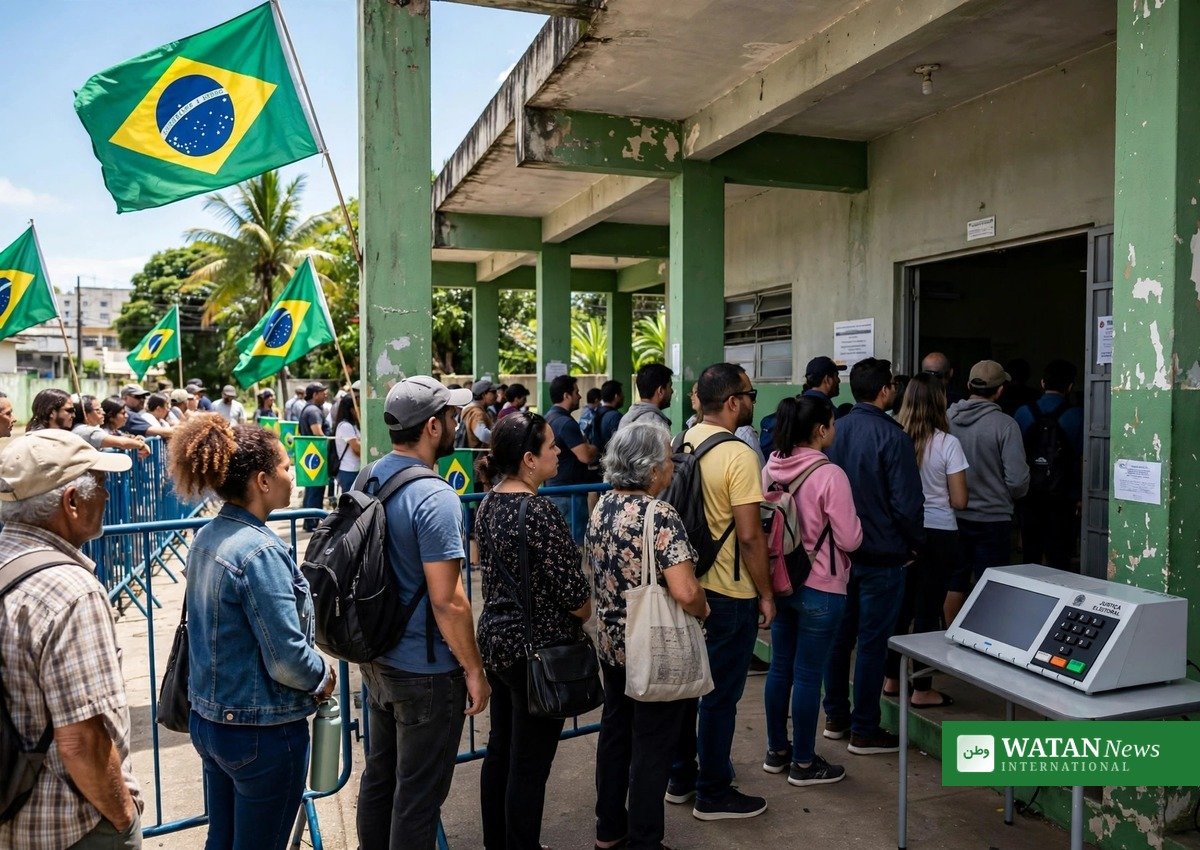
The row has now reached Brazil’s highest court — and split it. On September 25, Justice André Mendonça, acting through the Superior Electoral Court (TSE), ordered the removal of 1,125 publications spreading the claim, deeming them “notoriously untrue” and citing the damage to Bolsonaro’s candidacy days before the vote.
Three days later, fellow Supreme Court Justice Flávio Dino overturned the order, ruling he saw no “sufficient degree of certainty of illegality to draw extremely harsh consequences against freedom of expression.” Dino called for the full court to consider the case; the date will be set by court president Edson Fachin. The judiciary tug-of-war has itself become campaign fodder in the final stretch.
CNBB: ‘Lies are not combated with other lies’
At the center of the political crossfire stands the CNBB, the National Conference of Bishops of Brazil. After Bolsonaro accused “people from within the CNBB” of helping spread the rumor, the bishops’ conference issued a formal denial: “The CNBB did not produce, authorize, or participate in the creation or dissemination of false information regarding the current electoral process,” it said. “Lies are not combated with other lies.” The conference reaffirmed that it is non-partisan and endorses no candidate.
Brazil’s Attorney General, Jorge Messias, repudiated Bolsonaro’s attack, saying the CNBB had suffered “attacks and aggressions” unjustly. Bolsonaro later softened his tone: at a São Paulo event he thanked the CNBB for its statement, saying it confirmed the story was a lie — while insisting the lie had been “amplified by the PT” and shared by figures including First Lady Janja and Senator Simone Tebet.
How the Brazil patron saint row could decide the vote
With polls showing a statistical dead heat, even a small shift among religious voters could decide the outcome. Catholics account for roughly 57 percent of Brazil’s population, and the 2022 race was settled by less than two percentage points. Lula’s campaign has leaned into the controversy, calculating that Catholic unease could peel votes from Bolsonaro — though polling suggests the episode is hurting the challenger, with analysts noting the discussion became one of the year’s most viral political topics online.
For Bolsonaro, the damage is two-sided: the clash with the CNBB alienates Catholics, while his very public embrace of the saint — he held up her image at a São Paulo rally — risks looking opportunistic to the evangelical base that powers his campaign. Read more on the court battle in this English-language report.
Conclusion
Days before Brazilians vote, a hoax about a 300-year-old devotion has become the defining controversy of the 2026 campaign — a measure of how deeply faith and politics are intertwined in the country. Whether the patron-saint row moves enough Catholic voters to decide a race this tight will be known on Sunday. Follow Watan News’ continuing coverage on our English main site.
Frequently Asked Questions
What is the Brazil patron saint controversy about?
A false claim spread online that presidential candidate Flávio Bolsonaro would strip Our Lady of Aparecida of her title as Brazil’s patron saint. The claim recycles a 2007 bill that was shelved in 2008 and has no connection to Bolsonaro.
Who is Brazil’s patron saint?
Our Lady of Aparecida (Nossa Senhora Aparecida), officially declared Brazil’s patroness by the Vatican in 1930. Her feast day, October 12, is a national holiday.
Can a Brazilian president change the patron saint?
No. Only the Vatican has the authority to alter the designation of a patron saint. No presidential decree can change it.
When is Brazil’s election?
The first round is on Sunday, October 4, with a runoff on October 25 if no candidate wins outright. The latest Quaest poll gives Lula 39 percent and Flávio Bolsonaro 34 percent.
What has Flávio Bolsonaro said about the claims?
He has called them “fake news” — “the biggest fake news of this campaign” — accused the PT of inventing the story, and later thanked the CNBB bishops’ conference after it denied any role in spreading the rumor.
Author

usmanjaved13132@gmail.com
Related Posts
Israeli Settlers Attack European Diplomats Near Taybeh in West Bank
- 0
- 786 words
The attack on European diplomats in the occupied West Bank has drawn strong condemnation after Israeli settlers targeted a diplomatic delegation during...
Read out all
Zelenskyy Floats Ukraine-US-Russia Meeting at G20 Summit in Miami
- 0
- 661 words
Zelenskyy G20 Miami talks could bring together Ukraine, the United States and Russia during the Group of 20 summit in Miami in...
Read out all
India Calls for Balanced, Equitable Climate Action Ahead of COP31 at UN Event
- 0
- 926 words
India has called for balanced climate action ahead of the COP31 summit, telling a special United Nations event in New York that...
Read out all
Russia Extends Drone Attacks Deeper Into Western Ukraine, Expert Warns
- 0
- 474 words
Russia is extending its drone campaign deeper into western Ukraine, with aviation experts warning that Moscow is testing new methods to guide...
Read out all
China Kindergarten Owner Jailed for Life Over Lead Poisoning of 247 Children
- 0
- 524 words
A court in northwest China has sentenced the operator of a kindergarten to life in prison after staff served tainted food that...
Read out all
Atmos Buys Nearly 1 GW Wind-Solar Portfolio from BayWa in Australia
- 0
- 935 words
Sydney: Australian renewable energy developer Atmos Renewables has bought nearly one gigawatt of wind and solar projects from European developer BayWa r.e.,...
Read out all