- 0
- 1,306 word
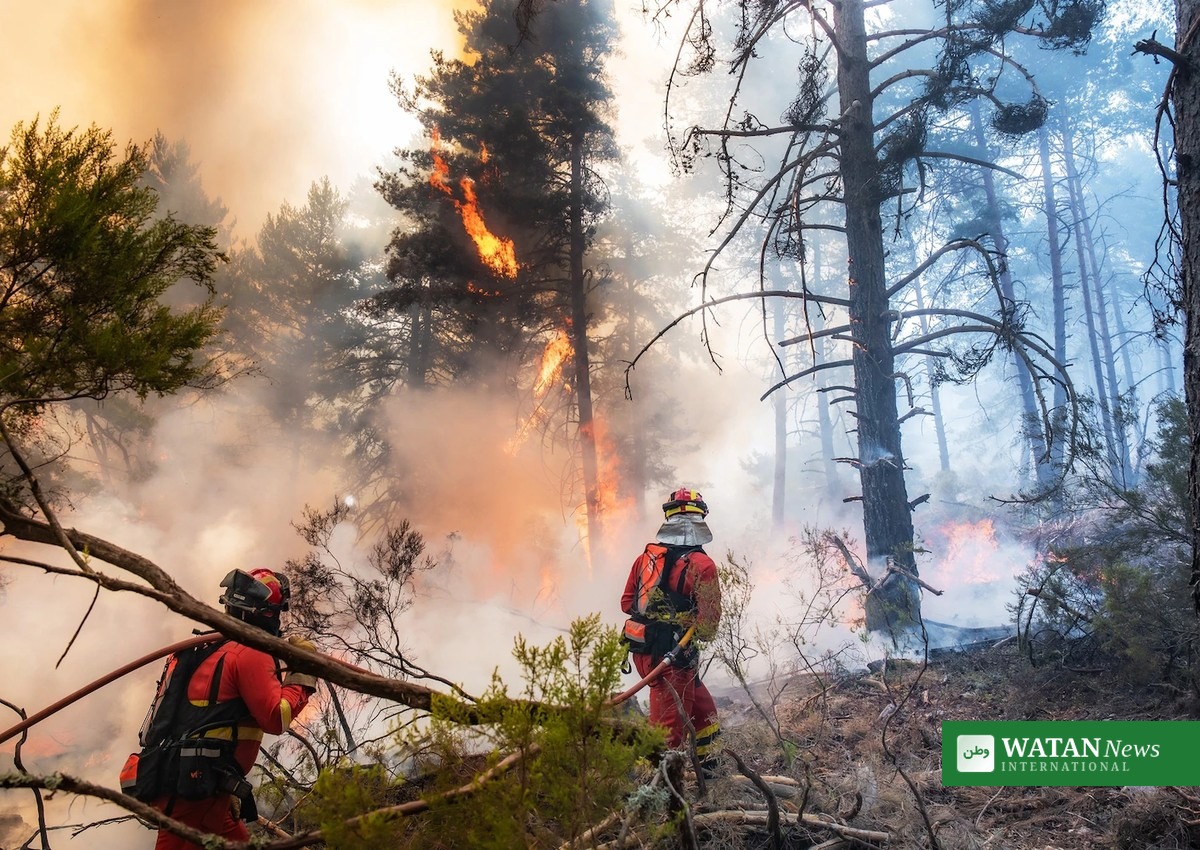
Türkiye has launched a global action plan against forest fires at the COP31 climate summit in Antalya, inviting every country to join a shared effort as rising temperatures and drought make wildfires more frequent and more destructive.
Agriculture and Forestry Minister İbrahim Yumaklı presented the Integrated Fire Management Antalya Action Plan on 12 November 2026, prepared together with Brazil, South Korea and the United Nations Food and Agriculture Organization (FAO). The plan aims to turn global commitments into practical cooperation, shared knowledge and action on the ground.
“Fires know no borders. The solution must be shared,” Yumaklı said. Türkiye is improving prevention, early detection and rapid response, he said, while restoring burned areas according to their ecological characteristics.
What the Antalya Action Plan promises
The plan brings countries together around the full cycle of fire management — preventing fires before they start, detecting them early, responding fast when they break out, and restoring the forest afterwards in a way that fits the local ecology.
Yumaklı called for accessible long-term financing, technology, scientific cooperation and exchanges of field experience between countries. Supporting forest villagers and local communities, he said, is essential to sustainable protection.
Forests remove carbon from the atmosphere, protect soil and water, sustain biodiversity and provide rural livelihoods, Yumaklı said, describing them as key tools for both climate mitigation and adaptation. That is why fire, which can undo decades of forest growth in days, has become a central issue at COP31.
Why Antalya, and why now
Antalya is hosting COP31 on land that knows the cost of fire. In the summer of 2021, fires that began in the Manavgat district spread across Antalya and Muğla in the largest forest fire crisis in the history of the Republic of Türkiye. An area equal to about 200,000 football pitches burned, eight people lost their lives and thousands were left homeless.
The heat has only grown since. In July 2025, a temperature of 50.5 degrees Celsius was recorded in Silopi in south-eastern Türkiye, breaking the country’s all-time temperature record. COP31 President Murat Kurum has said that around 3.7 million square kilometres of forest land worldwide was lost to fires between 2024 and 2025.
The scale is global. Britain’s Ed Miliband told the COP31 leaders’ summit that 150 million hectares burned in the first three months of 2026 alone, according to the State of Wildfires 2026 report. The Intergovernmental Panel on Climate Change projects that temperatures, droughts and fire-prone weather in the Mediterranean basin will keep increasing until the middle of the century.
California brings its firefighting experience
The same day the plan was launched, California Governor Gavin Newsom opened a global wildfire exchange at COP31, visiting Antalya’s forest fire centre, which includes a Forest Fire Fighting Training Simulator where engineers and incident commanders practise fighting fires under different weather, vegetation and terrain conditions.
A partnership between the FAO and Türkiye is expanding the centre’s international training capabilities, particularly in Central Asia and the Caucasus. Newsom, who is leading a California delegation at the summit in the absence of an official United States federal delegation, told Anadolu that there is much to learn and share between two regions with Mediterranean climates and escalating wildfire pressures.
“I think there’s a lot to learn and a lot to share,” Newsom said, noting the striking parallels between California and Türkiye. Exchanging firefighting technologies, best practices and reforestation approaches, he added, aligns directly with climate resilience work on both sides.
States and regions also held their own high-level exchange on wildfire resilience on 12 November, organised by the Under2 Coalition with the FAO and Türkiye’s General Directorate of Forestry, bringing together governments from partner networks to share experience and explore cooperation.
Planting must be fire-smart
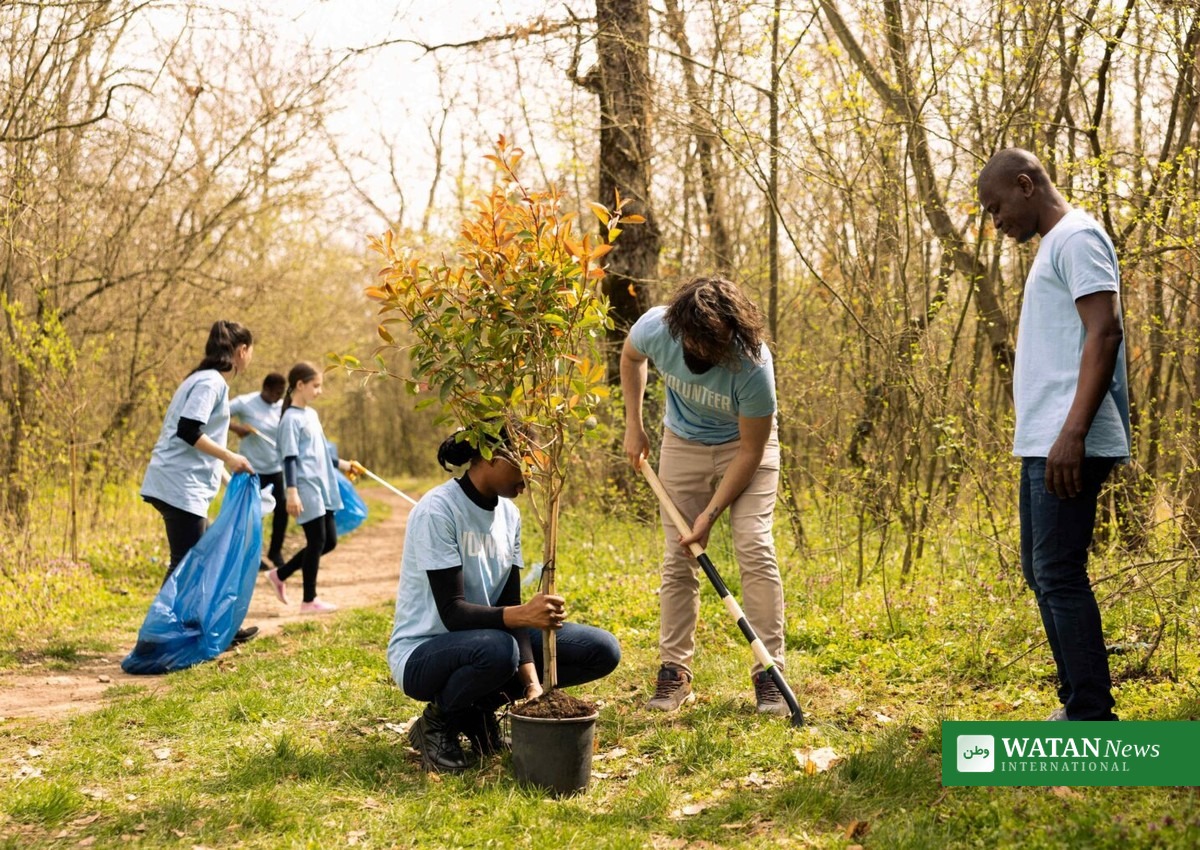
The action plan arrives with a warning that planting trees alone is not enough. A global study reported earlier this month found that planting new forests can raise wildfire risk by 26 percent if the wrong trees are planted in the wrong places — a finding Watan News reported on 7 November. Restoration, the plan stresses, must follow the ecological characteristics of each burned area.
That science is already being put to work in Türkiye. Researchers have begun fieldwork in the western province of Aydın to study how drought and fires affect tree physiology, examining stone pines damaged by a 2024 fire in the Bozdoğan district. Devices installed on the trees will track the effects of fire and drought for three years. The project brings together İzmir Katip Çelebi University, Austria’s University of Innsbruck and the Aegean Forestry Research Institute.
Key facts
- What: the Integrated Fire Management Antalya Action Plan, launched at COP31 on 12 November 2026.
- Who: presented by Türkiye’s Agriculture and Forestry Minister İbrahim Yumaklı; prepared with Brazil, South Korea and the FAO.
- Aim: prevention, early detection, rapid response and ecologically matched restoration, with shared finance, technology and field experience.
- Context: 150 million hectares burned worldwide in the first three months of 2026; Türkiye recorded 50.5°C in July 2025, a national record.
- Next: COP31 Nature Day on 17 November and the official Forests Roadmap side event on 18 November.
What happens next
The Antalya Action Plan is open to all countries, and its test will be whether governments sign up and share the financing, technology and training it promises. Forest finance is already on the COP31 agenda: at the leaders’ summit on forests on 11 November, the Netherlands pledged up to $500 million to the Tropical Forest Forever Facility, lifting total pledges to $7.8 billion — a story Watan News reported in full. Read our report on the COP31 forest summit and the $7.8 billion forest fund.
Attention now turns to COP31 Nature Day on 17 November, covering oceans, seas, nature and land use, and to the official Forests Roadmap side event on 18 November, where countries will discuss how to turn the roadmap to halt and reverse deforestation by 2030 into action. Forests can only keep storing carbon if they survive the fire season — and in Antalya, governments have now agreed to fight that fire together.
Conclusion
Forest fires do not respect borders, and the Antalya Action Plan answers them in the same spirit: shared prevention, shared detection, shared response and shared restoration. If countries join and fund it, the plan could turn one of the climate crisis’s fastest-growing threats into one of its clearest examples of cooperation.
Frequently asked questions
What is the Antalya Action Plan?
It is the Integrated Fire Management Antalya Action Plan, launched by Türkiye at COP31 on 12 November 2026. It invites all countries to cooperate on preventing forest fires, detecting them early, responding rapidly and restoring burned forests according to local ecology.
Who prepared the plan?
Türkiye prepared the plan together with Brazil, South Korea and the United Nations Food and Agriculture Organization (FAO). Agriculture and Forestry Minister İbrahim Yumaklı presented it and invited all countries to join.
Why are forest fires getting worse?
Rising temperatures and longer droughts dry out forests and lengthen fire seasons. The Intergovernmental Panel on Climate Change projects that fire-prone weather in the Mediterranean basin will keep increasing until the middle of the century, and 150 million hectares burned worldwide in the first three months of 2026 alone.
What is California doing at COP31?
California Governor Gavin Newsom led a delegation to a global wildfire exchange in Antalya, visiting Türkiye’s forest fire training centre and sharing California’s experience in fire forecasting, detection satellites and airtankers. An FAO partnership with Türkiye is expanding the centre’s training for Central Asia and the Caucasus.
Does planting more trees always reduce fire risk?
Not on its own. A global study found that planting new forests can raise wildfire risk by 26 percent if species and locations are wrong. The Antalya Action Plan stresses restoration matched to each area’s ecology, and researchers in Aydın are studying how fire and drought affect trees to guide that work.
Author

usmanch0013@gmail.com
Related Posts
کاپ31: ترکیے نے جنگلات کی آگ سے مشترکہ مقابلے کے لیے انطالیہ ایکشن پلان پیش کر دیا
ترکیے نے کاپ31 میں انٹیگریٹڈ فائر مینجمنٹ انطالیہ ایکشن پلان پیش کر دیا ہے اور تمام ممالک کو جنگلات کی آگ کے...
Read out all
COP31: Tyrkiet lancerer Antalya-handlingsplan mod skovbrande
- 0
- 1,315 word
Tyrkiet har på COP31 lanceret Antalya-handlingsplanen for integreret brandbekæmpelse og inviteret alle lande til at deltage i den fælles kamp mod skovbrande.
Read out all
Fourteen Killed, 30 Injured in Fujairah Pile-Up Involving 23 Vehicles
- 0
- 734 words
Fourteen people were killed and 30 injured in a 23-vehicle pile-up on Sheikh Khalifa bin Zayed Road at the entrance to Fujairah,...
Read out all
COP31: Affaldsindsamlere kræver klimapenge til sig selv – ikke til forbrændingsanlæg
- 0
- 1,491 word
På COP31 i Antalya siger affaldsindsamlere og zero waste-grupper, at klimapengene skal nå de mennesker, der indsamler, sorterer og komposterer affald —...
Read out all
کاپ31 میں کچرا چننے والوں کا مطالبہ: موسمیاتی رقم ان تک پہنچے، جلانے والے پلانٹس تک نہیں
انطالیہ میں کاپ31 کے مالیاتی دن پر کچرا چننے والے اور زیرو ویسٹ تنظیمیں مطالبہ کر رہی ہیں کہ موسمیاتی رقم ان...
Read out all
COP31 Finance Day: Waste Pickers Demand Climate Money Reaches Them, Not Incinerators
- 0
- 1,456 word
At COP31 in Antalya, waste pickers and zero-waste groups say climate finance must reach the people who collect, sort and compost waste...
Read out all