
- 0
- 2,179 words
Denmark’s Supreme Court ruled on Monday, 23 November 2026, that a housing association did not discriminate on ethnic grounds when it ended 91 leases to keep a neighbourhood from being classed a “hard ghetto”, backing a central pillar of Denmark’s tough approach to immigration and integration. The Denmark parallel societies ruling was unanimous, with seven judges rejecting the final appeal of seven families evicted from the Nøjsomhed housing estate in Helsingør, north of Copenhagen.
The judgment upheld a 2022 ruling by the Eastern High Court and rejected the families’ argument that the law’s criterion — the share of immigrants and descendants from “non-Western” countries in an area — amounted to discrimination on the grounds of ethnic origin. The court held that the criterion was legally neutral. The ruling comes after the European Union’s top court said last year that the law could amount to ethnic discrimination, while leaving the final decision to the Danish courts. The Danish court has now made that decision in the government’s favour.
FAKTA
- What: Denmark’s Supreme Court ruled that evictions under the country’s “parallel societies” housing law did not amount to ethnic discrimination.
- When: Monday, 23 November 2026, in a unanimous judgment by seven judges.
- Who: Seven families who appealed against the termination of their leases at the Nøjsomhed estate in Helsingør, north of Copenhagen.
- Background: The housing association Boliggaarden ended 91 leases in 2022 to keep the area from being classed a “hard ghetto”. Most of those affected were classed as non-Western.
- The law: Adopted in 2018 and renamed the Parallel Society Act in 2021. It targets areas where more than half of residents are immigrants or descendants from non-Western countries, and requires estates to rent at least 60 per cent of homes at market rates by 2030.
- EU court: The Court of Justice of the European Union ruled on 18 December 2025 (case C-417/23) that the law could amount to ethnic discrimination, leaving the final decision to national courts.
- Reaction: Housing Minister Jacob Mark said he was satisfied with the decision. The families’ lawyer, Eddie Khawaja, said the court had focused more on the wording of the law than on how it was implemented.
- Scale: Tenants’ associations say about 11,000 people will have to leave their homes and be rehoused elsewhere by 2030 under the legislation.
What the Supreme Court Decided
The Supreme Court, known in Danish as Højesteret, dismissed the appeals brought by the seven families and upheld the Eastern High Court’s 2022 ruling. The judges found that the law’s criterion of “immigrants and descendants from non-Western countries” is neutral and is not a measure of ethnic origin, under Denmark’s Act on Ethnic Equal Treatment and the European Union’s Racial Equality Directive.
The court reasoned that applying the criterion involves dividing people into two groups — immigrants and descendants from non-Western countries, and all other persons — and that both groups include people of a very large majority of different ethnic origins, while people of the same ethnic origin can be found in both groups. The judges also noted that no information had been presented about the ethnic background of the residents who had been evicted. On that basis, the court concluded that the category in the social housing law must be regarded as a neutral criterion and not as a criterion relating to ethnic origin.
The court went further. It said that even if the housing association aimed to cut the share of non-Western immigrants and descendants in Nøjsomhed to 50 per cent or below, that would not be direct discrimination, because the criterion itself is lawful. It also found no evidence that particular ethnic groups were put at a particular disadvantage by the lease terminations.
The Case Behind the Ruling
The case concerns the Nøjsomhed area in Helsingør, a town north of Copenhagen. In 2022, the housing association Boliggaarden terminated the leases of 91 households at the estate, as part of a redevelopment plan triggered by the housing legislation. Most of those affected were classed as non-Western. Seven of the families took the case to court, arguing that the termination of their leases was based on ethnic origin and therefore unlawful.
Lower courts had already dismissed their claims. The Eastern High Court ruled in 2022 that the law’s criterion was neutral and not a measure of ethnic origin. The Supreme Court has now rejected the families’ final appeal, confirming that interpretation at the highest level of the Danish legal system.
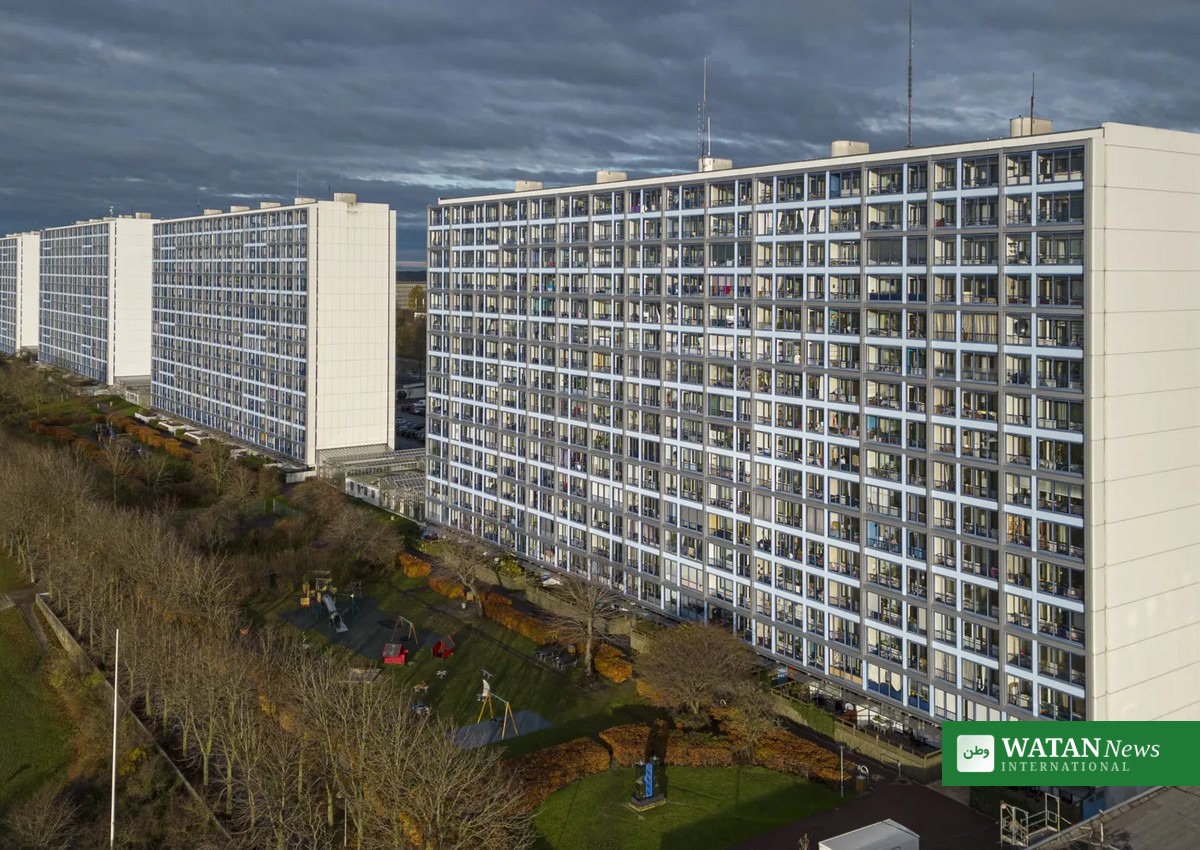
Aerial view of the Høje Gladsaxe social housing estate in Denmark. Non-profit housing accommodates more than one million people in Denmark, and the 2018 legislation requires some estates to change their mix of residents.
The Law at the Centre of the Case
The legislation at issue was adopted in 2018 under a centre-right government and has since been maintained by the Social Democrat-led administration of Prime Minister Mette Frederiksen, which renamed it the Parallel Society Act in 2021. The government describes the law as a bid to tackle segregation and what it calls parallel societies in disadvantaged neighbourhoods, and to promote integration.
Under the law, a neighbourhood is classed as a “transformation area” — previously officially termed a “hard ghetto” — when more than half of its residents are immigrants or descendants of immigrants from non-Western countries, alongside other criteria relating to employment, education, income and crime. Social housing estates in such areas must change their mix of residents, including by renting at least 60 per cent of homes at market rates by 2030, and by rebuilding, renovating or selling homes.
According to Statistics Denmark, “non-Western” countries are defined as all countries except the 27 member states of the European Union and a defined list of other Western countries, including Britain, Norway, the United States, Canada, Australia and New Zealand. The definition is a statistical category used by the Danish authorities, and it was this category — rather than any individual’s ethnic origin — that the court held to be neutral.
The European Court’s Earlier Warning
The Danish ruling sits alongside a decision by the Court of Justice of the European Union, the EU’s top court, which examined the same law last year. In a judgment of 18 December 2025, in case C-417/23, the EU court said the law could amount to ethnic discrimination if ethnic origin was a decisive consideration when it was adopted. It also said that residents of such areas faced a higher risk of early lease termination than residents of areas with similar social problems but fewer non-Western residents.
The EU court did not strike the law down. It left the final decision to the national courts, which had to assess the evidence in the specific case before them. The Danish Supreme Court has now carried out that assessment and reached the opposite conclusion to the one the residents had argued for: on the evidence presented in this case, the court found, the law’s criterion was neutral and no particular ethnic group had been shown to be disadvantaged.
The relationship between the two judgments will be closely watched in Denmark and elsewhere in Europe, because other countries with large social housing sectors and integration debates have followed the Danish case. For now, the Danish ruling is the final word in Denmark’s own courts, although the residents’ lawyers have not ruled out further legal steps.
Reactions to the Ruling
The government welcomed the judgment. Housing Minister Jacob Mark said in a statement that he was satisfied with the Supreme Court decision, reiterating the government’s position that the law “strengthens security, social cohesion, and integration”. The ruling is a significant legal victory for the government’s approach, which has enjoyed broad political support in Denmark even as it has been widely criticised by tenants and tenants’ associations.
The residents and their lawyer
The families and their representatives expressed disappointment. One of the plaintiffs, Riad, told the AFP news agency: “We’re obviously disappointed.” Their lawyer, Eddie Khawaja, said the Supreme Court had looked more into the wording of the law instead of how it was implemented on the ground. Khawaja had argued earlier that, in his view, “non-Western” is “a proxy for ethnic origin”.
The housing association
Boliggaarden, the housing association that ended the leases, said in a written statement that it was aware its decision to evict residents had affected people and their homes, but that it had been important for the association to rehouse the residents. The association’s task now is to carry out the redevelopment of the estate while rehousing the affected households.
What Happens Next
With the Supreme Court’s judgment, the legal challenge to the Nøjsomhed evictions is over in the Danish courts, and the redevelopment plans for the estate can proceed. More broadly, the ruling removes a major legal obstacle to the parallel societies legislation as a whole. Other housing associations in transformation areas are expected to continue with their plans to change the mix of residents, including sales, demolitions and conversions to market-rate homes, in order to meet the 2030 target.
Tenants’ associations say that, under the legislation, some 11,000 people will be forced to leave their apartments and be rehoused elsewhere by 2030. Non-profit housing accommodates more than one million people in Denmark and is open to all, so the scale of the redevelopment programme is significant for the country’s housing sector as a whole.
The debate over the law itself is unlikely to end with the judgment. Supporters of the legislation say it is necessary to prevent segregation and to ensure that disadvantaged neighbourhoods do not become isolated from the rest of society. Critics, including tenants’ associations, say it forces people out of their homes on the basis of where they come from. The Supreme Court has now settled the legal question of whether the law, as applied in this case, amounted to ethnic discrimination. The political discussion about the law’s aims and effects continues.
Conclusion
Monday’s unanimous ruling is a landmark moment for Denmark’s integration policy. By holding that the “non-Western” criterion is neutral and not a measure of ethnic origin, the Supreme Court has given the government’s parallel societies legislation a firm legal foundation, even after the EU’s top court warned that the law could amount to discrimination. For the seven families from Nøjsomhed, the judgment ends a legal battle that began with the termination of their leases in 2022. For Denmark, it clears the way for the redevelopment of transformation areas to continue towards the 2030 deadline — and for the wider debate about integration, housing and equality to continue on political, rather than legal, ground.
Related Articles
- Denmark’s Supreme Court to Rule on Parallel Societies Law After Landmark Hearing
- Frederiksen Rejects Multiculturalism in Podcast Remarks on Danish Identity
- Denmark’s Citizenship Freeze Leaves 487 Applicants in Limbo
- Five EU Countries Plan Rwanda Return Hub for Rejected Asylum Seekers
- Denmark’s Supreme Court Backs Parallel Societies Evictions in Landmark Ruling
Frequently Asked Questions
What did Denmark’s Supreme Court decide on 23 November 2026?
The court ruled unanimously that a housing association did not discriminate on ethnic grounds when it ended 91 leases at the Nøjsomhed estate in Helsingør. It held that the law’s “non-Western” criterion is neutral and not a measure of ethnic origin.
Who brought the case?
Seven families whose leases were terminated in 2022 by the housing association Boliggaarden. They were among 91 households whose leases were ended to keep the area from being classed a “hard ghetto”. Most of those affected were classed as non-Western.
What is the “parallel societies” law?
The law, adopted in 2018 and renamed the Parallel Society Act in 2021, targets social housing areas where more than half of residents are immigrants or descendants from non-Western countries. Estates in such areas must change their mix of residents, including by renting at least 60 per cent of homes at market rates by 2030.
What did the EU’s top court say about the law?
On 18 December 2025, the Court of Justice of the European Union said the law could amount to ethnic discrimination if ethnic origin was a decisive consideration when it was adopted, and noted that residents of such areas faced a higher risk of early lease termination. It left the final decision to the national courts.
Why did the Danish court reach a different conclusion?
The Supreme Court found that both groups created by the criterion include people of many different ethnic origins, that the same ethnic origin can appear in both groups, and that no information had been presented about the ethnic background of the evicted residents. It therefore treated the criterion as neutral and found no evidence that particular ethnic groups were disadvantaged.
What happens to the residents who were evicted?
Boliggaarden said it had been important to rehouse the residents, and the association is responsible for rehousing them. Tenants’ associations say about 11,000 people across Denmark will have to leave their homes and be rehoused elsewhere by 2030 under the legislation.
What happens next?
The ruling is final in the Danish courts, so redevelopment plans for Nøjsomhed and other transformation areas can proceed towards the 2030 target. The wider political debate about the law’s aims and effects continues.
Author

usmanch0013@gmail.com
Related Posts

Venezuela to Repeal Simón Bolívar Law That Barred Opposition From Public Office
- 0
- 593 words
Venezuela's National Assembly will begin repealing the Simón Bolívar Law, which barred opposition figures from public office and carried prison terms of...
Read out all
Serbia’s Student Movement Delays Naming Prime Minister as Deadlines Near
- 0
- 469 words
A month after its landslide election win, Serbia's student-led movement has still not named a prime minister, with budget, refinery and gas...
Read out all
CITIS 2026: New Delhi Summit to Turn Climate Innovation into Bankable Projects
- 0
- 1,014 word
New Delhi hosts the fourth CITIS summit on 14–16 December 2026, where investors and innovators will work on turning first-of-a-kind climate technologies...
Read out all
China Rehearses Amphibious Landing With Civilian Ships Near Taiwan
- 0
- 496 words
China is rehearsing amphibious landings near Taiwan, linking civilian vessels into an 800-metre floating bridge in Dacheng Bay, satellite images show.
Read out all
Pakistan’s First Astronaut Reaches China’s Tiangong Space Station Aboard Shenzhou-24
- 0
- 918 words
Muhammad Zeeshan Ali has become the first Pakistani to reach orbit and the first foreign astronaut to visit China's Tiangong space station,...
Read out all
Islamabad Hosts Trilateral Defence Talks as Mecca Pact Takes Effect
- 0
- 480 words
Pakistan, Saudi Arabia and Türkiye meet in Islamabad on 27–28 November for the third session of the Strategic Political and Defence Committee...
Read out all