- 0
- 843 words
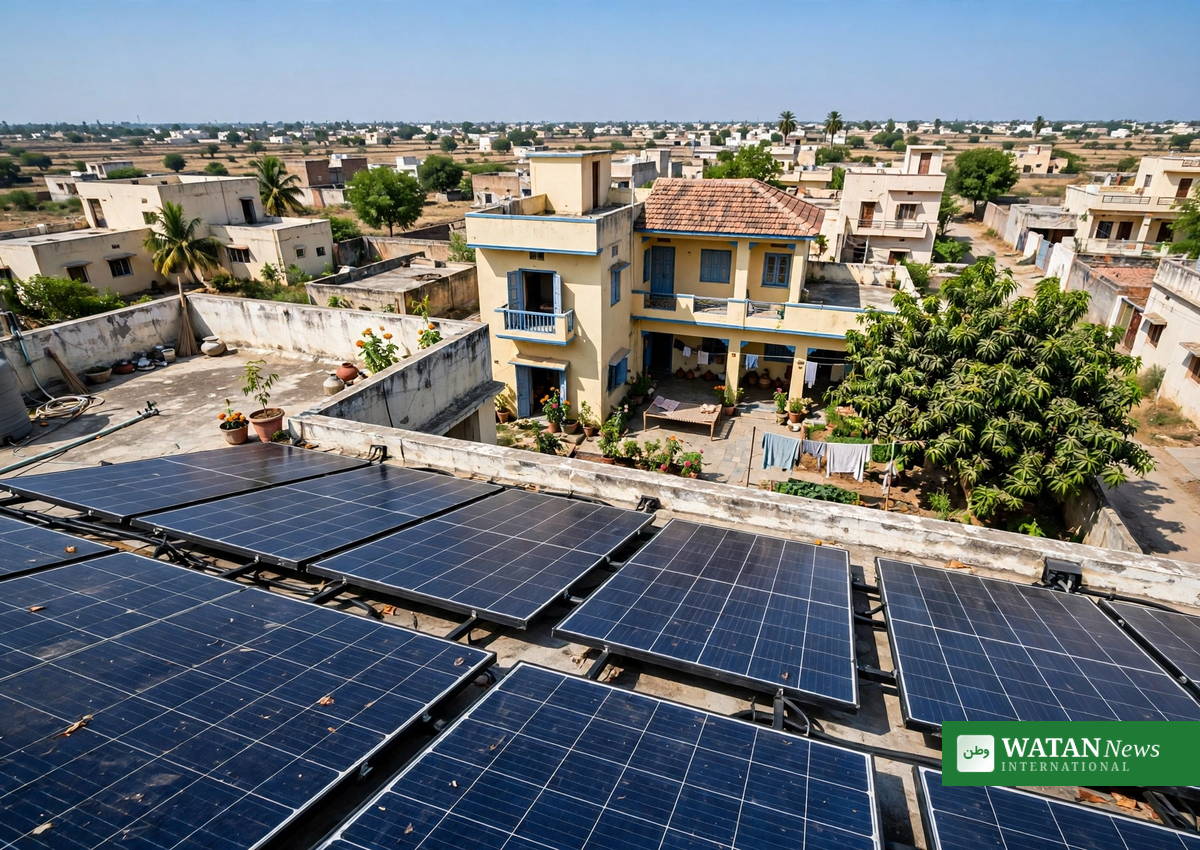
Gujarat will now cover most of the cost of a rooftop solar system for hundreds of thousands of homes, after the state cabinet approved around 1,000 crore rupees in extra subsidy on 21 October 2026. Under the decision, a general-category household will pay only 10% of the benchmark cost of a system of up to 2 kilowatts, while a household from the Scheduled Castes or Scheduled Tribes will pay just 5%.
The announcement was made by state spokesperson Jitu Vaghani after a cabinet meeting chaired by Chief Minister Bhupendra Patel in Gandhinagar, according to the state government as reported by IANS. The extra state support sits on top of the central subsidy available under the PM Surya Ghar: Muft Bijli Yojana, and the state government will bridge the gap between the central assistance and the household’s fixed share.
What the Gujarat decision changes
Until now, the upfront cost of a rooftop solar system has been the biggest barrier for many families, even where the central subsidy applies. Gujarat’s top-up removes most of that barrier for smaller residential systems. The measure is expected to benefit more than 300,000 families, the state government said.
The subsidy applies to residential rooftop solar systems with a capacity of up to 2 kilowatts. For a 1 kilowatt system benchmarked at 54,000 rupees, a general-category household will pay 5,400 rupees and a Scheduled Caste or Scheduled Tribe household will pay 2,700 rupees. The central government contributes 32,400 rupees, and the state tops up 16,200 rupees for general-category households and 18,900 rupees for Scheduled Caste and Scheduled Tribe households.
For a 2 kilowatt system benchmarked at 1,07,200 rupees, the household share is 10,720 rupees for general-category consumers and 5,360 rupees for Scheduled Caste and Scheduled Tribe consumers. The central subsidy is 62,800 rupees, with the state adding 33,600 rupees and 38,960 rupees respectively.
| System size | Benchmark cost | Central subsidy | Household pays (general) | Household pays (SC/ST) |
|---|---|---|---|---|
| 1 kW | 54,000 rupees | 32,400 rupees | 5,400 rupees | 2,700 rupees |
| 2 kW | 1,07,200 rupees | 62,800 rupees | 10,720 rupees | 5,360 rupees |
Why Gujarat is moving now
Gujarat already leads India in rooftop solar adoption. More than 14 lakh households in the state have installed rooftop solar systems, and more than 8.5 lakh homes have done so under the PM Surya Ghar scheme, placing the state first nationally under the programme, according to the state government as reported by The Hindu BusinessLine.
Rooftop solar lets participating households cut their daytime electricity bills by generating power at home, and households can also earn income by supplying surplus electricity to the grid. The state government’s latest step is aimed at households that have so far been deterred by the initial investment, even though they would benefit from lower bills over time.
What it means for clean power
Distributed rooftop solar adds clean generation close to where electricity is used, reducing losses from long-distance transmission and easing pressure on the grid during daylight hours. The Gujarat decision shows how a state top-up can turn a national subsidy into a near-zero upfront cost for the smallest systems, which are the most relevant for lower-income and smaller homes.
There is an honest limit to note: rooftop solar generates power during the day and does not by itself cover evening peak demand, when households use the most electricity after sunset. Batteries, grid upgrades and other flexible supply will still be needed for a fully round-the-clock clean power system. Gujarat’s move is a step on household adoption, not a complete answer to the state’s power system.
Key facts
- Decision: Gujarat cabinet approval, 21 October 2026, chaired by Chief Minister Bhupendra Patel.
- Extra state funding: around 1,000 crore rupees; expected beneficiaries: more than 300,000 families.
- Household share: 10% of benchmark cost for general-category households, 5% for Scheduled Caste and Scheduled Tribe households.
- Covered systems: residential rooftop solar up to 2 kilowatts under PM Surya Ghar: Muft Bijli Yojana.
- State context: more than 14 lakh households with rooftop solar; more than 8.5 lakh under PM Surya Ghar, first in India under the programme.
Read more on Watan News: Watan News in English.
Frequently asked questions
Who can benefit from the Gujarat top-up?
Residential electricity consumers in Gujarat installing a rooftop solar system of up to 2 kilowatts under the PM Surya Ghar scheme. General-category households pay 10% of the benchmark cost and Scheduled Caste and Scheduled Tribe households pay 5%.
Does the state subsidy replace the central subsidy?
No. The Gujarat top-up is additional. The central subsidy under PM Surya Ghar still applies, and the state government covers the remaining gap after the central subsidy and the household’s fixed share.
How much will a 1 kilowatt system cost a household?
For a system benchmarked at 54,000 rupees, a general-category household pays 5,400 rupees and a Scheduled Caste or Scheduled Tribe household pays 2,700 rupees, according to the state government’s announced figures.
How much will a 2 kilowatt system cost a household?
For a system benchmarked at 1,07,200 rupees, a general-category household pays 10,720 rupees and a Scheduled Caste or Scheduled Tribe household pays 5,360 rupees.
How does a household apply?
Applications for rooftop solar under PM Surya Ghar are made through the scheme’s official national portal, and households should confirm the current process and claim steps with their electricity distribution company or on the state portal before signing a vendor agreement.
Author

usmanch0013@gmail.com
Related Posts

Former Japanese Prime Minister Yasuo Fukuda Dies at 90
- 0
- 475 words
Former Japanese Prime Minister Yasuo Fukuda has died at 90, Nikkei reported on Monday. He led Japan from September 2007 to September...
Read out all
China’s Communist Party Opens Key Plenum Focused on Party Governance
- 0
- 443 words
China's Communist Party has opened a four-day Central Committee plenum in Beijing focused on party discipline and self-governance, ahead of a major...
Read out all
Lev lettere: Reparation, genbrug og mindre madspild mindsker dit fodaftryk
- 0
- 1,025 word
Dette er en forklarende artikel, ikke breaking news: en guide til de små, daglige valg, der gør et hjem mere bæredygtigt —...
Read out all
ہلکی زندگی: مرمت، دوبارہ استعمال اور کم خوراک کا ضیاع
یہ کوئی بریکنگ نیوز نہیں بلکہ ایک معلوماتی مضمون ہے: روزمرہ کے چھوٹے فیصلوں کی رہنمائی جو گھر کو زیادہ پائیدار بناتے...
Read out all
Living Lighter: How Repair, Reuse and Less Food Waste Shrink Your Footprint
- 0
- 952 words
This is an explainer, not breaking news: a guide to the small, everyday choices that make a home more sustainable — repairing...
Read out all
Gujarat sænker prisen på solceller på taget til 5–10 % for 300.000 hjem
- 0
- 844 words
Gujarat vil nu dække det meste af prisen for et solcelleanlæg på taget for hundredtusindvis af hjem, efter at delstatens kabinet den...
Read out all